Zhurong Rover Uncovers Gypsum Crystals That May Trap Ancient Martian Brine
Scientists uncover a surprising mineral on Mars, sparking fresh interest in the planet’s ancient history and its potential habitability.

China’s Zhurong rover has detected bright gypsum crystals in the Utopia Planitia region, a find that may lock in microscopic remnants of ancient brine and provide fresh clues about the Red Planet’s watery past.
The observations, now reported in Nature Astronomy, suggest that the mineral deposits could preserve chemical signatures from water that circulated on Mars hundreds of millions of years ago.
Gypsum Formations Reveal a Lost Martian Water Body
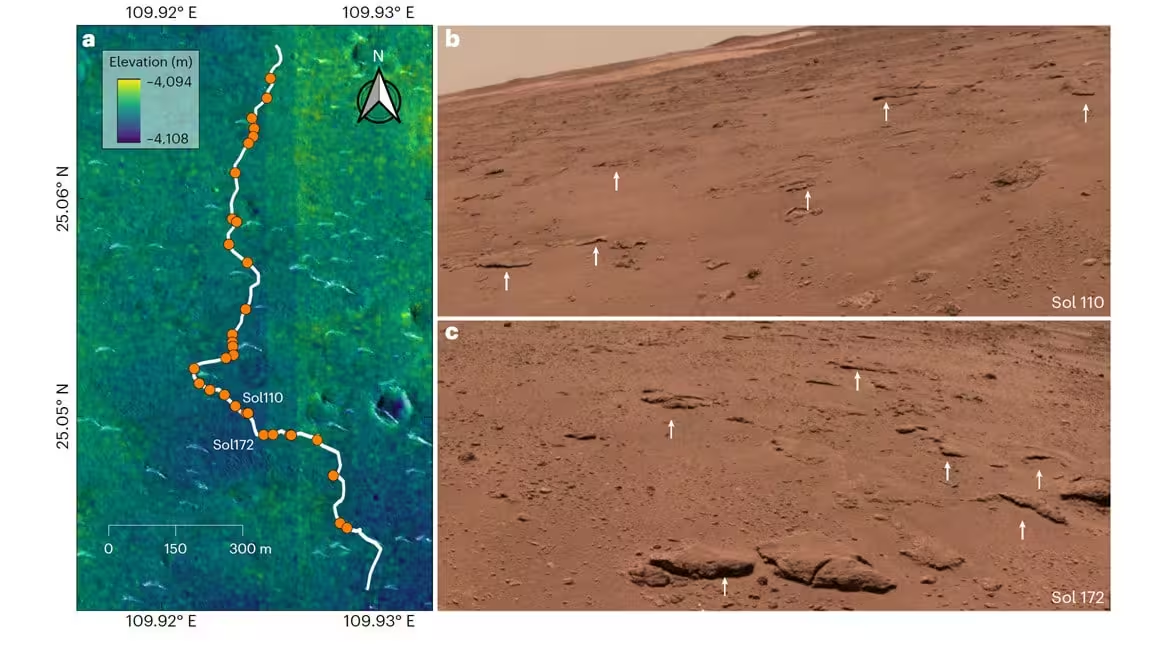
During its trek across the northern plains since its May 2021 landing, Zhurong has photographed a terrain strewn with sediments, rocks and mineral layers shaped by long‑term geological processes.
Earlier work with the rover identified hydrated minerals in several outcrops, confirming that water played a role in their formation. The precise mineral types, however, remained ambiguous, with possibilities ranging from various sulfates to silica‑rich compounds.
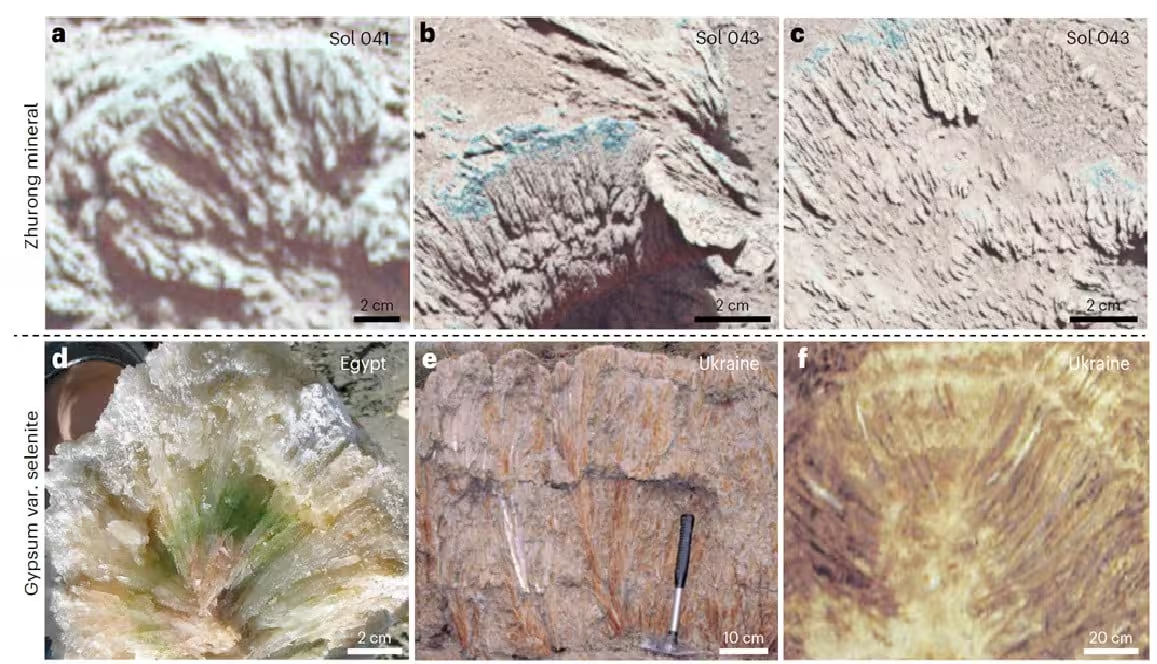
Some of the crystals display curved, leaf‑like outlines, while others branch in patterns reminiscent of fishbones or miniature trees. By integrating crystal morphology, mineralogy and spectral measurements, the team concluded that the deposits are most likely large gypsum crystals.
Possible Brine Trapped Within Martian Gypsum
The newly mapped gypsum layer differs from earlier sulfate discoveries made by NASA’s Opportunity rover, which found gypsum in mineral veins, and from investigations by Curiosity and Perseverance that focused on other sulfate contexts.
Zhurong’s deposit forms a relatively uniform sheet estimated to be five to ten centimeters thick, implying that the crystals may have precipitated directly from highly concentrated water rather than growing later within fractures.
Researchers classify the formation as a potential primary evaporite, meaning the mineral suite could have crystallized as evaporating water left behind dissolved salts.
The find sits within Utopia Planitia, a vast plain lacking a clearly defined lake basin, and overlays terrain dated to roughly 757 million years ago—a period generally associated with a colder, drier Martian climate.
The team hypothesizes that subsurface heat—perhaps from ancient volcanic activity—might have melted buried ice, allowing salty groundwater to ascend and gradually generate the gypsum crystals.
Implications for Future Sample‑Return Missions
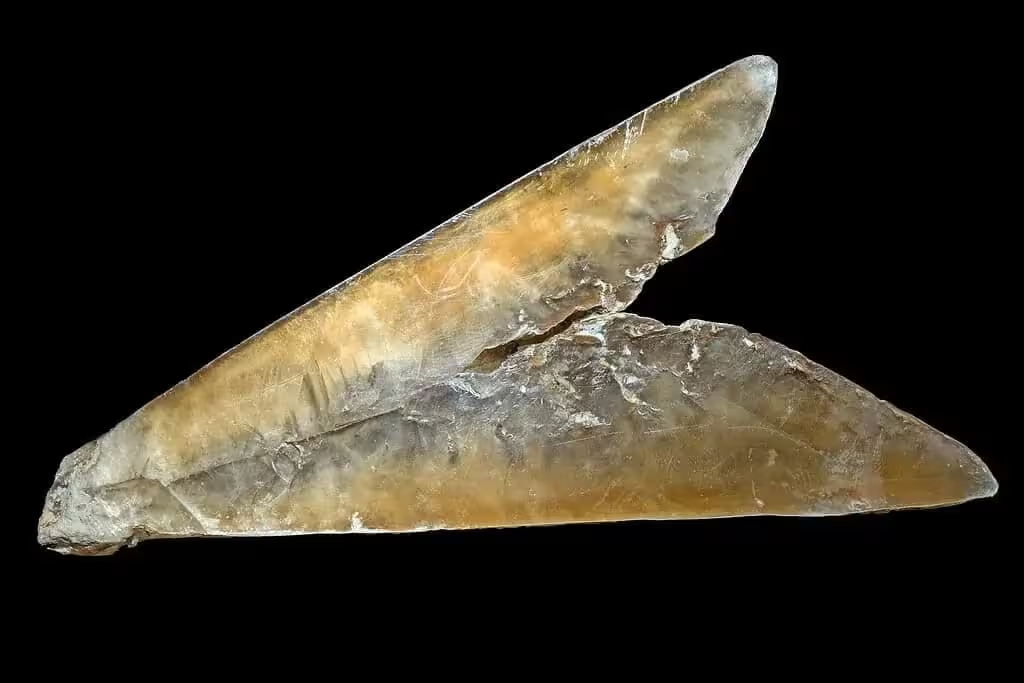
On Earth, sizable selenite gypsum crystals often host fluid inclusions—microscopic pockets of liquid that can retain signatures of ancient environments, including dissolved salts, gases and organic molecules. If comparable inclusions exist within the Martian crystals, they could offer a direct window into the chemistry of bygone groundwater.
Although exposure to radiation and harsh surface conditions over hundreds of millions of years may have altered any trapped material, mineral cavities can still shield delicate compounds from some destructive processes.
Current rover capabilities cannot access these potential brine pockets, but upcoming missions designed to collect and return Martian samples could examine the gypsum deposits in terrestrial laboratories, shedding new light on the planet’s hydrologic history.
This article has been fact checked for accuracy, with information verified against reputable sources. Learn more about us and our editorial process.
Last reviewed on .
Article history
- Latest version
Cite this page:
- Posted by Bilal Abbasi