Czech Republic Deploys National Health Data Sandbox to Protect Patient Privacy
A novel national platform allows researchers to test complex analytics on safe, artificial databases before running them on real patient records.
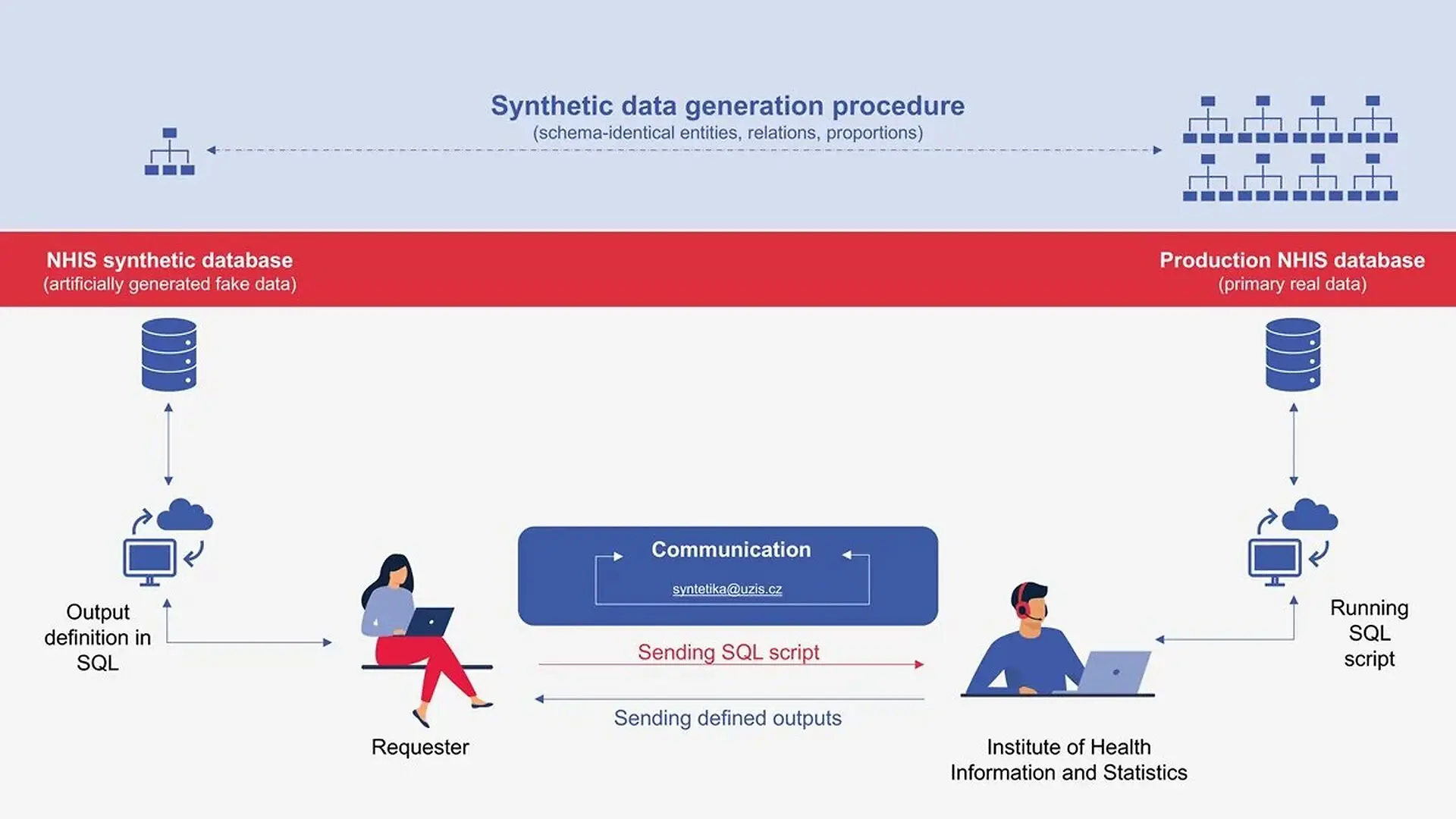
A new national health data platform in the Czech Republic allows researchers to build and test complex analytical scripts without ever looking at real patient records, solving a major privacy bottleneck in medical research. Public health experts face a constant tug-of-war between the urgent need for large-scale health data and strict privacy laws like the General Data Protection Regulation, which forbid exposing sensitive personal information.
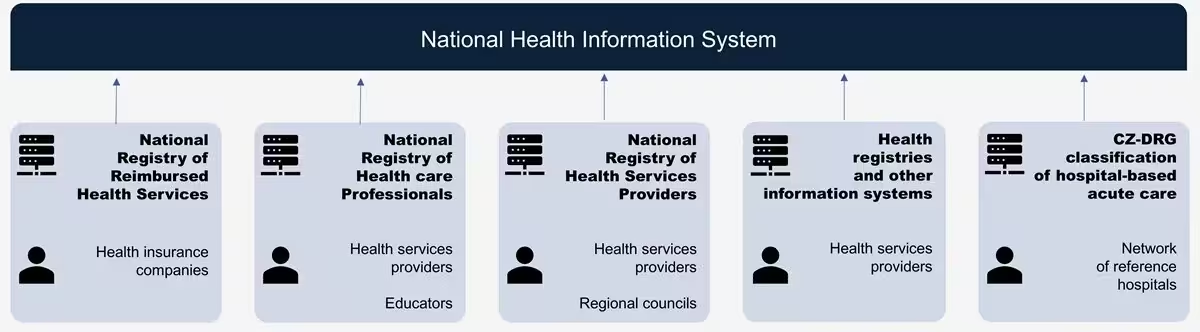
To break this deadlock, researchers at the Institute of Health Information and Statistics of the Czech Republic designed a national synthetic data infrastructure within the country’s National Health Information System, known as the NHIS. Detailed in a study published in JMIR Medical Informatics, the platform provides artificially generated stand-ins for major health registries, including reimbursement claims, cancer records, reproductive health, and mortality databases.
How Fake Health Data Protects Real Patients While Enabling Science
The newly deployed infrastructure does not try to mirror every statistical nuance or population trend of the original medical databases. Instead, the team built rule-based generation procedures that strip out all direct patient identifiers and primary keys, replacing them with randomly generated synthetic counterparts.
Continuous variables, such as medical costs or lab values, have their absolute minimum and maximum points adjusted inward toward the mean, typically bounded between the 5th and 95th percentiles. This mathematical masking hides statistical outliers that could otherwise be used to re-identify a specific individual in the system. The resulting fake databases represent roughly 0.04% to 0.26% of the volume found in the primary production environment, yet they preserve the exact database schemas, table structures, and data types required for computer code to run smoothly.
Because the artificial registries share compatible table structures and identifiers, investigators can perform multi-registry data joins just as they would on real records. This setup lets programmers write and debug structured query language scripts, commonly called SQL scripts, in a completely safe sandbox environment.
From Sandbox Testing to Real-World Clinical Insights
Once scientists finalize and validate their analytical code in the synthetic sandbox, they submit the script through a formal online request queue. Authorized personnel at the health institute then run those exact scripts on the actual, operational NHIS databases behind locked digital doors.
Before any final numbers are released back to the researcher, the output must pass a strict disclosure-risk review. This review checks for minimum cell sizes, ensuring that any small subgroup containing fewer than ten patient observations is suppressed, aggregated, or modified to block any backdoor re-identification attempts.
During an operational evaluation spanning from the platform public launch in May 2025 through July 2026, the system processed a substantial volume of real-world scientific interest. A total of 170 users registered on the platform, roughly 69.8% hailing from the commercial sector, 25.6% operating as individual users, and 5% representing civic initiatives and research organizations.
Real-World Medical Use Cases and Public Transparency
During the evaluation window, users submitted 199 analytical requests, of which 184 reached a final outcome. Out of those completed requests, 173 successfully closed with data delivery, while a small fraction were canceled or rejected due to governance standards. Furthermore, about 20.6% of applicants voluntarily consented to share their written SQL scripts publicly through an open portal, boosting scientific transparency and reproducibility.
The platform has already powered several high-profile clinical explorations across the healthcare ecosystem. One project successfully mapped early care pathways for newly diagnosed lung cancer patients using administrative reimbursement claims. Another initiative collaborated with a clinical expert society to trace chronic kidney disease pathways and dialysis treatments, linking specialist visits, prescriptions, and kidney transplants.
Additional projects evaluated cardiovascular disease burdens across nationwide registries and tested the feasibility of tracking vaccination uptake and outcomes for meningococcal B. Across all evaluated operations, the institute reported zero privacy breaches, unauthorized disclosures, or confirmed re-identification events.
Navigating Future Governance and Scalability Hurdles
Despite the successful rollout, the study authors note several operational challenges that lie ahead. Manually reviewing every incoming script for technical, methodological, and legal compliance creates a bottleneck as user demand expands. Furthermore, as researchers link multiple disparate datasets together over time, cumulative disclosure risks increase, demanding constant updates to anonymization safeguards.
The research team emphasizes that privacy protection cannot be treated as a one-time technical fix. As artificial intelligence tools advance and sophisticated reconstruction attacks evolve, national health data infrastructures must continually adapt their governance frameworks to keep patient data secure.
The research was published in JMIR medical informatics on November 10, 2026.
This article has been fact checked for accuracy, with information verified against reputable sources. Learn more about us and our editorial process.
Last reviewed on .
Article history
- Latest version
Reference(s)
- Komenda, Martin., et al. “Implementation of a National Synthetic Data Infrastructure for Privacy-Preserving Analytical Workflows in the Czech National Health Information System: Development and Evaluation Study.” JMIR Medical Informatics, vol. 14, November 10, 2026, pp. e80683-e80683. JMIR Publications Inc., doi: 10.2196/80683. <https://doi.org/10.2196/80683>.
Cite this page:
- Posted by Robert Brown