Foldable Bedside Lead Shields Slash Portable X-Ray Scatter in Hospital Wards
A newly evaluated mobile shielding system achieves high scatter dose reductions during orthopedic radiography, though user feedback highlights practical hurdles in tight ward spaces.
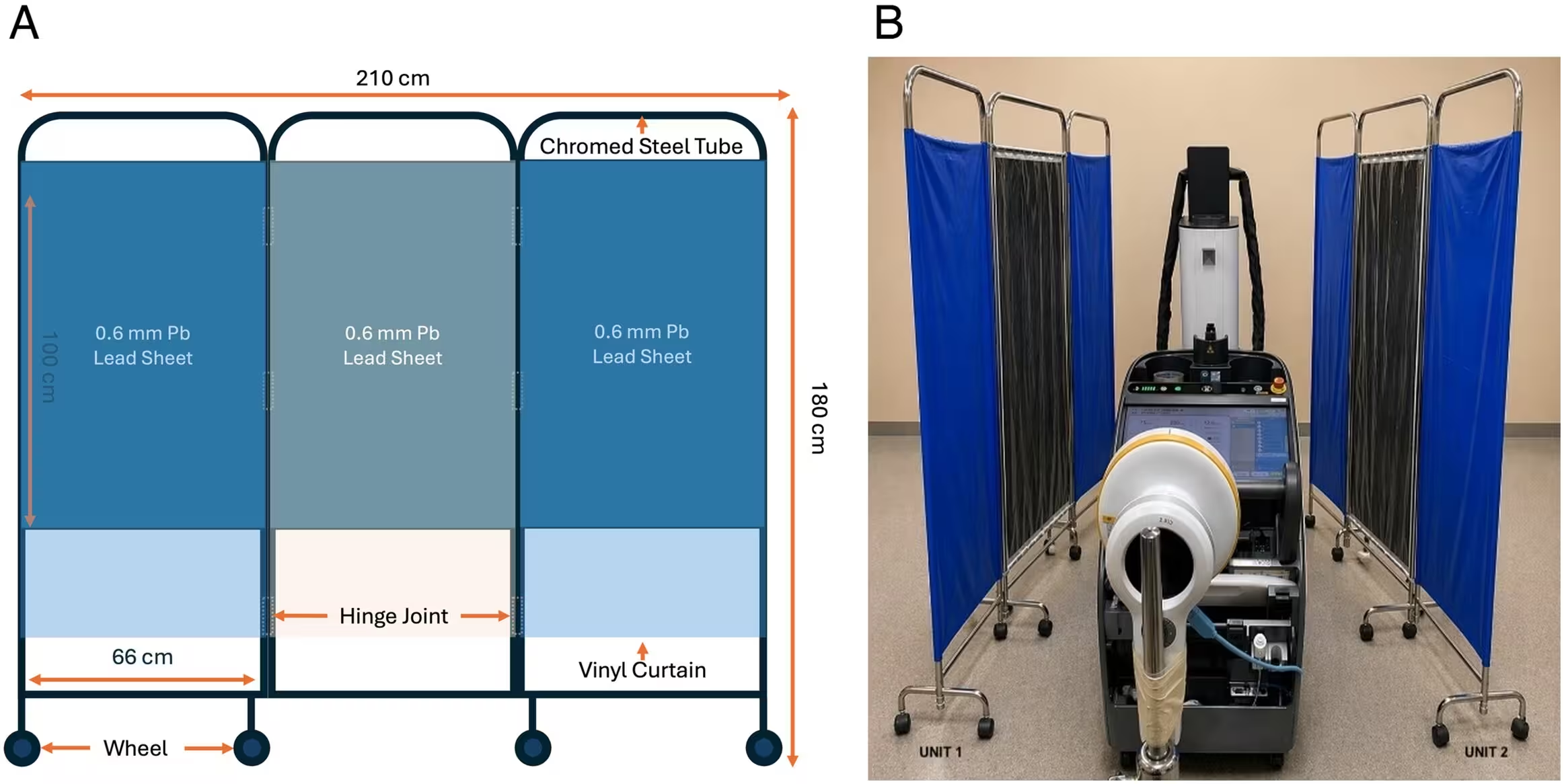
Portable X-ray imaging in crowded orthopedic wards exposes healthcare workers and nearby patients to scattered radiation in open spaces where maintaining distance is often difficult. To tackle this safety challenge, researchers recently designed and evaluated a foldable mobile radiation shielding system that can be deployed directly at the patient’s bedside in less than a minute. The device, which consists of two three-panel units fitted with 0.6-millimeter lead sheets, was tested under standardized conditions to measure how effectively it cuts down ambient scatter during common bone imaging procedures.
How the Mobile Shielding System Was Tested in Simulated Ward Conditions
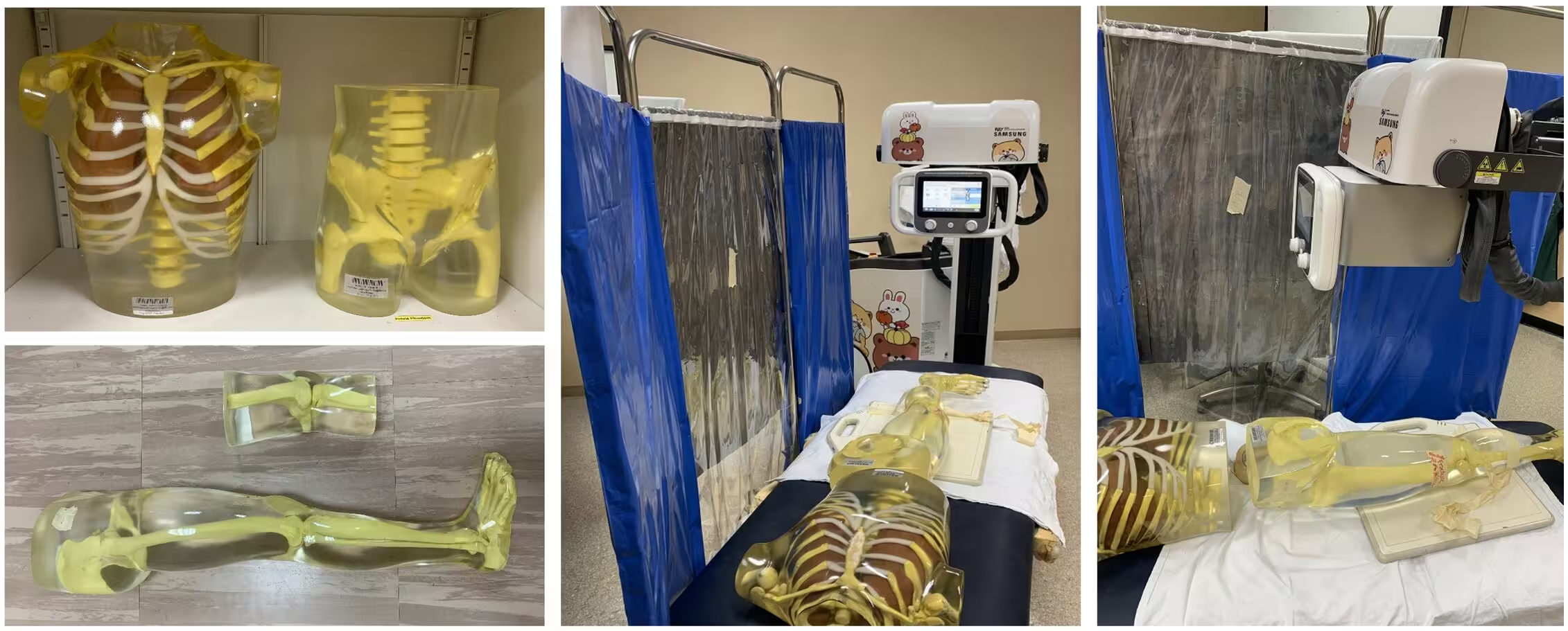
The shielding units were constructed with chromed steel frames measuring 210 centimeters in total width and 180 centimeters in height, mounted on wheeled castors for easy positioning. Each panel featured a central 100-centimeter band of lead covered by a vinyl outer layer for disinfection, leaving an open upper section for visibility. During the evaluation published in PLOS One, the investigators used anthropomorphic sectional phantoms representing an average adult male weighing 74 kilograms to simulate eight common orthopedic projections. These included chest, pelvis, lumbosacral spine, femur, and knee examinations performed with a portable X-ray unit.
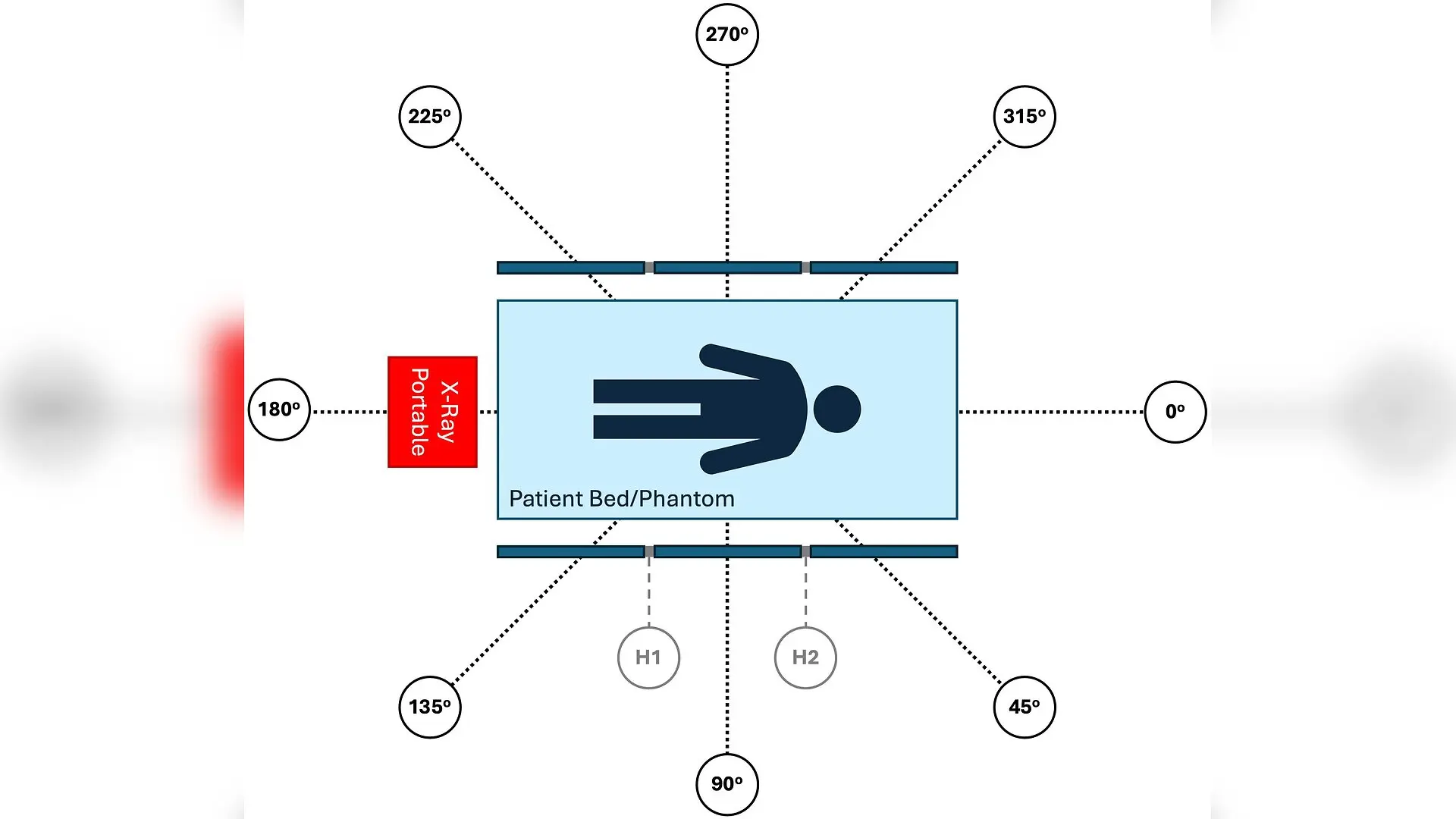
Radiation measurements were gathered using a calibrated ionization chamber survey meter placed at eight different angles around the bed, spanning 0 to 315 degrees in 45-degree increments. Distances from the bed center ranged from 50 to 250 centimeters, with the primary measurement height set at 120 centimeters to match the torso level of standing staff. The two shielding units were placed along each lateral side of the bed to intercept deflected X-ray photons before they could reach surrounding personnel.
Significant Scatter Reduction Across Multiple Imaging Angles
The analysis revealed that the dual-unit barrier produced an overall median percentage reduction in corrected scatter dose rate of 94.1 percent across the main projections. When evaluated specifically for the panel-covered lateral and oblique directions, the median reduction reached 95.9 percent. The shielding effectiveness remained consistently high across different tube voltages ranging from 65 to 85 kilovolts peak and across the entire distance range tested, though relative attenuation was greatest at closer distances.
Performance varied noticeably by angular position. The lowest reductions occurred at the 0-degree and 180-degree axial positions, which represented the open ends of the setup not directly blocked by the lead panels. At these open ends, the median reduction dropped to 65.7 percent, highlighting that the device relies heavily on proper geometric positioning to achieve maximum protection. Measurements taken at panel hinge junctions also showed minor localized leakage, suggesting areas where future mechanical refinements could improve performance.
Estimated Impact on Occupational Safety and Workload Scenarios
The team calculated estimated annual occupational radiation doses using a high-workload model assuming 50 exposures per day for 250 working days a year. Without shielding, projections requiring higher output, such as lateral lumbosacral spine imaging, generated estimated annual doses exceeding the average occupational limit of 20 millisieverts per year under this heavy workload. With the mobile shields in place, the estimated annual dose for that projection dropped to 2.47 millisieverts, while all other shielded scenarios fell well below 0.5 millisieverts per year.
A sensitivity analysis testing lower workloads of 10 and 25 exposures per day showed that unshielded estimates also dropped below the 20-millisievert threshold at reduced volumes. All shielded estimates remained well within safe limits across every tested workload scenario. The authors emphasize that these figures represent theoretical projections rather than direct individual monitoring data, and actual worker doses depend heavily on individual case mixes and daily habits.
User Feedback and Practical Limitations to Consider
A structured survey involving 20 radiologic technologists and 10 orthopedic ward nurses evaluated the device on a 5-point Likert scale following hands-on demonstrations. Radiologic technologists reported very high satisfaction, giving the device an average score of 4.80 out of 5, particularly praising its impact on radiation safety perception. Orthopedic nurses expressed more moderate satisfaction, with an average score of 3.67, noting concerns regarding physical storage, compactness, and maneuvering two 30-kilogram units within tight ward spaces.
The researchers note several limitations to the study, including the use of a single reference phantom size that may not represent patients with different body habitus. Additionally, long-term durability, real-world ward clutter, and continuous staff movement were not captured in the controlled phantom setup. The team concludes that while temporary bedside shielding offers a promising engineering control to reduce scatter in shared spaces, it should be used alongside proper positioning guidance and further real-world clinical validation.
The research was published in PLOS One on November 13, 2026.
This article has been fact checked for accuracy, with information verified against reputable sources. Learn more about us and our editorial process.
Last reviewed on .
Article history
- Latest version
Reference(s)
- Cheewakul, Jongwat. “Mobile radiation shielding device for scatter dose reduction during portable radiography in an orthopedic ward.” PLOS ONE, vol. 21, no. 11, pp. e0362759, doi: 10.1371/journal.pone.0362759. <https://doi.org/10.1371/journal.pone.0362759>.
Cite this page:
- Posted by Rohan Kumar