Gene Importance Fails to Predict Mutation Rates in Major Microbes
Rigorous new genomic re-analysis challenges adaptationist theories and exposes widespread statistical artefacts in mutation research.
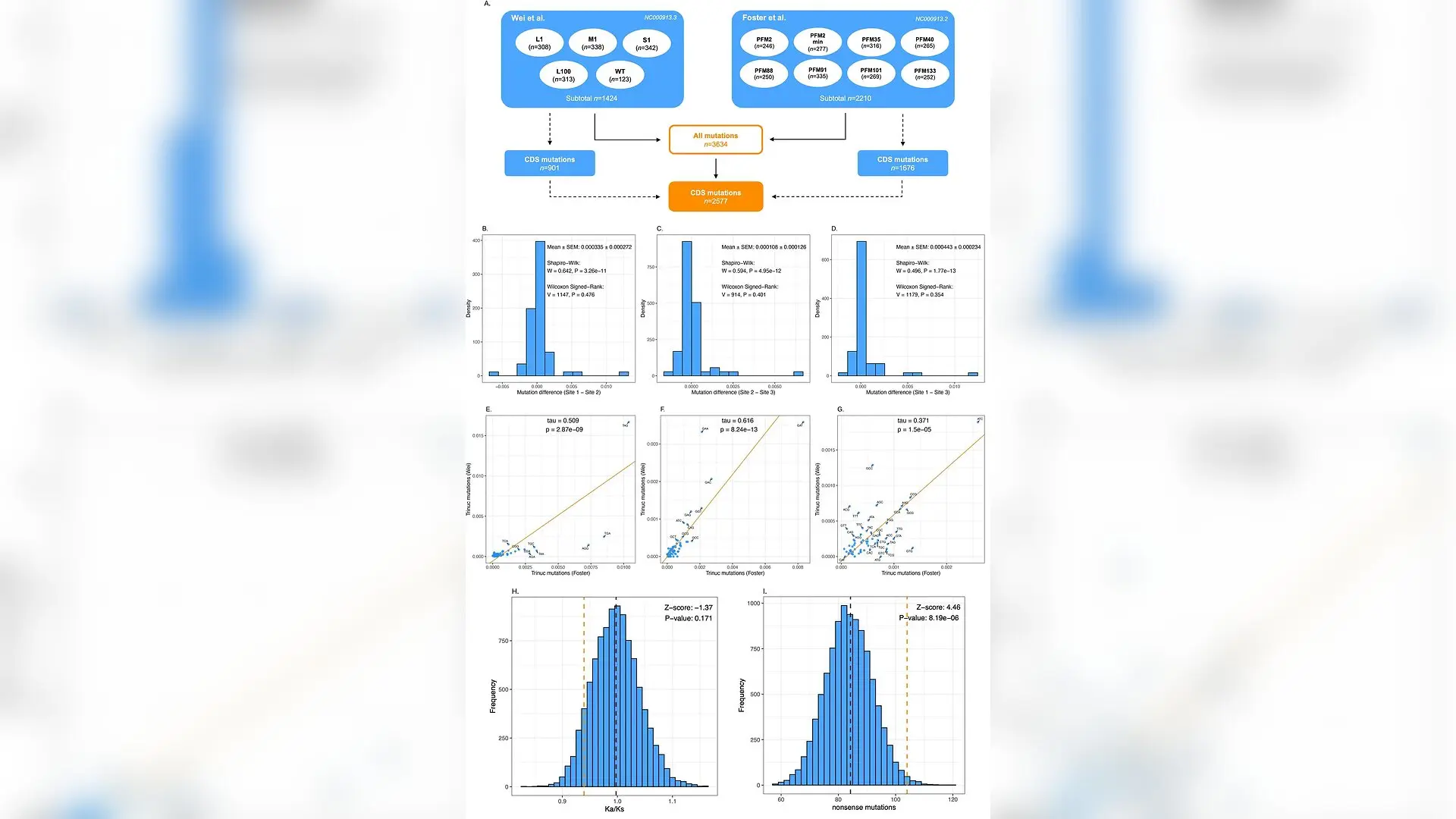
Eukaryotic and bacterial genomes display a surprising lack of targeted mutation shielding, according to a sweeping re-analysis of genetic data that challenges prevailing adaptationist theories.
For decades, evolutionary biologists have debated whether natural selection actively shapes mutation rates across different genes within an organism. Prominent hypotheses have argued that vital genes, such as those essential for survival or responsible for high levels of protein production, are shielded from mutations by being positioned on specific DNA strands or genomic coordinates. Conversely, genes linked to rapid adaptation have been theorized to possess elevated mutation rates to help organisms weather environmental stress.
However, a comprehensive investigation conducted by Sofia Radrizzani and Laurence D. Hurst from the University of Bath upends these assumptions. Their exhaustive study, published in PLOS Biology, demonstrates that a gene’s functional importance does not predict its mutation rate.
Methodological Pitfalls and the Gene Length Illusion
To uncover the true drivers of mutational variation, the researchers examined amassed mutation accumulation data from wild-type Escherichia coli and the budding yeast Saccharomyces cerevisiae. Previous studies supporting adaptive mutation models often relied on proxies like single-nucleotide polymorphisms or data from mismatch repair knockout strains, which are laboratory strains lacking key DNA spelling-error correction mechanisms.
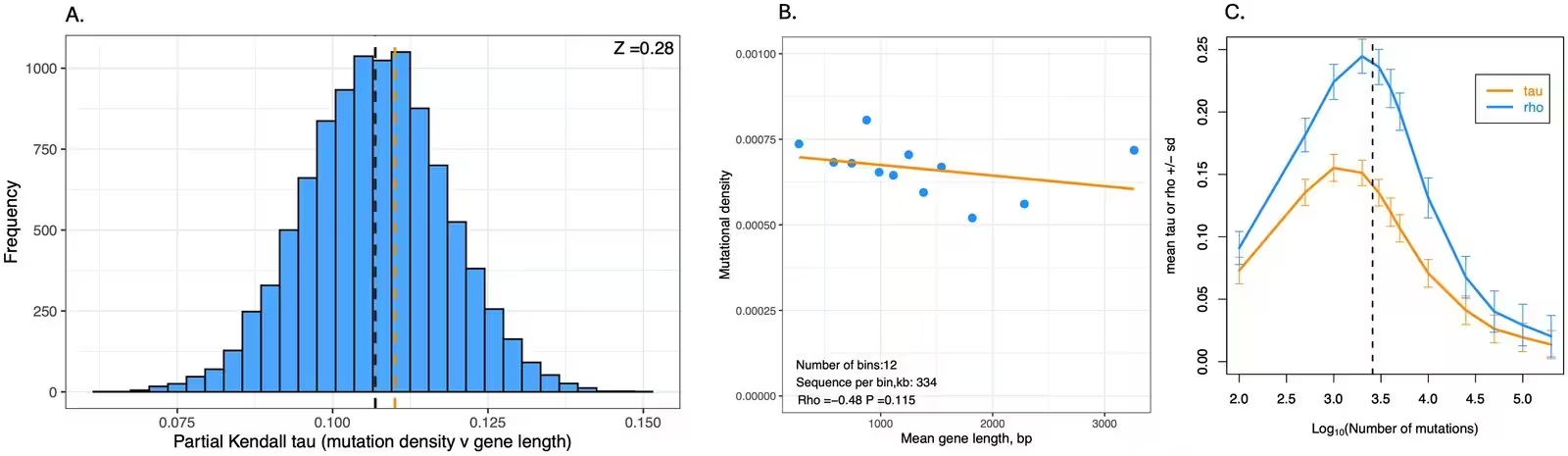
Radrizzani and Hurst discovered that these older datasets frequently introduced statistical artefacts. Most notably, standard correlation methods previously indicated a strong positive relationship between gene length and mutational density, meaning longer genes appeared to accumulate more mutations per base pair. Through rigorous Monte Carlo simulations, the authors proved this relationship is an artifactual byproduct driven entirely by the high abundance of short genes that happen to harbor zero mutations.
When correcting for these statistical anomalies and controlling for genomic covariates such as GC content and replication timing, the alluring signals of adaptive mutation vanished entirely.
What Actually Drives Mutational Density Across Genomes
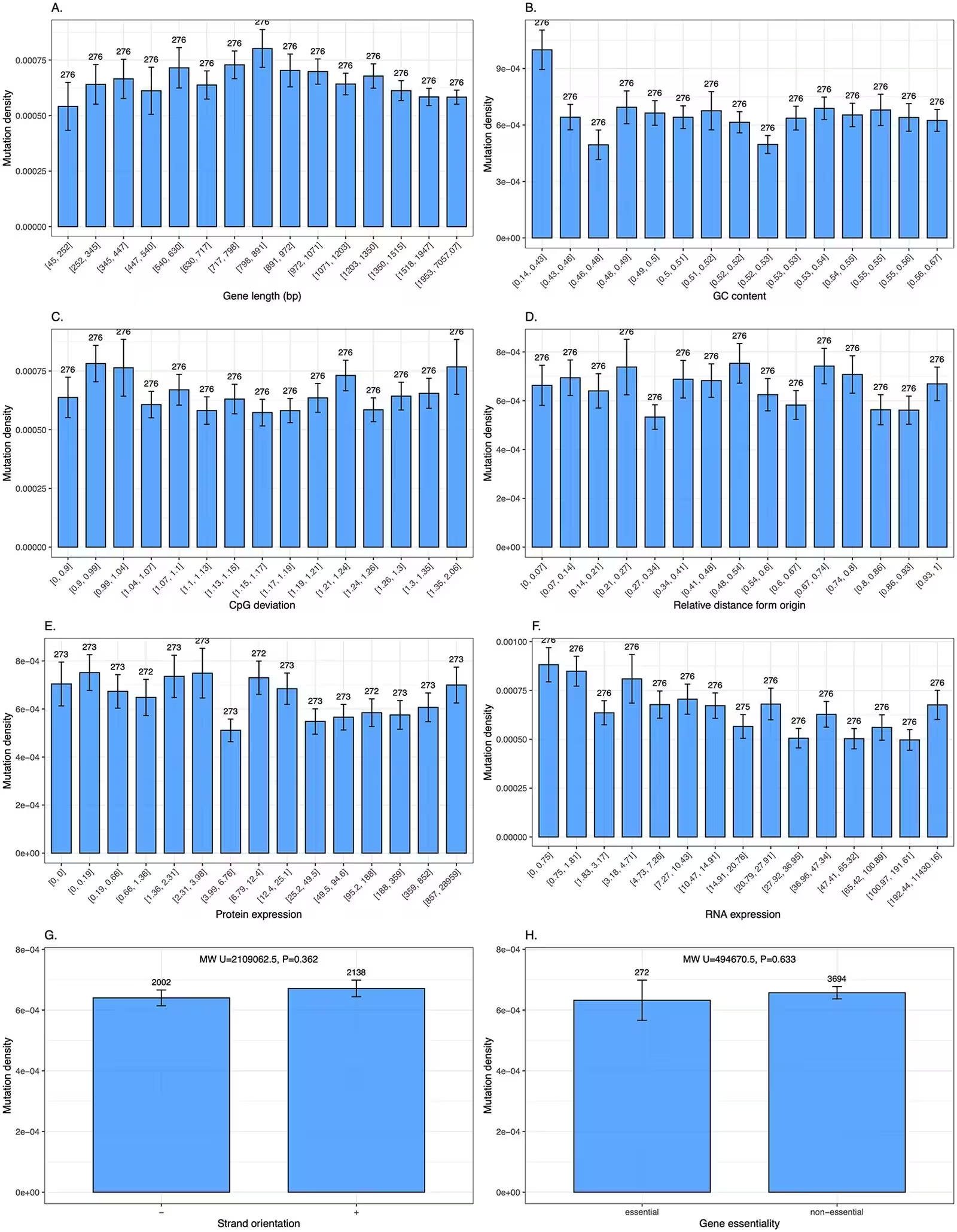
Across both bacterial and yeast genomes, the researchers found no evidence that essential genes or genes encoding abundant proteins experience lower mutation rates. Furthermore, analysis of bacterial strand orientation relative to the origin of replication revealed no systematic differences in mutation density between leading and lagging DNA strands.
Instead, the study highlights that transcription itself exerts a minor antimutagenic effect in E. coli, where actively transcribed regions display slightly lower mutation densities. This phenomenon likely stems from transcription-coupled DNA repair mechanisms rather than evolutionary selection protecting important functions. In yeast, replication timing remains the dominant structural predictor of mutation frequency, with later-replicating genomic regions accumulating more mutations.
Ultimately, the researchers concluded that any potential mutation rate variations linked to gene importance are so minuscule that they explain less than half a percent of total genomic variation. These findings strongly reaffirm the classic evolutionary paradigm that spontaneous mutation operates as a fundamentally directionless force.
The research was published in PLoS biology on November 1, 2026.
This article has been fact checked for accuracy, with information verified against reputable sources. Learn more about us and our editorial process.
Last reviewed on .
Article history
- Latest version
Reference(s)
- Radrizzani, Sofia., et al. “The importance of genes does not predict their mutation rate.” PLOS Biology, vol. 24, no. 11, November 12, 2026, pp. e3004089 Public Library of Science (PLoS), doi: 10.1371/journal.pbio.3004089. <https://doi.org/10.1371/journal.pbio.3004089>.
Cite this page:
- Posted by Priya Sharma