Bulldog Airway Surgery Comparison Reveals Hidden Benefit of Special Technique
Computed tomography scans show that a specialized folded flap procedure reduces throat tissue thickness by 26 percent, outperforming traditional surgery.
French and English bulldogs struggling to breathe because of narrowed airways can find lasting relief through surgical correction, but a new veterinary comparison reveals that one specific technique does a better job of altering the structure of the throat than traditional methods. Researchers tracked 16 dogs diagnosed with brachycephalic obstructive airway syndrome, a condition caused by skull shapes that crowd the upper respiratory tract and make everyday breathing an exhausting effort.
Comparing Two Common Throat Surgeries in 16 Bulldogs
The study evaluated 11 French bulldogs and 5 English bulldogs, ranging in age from 6 months to 5 years, who underwent upper airway surgery at the University of Florida Veterinary Hospital. All dogs suffered from an elongated soft palate, which is the muscular partition separating the nasal and oral cavities that frequently blocks airflow in flat-faced breeds. Half of the dogs underwent a traditional procedure called a staphylectomy, which involves cutting away the dangling rear portion of the soft palate. The other half received a folded flap palatoplasty, a procedure designed to both shorten the palate and reduce its thickness by folding the tissue onto itself.
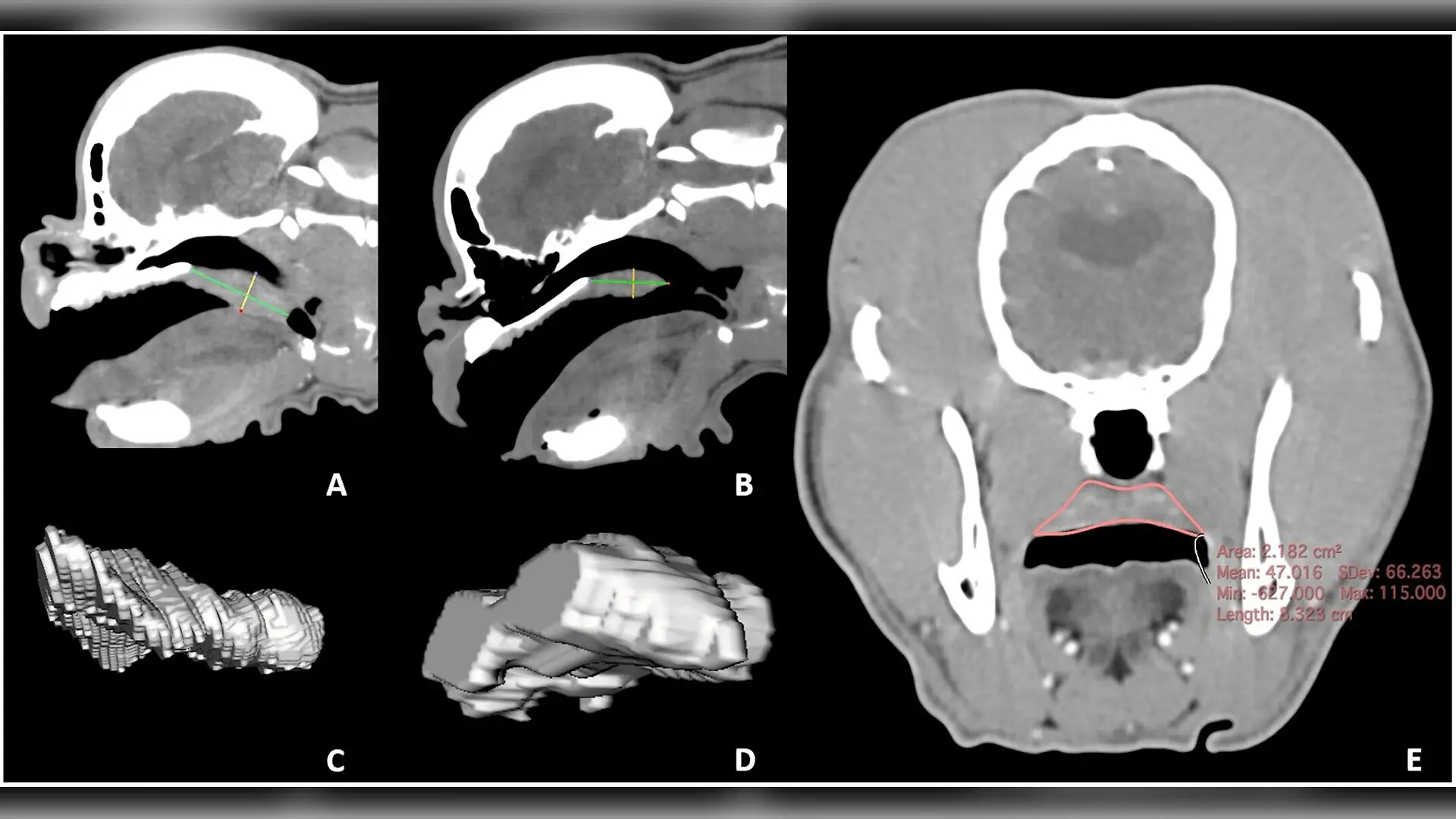
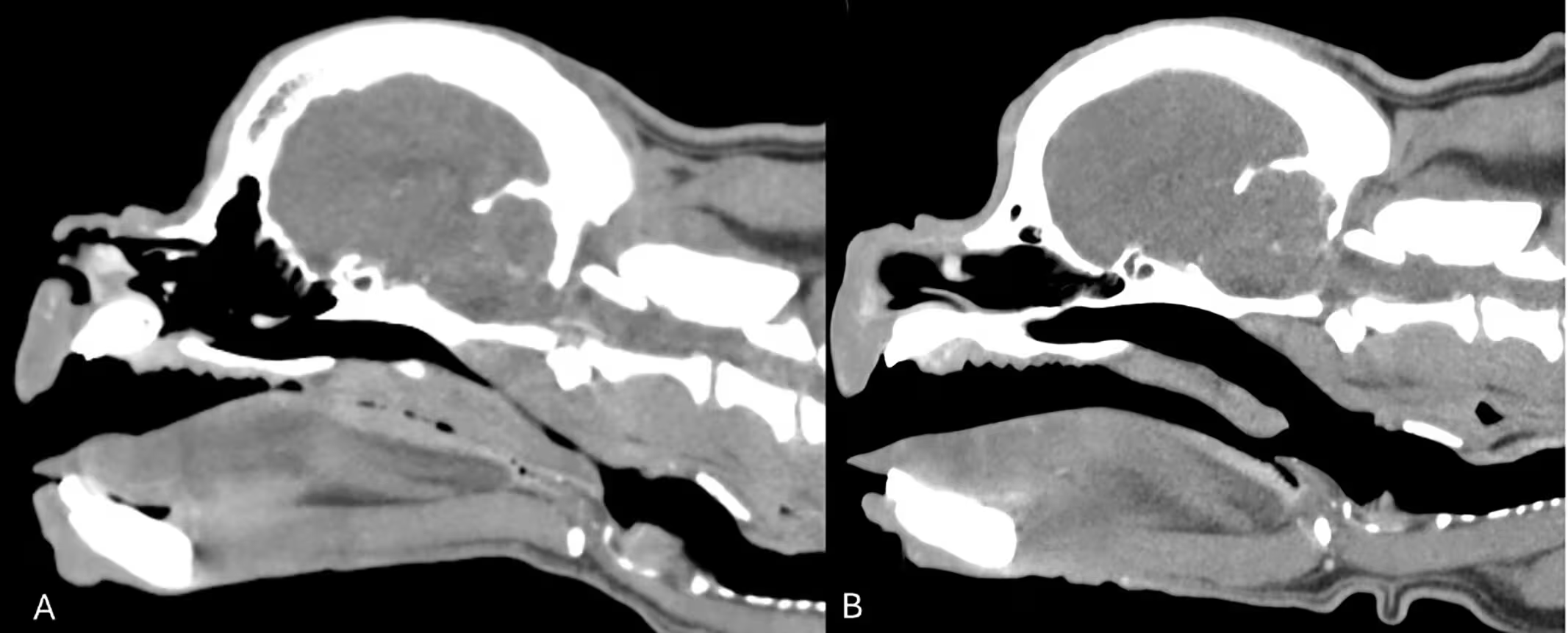
Computed tomography scans of the head, neck, and thorax were performed under conscious sedation before the operations and again four weeks afterward. The detailed imaging allowed veterinary radiologists to measure changes in palate length, thickness, and total tissue volume with high precision. The findings were published in PLOS One, providing new insight into how different surgical approaches remodel upper airway tissues.
Measuring Palate Length, Volume, and Thickness
Both surgical techniques proved successful at shortening the soft palate and reducing its overall tissue volume. The traditional staphylectomy reduced soft palate length by an average of 0.91 centimeters and volume by 2.81 cubic centimeters. The folded flap palatoplasty achieved similar reductions, shortening the palate by an average of 0.86 centimeters and decreasing volume by 2.54 cubic centimeters.
However, the folded flap technique delivered a distinct advantage when it came to reducing tissue thickness. While the traditional staphylectomy did not produce a statistically significant change in palate thickness, the folded flap procedure reduced mean soft palate thickness by approximately 26 percent, or about 0.30 centimeters. Statistical analysis confirmed that this difference in thinning between the two procedures was significant.
Understanding the Implications for Breathing Recovery
An overly thick soft palate creates a major obstruction in the nasopharynx and can severely restrict airflow even after the excess length is removed. Because flat-faced dogs often develop secondary swelling and tissue thickening from years of generating excessive negative pressure during breathing, addressing thickness as well as length is considered a major surgical benefit.
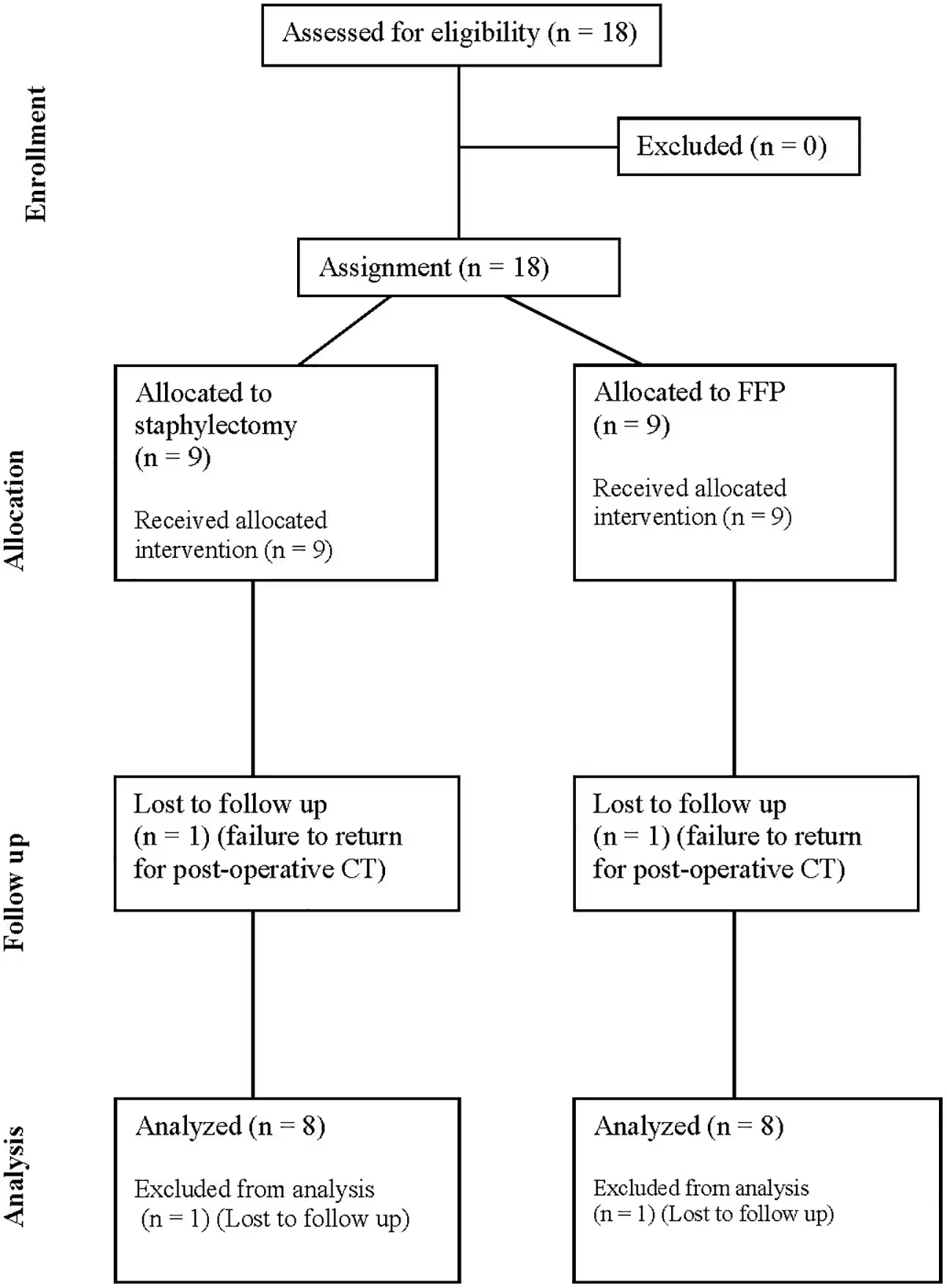
The researchers noted that folded flap palatoplasty is more technically demanding and requires greater surgical precision than a standard staphylectomy. Furthermore, minor complications such as partial incisional dehiscence, which is the splitting or opening of a surgical wound, occurred in two of the folded flap cases where continuous suture patterns were used. Despite these partial openings, the affected dogs still experienced successful palate shortening and showed clinical improvement without needing revision surgery.
What Comes Next for Veterinary Airway Procedures
The findings suggest that veterinary surgeons should evaluate soft palate thickness using advanced imaging before deciding on an operative plan. For dogs with significant tissue thickening alongside elongation, the folded flap palatoplasty offers a clear mechanical advantage over traditional resection. Future investigations with larger patient groups and standardized post-operative monitoring will help further refine surgical choices for pets suffering from severe airway obstruction.
The research was published in PLOS One on November 13, 2026.
This article has been fact checked for accuracy, with information verified against reputable sources. Learn more about us and our editorial process.
Last reviewed on .
Article history
- Latest version
Reference(s)
- Ruzics, Eva. “A comparison of soft palate thickness, length, and volume in bulldogs before and after staphylectomy or folded-flap palatoplasty: A prospective clinical study.” PLOS ONE, vol. 21, no. 11, pp. e0362626, doi: 10.1371/journal.pone.0362626. <https://doi.org/10.1371/journal.pone.0362626>.
Cite this page:
- Posted by Priya Sharma