Paleontologists Unearth Europe’s Best-Preserved 150-Million-Year-Old Stegosaur Skull
Fósil de cráneo de 150 millones de años revela detalles inéditos de dinosaurios acorazados en Europa
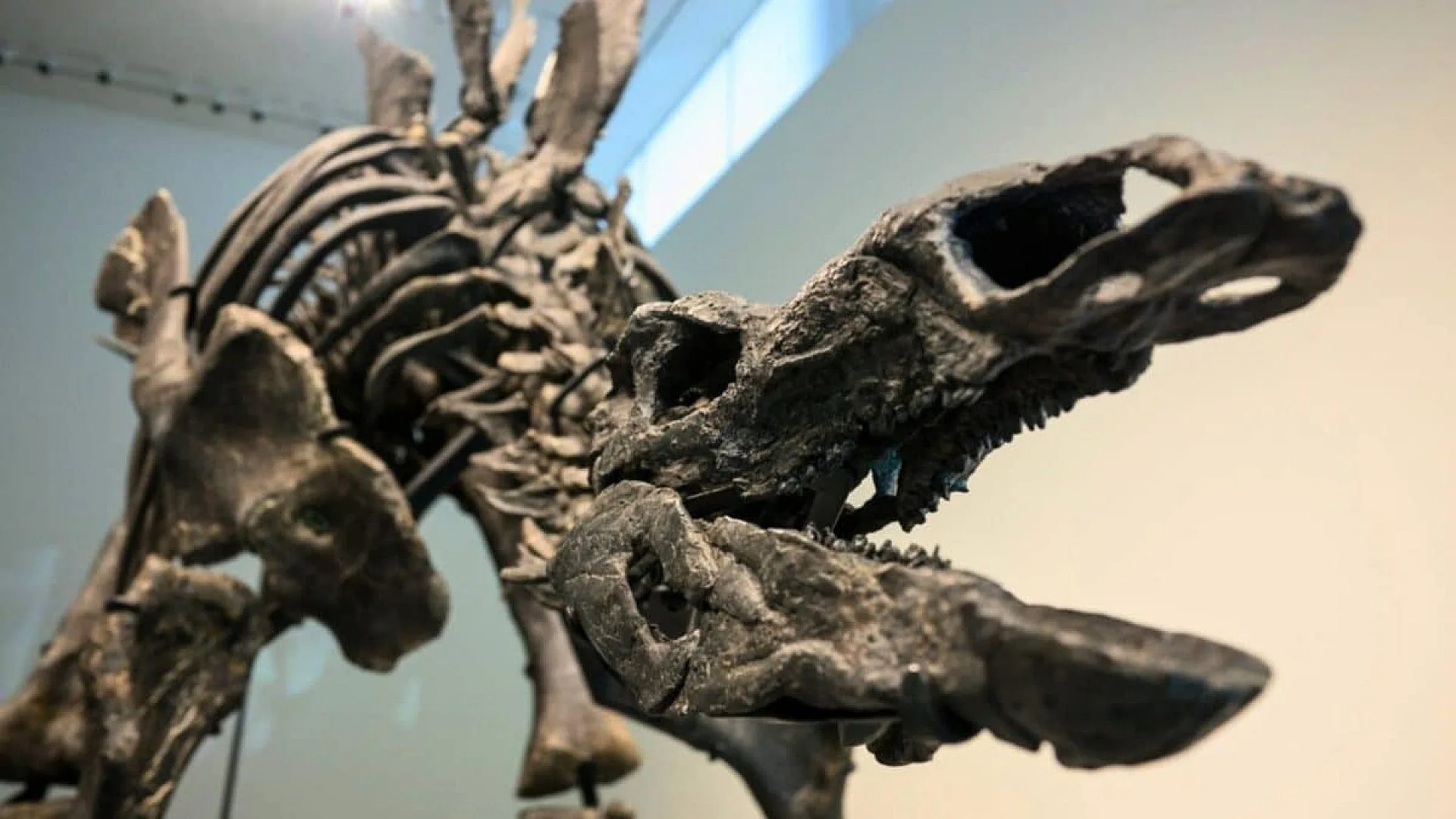
Because the bones that make up a dinosaur’s head are thin and loosely connected, they are among the first to disintegrate after death. Paleontologists therefore often recover only scattered fragments—a piece of snout here, a cheekbone there—providing hints of shape but rarely a complete picture. This problem is especially acute for stegosaurs, the armored herbivores that lived across Europe, Africa and the Americas for tens of millions of years, leaving their skulls as one of the most elusive parts of the fossil record.
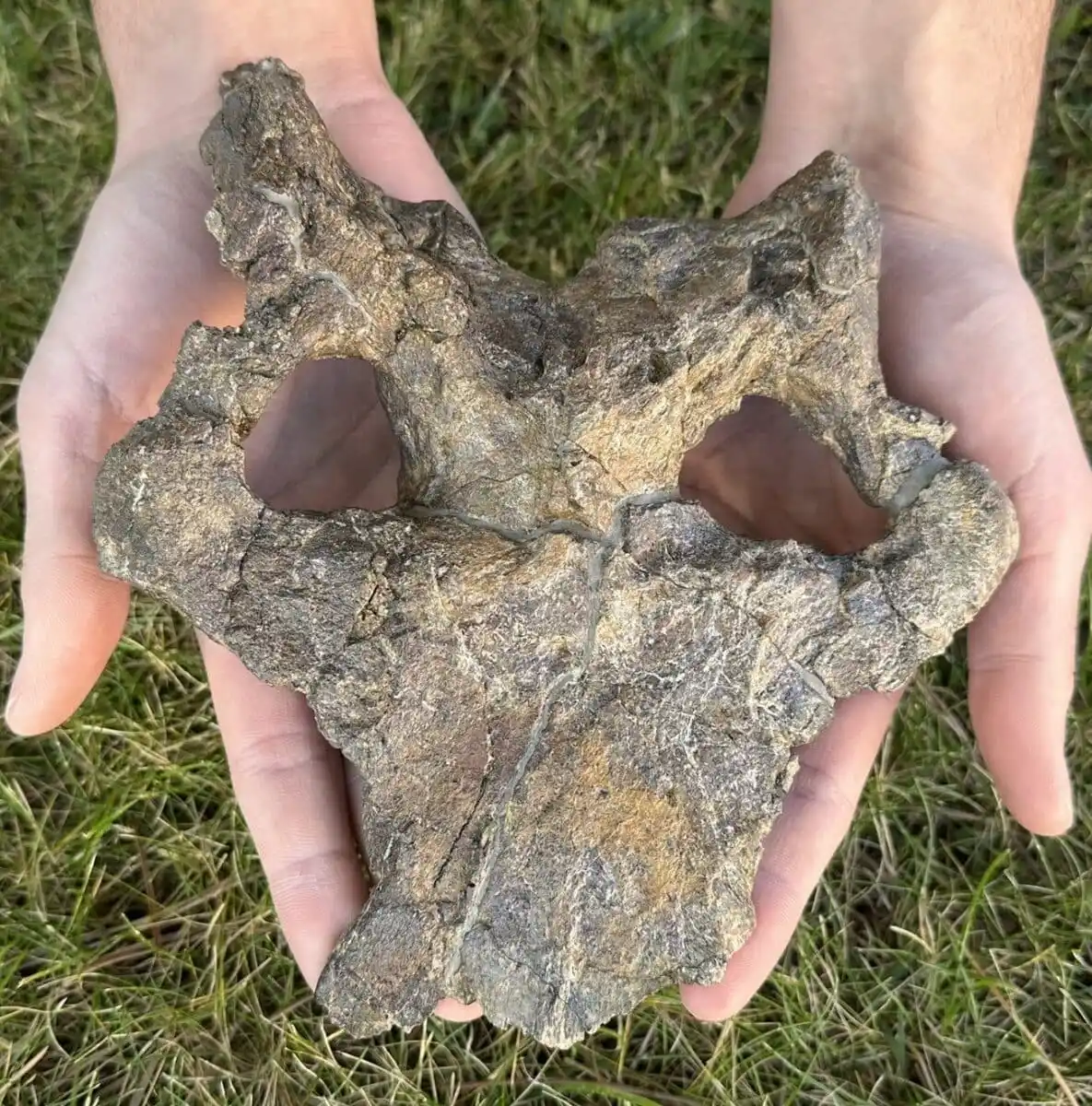
A breakthrough emerged in the tiny town of Riodeva, Teruel, Spain, where workers at the “Están de Colón” quarry uncovered a partial stegosaur skull embedded in Late Jurassic sediments. Unlike earlier finds, this specimen retained an intact snout profile, a discernible braincase, and detailed facial bones, allowing scientists to study the animal’s head directly rather than infer its structure.
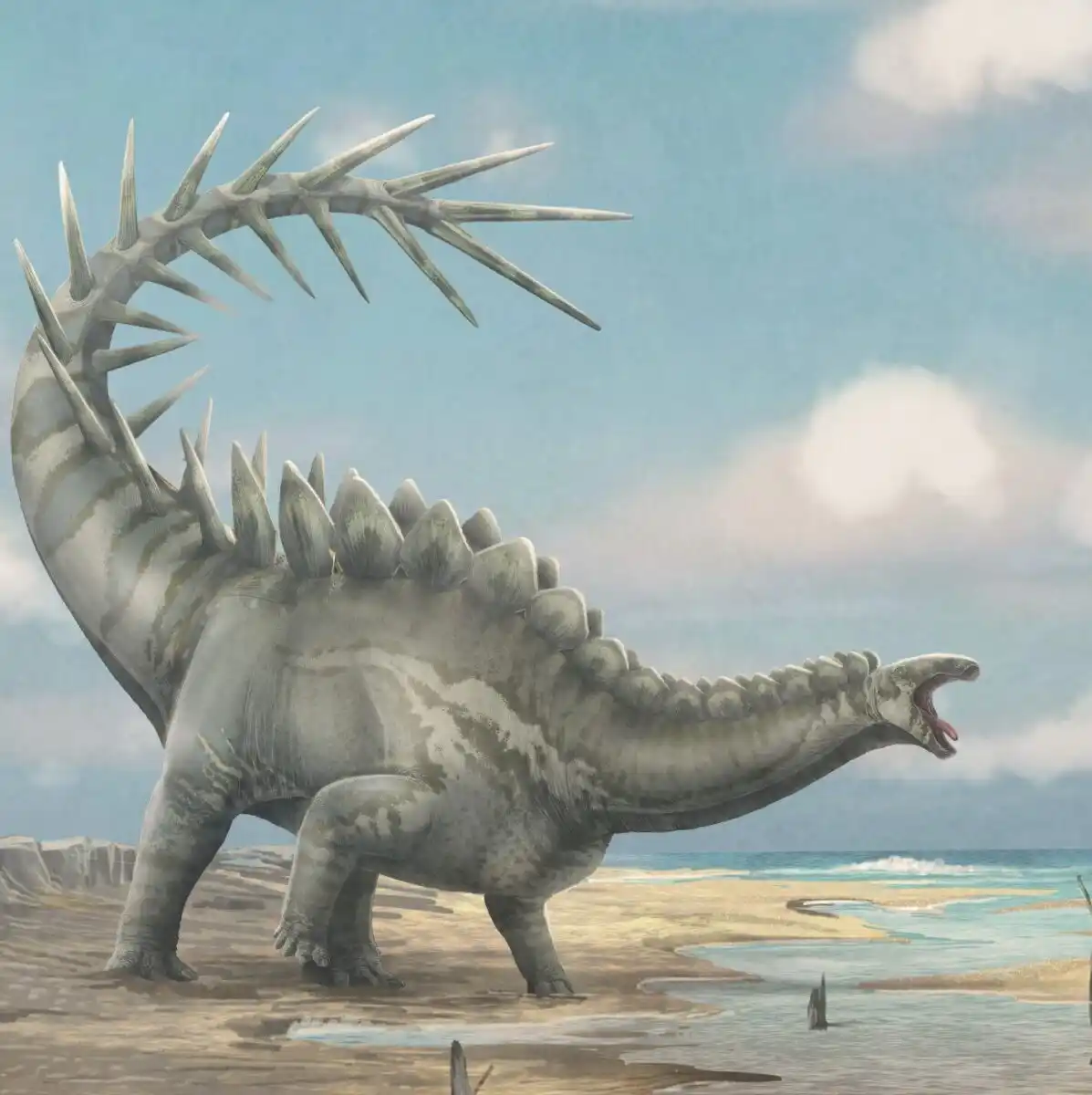
The skull belongs to Dacentrurus armatus, the taxon that has anchored the European stegosaur record since its first description in 1875. Researchers from the Fundación Conjunto Paleontológico de Teruel‑Dinópolis, who led the excavation, reported that this is the most complete stegosaurian cranium recovered on the continent. Their study appeared in the peer‑reviewed journal Vertebrate Zoology, exactly 150 years after the species entered the scientific literature.
A landmark stegosaur skull fills a 150‑year gap
Beyond its rarity, the Riodeva skull provides a wealth of anatomical detail. Detailed examination revealed a previously unknown autapomorphy—a unique feature that sets Dacentrurus armatus apart from all other stegosaurians. Although the authors did not disclose the exact characteristic in the press release, its discovery was sufficient to revise the species’ formal diagnosis, the set of traits paleontologists use to assign new fossils to the correct taxon.
A robust species diagnosis is critical because it underpins the evolutionary trees that map dinosaur relationships. An incomplete or inaccurate definition can cascade errors through subsequent analyses. For a species studied for a century and a half, the Riodeva cranium offers the first chance to test and refine its anatomical baseline against exceptionally preserved material.
“The detailed study of this exceptional fossil has allowed us to reveal previously unknown aspects of the anatomy of Dacentrurus armatus,” said lead author Sergio Sánchez‑Fenollosa in a statement accompanying the publication via EurekAlert. The skull originates from the Villar del Arzobispo Formation, a layer deposited roughly 150 million years ago during the Late Jurassic, and was recovered by teams affiliated with Fundación Dinópolis.
Revising the stegosaur family tree
Armed with the new cranial data, the team assembled an updated stegosaurian character matrix and performed a phylogenetic analysis using Maximum Parsimony, a standard method for inferring evolutionary relationships from morphological traits. The results challenged a recent proposal to merge the North American genus Stegosaurus with the Chinese genus Wuerhosaurus into a single taxon. According to the new analysis, the two remain distinct lineages, a conclusion that could overturn a classification some researchers have treated as settled.
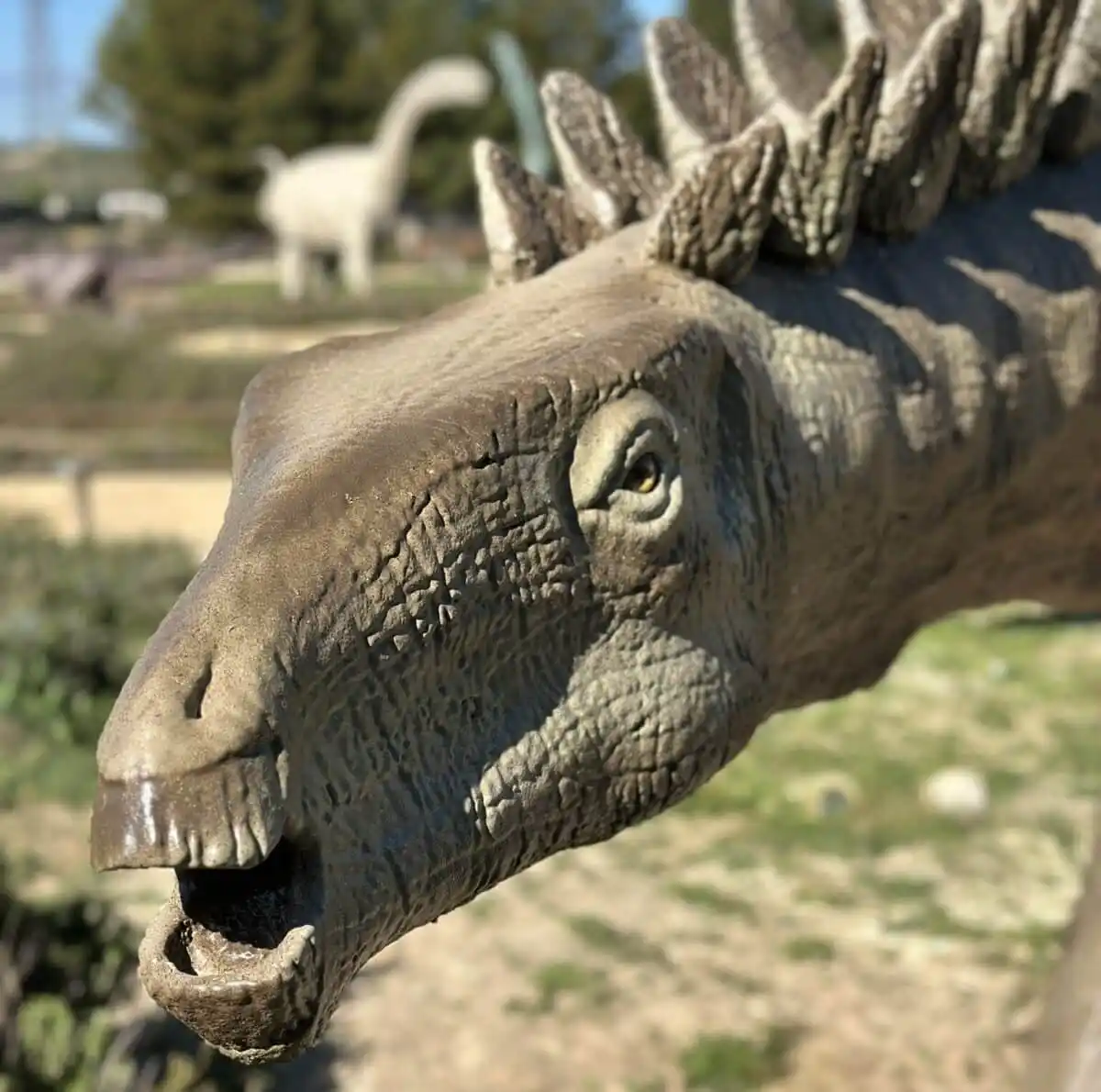
The analysis also introduced a new clade named Neostegosauria, encompassing medium‑to‑large stegosaurians that dispersed across Africa and Europe in the Middle and Late Jurassic, reached North America in the Late Jurassic, and extended into Asia during the early Cretaceous. Within this framework, the researchers placed Isaberrysaura mollensis firmly inside Huayangosauridae as a confirmed stegosaur, and for the first time evaluated Mongolostegus exspectabilis using a comprehensive stegosaurian phylogenetic model.
These findings imply that a lineage of early stegosaurids persisted in Asia longer than previously recognized, pushing the known temporal range of the group into the late Early Cretaceous.
Future discoveries at the Riodeva quarry
While the skull dominates headlines, the “Están de Colón” site continues to yield additional material. Researchers have identified more postcranial bones belonging to the same adult individual, and, remarkably, juvenile specimens of Dacentrurus armatus from the same horizon.
Finding both adult and juvenile remains of a single stegosaur species at one locality is rare and offers a valuable window into ontogenetic development. Comparing growth stages from the same population helps separate age‑related variation from genuine species‑level differences—a persistent source of taxonomic confusion when juvenile fossils are misidentified as distinct adult taxa.
If the ongoing analysis confirms these interpretations, the Riodeva assemblage could provide the first comprehensive developmental series for a European stegosaur, enriching our understanding of how these iconic dinosaurs changed as they matured. Further papers detailing the remaining material are expected as the team completes its study.
This article has been fact checked for accuracy, with information verified against reputable sources. Learn more about us and our editorial process.
Last reviewed on .
Article history
- Latest version
Reference(s)
- Sánchez-Fenollosa, Sergio. “New insights into the phylogeny and skull evolution of stegosaurian dinosaurs: An extraordinary cranium from the European Late Jurassic (Dinosauria: Stegosauria).”, vol. 75, May 26, 2025, pp. 165-189. Senckenberg Gesellschaft für Naturforschung, doi: PropertyValue. <https://vertebrate-zoology.arphahub.com/article/146618/>.
- <https://www.eurekalert.org/news-releases/1085441>.
Cite this page:
- Posted by Hassan Raza