The Way Young Fruit Bats Grow Up Can Shape How Boldly They Explore the Wild
A new study finds that fruit bats raised in richer early environments spend more time foraging, fly farther, and explore larger areas after release, regardless of their original personality traits.
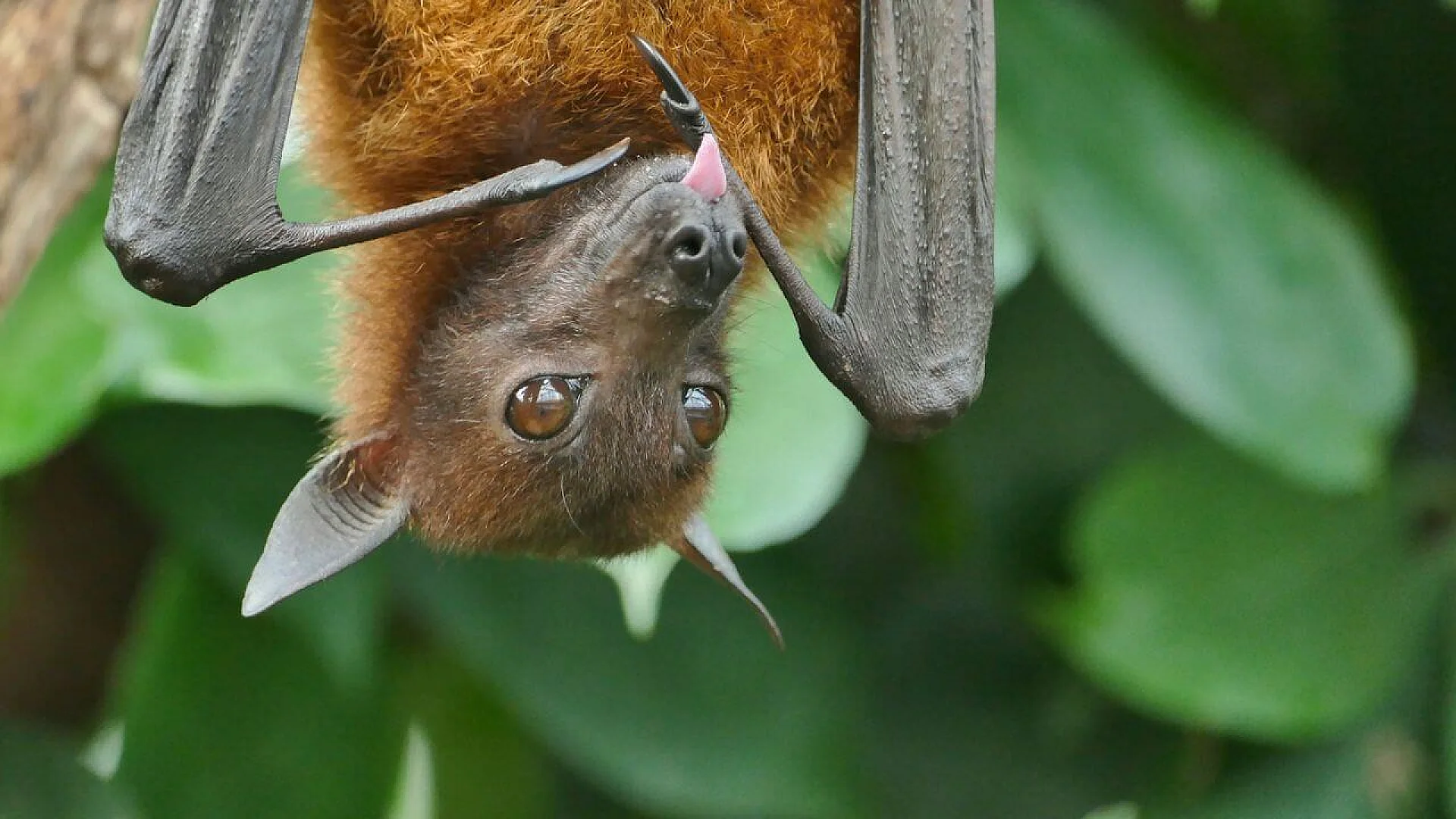
Spend enough time watching animals and one thing becomes clear. They are not all alike.
Some move quickly into new spaces. Others hesitate. Some seem curious. Others prefer to stay where things feel familiar. Scientists often call these steady behavior patterns “personalities.”
But where do these personalities come from?
Are they mostly inherited, shaped by genes from the beginning? Or can early experiences quietly shift how an animal behaves later in life?
A new study published in eLife takes a careful look at that question using Egyptian fruit bats. The results suggest that what young bats experience early in life can have long-lasting effects, even after they are released into the wild.
In fact, early environment appeared to matter more than the bats’ original personality traits.
A Study That Followed Bats From Indoors to the Wild
The research was conducted by scientists at Tel Aviv University, including behavioral ecologist Yossi Yovel and colleagues.
They worked with 39 juvenile Egyptian fruit bats. At the time of the first tests, the bats were between 55 and 281 days old. So some were still quite young, while others were closer to adulthood.
Before changing anything about their living conditions, the researchers first wanted to understand each bat’s starting personality.
That meant controlled behavioral testing.
Testing Boldness Inside a Flight Tent
Each bat was placed alone overnight inside a large flight tent measuring 3.9 by 2.7 by 1.9 meters. On the floor were six identical black plastic boxes.
Inside each box was fruit and mango nectar. Specifically, 25 pieces of fruit weighing 150 grams, plus 50 milliliters of nectar. The boxes were designed so that no bat would run out of food in a single container. They could explore freely.
Infrared cameras recorded every movement.
From these trials, the scientists measured three main traits.
First was boldness. This was calculated as the proportion of times a bat entered the boxes.
Second was exploration, defined as how many different boxes the bat chose to enter.
Third was activity, measured as the number of actions per hour.
Each bat completed two baseline trials. The researchers wanted to see whether behavior was consistent from one night to the next.
It was. Bats that were bold on the first night tended to be bold on the second. The same pattern appeared for exploration and activity. This showed that individual differences were real and not just random fluctuations.
So at least in the short term, bat personalities seemed stable.
Growing Up in Different Conditions
After establishing baseline behavior, the researchers divided the bats into two groups.
One group lived in what scientists called an enriched environment. This space included more physical and social stimulation. There were more opportunities for interaction and varied experiences.
The other group lived in an impoverished environment, with fewer stimuli and less complexity.
The bats remained in these conditions for at least two months.
After that period, they were tested again in the same flight tent setup.
Interestingly, when looking only at indoor personality scores, the researchers did not find strong differences between enriched and impoverished groups. On the surface, enrichment did not appear to dramatically change boldness or exploration inside the tent.
But the real test was still ahead.
Release Into the Open World
Eventually, the bats were moved to an open colony where they could freely fly in and out. After an adjustment period, they were released into the wild.
Nineteen of the bats were equipped with GPS tracking devices. These devices recorded their movements during nightly foraging trips.
Now the researchers could measure real-world behavior.
They focused on three main outcomes.
How long did each bat spend outside the roost each night?
How far did it fly from the colony?
And how much total area did it explore?
This is where the differences became clear.
Enriched Bats Traveled Farther and Stayed Out Longer
Bats raised in enriched environments spent more time foraging each night. On average, they remained outside for about 3.5 hours. Bats from impoverished environments averaged about 2.8 hours.
The enriched bats also flew farther. Their average maximum distance from the colony was about 1.3 kilometers. In comparison, impoverished bats reached about 0.8 kilometers.
The explored area was larger too. Enriched bats covered around 7.82 square kilometers, while impoverished bats covered about 3.39 square kilometers.
Even when researchers analyzed a standardized time window of 15 to 20 nights after release, the pattern remained.
The enriched bats consistently spent more time outside, traveled farther, and explored broader areas.
In other words, early-life environment was linked to meaningful differences in how these animals used the landscape.
Did Original Personality Matter?
To understand whether these outcomes were driven by early experience or innate predisposition, the researchers ran statistical analyses that included both factors.
They used the very first baseline personality test as a measure of each bat’s original tendencies. If personality was the main driver, those early scores should predict later outdoor behavior.
They did not.
Initial boldness and combined personality measures from the first trial were not significant predictors of time spent outside, distance flown, or area explored.
In contrast, early environmental condition showed a strong association with all three measures.
This suggests that how the bats were raised had a larger effect on adult foraging behavior than their original personality.
That is a notable finding.
Indoor Behavior and Outdoor Reality
The researchers also examined whether behavior measured indoors after release correlated with outdoor tracking data.
They compared personality scores from a post-release indoor trial with the bats’ average movement patterns in the wild.
Some correlations were observed. Traits like boldness and exploration inside the tent were reflected, to some degree, in outdoor activity.
Still, the dominant factor remained early-life environment.
This strengthens the conclusion that developmental conditions played a major role.
Why Early Experience Might Matter So Much
Enriched environments often provide more sensory input, more movement, and more social interaction. For young animals, this can mean more learning opportunities.
In the case of fruit bats, learning how to navigate, locate food, and respond to complex surroundings may be especially important.
Egyptian fruit bats feed on patchy food sources such as fruit trees. Finding these resources in a large landscape requires exploration.
A bat that is comfortable traveling farther and staying out longer may discover more feeding sites.
At the same time, greater exploration can also carry risks. Flying longer distances might increase exposure to predators or unfamiliar terrain.
This study did not measure survival or reproductive success, so it cannot determine whether enriched bats ultimately perform better in the long term.
What it does show is that early environment can shape real-world movement patterns months later.
Personality Is Not Fixed at Birth
One important takeaway from this research is that personality is not entirely locked in from the start.
The bats showed consistent behavior across short time periods. That suggests stable individual differences exist.
But those differences did not fully determine how the animals behaved in the wild.
Experience modified the outcome.
This fits with a broader understanding in behavioral ecology. Genes matter, but development matters too. The environment in which an animal grows can adjust, amplify, or redirect early tendencies.
In these fruit bats, enrichment during youth led to broader exploration later on.
A Rare Combination of Lab and Field
Studies that follow the same individuals from controlled experiments into the wild are not easy to conduct.
Tracking animals after release requires technology, time, and careful planning. In this case, GPS devices allowed researchers to measure precise distances and areas explored.
The sample size for outdoor tracking was 19 bats. That is modest, but sufficient to detect clear differences between groups.
Because the study combined indoor personality testing with real-world movement data, it provides a strong link between developmental conditions and adult behavior.
That combination makes the findings particularly valuable.
What Remains Unknown
There are still open questions.
The study focused on one species. Other animals may respond differently to early enrichment.
The enriched and impoverished conditions were defined within captivity. Wild environments are more complex than either setup.
It is also unclear how long these behavioral differences persist. The bats were tracked for weeks to months after release, but not over multiple years.
Future work could explore whether early enrichment affects social status, mating success, or long-term survival.
For now, the evidence supports a clear conclusion.
Early Life Leaves a Mark
The way young Egyptian fruit bats grow up influences how they move through the world later.
Those raised in enriched environments flew farther, explored more territory, and spent more time foraging after release.
And importantly, these differences were not explained by their original personality scores.
Experience, especially early experience, left a measurable mark.
It is a quiet but meaningful reminder that development shapes behavior. Even in animals that appear consistent in their tendencies, the conditions of early life can open or narrow the paths they choose later on.
The research was published in eLife on November 11, 2025.
This content has been reviewed by subject-matter experts to ensure scientific accuracy. Learn more about us and our editorial process.
Last reviewed on .
Article history
- Latest version
Reference(s)
- Rachum, Adi., et al. “Early experience affects foraging behavior of wild fruit bats more than their original behavioral predispositions.” eLife, vol. 14, 11 November 2025 eLife Sciences Publications, Ltd, doi: 10.7554/eLife.103220.3. <https://doi.org/10.7554/eLife.103220.3>.
Cite this page:
- Posted by Zara Tariq