Scientists Find a New Way to Make a Failing Mite Treatment Work Again
Blocking tiny detox pumps inside Varroa mites can restore the power of amitraz, one of the last major chemicals used to protect honeybee colonies.
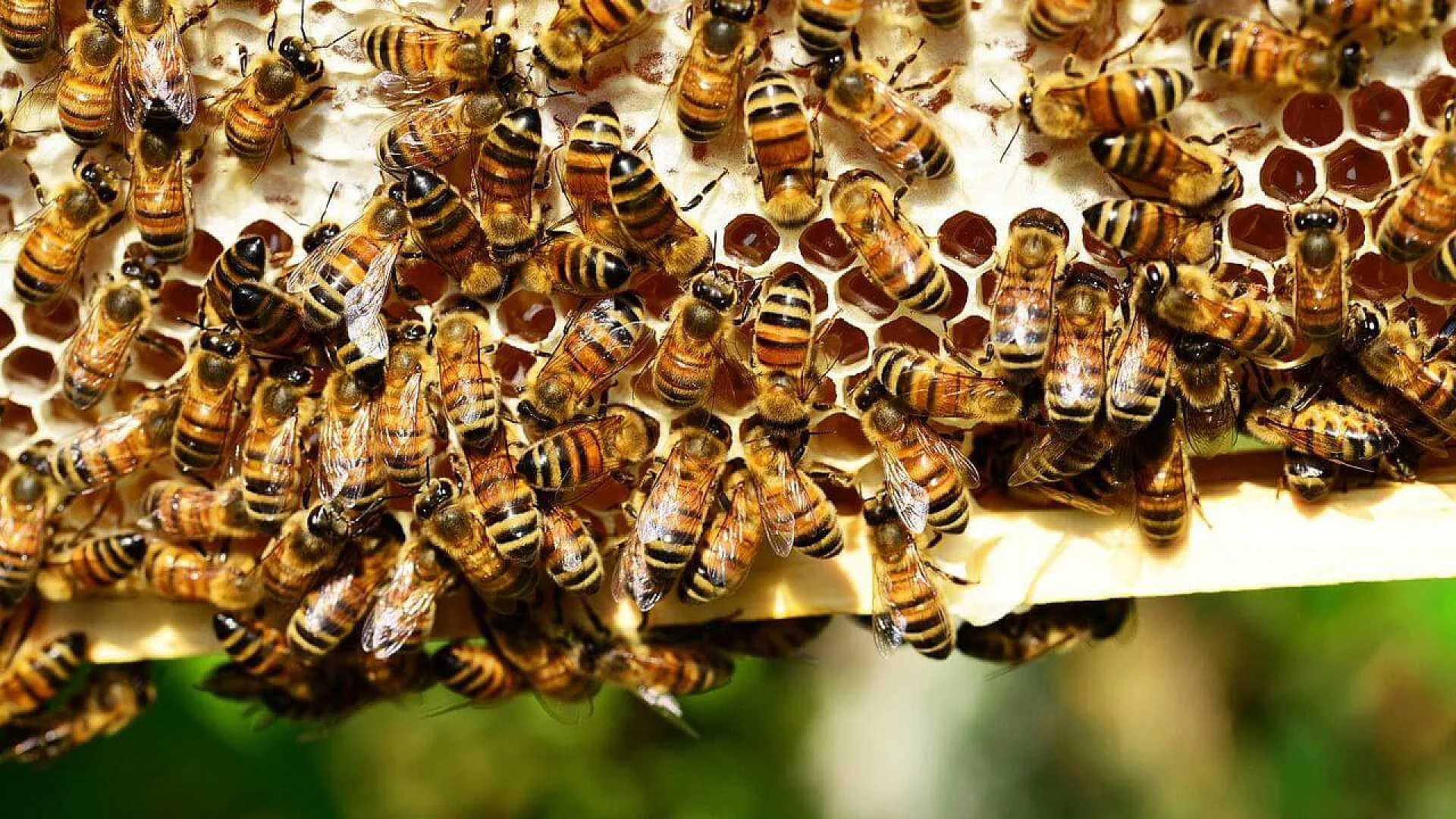
Honeybees are small, but their role in agriculture is enormous. They pollinate crops, support ecosystems, and quietly hold up a large part of global food production.
Yet many colonies are under constant pressure from a parasitic mite called Varroa destructor. The mite feeds on developing and adult bees, weakens their immune systems, and spreads viruses. Over time, untreated infestations can collapse entire colonies.
For years, beekeepers have depended on a short list of chemical treatments to keep mite numbers under control. One of the most widely used is amitraz.
Amitraz has been considered one of the last strong lines of defense. But in many regions, its effectiveness has started to drop. Mites are surviving treatments that once worked reliably.
That trend has worried researchers and beekeepers alike. If amitraz fails, options become limited.
A new study now offers a possible explanation for how these mites are surviving. It also suggests a way to make the chemical work again.
Looking Inside the Mite
Resistance does not appear out of nowhere. In insects and mites, it often develops through genetic and physiological changes that help them survive exposure to toxins.
The new research focused on a specific group of proteins called ABC transporters. The name stands for “ATP-binding cassette” transporters.
In simple terms, these proteins act like microscopic pumps. They sit in cell membranes and push foreign substances out of cells. Many organisms, including humans, have them.
In pests, ABC transporters can help remove insecticides from cells before the chemicals cause lethal damage. This process is known as efflux.
If a mite can pump out amitraz quickly enough, the chemical may never reach toxic levels inside its cells.
The researchers wanted to know whether these pumps were playing a role in amitraz resistance in Varroa destructor.
Testing Resistant and Susceptible Mites
To investigate, scientists worked with mite populations that showed different responses to amitraz. Some were considered susceptible, meaning the chemical still worked well. Others were resistant, meaning survival rates were higher after treatment.
The team measured how toxic amitraz was to both groups. As expected, resistant mites survived doses that killed susceptible ones.
Then they introduced compounds known to inhibit ABC transporters. These inhibitors interfere with the efflux pumps and reduce their ability to remove toxins from cells.
The idea was straightforward. If efflux pumps help mites survive, then blocking those pumps should make amitraz more toxic again.
That is exactly what the researchers observed.
When ABC transporters were inhibited, amitraz toxicity increased. This effect was especially clear in resistant mite populations.
In other words, once the detox pumps were slowed down, the chemical regained much of its strength.
A Clear Change in Toxicity
The study carefully quantified how much toxicity changed under different conditions.
In resistant mites, the presence of ABC transporter inhibitors significantly reduced survival when amitraz was applied. The difference was not subtle.
Mites that had previously tolerated treatment became far more vulnerable when their efflux systems were disrupted.
This suggests that resistance in at least some Varroa populations is not only due to changes at the chemical’s target site. It also involves enhanced detoxification mechanisms.
That distinction matters.
If resistance were caused only by changes in the molecular target of amitraz, reversing it would be much harder. But if detoxification systems are involved, there may be ways to interfere with them.
What Are ABC Transporters, Really?
At a basic level, ABC transporters are proteins that use energy from ATP, a molecule that powers many cellular processes.
They bind to unwanted compounds inside the cell and move them across the membrane to the outside. This protects the cell from damage.
In many pest species, overexpression of these transporters has been linked to resistance against insecticides and acaricides, which are chemicals that kill mites and ticks.
The new findings suggest Varroa destructor may be using the same strategy.
By increasing the activity or number of these transporters, resistant mites can effectively reduce the concentration of amitraz inside their bodies.
When that internal concentration drops below a lethal threshold, the mite survives.
Why This Matters for Beekeeping
For beekeepers, resistance is not just a laboratory concept. It shows up in the field as persistent infestations.
Colonies that receive treatment may still show high mite counts weeks later. Repeated applications increase costs and may add stress to bees.
Amitraz has remained in use partly because alternatives are limited and resistance to other chemicals has already been documented.
If amitraz also becomes unreliable, management becomes more difficult.
The study does not suggest that beekeepers should start mixing amitraz with transporter inhibitors immediately. That would require regulatory approval and safety testing.
However, the findings point to a new direction for research and product development.
If formulations can be designed to include safe inhibitors that target mite detox systems, they may restore the effectiveness of existing treatments.
A Step Toward Smarter Pest Control
One of the important aspects of the study is that it does not rely on creating entirely new chemicals.
Developing new pesticides is expensive, time-consuming, and subject to strict regulation. It can take many years before a new compound reaches the market.
By contrast, improving the performance of an existing treatment may be faster and more practical.
This strategy, sometimes called synergism, involves combining a pesticide with another compound that enhances its effect.
In this case, the enhancement comes from blocking the mite’s defense system rather than increasing the dose of amitraz itself.
That distinction is important because higher doses can increase risks to bees and leave more residues in hive products.
If efficacy can be improved without raising concentrations, it may offer a safer path forward.
Limits and Open Questions
The study was conducted under controlled experimental conditions. That allows precise measurement of toxicity and survival.
However, field conditions are more complex.
Temperature, humidity, colony strength, and repeated exposure patterns can all influence treatment outcomes.
It is also not yet clear whether all resistant Varroa populations rely equally on ABC transporters. Resistance can arise through multiple mechanisms.
Some mites may have changes in the molecular target of amitraz. Others may rely more heavily on detoxification pathways.
Future research will need to map how widespread transporter-based resistance is across different regions.
Another important question is safety.
Any inhibitor used in combination with amitraz must not harm bees, contaminate honey, or disrupt colony health.
Careful evaluation would be required before practical application.
A Broader Pattern in Resistance Biology
The idea that detoxification systems contribute to pesticide resistance is not new. It has been documented in insects such as mosquitoes and agricultural pests.
What makes this study important is its focus on Varroa destructor, one of the most damaging parasites affecting managed honeybees worldwide.
By identifying a specific physiological mechanism linked to amitraz resistance, the research provides a clearer picture of how this mite adapts to chemical pressure.
It also reinforces a broader lesson in pest management.
Relying on a single chemical repeatedly creates strong selection pressure. Over time, individuals with protective traits survive and reproduce.
Understanding the biology behind those traits allows more targeted interventions.
Where the Research Leads Next
The next logical step is to explore which specific ABC transporter genes are involved and how their expression differs between resistant and susceptible mites.
Molecular studies could reveal whether certain transporter families are upregulated in resistant populations.
That information may help in designing more precise inhibitors.
Researchers may also investigate whether combining amitraz with other control methods, such as mechanical or biological strategies, reduces the speed at which resistance develops.
Integrated pest management approaches often work best when multiple tactics are used together.
In the long run, maintaining honeybee health will likely require a combination of chemical, genetic, and management solutions.
A Measured but Meaningful Advance
The study does not claim to solve the Varroa problem.
But it does clarify one piece of the puzzle.
By showing that ABC transporters contribute to amitraz resistance and that inhibiting them increases toxicity, the researchers have identified a functional mechanism behind treatment failure.
That knowledge creates options.
It shifts the conversation from “amitraz is failing” to “why is it failing, and how can we counteract that process?”
For beekeepers and scientists, that shift matters.
Resistance may be inevitable under strong chemical pressure. But understanding its biology can slow its spread and extend the usefulness of existing tools.
In the case of Varroa destructor, even small improvements in control can translate into healthier colonies and more stable pollination systems.
And for a creature as small as a mite, a microscopic pump may turn out to be a surprisingly powerful target.
The research was published in Journal of Apicultural Research on February 16, 2026.
This content has been reviewed by subject-matter experts to ensure scientific accuracy. Learn more about us and our editorial process.
Last reviewed on .
Article history
- Latest version
Reference(s)
- Fine, Julia D.., et al. “Amitraz toxicity in resistant Varroa mites can be increased by inhibiting ABC efflux transporters.” Journal of Apicultural Research, 16 February 2026 Taylor & Francis, doi: 10.1080/00218839.2026.2620209. <https://doi.org/10.1080/00218839.2026.2620209>.
Cite this page:
- Posted by Hassan Raza