Scientists Just Found a Tiny Creature in the Great Salt Lake, It May Have Been There Since the Age of Dinosaurs
Une créature unique découverte dans les eaux salées du Grand Lac Salé intrigue les scientifiques
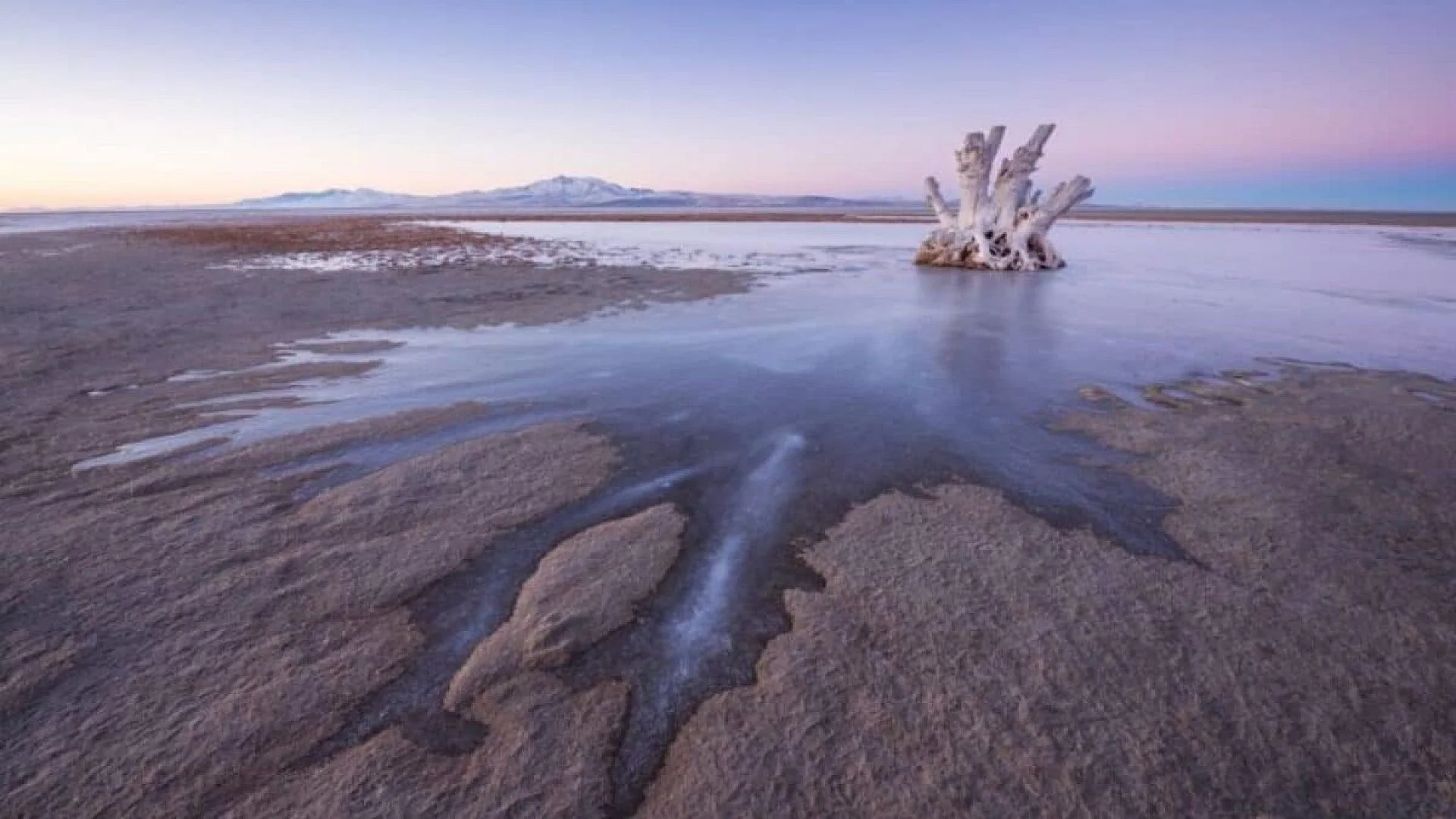
Researchers from the University of Utah have unveiled a previously unknown microscopic worm living in the Great Salt Lake. The newly described species, Diplolaimelloides woaabi, appears to be endemic to the lake, offering a rare window into life thriving under some of North America’s most extreme saline conditions.
A Microscopic Resident of an Extreme Habitat
The organism measures under 1.5 millimetres and was located inside microbialite formations—rocky structures built by colonies of microorganisms on the lakebed. Until now, the lake’s brine ecosystem was thought to support mainly brine shrimp and brine flies, making this nematode a surprising addition to its biodiversity.
From Fieldwork to Formal Description
The worm first came to scientific attention in 2022 when Julie Jung was collecting sediment samples as a postdoctoral researcher in the lab of Michael Werner. Although nematodes are among the most abundant animal groups on Earth—over 250 000 species have been catalogued—none had been confirmed from the Great Salt Lake before this study.
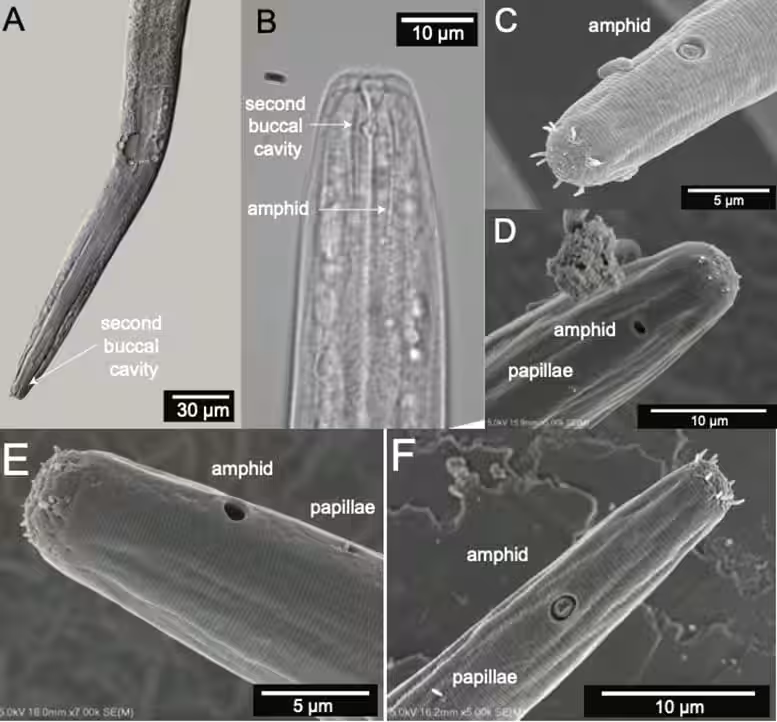
The team relied on DNA sequencing and high‑resolution microscopy to compare the collected specimens with known taxa. Their analysis highlighted several distinctive traits: eyespots, fused lips, a funnel‑shaped oral cavity, short sensory bristles, and male reproductive structures not seen in related species.
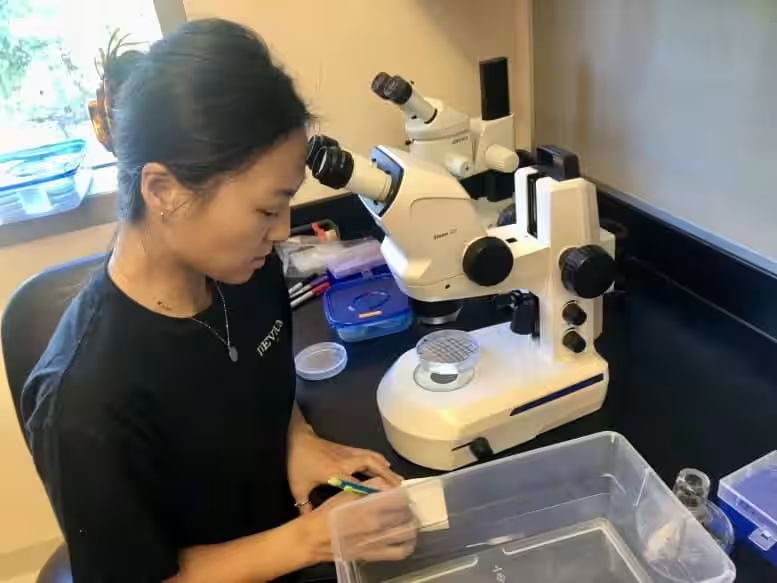
“We thought that this was probably a new species of nematode from the beginning, but it took three years of additional work to taxonomically confirm that suspicion,” Jung said.
The species was christened Diplolaimelloides woaabi in honor of the Northwestern Band of the Shoshone Nation. Michael Werner consulted tribal elders, who suggested the term “Wo’aabi,” meaning “worm.”
Tracing the Worm’s Arrival
One puzzling aspect of the discovery is how a member of this genus, typically associated with coastal or brackish waters, ended up in a landlocked lake perched about 4,200 feet above sea level and roughly 800 miles from the nearest ocean. Byron Adams of Brigham Young University proposes that ancient geological events may hold the answer. During the Cretaceous, the Western Interior Seaway flooded large portions of North America, potentially allowing ancestors of the worm to colonize the region.
“With the Colorado Plateau lifting up, you formed a great basin, and these animals were trapped here. That’s something that we have to test out and do more science on, but that’s my go‑to. The null hypothesis is that they’re here because they’ve always kind of been here,” Adams said.
If this scenario proves correct, the nematode may have persisted through major environmental shifts, including the existence of Lake Bonneville—a massive freshwater lake that once covered much of northern Utah. An alternative hypothesis involves migratory birds, which frequently stop at the Great Salt Lake, possibly transporting worm eggs or juveniles from distant saline habitats.
Ecological Insights from a Tiny Predator
Beyond its taxonomic novelty, Diplolaimelloides woaabi may serve as a window into the lake’s microbial ecosystems. The worms were found inhabiting algal mats associated with microbialites, where they appear to feed on bacterial communities. Most individuals occupied the upper few centimeters of these mats rather than deeper layers.
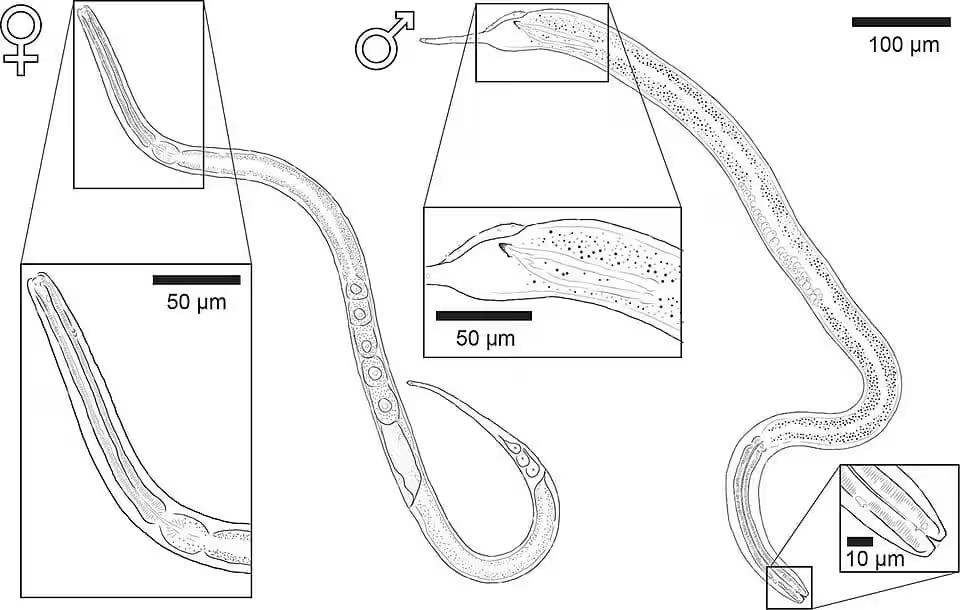
A striking observation emerged from laboratory cultures: while field samples contained fewer than 1 percent males, cultured populations displayed an almost equal sex ratio. This discrepancy suggests that the species’ reproductive dynamics may be highly responsive to environmental conditions.
“That’s another confusing part of the story for us,” Werner said. “When we sample out there on the lake and bring them back in the lab, we get less than 1% males. But when we have cultured them in the lab, the males make up about 50% of the sex ratio.”
Because nematodes are known to react quickly to shifts in water chemistry, the newly described worm could become a valuable bioindicator for monitoring the health of the Great Salt Lake’s fragile ecosystem.
For now, the existence of Diplolaimelloides woaabi confirms that life can persist in some of the continent’s saltiest lakes, even if its evolutionary origins remain an open question.
This article has been fact checked for accuracy, with information verified against reputable sources. Learn more about us and our editorial process.
Last reviewed on .
Article history
- Latest version
Reference(s)
- “Home | Julie Jung.” <https://www.jungjulie.com/>.
- “Discovery.” <https://profiles.faculty.utah.edu/u6029419>.
- “Dr. B.G. (Byron) Adams.”, April 17, 2026 University of Amsterdam <https://www.uva.nl/en/profile/a/d/b.g.adams/b.g.adams.html>.
Cite this page:
- Posted by Hassan Raza