Scientists Finally Know Why Humans Became So Strongly Right-Handed
Humans universally tend to skew right due to hidden underlying factors yet to be fully uncovered
When you reach for a pen, open a jar, or wave goodbye, you most likely rely on your right hand without a second thought. This pattern holds true for roughly ninety percent of people today, as well as for individuals living a thousand, ten thousand, or even a hundred thousand years ago. No other primate shows such a uniform preference; chimpanzees, gorillas and other monkeys may favor one hand individually, but the direction varies widely across their populations.
A new analysis appearing in April 2026 in PLOS Biology offers a comprehensive explanation. Researchers from the University of Oxford and the University of Reading argue that two pivotal shifts in human evolution—adopting bipedal locomotion and the rapid enlargement of the brain—jointly shaped the pronounced right‑hand bias observed in modern humans.
A Global Survey of Over Two Thousand Primates
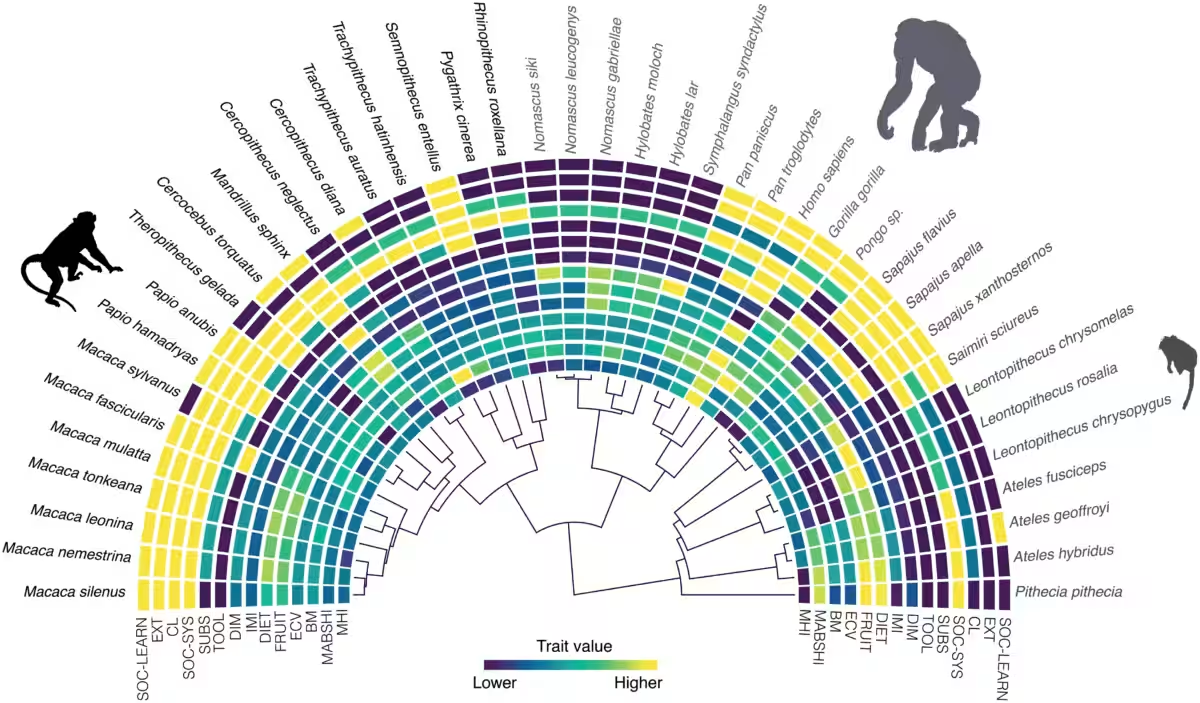
Led by Dr Thomas A. Püschel and Rachel M. Hurwitz, the team assembled data from 2,025 individuals across 41 anthropoid species. Applying Bayesian phylogenetic models, which incorporate evolutionary relationships, they evaluated competing hypotheses—including diet, body size, habitat, tool use, social organization, brain volume, and locomotor style—simultaneously.
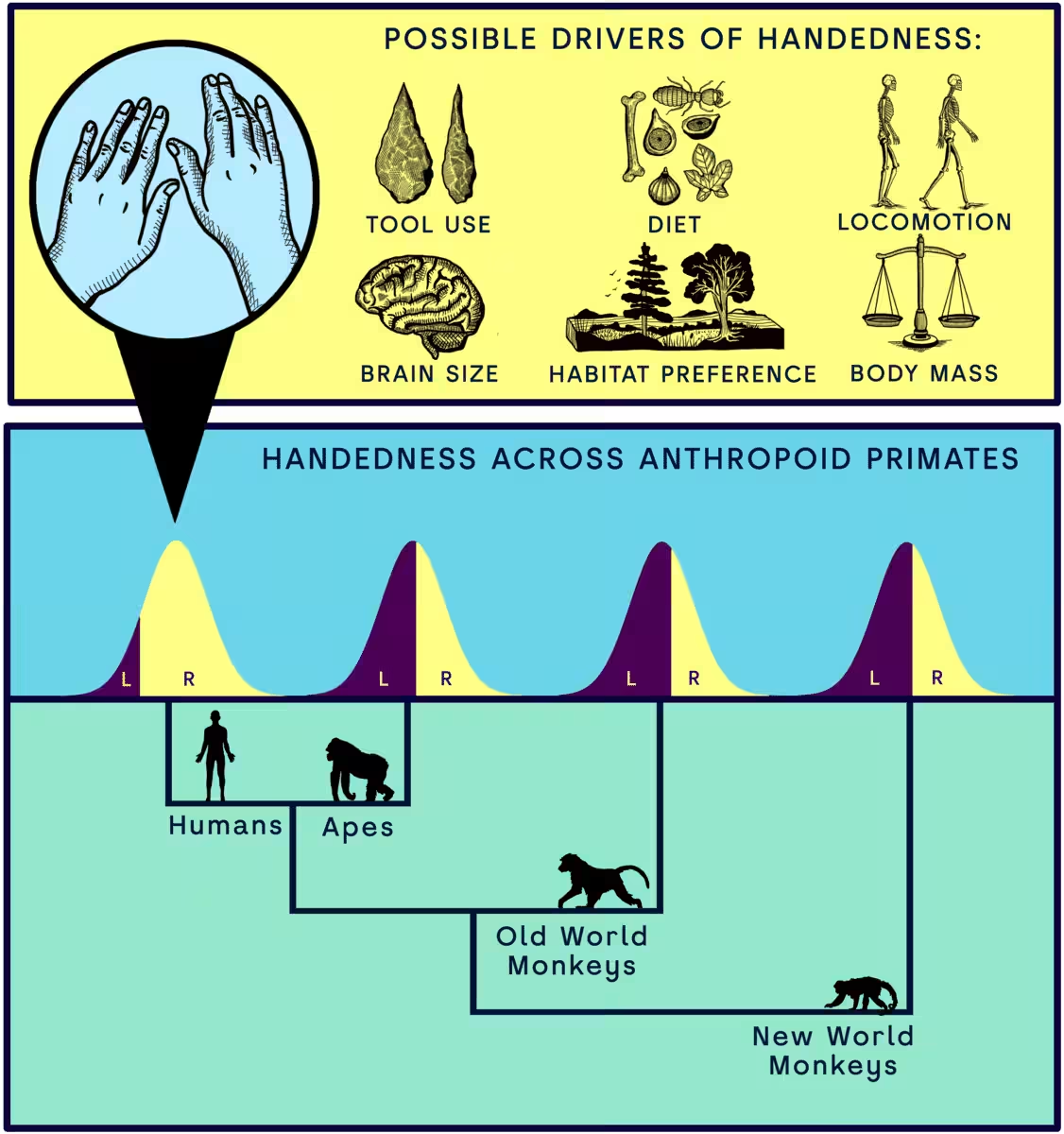
When the models ran without specific trait controls, Homo sapiens immediately emerged as an outlier, displaying both the strongest right‑handedness and the most consistent individual preferences among all species examined. Adding two variables—endocranial volume (a proxy for brain size) and the intermembral index (the ratio of arm to leg length, indicating bipedalism)—removed this anomaly, with the model’s prediction aligning closely with the observed human values.
From Early Hominins to Modern Humans: A Handedness Timeline
The authors projected handedness scores onto extinct hominin taxa, revealing two distinct patterns. First, the overall strength of hand preference—how reliably an individual uses one hand—appears high throughout the hominin lineage, even in early species such as Ardipithecus ramidus and Australopithecus afarensis. These ancestors likely exhibited individual biases comparable to those seen in present‑day great apes.
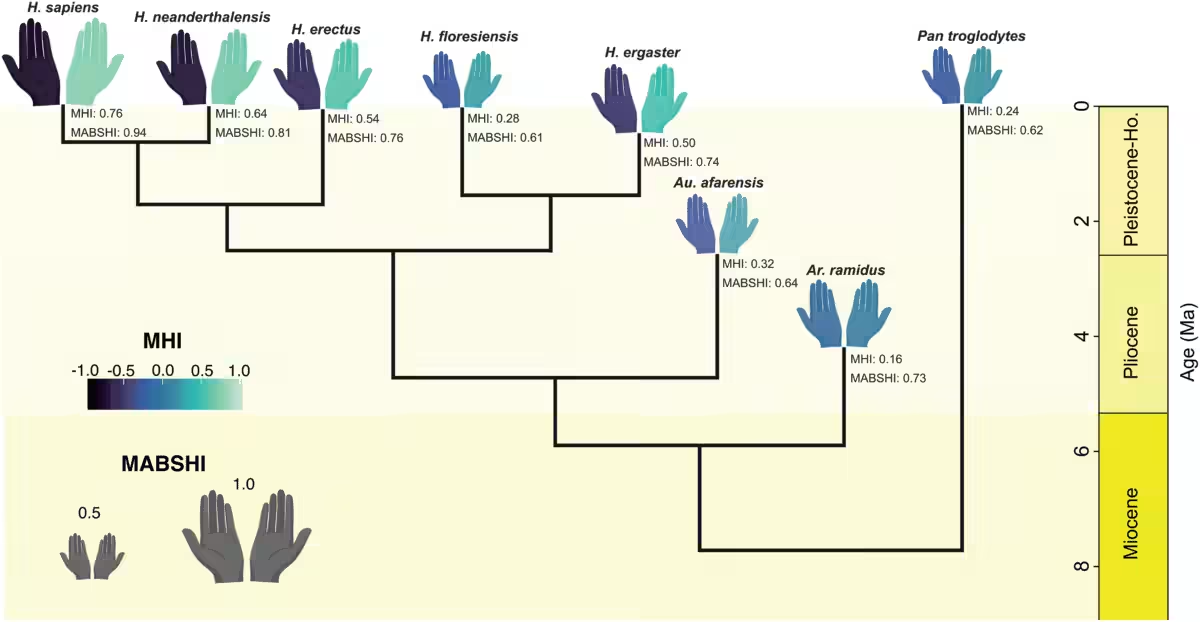
Second, the direction of bias toward the right hand intensified gradually and then more sharply with the emergence of the genus Homo. Predicted scores rise from 0.16 in Ardipithecus ramidus to 0.32 in Australopithecus afarensis, 0.50 in Homo ergaster, 0.54 in Homo erectus, 0.64 in Homo neanderthalensis, and reach 0.76 in modern humans. The steepest jumps correspond to periods of notable brain expansion within the Homo lineage.
The researchers suggest a sequential process: bipedalism first liberated the hands from locomotor duties, creating a selective pressure for asymmetric use; later, increased brain size and hemispheric specialization amplified the population‑wide right‑hand preference.
A Small Outlier: Homo floresiensis
The diminutive hominin Homo floresiensis, discovered on Indonesia’s Flores island and nicknamed the “hobbit,” broke the emerging trend. Its predicted right‑hand bias of 0.28 aligns more closely with early australopithecines than with other Homo species.
The authors note that H. floresiensis retained a relatively small brain and skeletal features linked to climbing, such as elongated feet and curved toe bones. This combination of limited brain growth and mixed locomotor habits—partially bipedal, partially arboreal—reduces the influence of the two key drivers identified in the model, thereby explaining its weaker right‑hand bias.
Testing Competing Theories in a Unified Framework
Earlier work often examined single hypotheses about human handedness in isolation. Dr Püschel emphasizes that this study is the first to evaluate multiple major explanations concurrently, using a single dataset and consistent modeling techniques across all scenarios.
When humans were excluded from the analyses, no individual hypothesis outperformed the others. Many proposed mechanisms appeared significant only because they incorporated Homo sapiens data, indicating that prior theories may have been over‑fitted to the human pattern rather than rigorously tested against the broader primate context.
This article has been fact checked for accuracy, with information verified against reputable sources. Learn more about us and our editorial process.
Last reviewed on .
Article history
- Latest version
Reference(s)
- Püschel, Thomas. “Bipedalism and brain expansion explain human handedness.”, vol. 24, no. 4, pp. e3003771, doi: 10.1371/journal.pbio.3003771. <https://journals.plos.org/plosbiology/article?id=10.1371/journal.pbio.3003771>.
Cite this page:
- Posted by Hassan Raza