Inside a Japanese Sea Cave 385 Meters Below the Ocean, a Strange Green Flash Revealed a Creature No One Had Ever Seen
A hidden underwater cave reveals mysterious ocean flashes—what lit them up?
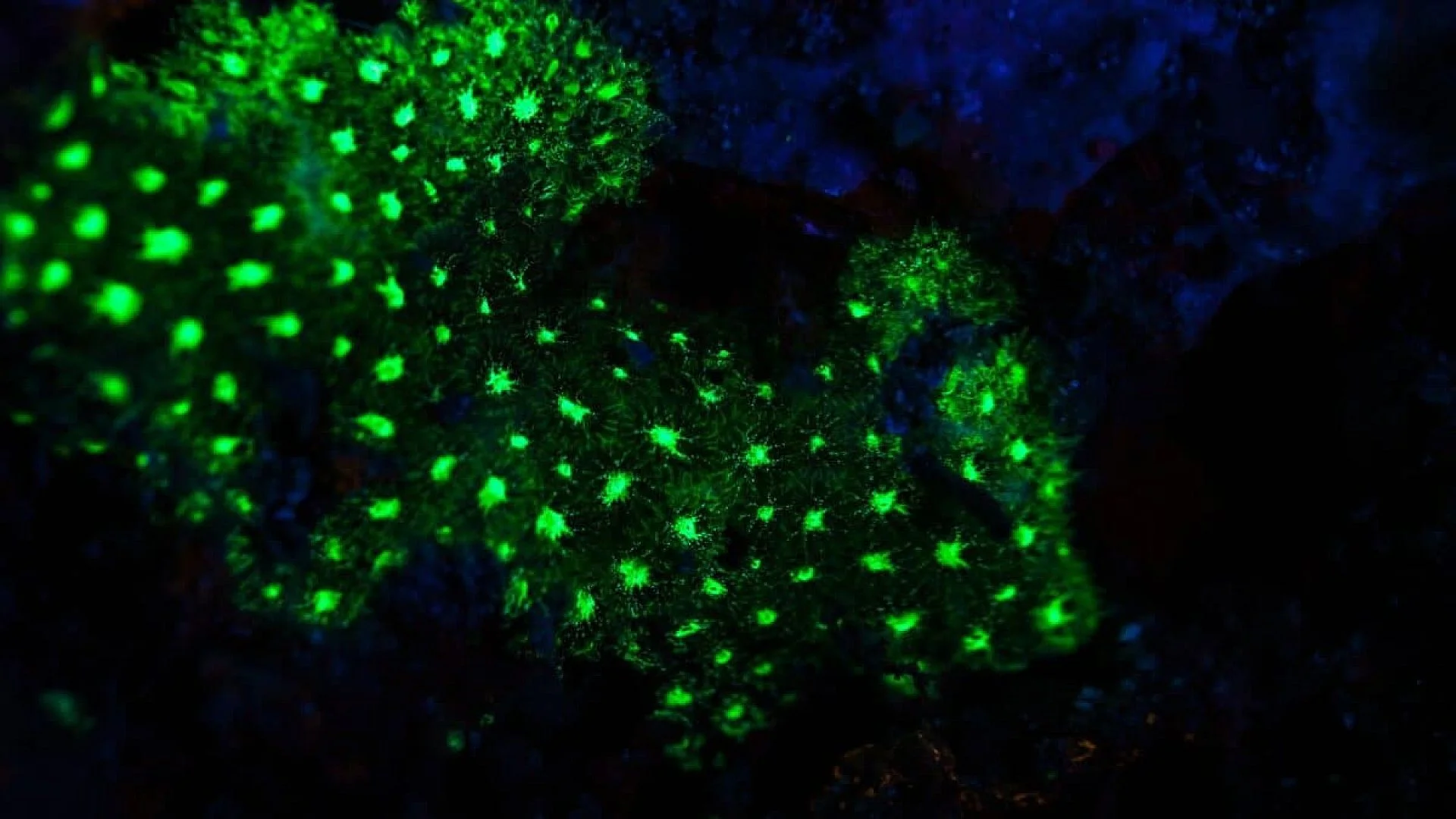
A robotic explorer descending to a depth of 385 metres in the Pacific uncovered a fleeting flash of green light, prompting researchers to identify a previously unknown bioluminescent coral. The new species, named Corallizoanthus aureus, only glows when its tissue is disturbed, a response that scientists suspect may serve as a defensive signal.
Robotic Survey Reveals Hidden Life in a Submerged Cave
During a May 2024 expedition, the Japan Agency for Marine‑Earth Science and Technology (JAMSTEC) deployed a remotely operated vehicle to explore limestone caves surrounding Minamidaito Island, a remote outpost roughly 360 kilometres east of Okinawa. The vehicle’s manipulator brushed against colonies of precious corals from the genus Pleurocorallium, where clusters of a tiny yellow organism were observed for the first time.
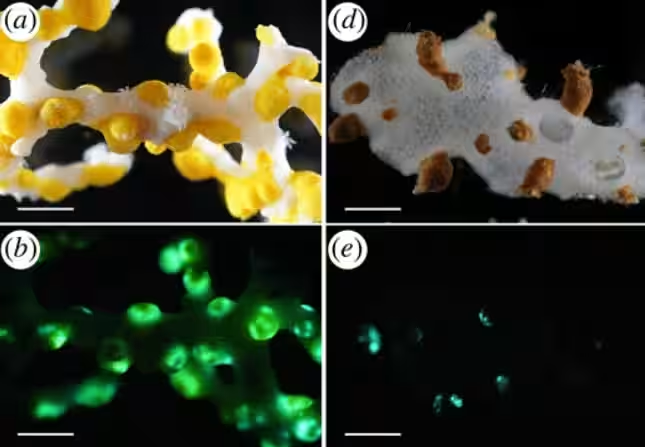
When the vehicle’s arm made contact, the yellow organisms emitted an instant, brief burst of green light confined to their tentacle region, while the surrounding polyps remained dark. This unexpected reaction, recorded in the study published in Royal Society Open Science, led the team to investigate the organism’s taxonomy and bioluminescent properties.
Distinct Anatomy Places It Among Zoantharians
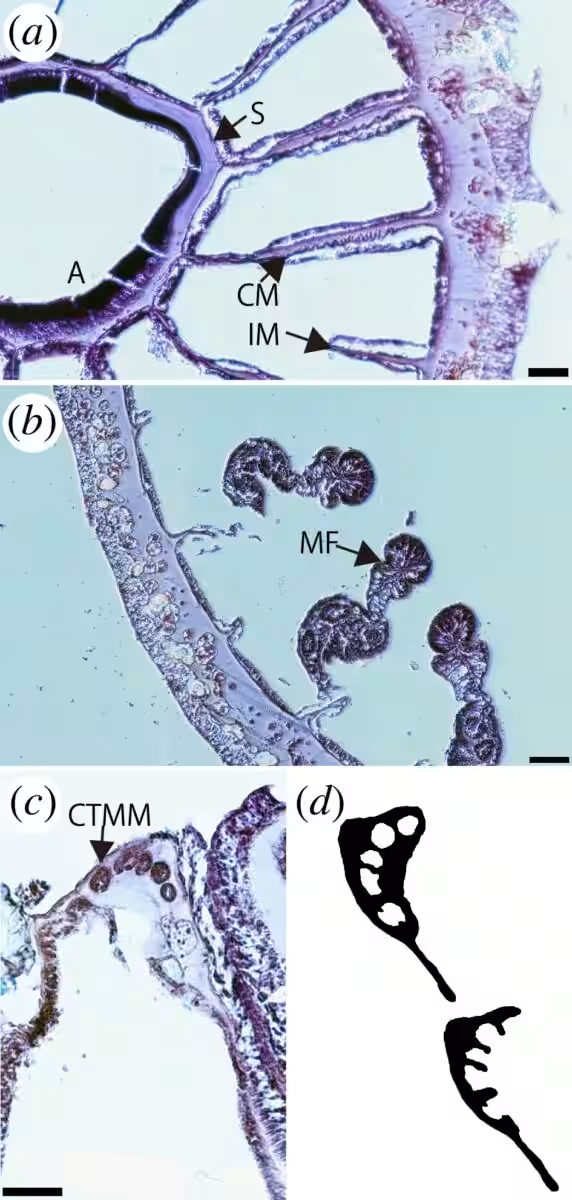
Morphological analysis placed the newcomer within the order Zoantharia, a lineage that includes sea anemones and certain corals. Compared with its closest known relative, Corallizoanthus tsukaharai, the new species exhibits 24‑26 tentacles, a unique marginal musculature around the oral disc, and a vivid yellow hue that inspired the epithet “aureus.”
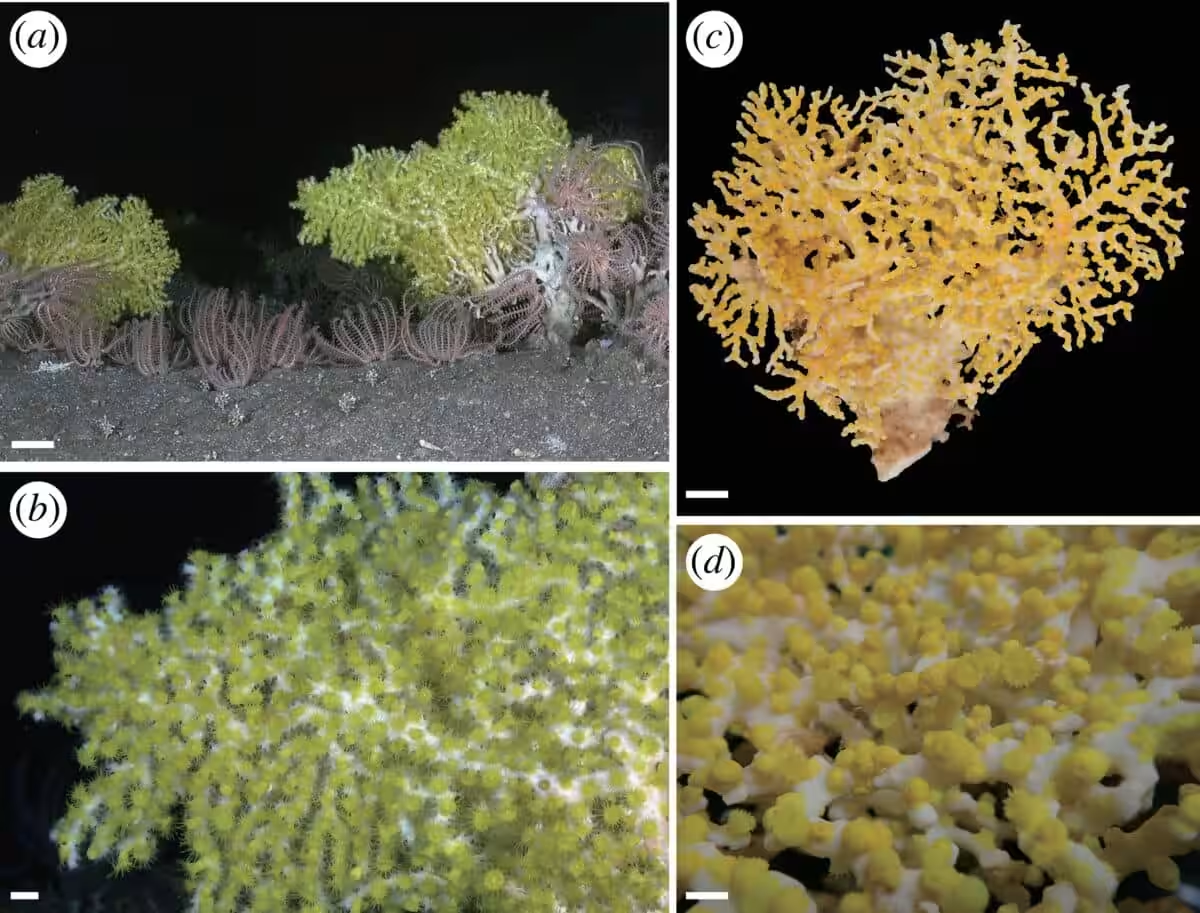
The coral was found exclusively on Pleurocorallium colonies, indicating an epibiotic lifestyle—living attached to another organism. Measurements taken aboard the JAMSTEC vessel showed that its light peaks at roughly 515 nanometres, a green wavelength, and that illumination only occurs after physical or chemical disturbance.
Biochemical Light Production and Possible Defense Role
Further tests ruled out fluorescence and bacterial symbionts as sources of the glow. Instead, researchers propose an internal biochemical pathway, likely involving the molecule coelenterazine and a luciferase enzyme that catalyzes a reaction with oxygen to emit light. This mechanism aligns with the classic “burglar‑alarm” hypothesis first suggested in the 1940s, whereby small organisms flash to attract predators of their own attackers.
While the study does not confirm the alarm function inside the cave, the authors emphasize that ongoing exploration of deep‑sea caves and similarly isolated habitats is likely to uncover additional bioluminescent organisms.
This article has been fact checked for accuracy, with information verified against reputable sources. Learn more about us and our editorial process.
Last reviewed on .
Article history
- Latest version
Reference(s)
- Kise, Hiroki., et al. “Glow in the D-ARK: a new bioluminescent species of Corallizoanthus (Anthozoa: Zoantharia: Parazoanthidae) from southern Japan.” Royal Society Open Science, vol. 12, no. 11, November 5, 2025 The Royal Society, doi: 10.1098/rsos.250890. <https://royalsocietypublishing.org/doi/10.1098/rsos.250890>.
- “JAMSTEC - JAPAN AGENCY FOR MARINE-EARTH SCIENCE AND TECHNOLOGY.” JAMSTEC - JAPAN AGENCY FOR MARINE-EARTH SCIENCE AND TECHNOLOGY <https://www.jamstec.go.jp/e/>.
Cite this page:
- Posted by Hassan Raza