NASA Hits Major Artemis III Milestone As The Moon Rocket Takes Shape For Critical Testing
NASA has completed stacking the Artemis III boosters and installing its four RS-25 engines, moving the Moon rocket closer to critical fueling tests.
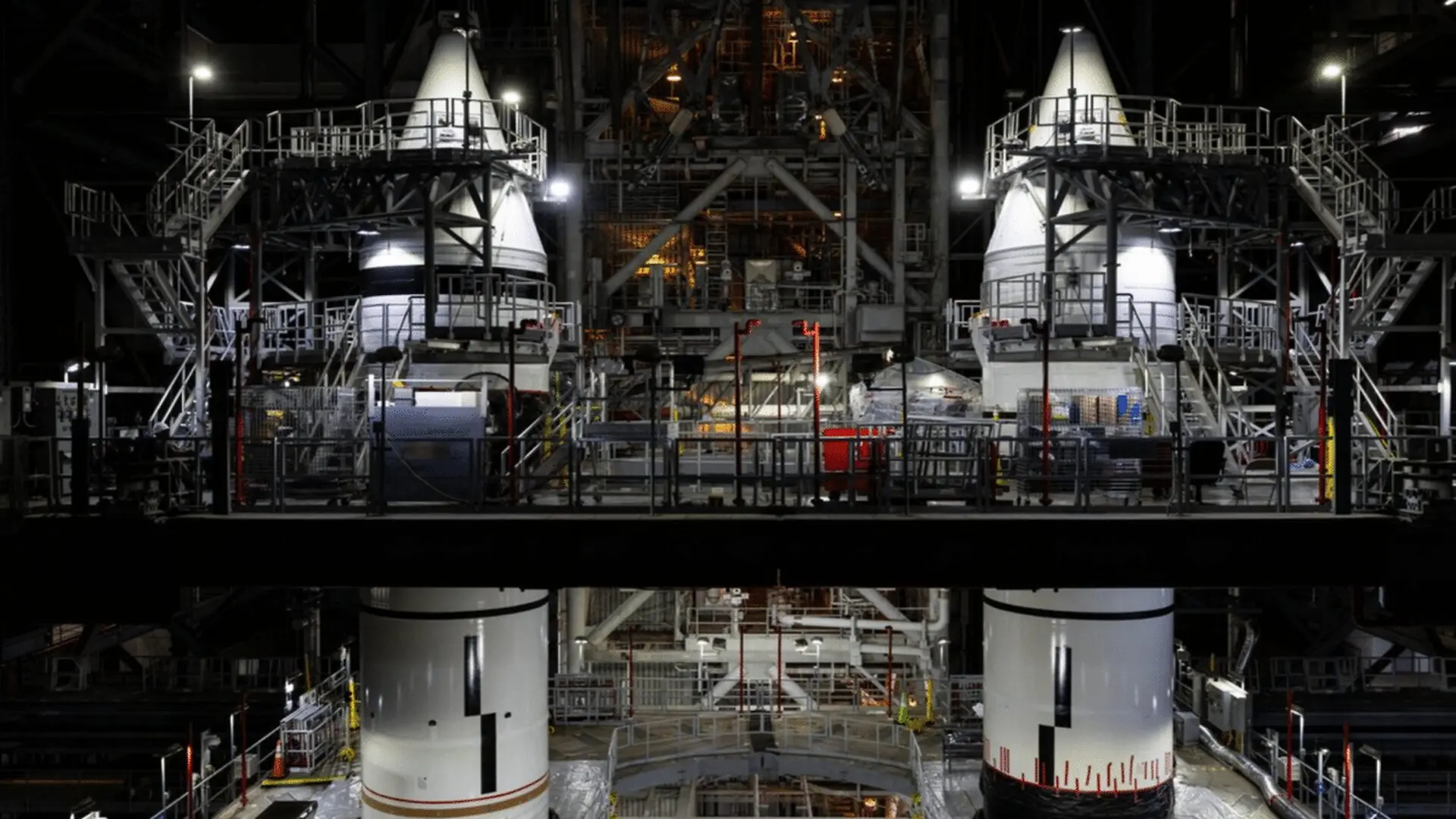
NASA has marked a significant advancement in its Artemis III mission, confirming the completion of the Space Launch System (SLS) solid rocket booster stacking and the installation of all four RS-25 engines on the core stage. According to an official update on October 13, 2026, this integration progress sets the stage for a critical fueling rehearsal at Kennedy Space Center in Florida, where engineers will validate launch protocols before the vehicle enters its final flight readiness phase.
Advancing Toward Crucial Fueling Trials
Within the Vehicle Assembly Building at Kennedy Space Center, crews are methodically building one of the most powerful launch vehicles ever designed for human spaceflight. This latest milestone represents a shift from individual component testing to full-scale assembly, bringing the Artemis III rocket closer to its first major ground-based systems test.
The final segments of the dual solid rocket boosters, which provide the bulk of the lift-off thrust, have been successfully positioned on the mobile launcher. These boosters will operate in tandem with the core stage, which houses the liquid oxygen and liquid hydrogen supply for the SLS rocket’s four RS-25 engines. With engine installation finished, technicians are moving forward with secondary systems, including the integration of a specialized tunnel that houses pyrotechnic cabling for stage separation and emergency disconnect systems.
Following this work, teams will unite the core stage with the boosters to form what NASA refers to as the “short stack” configuration. This preliminary assembly allows for essential ground operations before the final upper segments of the rocket are integrated.
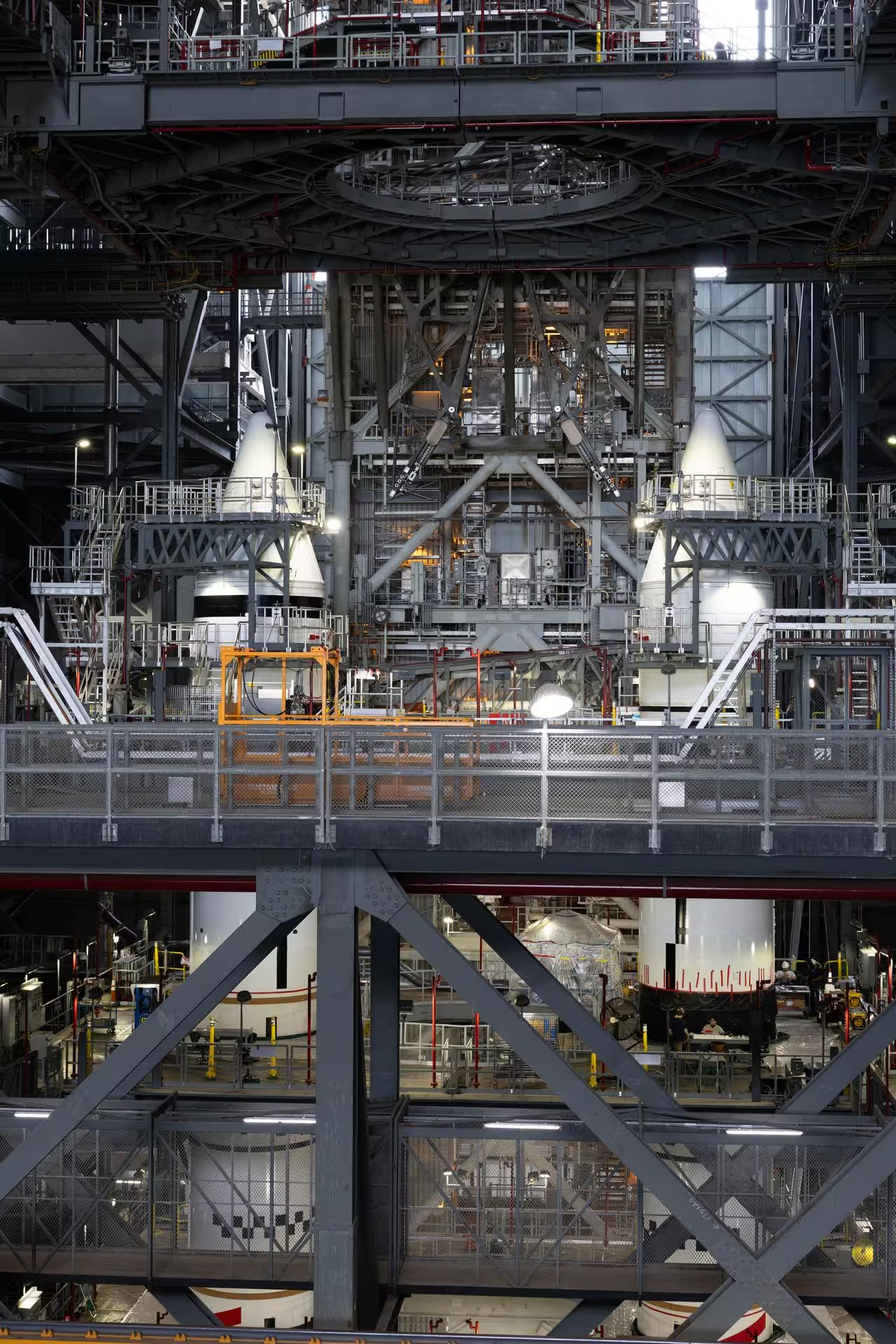
The short stack will eventually roll out to Launch Pad 39B for a comprehensive tanking test. This procedure will simulate the loading of cryogenic propellants to verify the ground infrastructure and launch team coordination under conditions that mirror an actual mission countdown.
Astronauts Integrate with Ground Operations
The upcoming launch pad campaign will integrate the Artemis III crew—Randy Bresnick, Frank Rubio, Andre Douglas, and Luca Parmitano of the European Space Agency—directly into the testing workflow. NASA’s latest update highlights that these sessions will include a full-scale launch-day rehearsal and an emergency egress drill at Pad 39B.
The crew will initiate these procedures in their quarters, donning their flight suits before traveling to the launch complex. They will practice ascending the mobile launcher and executing emergency evacuation routes, ensuring familiarity with the site should a countdown be interrupted by an unexpected hazard. By embedding the crew into these tests, NASA is treating the astronauts and the hardware as a singular, cohesive operational system.
Spent some time at @NASAKennedy this past Friday. Really impressed with the progress under @brianhughes and the @NASAArtemis and EGS leadership. By nearly every measure, the team has found efficiencies and improved the stacking process, cutting the schedule by 50%. The machine shops are running around the clock, not just at KSC, but across all the Centers. The rebuilding of core competencies are making NASA builders again and ensuring we have the engineers, technicians, and operators capable of doing the work. I also toured the pad rebuild work at @blueorigin. @JeffBezos and @davill have done an outstanding leading and motivating the workforce. The Blue team has a fire in them like we have never seen before. They are making believers out of many that once doubted the timelines. In all cases, be that in the VAB, helping our partners out at the pad, or working on the landers, suits, and rovers, @NASA is energized. We have our SME’s embedded throughout the supply chain, and doing the work to ensure the outcomes you have been patiently waiting for will soon be safely achieved.
— NASA Administrator Jared Isaacman (@NASAAdmin) October 18, 2026
Mission Infrastructure and Hardware Updates
Work on the Artemis III mission extends beyond the immediate rocket assembly. At Launch Pad 39B, ground crews have confirmed that the flame deflector remains in excellent condition following the Artemis II flight, with minimal damage reported to the infrastructure. Improvements made to the pad following the 2022 Artemis I mission have proven effective in mitigating the impact of high-intensity exhaust.
Simultaneously, preparations for the Orion spacecraft continue. Specialists have conducted inspections on the solar array wings, which are critical for powering the European Service Module and sustaining the crew throughout their journey. In Huntsville, Alabama, engineers at the Marshall Space Flight Center have completed the primary welding for the mission’s spacer, which will eventually stand in for an upper stage during flight.
Additional hardware, including the Orion stage adapter and the launch vehicle stage adapter, is undergoing final refurbishment and painting. NASA anticipates that these components will arrive at Kennedy Space Center by early 2027, maintaining a steady cadence for the broader mission assembly timeline.

This article has been fact checked for accuracy, with information verified against reputable sources. Learn more about us and our editorial process.
Last reviewed on .
Article history
- Latest version
Reference(s)
- Communications, NASA. “NASA Completes Artemis III Booster Stacking, Shares Status Update.”, October 13, 2026 NASA <https://www.nasa.gov/blogs/missions/2026/10/13/nasa-completes-artemis-iii-booster-stacking-shares-status-update/>.
Cite this page:
- Posted by Karan Das