Scientists Discover Why Earth’s Magnetic Field Waves Form Unevenly Around the Planet
Scientists have discovered a strange new wave pattern in Earth’s magnetic shield, revealing why specific regions react differently to solar particle storms.
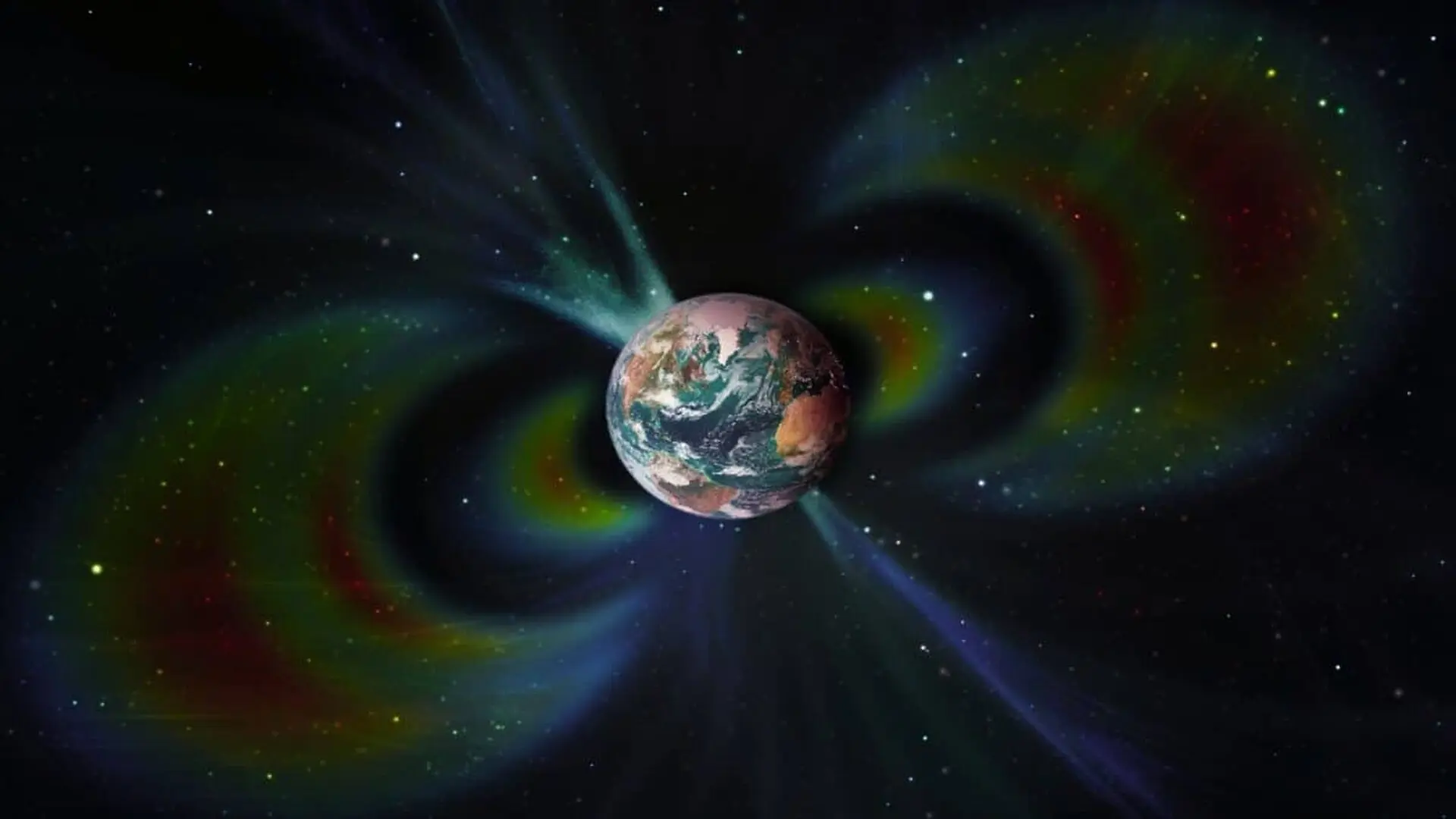
New research has uncovered why the outer reaches of Earth’s magnetic environment exhibit striking, asymmetrical turbulence. A study published on September 16, 2026, in Geophysical Research Letters reveals that the development of Kelvin-Helmholtz waves—rippling structures that form along the boundary of our magnetosphere—is heavily dictated by seasonal shifts and the fluctuating magnetic orientation of the solar wind.
Led by Lauri Holappa of the University of Oulu in Finland, the research team utilized advanced computer simulations to map how charged solar particles interact with Earth’s magnetic shield. By deploying the Lyon-Fedder-Mobarry global magnetohydrodynamic model through NASA’s Community Coordinated Modeling Center, the scientists were able to visualize the complex mechanics of space weather in unprecedented detail.
Mapping the Asymmetry of Earth’s Magnetic Shield
Earth is protected by a vast magnetic bubble, the magnetosphere, which acts as a barrier against the relentless solar wind. When this stream of charged particles hits the magnetosphere at varying velocities, it triggers Kelvin-Helmholtz instabilities. These waves are essential to space science, as they represent a primary channel through which solar plasma bypasses the magnetosphere to enter near-Earth space.
The study, which can be reviewed in full here, highlights how these waves are not distributed evenly. Under simulated conditions mimicking a Northern Hemisphere winter, researchers observed significant wave activity along the northern magnetopause, while the southern, summer-side boundary remained notably stable. The location of these disturbances also shifted based on the interplanetary magnetic field: a positive east-west orientation concentrated the waves on the dawn side, while a reversal of this component pulled the activity toward the dusk side.
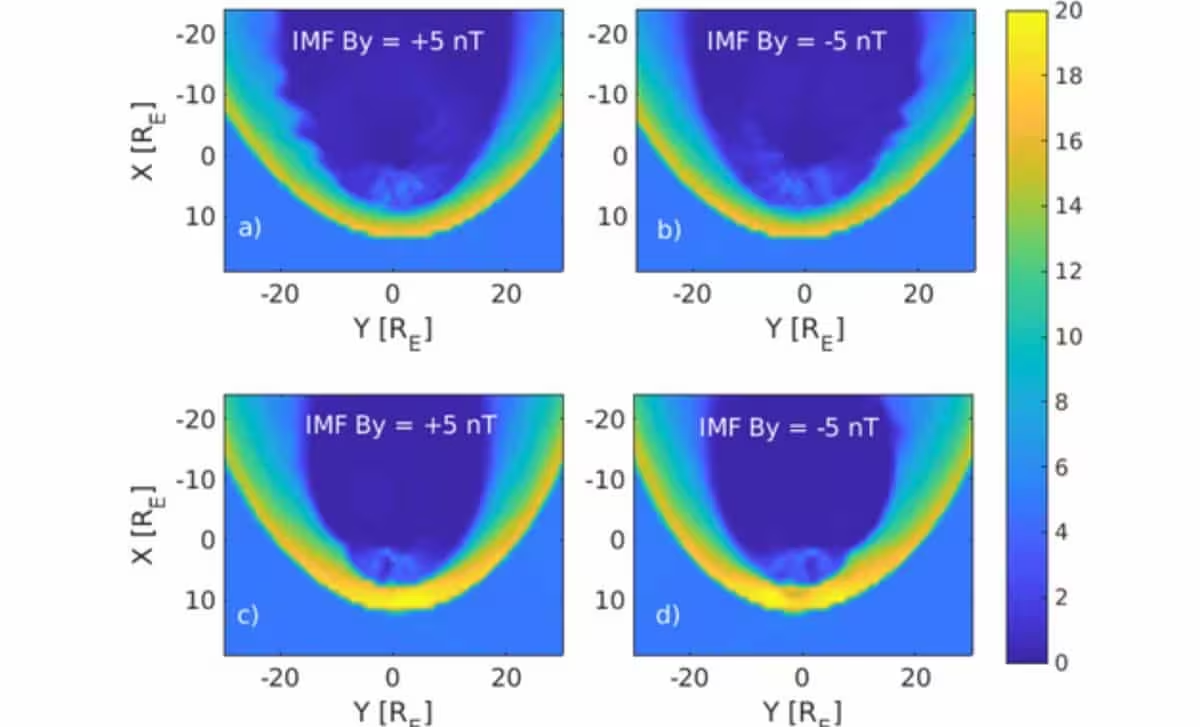
Drivers of Plasma Turbulence
The study points to the complex interplay of magnetic reconnection—a process where magnetic field lines break and reconnect, releasing energy—as a key factor in suppressing or enabling these waves. The simulation results indicated that reconnection can widen the plasma boundary layer on one side of the planet, which effectively dampens the growth of Kelvin-Helmholtz instabilities.
Holappa, who first identified these inconsistent patterns during a 2020 NASA fellowship, emphasizes that these simulations bridge the gap between abstract mathematical models and observable space weather phenomena. As the team noted in reports from outlets like the Daily Mail, recognizing these patterns is critical for refining our understanding of how geomagnetic storms impact human infrastructure.
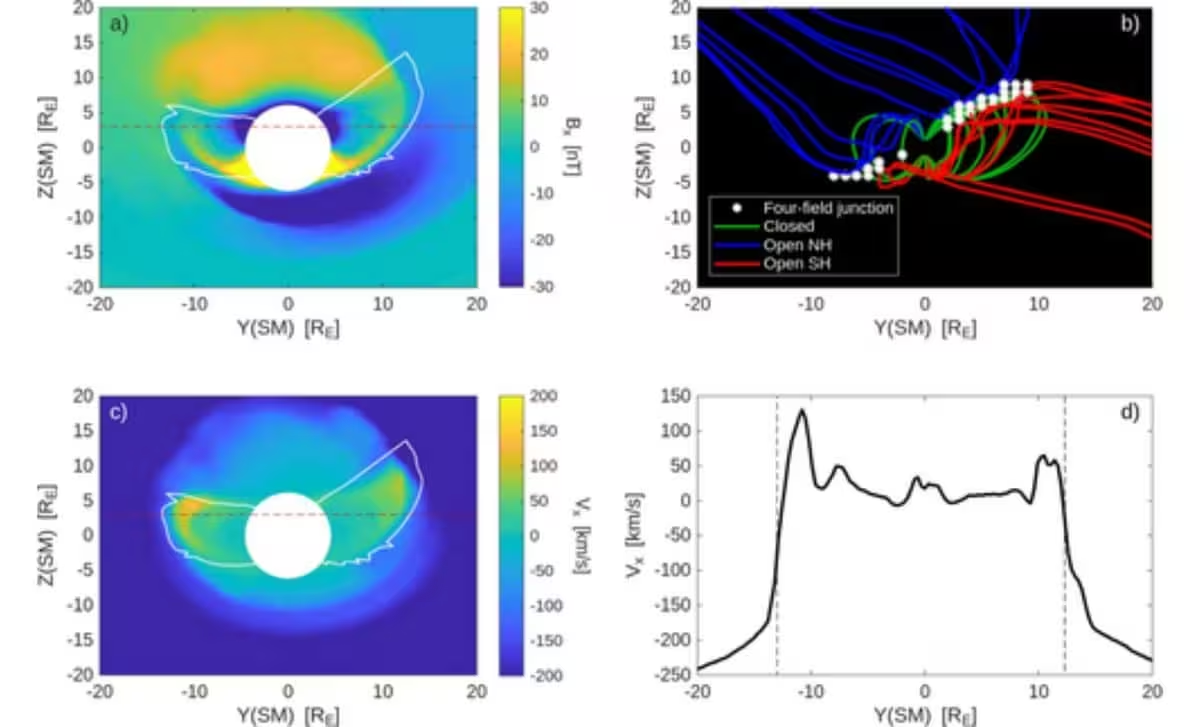
While the study successfully identifies the physical triggers for these asymmetric waves, the researchers note that further high-resolution simulation and real-time spacecraft data are essential. By characterizing these environmental variables, scientists hope to eventually improve the accuracy of space weather forecasts, protecting everything from global satellite arrays and navigation systems to the integrity of terrestrial electrical grids.
This article has been fact checked for accuracy, with information verified against reputable sources. Learn more about us and our editorial process.
Last reviewed on .
Article history
- Latest version
Reference(s)
- Holappa, L.., et al. “IMF B y ‐Controlled Dawn–Dusk and Hemispheric Asymmetries of Kelvin–Helmholtz Waves and Reconnection Geometry Under Negative Dipole Tilt.” Geophysical Research Letters, vol. 53, no. 18, September 16, 2026 American Geophysical Union (AGU), doi: 10.1029/2026GL124835. <https://agupubs.onlinelibrary.wiley.com/doi/10.1029/2026GL124835>.
- Hunter, Wiliam. “Scientists discover weakest points in Earth's invisible shield: Space 'tsunamis' reveal where dangerous solar storms can break through.”, October 15, 2026 Daily Mail <https://www.dailymail.com/sciencetech/article-16210871/solar-storms-weak-points-discovered.html?ns_mchannel=rss&ns_campaign=1490&ito=1490>.
Cite this page:
- Posted by Karan Das