NASA Just Dropped 12,000 Space Photos From Artemis II And Some Of Them Are Unlike Anything Ever Captured
NASA unveils a staggering collection of 12,000 fresh Artemis II images, offering an unparalleled glimpse into humanity’s farthest expedition to date.

Here’s the rewritten text, maintaining all HTML tags and their attributes, while optimizing for search engines and enhancing readability.
NASA has unveiled an extensive collection of over 12,000 images captured during the historic Artemis II mission, providing an unparalleled visual record of humanity’s most ambitious space exploration in over half a century. This massive archive expands on earlier imagery, showcasing the mission’s scale and scientific significance, which saw astronauts venture farther from Earth than ever before.
Unveiling the Unseen: A Photographic Odyssey
The newly released dataset from NASA chronicles one of the most groundbreaking human spaceflight missions of the modern era. Artemis II carried four astronauts, Reid Wiseman, Victor Glover, Christina Koch, and Jeremy Hansen, on a 694,481-mile journey, looping around the far side of the Moon. This marked the first crewed lunar flyby since the Apollo era, redefining the boundaries of human exploration.

The vast collection includes thousands of previously unseen images, revealing moments that were never broadcast or released during the mission. These include intricate views of the Moon’s rugged far side, dynamic star trails captured through long-exposure photography, and rare compositions of Earth appearing as a distant crescent suspended in darkness. The scale of the archive reflects both the mission’s duration and the deliberate effort to document every phase of the journey.
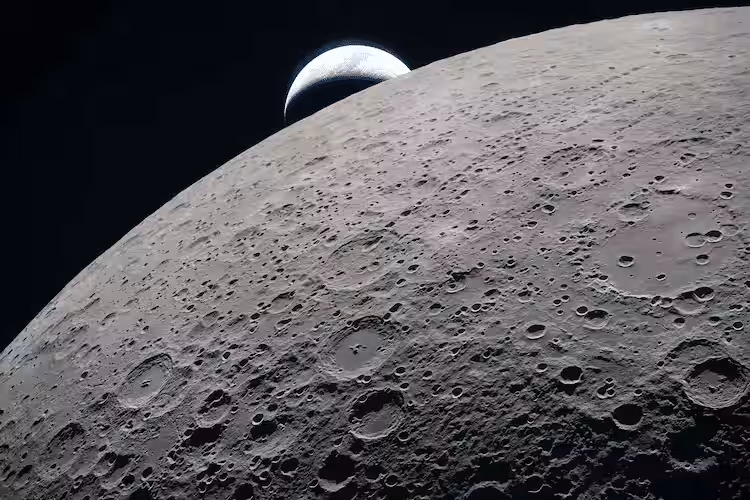
The use of advanced imaging tools, including high-performance Nikon cameras and modified iPhone 17 devices, allowed astronauts to capture space with unprecedented clarity and versatility. The result is a visual dataset that seamlessly blends scientific observation with human perspective, offering both researchers and the public a deeper connection to deep space.

Unveiling Rare Views of the Moon, Earth, and Deep Space
Among the most striking images are close-up shots of the lunar surface, showcasing craters, ridges, and shadowed regions with remarkable precision. These photographs provide valuable context for future Artemis landings, helping scientists better understand terrain composition and lighting conditions on the Moon’s far side.
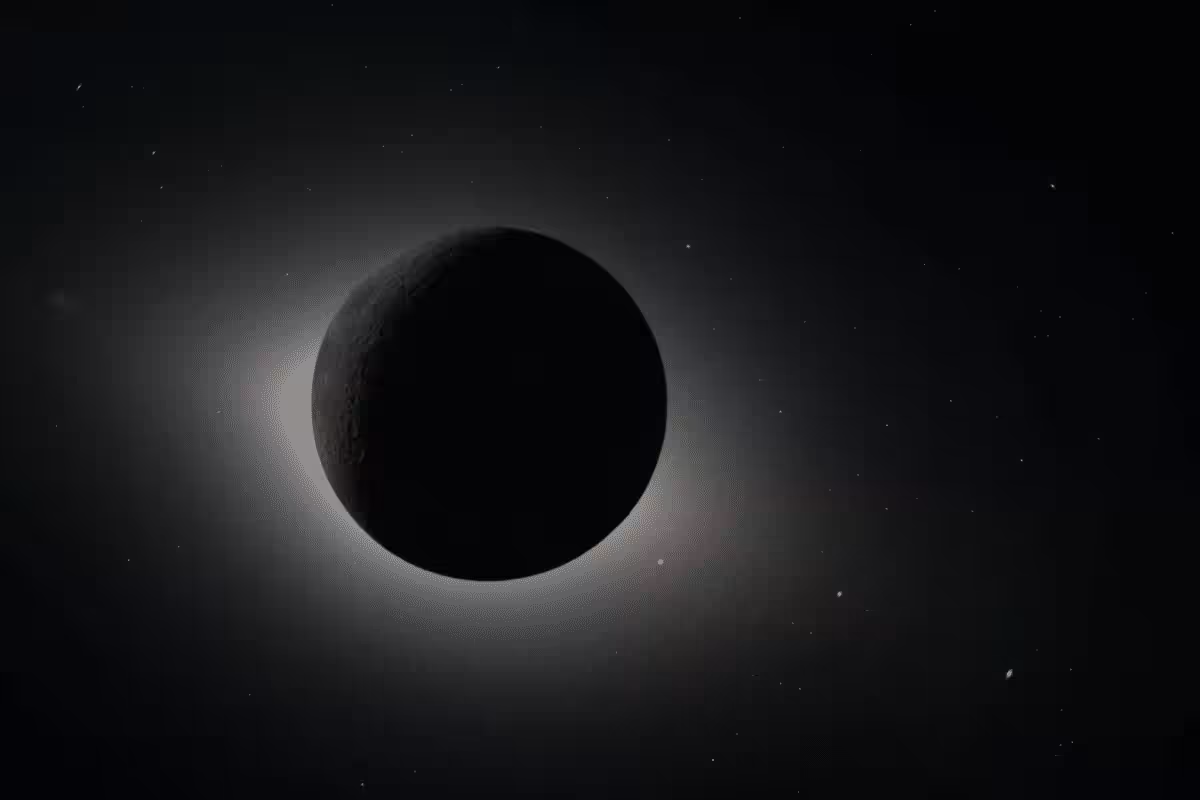
Equally compelling are the images captured during a total solar eclipse observed from space. The photographs reveal the Sun’s corona glowing around the Moon’s silhouette, an angle impossible to replicate from Earth’s surface. These observations contribute to ongoing solar research while delivering visually dramatic evidence of celestial mechanics in motion.
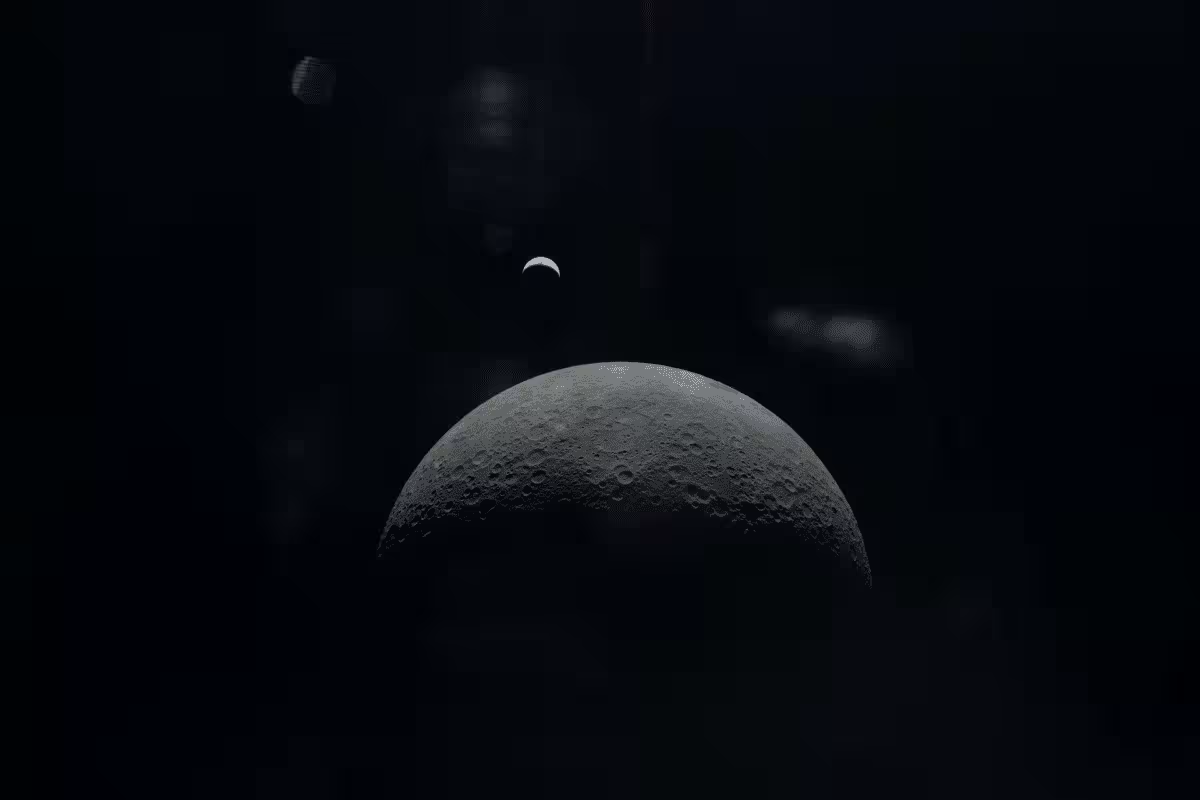
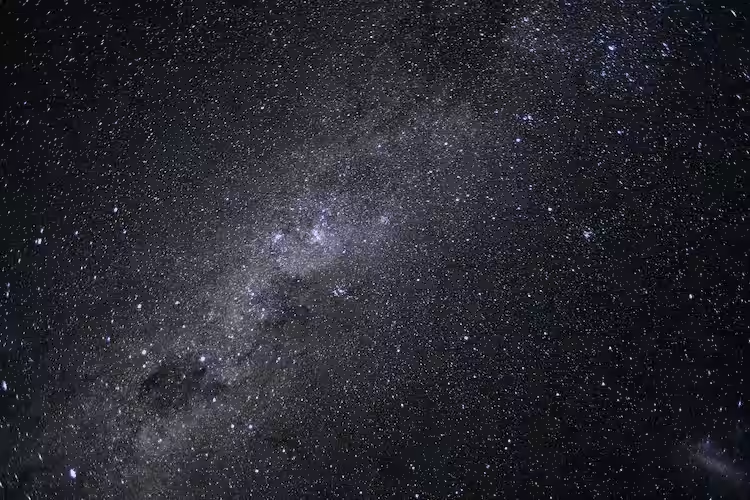
The collection also includes sweeping images of the Milky Way and extended star trails, created by long exposures that trace the apparent motion of stars relative to the spacecraft. These images are not only visually striking but also demonstrate the stability and orientation of the Orion spacecraft during flight operations.
Human Presence Beyond Earth Reaches New Milestones
One defining element of the release is the human perspective embedded in many of the images. Several photographs show the crew members positioned inside the Orion spacecraft, framed against windows with Earth visible in the distance. These compositions emphasize both the isolation and significance of the mission, human beings traveling farther than ever before, yet still visually tethered to their home planet.
The mission set a new record for the farthest distance humans have traveled from Earth, surpassing previous Apollo achievements. More importantly, Artemis II expanded direct human observation of the Moon’s far side, an area historically hidden from Earth-based view. This extended exposure is expected to inform both scientific analysis and mission planning for future lunar landings.
A Foundation for the Future of Lunar Exploration
This extensive image release serves more than a documentary purpose. It represents a foundational dataset for upcoming Artemis missions, including planned crewed landings and long-term lunar operations. Engineers, scientists, and mission planners will rely on these visuals to refine navigation, landing strategies, and habitat placement.
Beyond its technical value, the archive reinforces the cultural and symbolic importance of human spaceflight. By sharing thousands of high-resolution images with the public, NASA continues to position Artemis as both a scientific endeavor and a global milestone in exploration.
The Artemis II image trove transforms a single mission into an enduring resource, one that will shape how humanity prepares for its next steps on the Moon and, eventually, toward Mars.
This article has been fact checked for accuracy, with information verified against reputable sources. Learn more about us and our editorial process.
Last reviewed on .
Article history
- Latest version
Reference(s)
- “Artemis II Lunar Flyby - NASA.” NASA <https://www.nasa.gov/gallery/lunar-flyby/page/2/>.
Cite this page:
- Posted by Karan Das