Astronaut’s Sudden Loss of Speech in Orbit Leaves NASA Searching for Answers
A veteran astronaut abruptly lost the ability to speak aboard the International Space Station, triggering NASA’s first in-orbit medical evacuation. Months later, the cause remains a mystery.
Spaceflight is built on preparation. Every task aboard the orbiting laboratory is rehearsed, timed, and supported by teams on Earth. Yet even in this meticulously controlled environment, the human body can still surprise scientists.
Earlier this year, a veteran astronaut suddenly found himself at the center of an unprecedented medical mystery. While preparing for a spacewalk, Mike Fincke experienced a frightening and unexplained episode aboard the International Space Station.
He was sitting down to dinner after a day of preparation when, without warning, he lost the ability to speak.
There was no pain. No clear trigger. Just an abrupt and deeply alarming loss of speech that lasted roughly 20 minutes.
For the astronaut and his crewmates, the moment transformed an ordinary evening into an all-hands emergency. For scientists, it opened a new and unresolved chapter in the ongoing study of human health in space.
A Lightning-Fast Medical Event in Microgravity
The incident unfolded with startling speed. Fincke later described the onset as “out of the blue,” comparing it to a sudden lightning strike. He had spent months in orbit and had never experienced anything like it before.
His crewmates quickly recognized something was wrong. Within seconds, the entire crew gathered around him and contacted flight surgeons on the ground. Communication between orbit and Earth is routine, but this was anything but routine.
The astronaut could not talk, yet he felt no pain and no lingering symptoms afterward. The episode ended as quickly as it began, leaving more questions than answers.
Doctors have ruled out some of the most obvious causes, including a heart attack or choking. Beyond that, the list of possibilities remains wide open.
The event marked the first time NASA carried out a medical evacuation from the space station.
The First Medical Evacuation From Orbit
Space missions are designed with medical contingencies in mind, but evacuations are rare. Astronauts undergo rigorous screening before launch, and their health is closely monitored throughout missions.
Still, the sudden and unexplained nature of the episode prompted an extraordinary decision. Fincke and his crewmates returned to Earth more than a month earlier than planned.
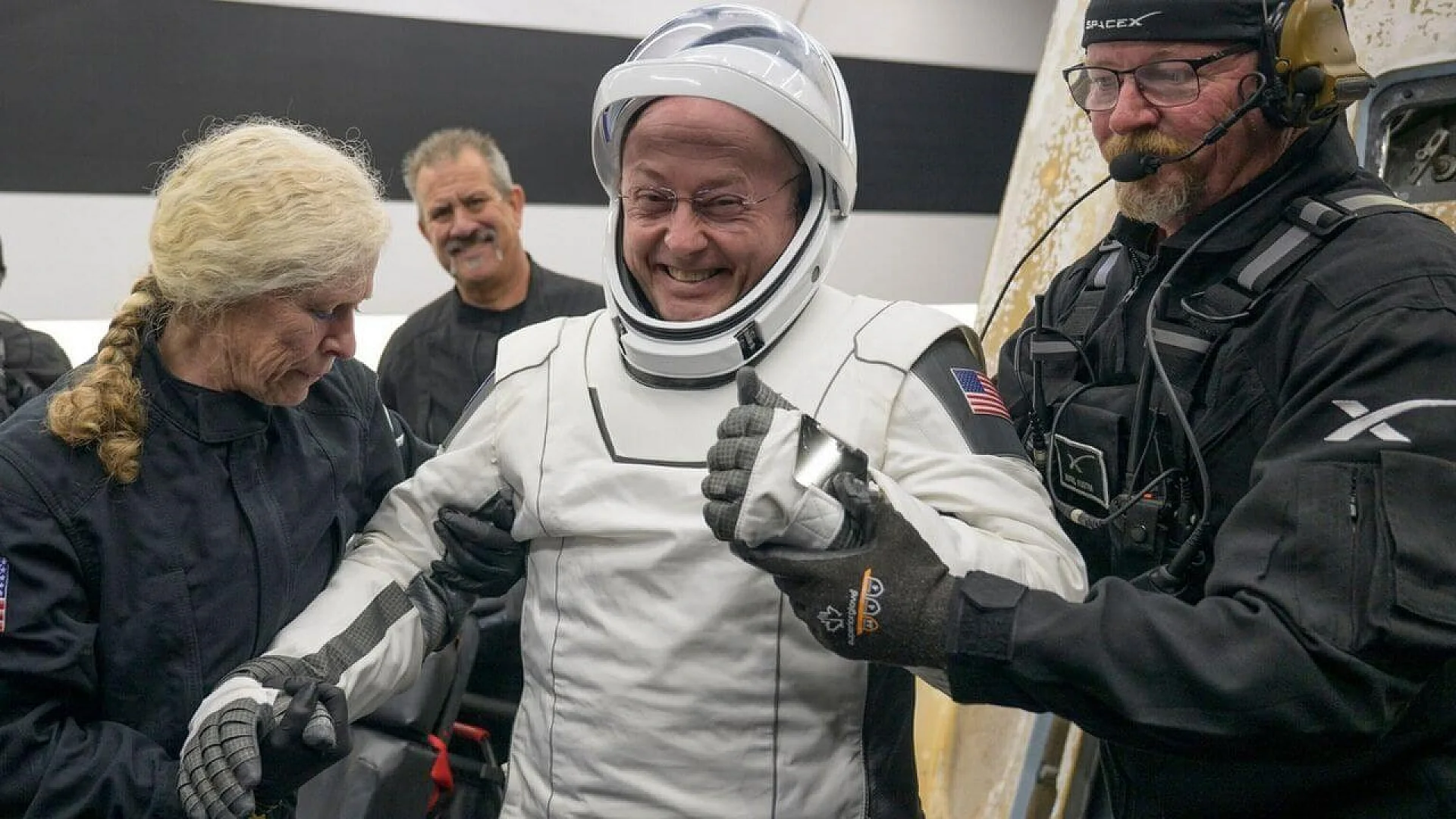
The return journey was carried out by SpaceX, whose spacecraft brought the crew safely home on January 15. Upon landing, the astronauts were taken directly to a hospital for evaluation.
The early return meant the cancellation of a planned spacewalk, which would have been Fincke’s tenth. It also cut short the mission of fellow astronaut Zena Cardman, who had been preparing for her first spacewalk.
For Fincke, the emotional weight of disrupting the mission lingered even after his health stabilized.
A Healthy Astronaut, A Puzzling Event
One of the most perplexing aspects of the episode is the astronaut’s overall health. Fincke has long been considered exceptionally fit and resilient, with a distinguished career that includes years spent in space.
Before the incident, he had accumulated hundreds of days in orbit and had never experienced a similar medical issue. After the event, he reported feeling completely normal again.
Extensive testing since his return has yet to reveal a clear explanation.
This leaves researchers facing a familiar but unsettling reality. The human body behaves differently in space, and scientists still do not fully understand all the ways long-duration missions affect physiology.
Space Medicine’s Growing List of Unknowns
Spaceflight research has uncovered numerous health effects associated with microgravity, including bone density loss, muscle atrophy, vision changes, and fluid shifts in the body.
Yet neurological and cardiovascular mysteries remain among the least understood.
Fincke’s episode could potentially be linked to his extended time in weightlessness. He had spent more than five months in orbit during this mission alone, adding to a career total of more than 500 days in space.
The possibility that long-term exposure to microgravity played a role is now a major focus of investigation.
Scientists are examining whether similar incidents may have occurred previously but went unreported or were attributed to other causes.
Privacy in Space and the Limits of Transparency
One reason details remain scarce is astronaut medical privacy. Space agencies aim to protect personal health information to ensure astronauts feel comfortable reporting medical concerns.
Fincke himself has said he cannot share additional specifics about the episode for this reason.
This balance between transparency and privacy presents a challenge for researchers and the public alike. Space medicine relies on shared data to improve safety, yet personal health information must remain protected.
NASA is now reviewing historical astronaut medical records to search for patterns or related cases that could shed light on what happened.
The Role of Onboard Medical Technology
During the emergency, the space station’s onboard ultrasound system played a critical role. The device allows astronauts to perform medical imaging in orbit with guidance from doctors on Earth.
This capability is a cornerstone of modern space medicine. It allows physicians to evaluate injuries or illnesses in real time, even hundreds of kilometers above the planet.
The successful use of onboard medical tools during the incident underscores how far space healthcare has advanced.
At the same time, the event highlights how much remains unknown about diagnosing and treating unexpected medical conditions in orbit.
Why This Matters
Preparing for the Next Era of Space Exploration
Human spaceflight is entering a new phase. Missions are becoming longer, and destinations are becoming more distant. Plans for lunar bases and eventual missions to Mars depend on a deeper understanding of astronaut health.
A sudden medical event during a mission to Mars would pose far greater challenges than one in low Earth orbit. Evacuation would not be an option.
Every unexplained incident in orbit becomes a valuable data point for future exploration.
Fincke’s experience may help researchers refine medical monitoring, screening, and emergency response protocols for long-duration missions.
The Psychological Side of Space Emergencies
Beyond the medical mystery, the episode also highlights the emotional and psychological pressures of spaceflight.
Astronaut crews rely on teamwork and trust. When a medical emergency strikes, the entire team must respond quickly and calmly.
Fincke has spoken about feeling responsible for the disruption to the mission, even though colleagues reassured him that the event was beyond his control.
Encouragement from fellow astronauts and leadership, including NASA administrator Jared Isaacman, helped him move past that sense of guilt.
The incident serves as a reminder that astronauts face not only physical risks but also emotional challenges in their work.
The Ongoing Investigation
Today, the mystery remains unsolved.
Researchers continue to analyze medical data and compare records from past missions. The goal is to determine whether Fincke’s episode was a rare anomaly or part of a broader pattern.
Possible explanations range from neurological events to circulation-related issues linked to microgravity.
Until a clear cause is identified, the case will remain a focal point in the field of space medicine.
A Veteran Astronaut’s Optimism
Despite the uncertainty, Fincke remains hopeful about the future. He has expressed a desire to return to space if given the opportunity.
That optimism reflects a broader spirit shared by many astronauts. Exploration carries risk, but it also drives scientific progress.
Each unexpected event contributes to the growing body of knowledge that will shape humanity’s future in space.
Looking Ahead
Space agencies and private companies are pushing toward longer missions and deeper destinations. As human presence in space expands, so does the importance of understanding how the human body adapts and responds.
This unexplained medical episode is a reminder that space still holds many surprises, not only beyond Earth but within the human body itself.
The search for answers continues, driven by the need to make future missions safer and more resilient.
This article has been fact checked for accuracy, with information verified against reputable sources. Learn more about us and our editorial process.
Last reviewed on .
Article history
- Latest version
Cite this page:
- Posted by Aisha Ahmed