A Purple “Alien” on the Space Station Turned Out to Be a Potato
A bizarre image from orbit sparked alien jokes online, but the truth behind the purple “tentacles” reveals how astronauts are quietly learning to grow food far from Earth.
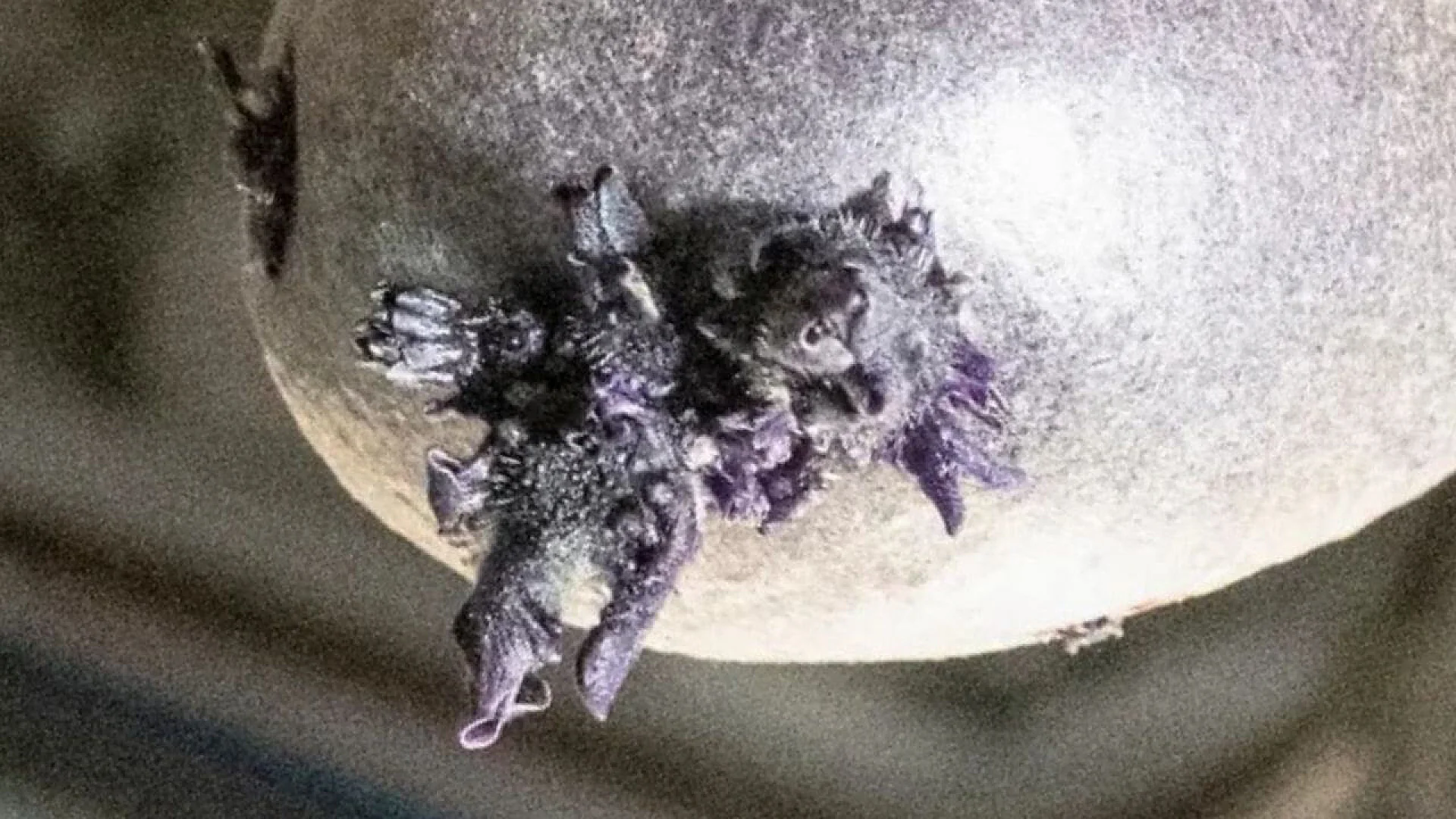
The image spread quickly online. A purple object floated inside a spacecraft, its curling tendrils reaching outward in ways that felt unmistakably alive. Social media users joked about extraterrestrial life, movie monsters, and urgent calls to “burn it.”
The reveal was far less cinematic and far more fascinating.
The supposed alien was actually a potato, grown aboard the International Space Station by NASA astronaut Don Pettit. Its curling “tentacles” were simply sprouts searching for a place to root.
What began as a humorous internet moment quickly became a reminder of something profound. Growing plants in space is no novelty experiment. It is a critical step toward the future of human exploration.
And sometimes, the future looks like a purple potato floating in a tiny garden.
The Hobby Garden Floating Above Earth
Pettit’s potato was not part of a major official mission objective. Instead, it emerged from a personal passion project.
During a long-duration stay aboard the station, Pettit spent off-duty time cultivating plants in a small space garden. The potato, affectionately nicknamed “Spudnik-1,” was grown hydroponically, meaning it was cultivated in nutrient-rich water rather than soil.
In microgravity, soil is messy and difficult to control. Water floats and clings to surfaces, roots cannot rely on gravity to guide them, and even tiny debris can pose hazards to sensitive equipment. Hydroponics offers a clean and efficient solution, allowing astronauts to deliver nutrients directly to plant roots in carefully controlled systems.
The odd purple color of the potato added to its alien appearance. The white patch attached to it was not fungus or growth. It was Velcro, used to keep the potato from drifting away inside the station.
This blend of improvisation and curiosity captures the spirit of space exploration. Even in one of the most advanced laboratories ever built, astronauts still experiment, tinker, and garden.
Social Media Meets Space Science
The potato’s internet fame began when Pettit shared the image on platforms like Instagram, X (Twitter), and Reddit.
The reaction was immediate and enthusiastic. Users joked about alien creatures and science fiction monsters. Others marveled at the surreal idea of an astronaut casually sharing gardening photos from orbit.
The humor underscored something deeper. Space exploration has long felt distant and technical to the public. But a floating potato is relatable. It is ordinary and extraordinary at the same time.
That mix makes space science feel human.
A Long Tradition of Space Gardening
Pettit’s potato may be the latest viral sensation, but astronauts have been growing plants in space for decades.
The first potatoes were successfully grown in orbit in 1995. Surprisingly, the resulting crops looked very similar to potatoes grown on Earth.
Since then, astronauts have cultivated a wide range of plants aboard the station, including peanuts, zucchini, broccoli, sunflowers, basil, and tomato seedlings.
These experiments may sound whimsical, but they are part of a serious scientific effort. Every new crop teaches researchers how plants respond to microgravity, radiation, limited water supplies, and confined environments.
Those lessons will matter enormously when humans travel farther from Earth.
Why Potatoes Matter in Space
If the idea of space potatoes sounds familiar, there is a reason. Andy Weir’s novel, later adapted into the film The Martian, popularized the concept of growing potatoes on Mars as a survival strategy.
The science behind that idea is very real.
Potatoes are incredibly efficient food sources. They provide high nutritional value relative to their mass, making them ideal candidates for space missions where every kilogram counts.
They are also versatile. Potatoes can grow in controlled environments and produce relatively high yields in limited space. For astronauts traveling to the Moon, Mars, or beyond, crops like potatoes could help provide fresh food without constant resupply from Earth.
Transporting food across millions of kilometers is expensive and risky. Growing it locally could transform the economics and logistics of space travel.
The Challenges of Growing Plants in Microgravity
Growing plants on Earth is guided by gravity. Roots grow downward, shoots grow upward, and water flows predictably through soil.
Remove gravity, and everything changes.
On the space station, plants take longer to mature than they do on Earth. Pettit noted that this slower growth could be linked to the station’s atmosphere, hydroponic systems, microgravity, or stress.
Scientists suspect that plants in orbit experience a unique combination of challenges:
- Fluid behavior changes without gravity.
- Air circulation behaves differently.
- Radiation exposure increases.
- Roots lose their natural orientation cues.
Each of these factors affects how plants grow, develop, and produce food.
Yet the results remain encouraging. Despite slower growth, many plants adapt remarkably well to life in orbit.
The Surprising Role of Stress in Space Plants
One intriguing possibility is that stress plays a role in slower growth.
Plants evolved under Earth’s conditions. When they encounter unfamiliar environments, they activate stress responses that alter their development. These responses can slow growth, change root structure, and affect nutrient uptake.
Understanding these stress reactions is a major research focus. Scientists want to know how to design environments that minimize plant stress and maximize productivity.
Future spacecraft may include specialized greenhouses with carefully tuned lighting, airflow, and nutrient systems designed specifically for plant health.
The Psychological Value of Space Gardens
Growing plants in space is not only about nutrition.
It is also about mental health.
Astronauts spend months in confined environments surrounded by machinery and metal surfaces. Living plants provide a rare connection to Earth’s natural world.
Pettit once described the sensory impact of plants in orbit, writing about the smell of greenery inside the station’s mechanical environment.
This connection can reduce stress, boost morale, and provide a sense of normalcy. In the isolation of deep space missions, that psychological support could be as important as the food itself.
From Hobby Experiments to Future Space Farms
What begins as hobby gardening today could evolve into full-scale agricultural systems tomorrow.
Future missions to the Moon and Mars may rely on space-grown crops for long-term survival. Engineers are already exploring closed-loop life support systems where plants recycle carbon dioxide, produce oxygen, and supply food simultaneously.
This vision transforms spacecraft into miniature ecosystems.
Instead of carrying everything they need from Earth, astronauts could cultivate renewable resources during their journeys.
The potato floating inside the station offers a glimpse of that future.
Why This Matters
Human space exploration is entering a new era. Missions to the Moon and Mars are no longer distant dreams. They are active goals.
To live beyond Earth, humans must learn how to grow food in space reliably and efficiently.
Every plant grown aboard the station adds to that knowledge. Each experiment helps researchers understand how life adapts to microgravity and how future explorers might sustain themselves far from home.
A purple potato may seem small. But its implications are enormous.
The Remaining Questions
Despite decades of research, many questions remain.
Scientists still need to determine how to speed up plant growth in microgravity. They must design systems that work reliably during multi-year missions. They must also ensure that space-grown crops remain safe and nutritious.
The journey toward space agriculture is ongoing. Each experiment adds a piece to the puzzle.
And sometimes, those experiments capture the world’s attention in unexpected ways.
A Floating Potato and the Future of Exploration
The internet saw an alien. Scientists saw progress.
The story of “Spudnik-1” captures the playful and profound sides of space exploration at once. It reminds us that the path to interplanetary travel is built not only on rockets and robotics, but also on gardens.
In the quiet corners of the space station, astronauts are learning how to farm among the stars.
One potato at a time.
This article has been fact checked for accuracy, with information verified against reputable sources. Learn more about us and our editorial process.
Last reviewed on .
Article history
- Latest version
Cite this page:
- Posted by Aisha Ahmed