NASA Prepares to Send Humans Back Around the Moon After Half a Century
NASA has entered the final countdown for Artemis II, a historic mission set to carry astronauts around the Moon for the first time in more than 50 years, marking a new era of human space exploration.
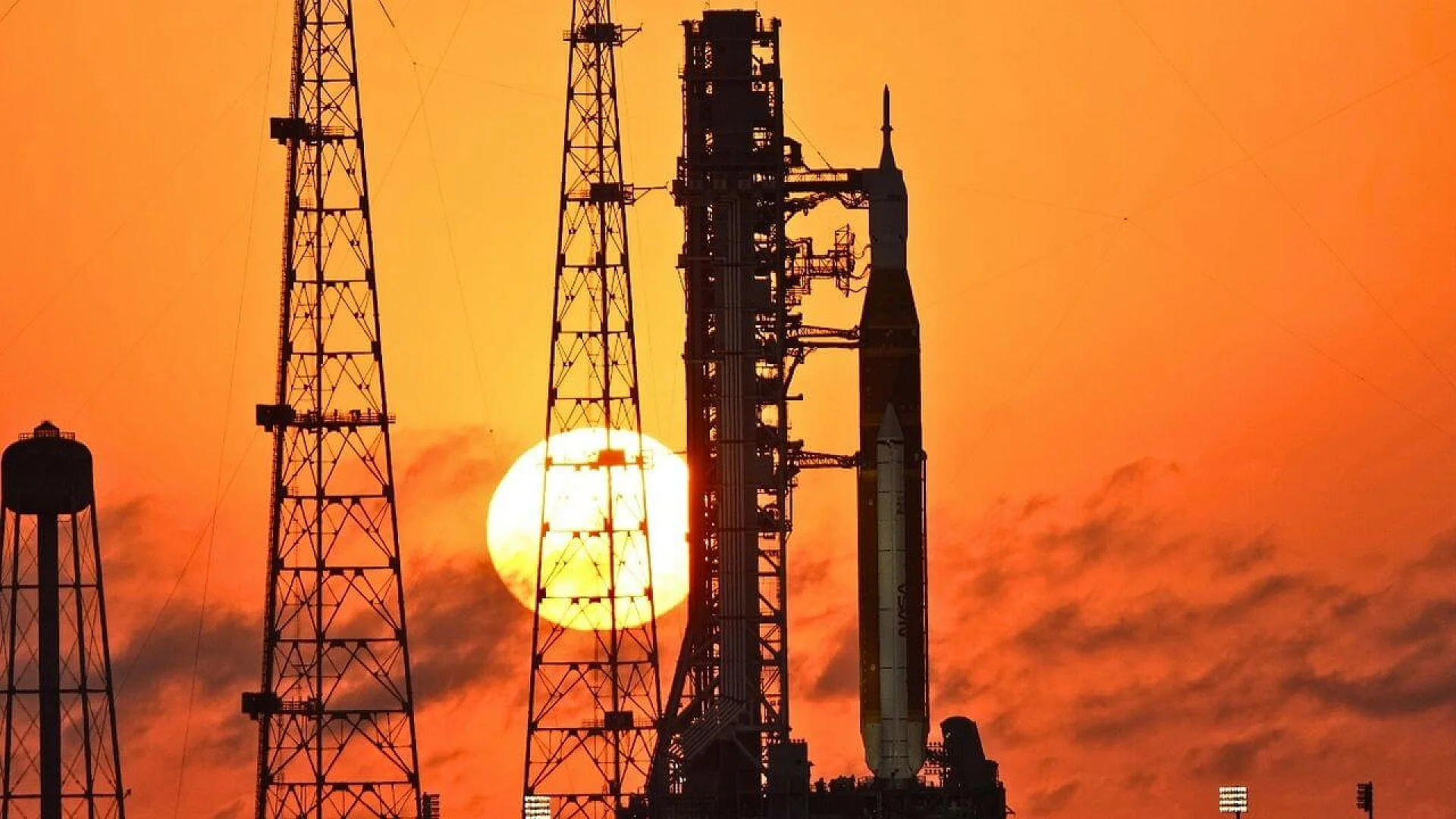
For the first time in more than half a century, the prospect of humans traveling toward the Moon is no longer a distant ambition. It is imminent.
NASA has officially started the countdown for Artemis II, a mission that aims to send four astronauts on a journey looping around the Moon and back to Earth. If successful, it will mark the first crewed lunar mission since the final flights of the Apollo era in the early 1970s.
The moment carries both historical weight and forward-looking ambition. It is not simply about revisiting a destination humanity once reached. It is about redefining how humans explore deep space in the 21st century.
A Mission Designed for Momentum, Not Landing
Unlike the iconic Moon landings of the Apollo program, Artemis II will not attempt to touch down on the lunar surface. Instead, the mission is designed as a crucial proving ground.
The astronauts will launch aboard NASA’s powerful Space Launch System rocket, a towering vehicle standing roughly 32 stories tall. Once in orbit around Earth, their Orion spacecraft will ignite its engines and begin the journey toward the Moon.
The path is carefully planned. After reaching lunar distance, the spacecraft will swing around the Moon in a wide arc before heading straight back to Earth. The entire mission is expected to last around 10 days, ending with a splashdown in the Pacific Ocean.
There will be no docking maneuvers, no lunar landing modules, and no extended stays. The simplicity is intentional. Every phase is focused on validating systems that must work flawlessly before more complex missions can follow.
Why This Flight Matters More Than It Appears
At first glance, a flyby mission may seem modest compared to the dramatic landings of the past. Yet Artemis II plays a far more strategic role than its trajectory suggests.
This mission will test the Orion spacecraft’s life-support systems with humans onboard, something that cannot be fully replicated on the ground. It will also evaluate navigation, communication, and thermal protection under real deep-space conditions.
These are not minor details. Traveling beyond Earth’s protective magnetic field exposes astronauts and equipment to intense radiation and extreme temperature fluctuations. Even small failures could have major consequences.
By sending a crew on this journey, NASA is effectively certifying its ability to safely transport humans into deep space once again.
Overcoming Setbacks on the Path to Launch
The road to this moment has not been smooth.
Originally targeted for an earlier launch window, Artemis II faced delays caused by technical issues. Engineers first encountered hydrogen fuel leaks, a persistent challenge in large cryogenic systems. Although these leaks were eventually resolved, another complication soon emerged.
A helium pressurization line became clogged, forcing the rocket to be rolled back to its hangar for further inspection and repair. Such setbacks are not unusual in spaceflight, where even minor anomalies must be thoroughly investigated before proceeding.
After weeks of careful work, the rocket was returned to the launch pad. Managers have since reported that systems are performing well, and conditions appear favorable for liftoff.
Weather, always a critical factor in launches, is also expected to cooperate within the current launch window.
A Crew That Reflects a Changing Era
While the technical aspects of Artemis II are essential, the human dimension of the mission carries its own significance.
The four-person crew includes individuals who represent a broader cross-section of humanity than the Apollo astronauts of the past. During the Apollo missions between 1968 and 1972, all lunar travelers were American men.
Artemis II tells a different story.
The crew includes a woman, a person of color, and a non-US astronaut, signaling a shift in how space exploration is perceived and who it represents. This evolution is not merely symbolic. It reflects a growing recognition that space exploration is a global and inclusive endeavor.
Pilot Victor Glover has spoken about the importance of representation, particularly for younger generations. He has expressed hope that children will see themselves reflected in the crew and imagine new possibilities for their own futures.
At the same time, he has emphasized a broader vision, one in which such milestones become routine rather than noteworthy, part of a shared human story rather than isolated firsts.
From Apollo to Artemis, A Shift in Purpose
To understand the importance of Artemis II, it helps to look back at its predecessor.
The Apollo program was driven by geopolitical competition, a race to demonstrate technological and ideological superiority during the Cold War. Its achievements were extraordinary, culminating in the first human steps on the Moon.
But Apollo was relatively short-lived. After just a few years of lunar exploration, the program ended, leaving a long gap in human deep-space travel.
Artemis represents a different philosophy.
Rather than a sprint to a symbolic finish line, it is designed as a sustained effort to establish a long-term human presence beyond Earth. The Moon is not the final goal, but a stepping stone toward even more ambitious destinations, including Mars.
Artemis II is a key part of that progression. It bridges the gap between uncrewed test flights and future missions that aim to land astronauts on the lunar surface once again.
The Technology Behind the Journey
At the heart of the mission are two critical systems: the Space Launch System rocket and the Orion spacecraft.
The Space Launch System is among the most powerful rockets ever built, capable of generating the thrust needed to send heavy payloads beyond Earth’s orbit. Its design incorporates lessons learned from decades of rocket development, including components derived from the Space Shuttle program.
Orion, meanwhile, serves as the crew’s home in space. It is equipped with advanced life-support systems, radiation shielding, and navigation tools tailored for deep-space travel.
Together, these systems form the backbone of NASA’s renewed exploration strategy.
Yet technology alone is not enough. Every component must function in harmony, under conditions that cannot be fully simulated on Earth. Artemis II is the first opportunity to test this integration with a human crew onboard.
Why This Matters
A Turning Point in Human Exploration
The significance of Artemis II extends far beyond a single mission.
For decades, human spaceflight has been largely confined to low Earth orbit, with astronauts living and working aboard space stations. While these missions have yielded valuable scientific insights, they represent only a fraction of what is possible.
Artemis II signals a return to deep-space exploration, reopening a frontier that has remained largely untouched since the 20th century.
Inspiring the Next Generation
The mission also carries a powerful cultural impact.
By showcasing a diverse crew and ambitious goals, Artemis II has the potential to inspire a new generation of scientists, engineers, and explorers. It reminds the world that space exploration is not just a technical challenge, but a human endeavor that invites participation from all corners of society.
Laying the Groundwork for the Future
Perhaps most importantly, Artemis II lays the foundation for what comes next.
Future Artemis missions aim to land astronauts on the Moon, establish sustainable operations, and eventually use lunar resources to support deeper missions into the solar system.
None of that is possible without first proving that humans can safely travel to and from the Moon again.
The Final Days Before Launch
With the countdown now underway, attention is focused on the final preparations.
Engineers are monitoring every system, from fuel lines to onboard computers, ensuring that nothing is overlooked. Astronauts are completing their final training sessions, rehearsing procedures that must be executed with precision.
There is a sense of anticipation, but also caution.
Spaceflight remains inherently risky, and each launch carries uncertainties. Yet there is also confidence, built on years of testing, analysis, and refinement.
NASA has a limited launch window in early April. If conditions are not suitable, the mission will be delayed until later in the month. Such flexibility reflects the agency’s commitment to safety above all else.
A New Chapter Begins
As Artemis II approaches liftoff, it represents more than a mission. It is a moment of transition.
For the first time in decades, humans are preparing to leave the immediate vicinity of Earth and venture back toward another world. The journey may be brief, a loop around the Moon rather than a landing, but its implications are profound.
It signals that humanity is once again ready to push beyond familiar boundaries, to test new technologies, and to expand its presence in the cosmos.
The countdown has begun, and with it, a new chapter in the story of exploration.
This article has been fact checked for accuracy, with information verified against reputable sources. Learn more about us and our editorial process.
Last reviewed on .
Article history
- Latest version
Cite this page:
- Posted by Aisha Ahmed