Scientists Warn: A Major Satellite Collision Could Be Just Days Away
As megaconstellations flood low Earth orbit, a new “CRASH Clock” reveals how close we may be to a chain reaction of satellite collisions that could disrupt life on Earth.
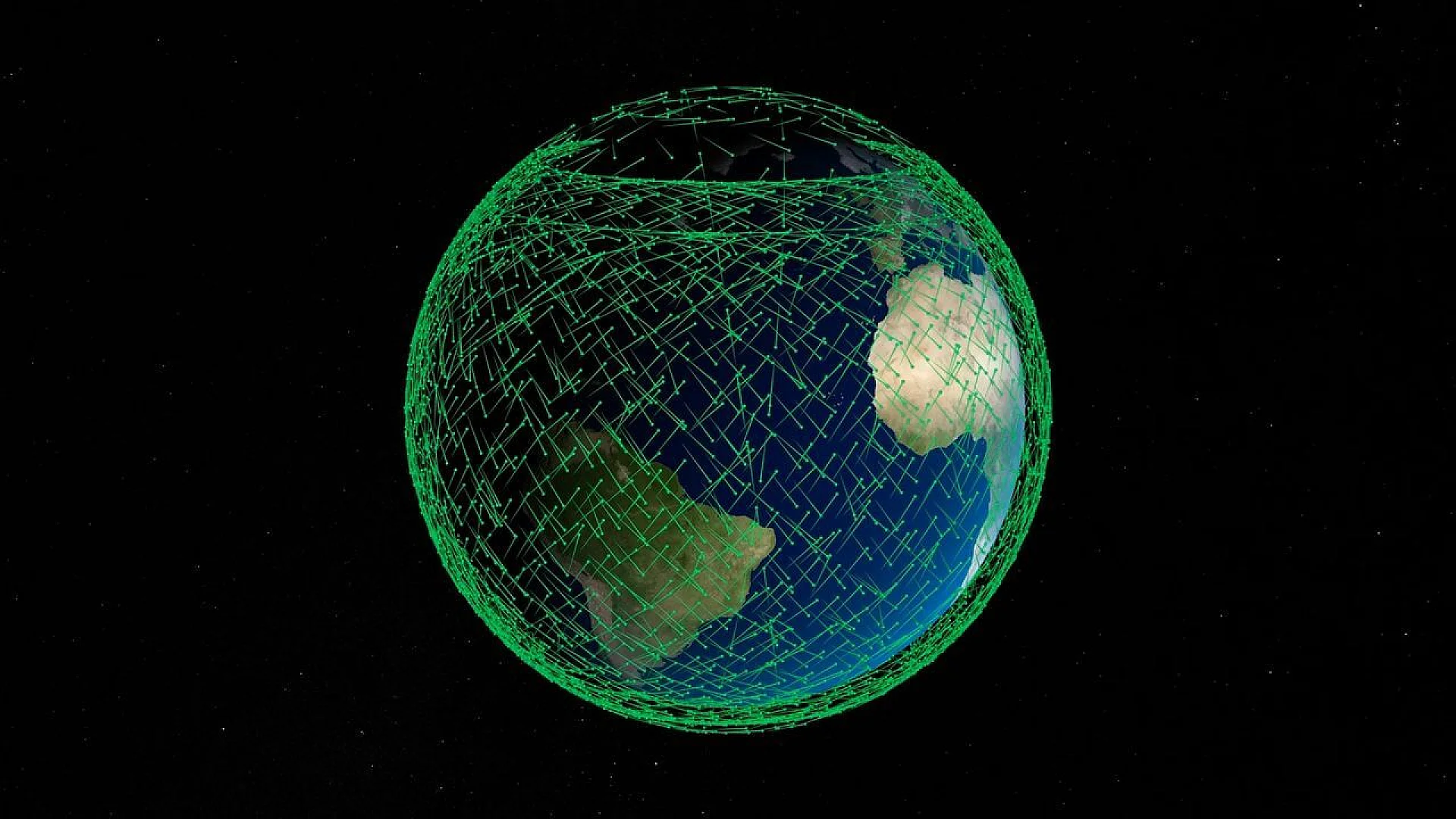
If you checked the weather today, used GPS to navigate, watched a live sports stream, or made an international call, you relied on satellites orbiting high above Earth.
Now imagine that, almost overnight, a major collision in space creates a cloud of debris that knocks out key satellites and triggers a domino effect of more crashes. Flights could lose accurate navigation, shipping routes could be disrupted, global internet coverage could falter, and disaster response systems could stumble right when they are needed most.
This is not the plot of a science fiction movie. It is a real risk that is growing rapidly as companies launch thousands of satellites into low Earth orbit, a region just a few hundred miles above our planet.
A new study introduces a stark way think about this risk: a “CRASH Clock” that measures how long we can expect to go before a catastrophic collision in low Earth orbit if satellites suddenly stop dodging each other. The result is sobering. In 2018, this clock read about 121 days. Today, the same clock has ticked down to just 2.8 days.
In other words, without constant collision avoidance, a serious satellite crash would be expected in less than three days.
The Growing Problem: Low Earth Orbit Is Turning Into a Traffic Jam
What Is Low Earth Orbit, and Why Is It Filling Up?
Low Earth orbit, often shortened to LEO, is a band of space roughly 160 to 2,000 kilometers above Earth. It is prime real estate for satellites because it offers:
- Short signal travel time
- High quality imaging of the planet
- Lower cost launches
For decades, this region was populated mainly by a manageable number of scientific, military, and communications satellites. But in recent years, a revolution has begun.
Companies like SpaceX, OneWeb, and others are launching “megaconstellations,” fleets of thousands of small satellites designed to blanket the Earth with fast internet and other services. What used to be a modest orbital neighborhood is becoming a packed city skyline.
The Kessler Syndrome: A Nightmare Scenario
With more satellites come more chances for collisions. Scientists have long warned about the “Kessler Syndrome.” This is a scenario where the number of objects in orbit becomes so high that one collision creates debris, which then hits other satellites, creating even more debris, and so on. The result is a cascade of collisions, turning usable orbits into dangerous minefields of flying metal.
The new makes clear that this nightmare scenario is not just a distant theoretical concern. The stress on orbital environment is already rising sharply.
The Central Question: How Close Are We to a Catastrophic Collision?
Scientists wanted to move beyond vague warnings and find a way to quantify the current risk in a form that is easy to grasp.
The key questions they asked were:
- Given how crowded Earth orbit has become, how long would it take for a major, destructive collision to occur if satellites could not dodge each other?
- How has this risk changed over time, especially with the of megaconstellations?
- Can we use this information as an early warning system for the health of our orbital environment?
From these questions, they developed the CRASH Clock, a simple but powerful metric that turns complex orbital dynamics into something you can understand at a glance.
The Approach: Turning Orbital Chaos into a Simple “Clock”
What Is CRASH Clock?
The CRASH Clock stands for Collision Realization And Significant. It is a measure of how long, on average, it would take for a major collision to occur in low Earth orbit if satellites stopped performing collision avoidance maneuvers.
In regular operation, satellites constantly make tiny adjustments to avoid each other. They receive warnings about potential close passes and, if needed, fire their thrusters to move out of the way. The CR Clock asks a chilling “what if” question:
If all that avoidance suddenly stopped, how long until something big and bad happens?
The answer becomes a single number in days. The shorter the number, the higher the stress on the orbital environment.
How Do Researchers Estimate This Clock?
The study uses:
- Data and models satellite populations andbits
- Information on how often satellites come dangerously close to one another
- Simulations of what would happen if satellites did not maneuver to avoid collisions
In simple terms, imagine a giant map of all satellites in low Earth orbit, each one moving at tens of thousands of kilometers per hour. Researchers track how often their paths nearly cross. Then they ask: if nobody flinched, how long before two of them actually slam into each other in a way that creates major debris?
By comparing results from different years and different satellite densities, they can see how quickly risk has grown.
The Breakthrough: From 121 Days to 2.8 Days
A Rapid and Alarming Decline
The study’s most striking result is how quickly the CRASH Clock has shrunk:
- In 2018, the CRASH Clock was about 121 days.
- Today, it sits at roughly 2.8 days.
This means that in only a few years, the estimated waiting time for a catastrophic collision (under a no-avoidance scenario) has dropped by a factor of more than 40.
In other words, the orbital environment has gone from somewhat tense to critically stressed in a very short time.
Close Conjunctions: Space’s Near Miss
The study also highlights that the number of “close conjunctions” has soared. A close conjunction is a near miss, a situation where two objects in space pass dangerously close to one another.
Some key points
- The frequency of these close passes has risen, especially in regions heavily occupied by megaconstellations.
- When many satellites cluster in similar orbits, even small errors in tracking position can make it hard to know where each one will be at a given time.
- These uncertainties increase the chance that two satellites, both trying to avoid each other or maneuvering frequently, might get into trouble.
You can think of it like a highway at rush hour. When there are only a few cars, driving is easy When the road fills up, even good drivers need constant adjustments, and the chance of a crash grows sharply.
The New Orbital “House of Cards”
The study characterizes our current situation as an “orbital house of cards.” Every satellite that is added to the system increases the structural strain. If collision avoidance systems and operations remain perfect, the house stands, but if avoidance fails even for a short period, the whole structure becomes vulnerable.
The CRASH Clock number of 2.8 days captures how precarious that house of cards has become.
Why This Matters: From Streaming to Safety
Everyday Technologies at Risk
A catastrophic collision in low Earth orbit is not just a problem for satellite operators. It could affect:
- Internet and Communications
- Many new broadband services rely on megaconstellations.
- A major debris event could wipe out dozens or hundreds of satellites, impacting global connectivity.
- Navigation and Transportation
- GPS and other satellite navigation systems guide aircraft, ships, trucks, and even personal vehicles.
- Loss or degradation of these systems can affect safety and efficiency in travel and shipping.
- Weather and Climate Monitoring
- Satellites monitor storms, track wildfires, and measure climate trends.
- Damage to this infrastructure could reduce our ability to forecast dangerous weather or respond to natural disasters.
- Security and Emergency Response
- Governments and relief agencies use satellites for communication and situational awareness in crises.
- A more hostile orbital complicates disaster response and global security efforts.
The Chain Reaction Problem
One large collision in low Earth orbit does not just destroy two satellites. It can create thousands of fragments, each moving at high speed. Any one of fragments can disable or destroy another satellite, creating even more debris.
This is why the study’s CRASH Clock is so important. It is not warning us about single unlucky accident. It is warning us about a tipping point where one accident could lead to many more.
The Policy and Management Challenge: Rules for a Shared Sky
Space Is a Global Commons
Low Earth orbit does not belong to any single country or company. It is a shared environment, much like the ocean or the atmosphere. one actor fills it with satellites or leaves dead spacecraft and debris behind, it affects everyone else.
The study’s findings underscore a growing consensus that
- Current rules and practices are not keeping up with the pace of satellite launches.
- There is an urgent need for coordinated, international standards for how satellites are deployed, operated, and retired.
What Needs to Change?
While the study focuses on risk assessment, its implications point directly toward several needed actions:
- Stronger Space Traffic Management
- Better tracking of satellites and debris.
- More reliable and transparent sharing of orbital data.
- Standard procedures for collision avoidance.
- Sustainable Constellation Design
- Limiting overcrowding in specific orbital shells.
- Ensuring that satellites have end-of-life plans to deorbit or move to safe “graveyard” bits.
- Debris Mitigation and Removal
- Stricter rules on leaving rocket stages and dead satellites in key orbital regions.
- Development of active debris removal technologies to clean up existing junk.
- International Coordination and Regulation
- Agreements that bind both nations and private companies to responsible behavior.
- Mechanisms to hold operators accountable if they put the shared space environment at undue risk.
The CRASH Clock gives policymakers a simple, vivid way to communicate how urgent these steps have become.
Caveats and Future Work: What We Still Need to Learn
Like any scientific tool, the CRASH Clock has limitations and relies on assumptions.
Some important caveats:
- Simplified Scenario
- The clock assumes that satellites abruptly stop collisions.
- In reality, operators will continue to maneuver, so 2.8 days is not a prediction of an exact date for a disaster.
- Instead, it is stress indicator, showing how dependent we now on constant, successful avoidance.
- Data and Tracking Uncertainties
- Not all objects in orbit are tracked with the same precision.
- Smaller debris is often invisible to current systems but can still cause serious damage.
- Improvements in and modeling could refine the CRASH Clock value.
- Changing Satellite Populations
- New launches, deorbits, and failures continuously change the orbital picture
- The clock must be updated regularly to remain accurate.
- Behavior of Operators
- Different satellite operators have different standards and capabilities for avoidance.
- Future work could explore how better coordination among might reset the clock to a safer value.
Future research will likely focus on:
- Making the CRASH Clock dynamic and continuously updated.
- Examining how specific policy changes, such as stricter debris rules or limits on constellation size, could extend the clock.
- Integrating more realistic models of operator behavior and technological improvements in avoidance and tracking.
Looking Ahead: Can We Step Back from the Brink?
The new research delivers a clear and unsettling message: humanity is putting unprecedented stress on the orbital environment that underpins a huge part of modern life. The CRASH Clock’s fall from 121 days to 2.8 days signals that we are entering a risky new era where safety depends on flawless, continuous management of a crowded sky.
Yet the situation is not hopeless.
We have:
- The knowledge to understand the problem.
- The technology to track objects, avoid collisions, and eventually clean up debris.
- The opportunity to create international rules and norms that protect orbital space for decades to come.
The key is acting before a major collision forces change upon us.
As satellite networks expand and more nations and companies reach for the stars, the CRASH Clock can serve as a vital warning bell. reminds us that innovation in space must be matched with responsibility, foresight, and cooperation.
The sky above may look empty, but it is becoming a busy, fragile ecosystem. Protecting it is no longer just a concern scientists or space agencies. It is a shared responsibility, because the health of our orbital environment is becoming as essential to daily life as the networks and power grids on the ground.
The clock is ticking. The question now is whether we will act in time to reset it.
The study was published in arXiv on December, 2025.
This article has been fact checked for accuracy, with information verified against reputable sources. Learn more about us and our editorial process.
Last reviewed on .
Article history
- Latest version
- Last updated by Dayyal Dungrela, MLT, BSc, BS
- Peer reviewed by Dr. Arjun Patel, PhD
Reference(s)
- Thiele, Sarah., et al. “An Orbital House of Cards: Frequent Megaconstellation Close Conjunctions.”, 2025 arXiv, doi: 10.48550/arXiv.2512.09643. <https://arxiv.org/abs/2512.09643>.
Cite this page:
- Posted by Aisha Ahmed