The Human Machine Merger Is Coming by 2045 According to Futurist Ray Kurzweil
Could brain implants and digital replicas allow our minds to outlive our bodies? Explore the cutting-edge technology poised to redefine human existence.
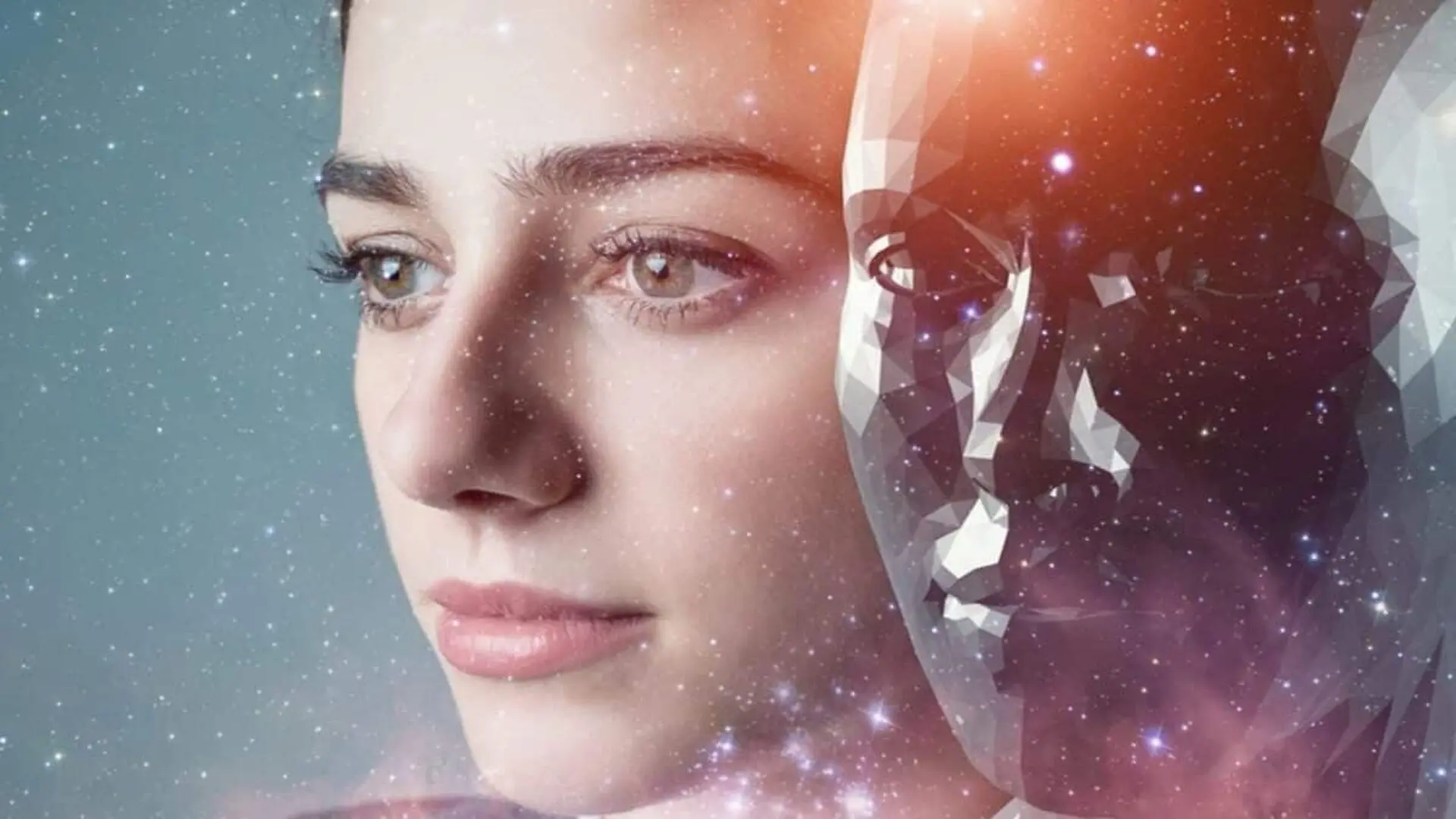
The technological singularity is frequently framed in popular culture as a sudden, catastrophic moment when machines achieve super-intelligence and break free from human control. Yet, for futurist Ray Kurzweil, this milestone represents something far more intimate: a symbiotic fusion where artificial intelligence becomes deeply woven into the human cognitive process, effectively blurring the lines between machine, biological identity, and the individual self.
Tracing its origins back to the 1950s, the concept of a technological singularity began as a vague notion discussed by luminaries like physicist John von Neumann and mathematician Stanisław Ulam. While author Vernor Vinge later popularized the term in the 1990s, Kurzweil has spent decades refining the prediction. In his foundational 2005 work, The Singularity Is Near, he famously pegged 2045 as the year this merger would reach a critical tipping point. His recent follow-up, The Singularity Is Nearer, further explores how current emerging technologies are actively laying the groundwork for this shift.
Digital Shadows and the Architecture of Modern Identity
Kurzweil argues that the path to this integration is already being paved by our daily reliance on digital systems. Every interaction, emotional expression, and behavioral quirk we document online creates a high-fidelity record of our internal lives. He posits that this data acts as a foundation for constructing increasingly accurate, AI-driven simulations of specific personalities.
As noted in Popular Mechanics, the rapid evolution of recording and organizing technology will likely allow for highly convincing digital replicas by the end of the 2020s. In The Singularity Is Nearer, Kurzweil writes:
“We are already creating through our digital activities enormously rich records of how we think and what we feel, and during this decade our technologies for recording, storing, and organizing this information will advance rapidly.”
This digital evolution is complemented by physical breakthroughs. From cochlear implants to brain-computer interfaces like those pioneered by Neuralink, we are already witnessing the integration of silicon and synthetic hardware into the human mind. While these current tools serve medical purposes, Kurzweil views them as the nascent stages of a future where biological limitations are entirely transcended by prosthetic and organ-level upgrades.
The Ethics of the “You 2” Replicant
A significant portion of Kurzweil’s inquiry centers on the moral and existential implications of the “You 2” concept—a high-fidelity replica of an individual. Drawing parallels to the “replicants” found in Philip K. Dick’s Do Androids Dream of Electric Sheep?, Kurzweil explores a reality where such entities could be housed in cybernetically enhanced biological bodies grown from the DNA of the original person.
This scenario forces a difficult question: does a perfect functional copy, created through AI and data, hold the same claim to personhood as the biological original? Kurzweil suggests that society will eventually be forced to grapple with the legal and ethical status of these entities, questioning whether they should possess civil rights, voting capabilities, or inheritance claims. The debate over whether such a replica is truly “conscious” remains the ultimate, unresolved mystery at the heart of this vision.
Nanotech Horizons and the Risk of Runaway Growth
Looking toward the 2040s and 2050s, Kurzweil highlights nanotechnology as the vehicle for the most radical human transformations. He envisions microscopic machines capable of not just repairing the human body, but fundamentally altering its structure to enable enhanced physical strength, rapid cognitive processing, and even survival in extreme environments.
In his 2024 text, he explains:
“In the 2040s and 2050s, we will rebuild our bodies and brains to go vastly beyond what our biology is capable of, including their backup and survival.”
However, this vision is not without peril. Kurzweil acknowledges the potential for the “grey goo” scenario, where self-replicating nanobots consume environmental resources unchecked, potentially destabilizing the planet’s biomass. Furthermore, as nonbiological components take an increasing role in decision-making by the 2030s, the boundary between autonomous human thought and machine-assisted logic will become almost impossible to define, marking a transition toward a post-biological era of human consciousness.
This article has been fact checked for accuracy, with information verified against reputable sources. Learn more about us and our editorial process.
Last reviewed on .
Article history
- Latest version
Reference(s)
- “Singularity Team | Ray Kurzweil.” <https://www.su.org/team/ray-kurzweil>.
- “Stanislaw Ulam - The Linda Hall.” The Linda Hall: Science Library and Arboretum <https://www.lindahall.org/about/news/scientist-of-the-day/stanislaw-ulam/>.
- “Kurzweil%2C%20Ray%20 %20The%20Singularity%20Is%20Near.” <https://dn790006.ca.archive.org/0/items/kurzweil-ray-the-singularity-is-near/Kurzweil%2C%20Ray%20-%20The%20Singularity%20Is%20Near.pdf>.
- “Book Review Singularity Nearer When We Merge Ai.” <https://www.cato.org/regulation/fall-2025/book-review-singularity-nearer-when-we-merge-ai>.
- Gorman, Shawn. “The Singularity—Humans Merging With AI—Is Coming Within 19 Years. But It’s Already Starting Inside You Now..”, October 12, 2026 Popular Mechanics <https://www.popularmechanics.com/science/a74070118/ai-singularity-human-merger-ray-kurzweil/>.
- “Review by Jason Koornick: Do Androids Dream of Electric Sheep? (1968) | Philip K. Dick.”, February 11, 2012 Philip K. Dick <https://philipdick.com/literary-criticism/reviews/review-by-jason-koornick-do-androids-dream-of-electric-sheep-1968/>.
- <https://www.britannica.com/technology/grey-goo>.
Cite this page:
- Posted by Hassan Raza