Great Barrier Reef Microbiome Mapped Revealing More Than 500 New Species and 360,000 Viruses
Scientists create the first full microbiome map of the Great Barrier Reef, revealing a hidden ecosystem of unknown microbes and viruses.
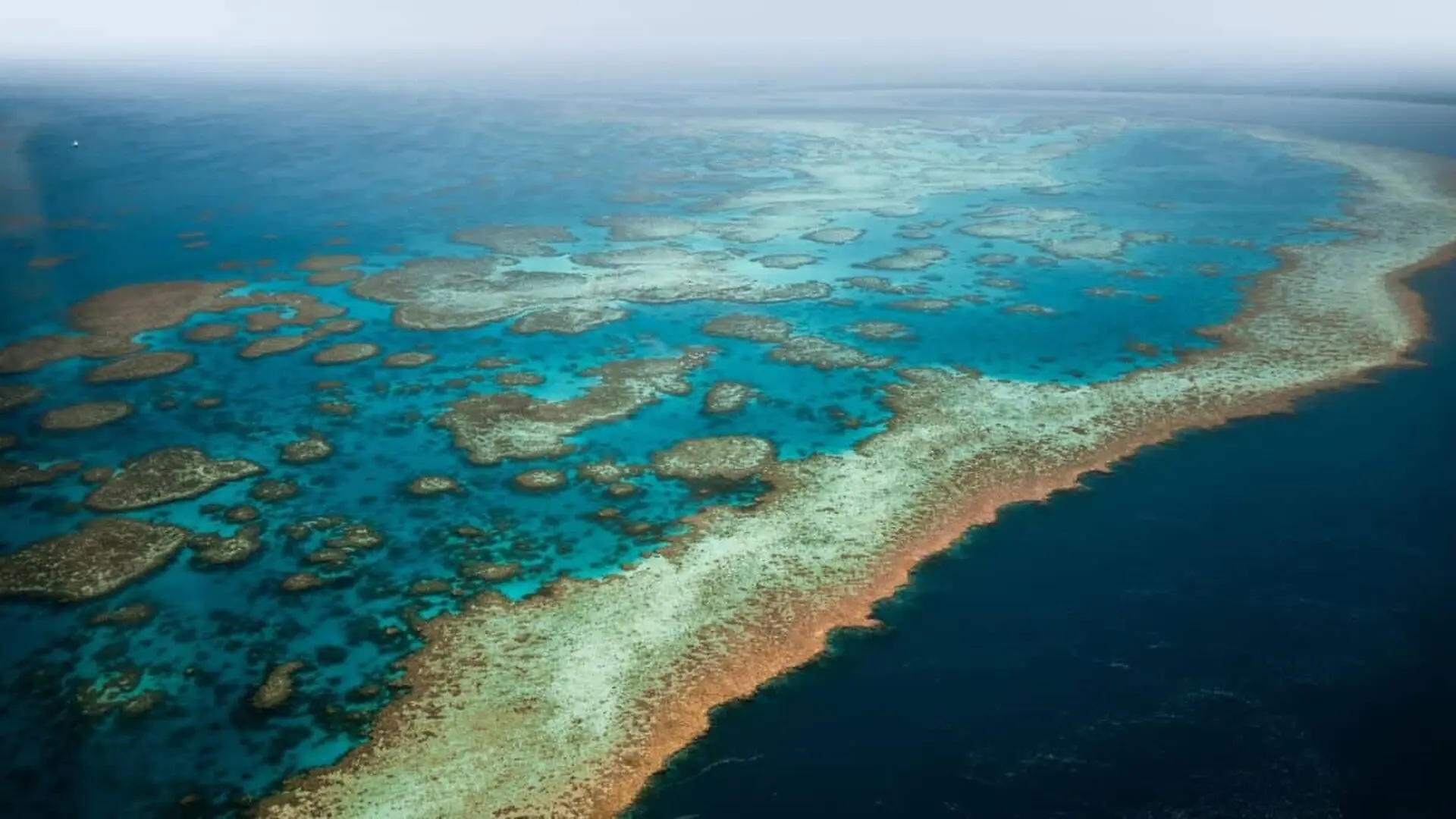
A team of Australian scientists has produced the first comprehensive genetic chart of the Great Barrier Reef’s microscopic inhabitants, unveiling a hidden world of bacteria, archaea and viruses. The findings, released in Nature, list more than 500 bacterial lineages never before recorded and a staggering number of viral entities.
Genome‑scale survey spans 48 reef locations
Collecting seawater from 48 distinct sites along the reef, the researchers extracted DNA and assembled an extensive catalogue of microbial genomes. The effort resulted in the creation of the Great Barrier Reef Microbial Genomes Database, now openly available for global research initiatives.
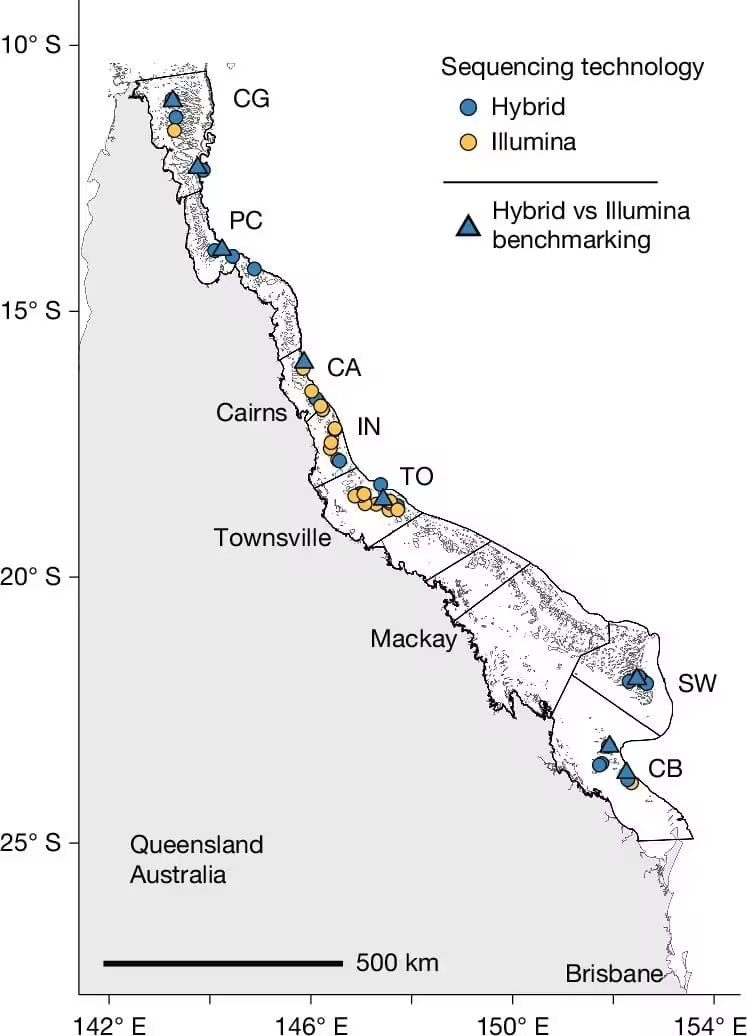
The database now serves as a baseline for future investigations into reef health, offering a reference point for scientists seeking to understand how microbial communities respond to environmental stressors.
Advanced sequencing overcomes oceanic mixing challenges
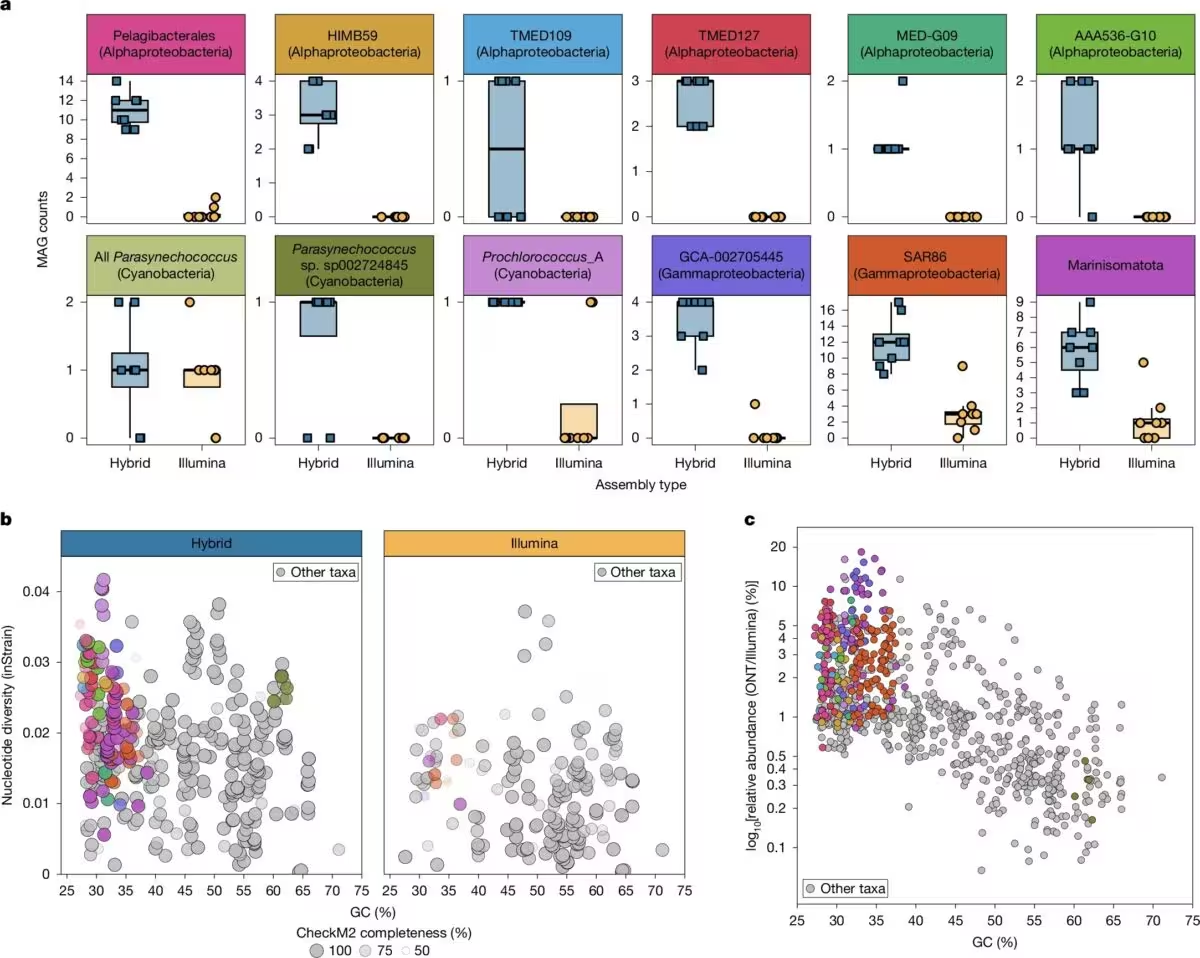
Traditional sequencing methods have struggled with the constant turbulence of ocean currents that blend closely related microorganisms, as well as with intricate DNA configurations found in many reef species. The team tackled these obstacles by employing long‑read DNA sequencing, a technique that captures extensive stretches of genetic material in a single pass.
Dr. Steven Robbins, the study’s lead author, described the approach as simplifying a massive jigsaw puzzle into a version with far fewer pieces, dramatically easing the reconstruction of microbial genomes.
Discovery of thousands of previously unknown microbes
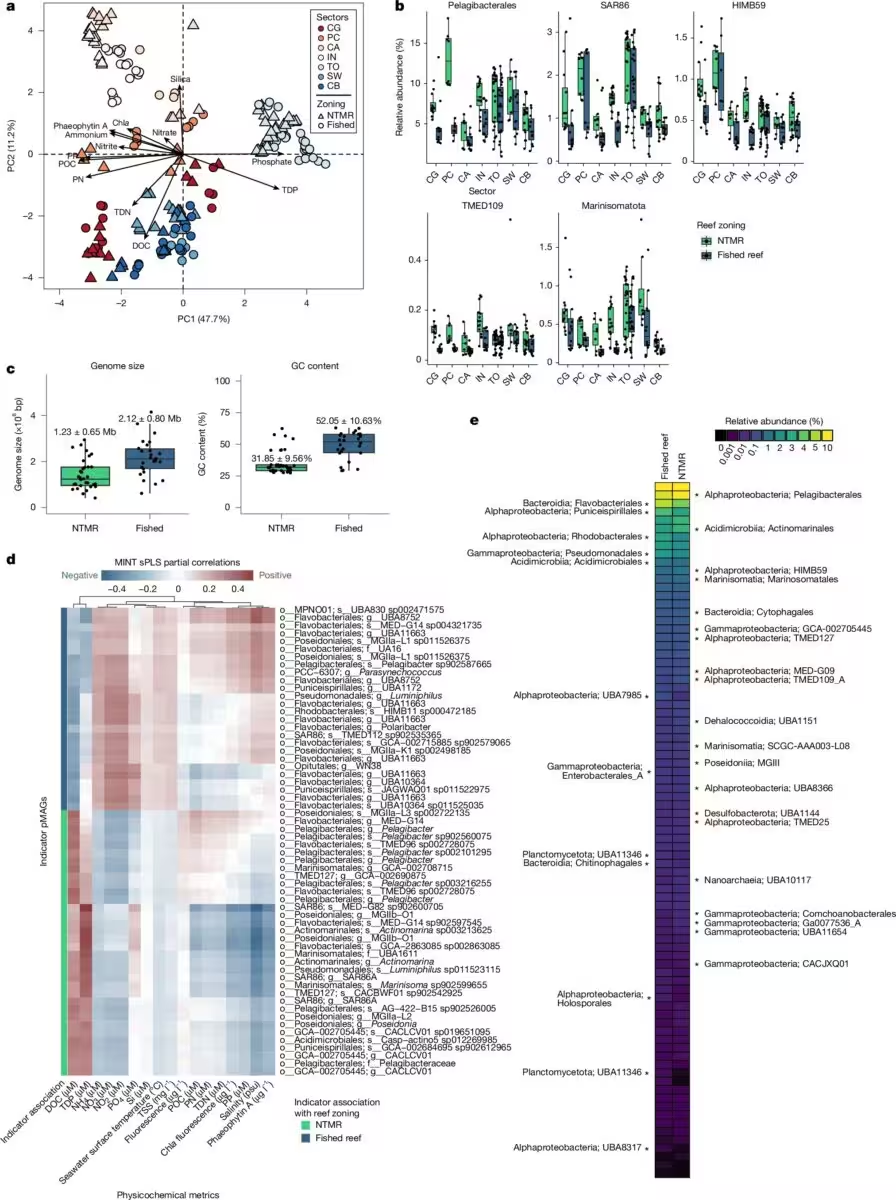
Analysis of the collected samples uncovered 876 distinct bacterial and archaeal taxa, with roughly two‑thirds representing novel lineages. In addition, the researchers catalogued more than 360,000 unique viral sequences, highlighting the reef’s rich viral landscape.
Among the surprising findings was the detection of Crassvirales, a viral group once thought to be a marker of anthropogenic waste because of its earlier identification in human gut studies. The new data indicate that this virus also occurs naturally in open ocean environments.
Microbial residents underpin reef food webs
The study underscores the foundational role of microscopic life in sustaining reef ecosystems. Dr. Yun Kit Yeoh of the Australian Institute of Marine Science explained that micro‑algae generate the majority of atmospheric oxygen and serve as the primary energy source for marine food chains, ultimately feeding organisms ranging from tiny coral polyps to massive whales.
“They are eaten by krill and other zooplankton, which are then consumed by other animals from the smallest coral polyps to the largest whales.”
Professor Philip Hugenholtz, senior author and microbiology expert at the University of Queensland, emphasized that the new map now allows researchers to investigate what constitutes a healthy reef microbiome and how these invisible communities react to environmental change.
This article has been fact checked for accuracy, with information verified against reputable sources. Learn more about us and our editorial process.
Last reviewed on .
Article history
- Latest version
Reference(s)
- “Great Barrier Reef Genomic Database - IMOS.”, June 24, 2024 IMOS <https://imos.org.au/facility/biomolecular-observing/great-barrier-reef-genomic-database>.
- <https://www.researchgate.net/profile/Steven-Robbins>.
- “Dr Yun Kit Yeoh.” <https://www.aims.gov.au/about/our-people/dr-yun-kit-yeoh>.
- Robbins, Steven. “The planktonic microbiome of the Great Barrier Reef - Nature.”, July 22, 2026, pp. 1-10. Nature, doi: 10.1038/s41586-026-10778-z. <https://www.nature.com/articles/s41586-026-10778-z>.
Cite this page:
- Posted by Hassan Raza