Ancient Chinese Fossil Shows Oldest Reptile Digestive System and Early Marine Adaptations
Newly found tiny marine reptile fossil from 245 million years ago shows astonishing longevity, reshaping paleontology.
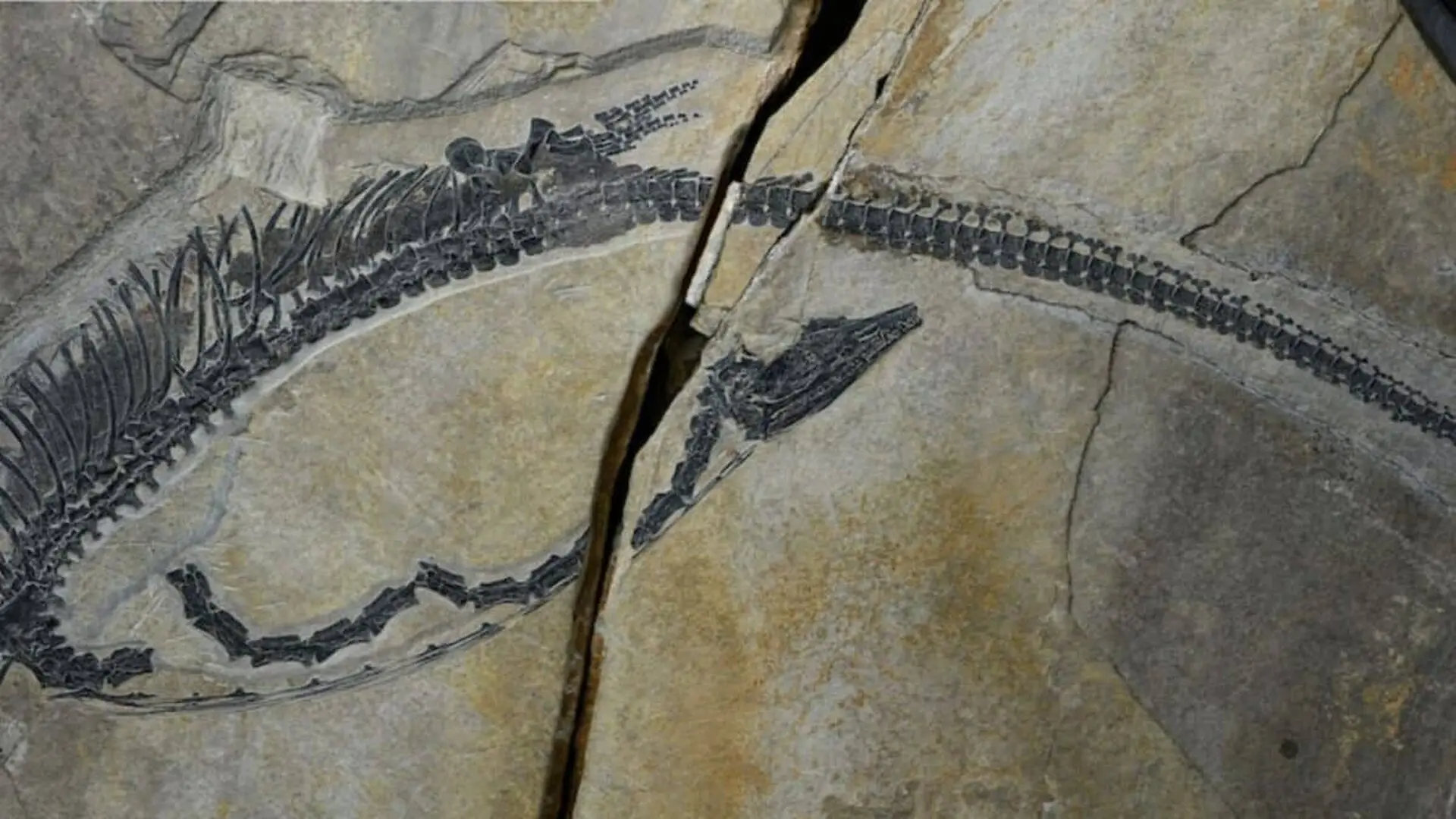
A remarkably preserved fossil unearthed in China offers scientists an unprecedented glimpse of a marine reptile that roamed the oceans roughly 245 million years ago. The specimen includes an almost complete skeleton together with extensive soft‑tissue remnants, making it the oldest reptile fossil known to retain a largely intact digestive tract.
The research, appearing in Science Advances, centers on Austronaga minuta, a diminutive, long‑necked reptile whose preservation reveals anatomical details seldom seen in Triassic fossils. An international team of paleontologists from China, Europe and the United States collaborated on the study, with Dr. Stephan Spiekman of the State Museum of Natural History Stuttgart and the University of Hohenheim among the contributors.
A tiny predator with a uniquely adapted body
The Austronaga specimen measures about 60 centimeters (24 inches) in total length. Despite its modest size, the animal possessed an unusually elongated neck and tail, setting it apart from other known Triassic marine reptiles.
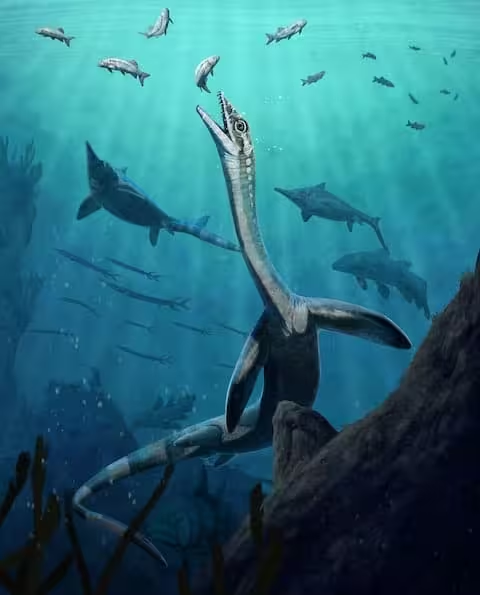
Its morphology indicates a lifestyle well suited to life in water. A powerful, elongated tail would have driven propulsion, while broadened, fin‑like forelimbs likely provided steering and stability. In contrast, the hind limbs were markedly reduced, contributing little to locomotion.
Although its overall shape recalls later marine reptiles such as ichthyosaurs and mosasaurs, phylogenetic analysis places Austronaga within an early branch of archosaurs—the lineage that eventually gave rise to dinosaurs and crocodilians. Dr. Stephan Spiekman noted that prior assumptions held early archosaurs to be only minimally adapted to marine habitats.
“The discovery of Austronaga shows that early representatives of this lineage had already developed complex adaptations to life in the oceans, comparable to those of other, better‑known groups of fossil marine reptiles.”
Internal organs preserved after two hundred and fifty million years
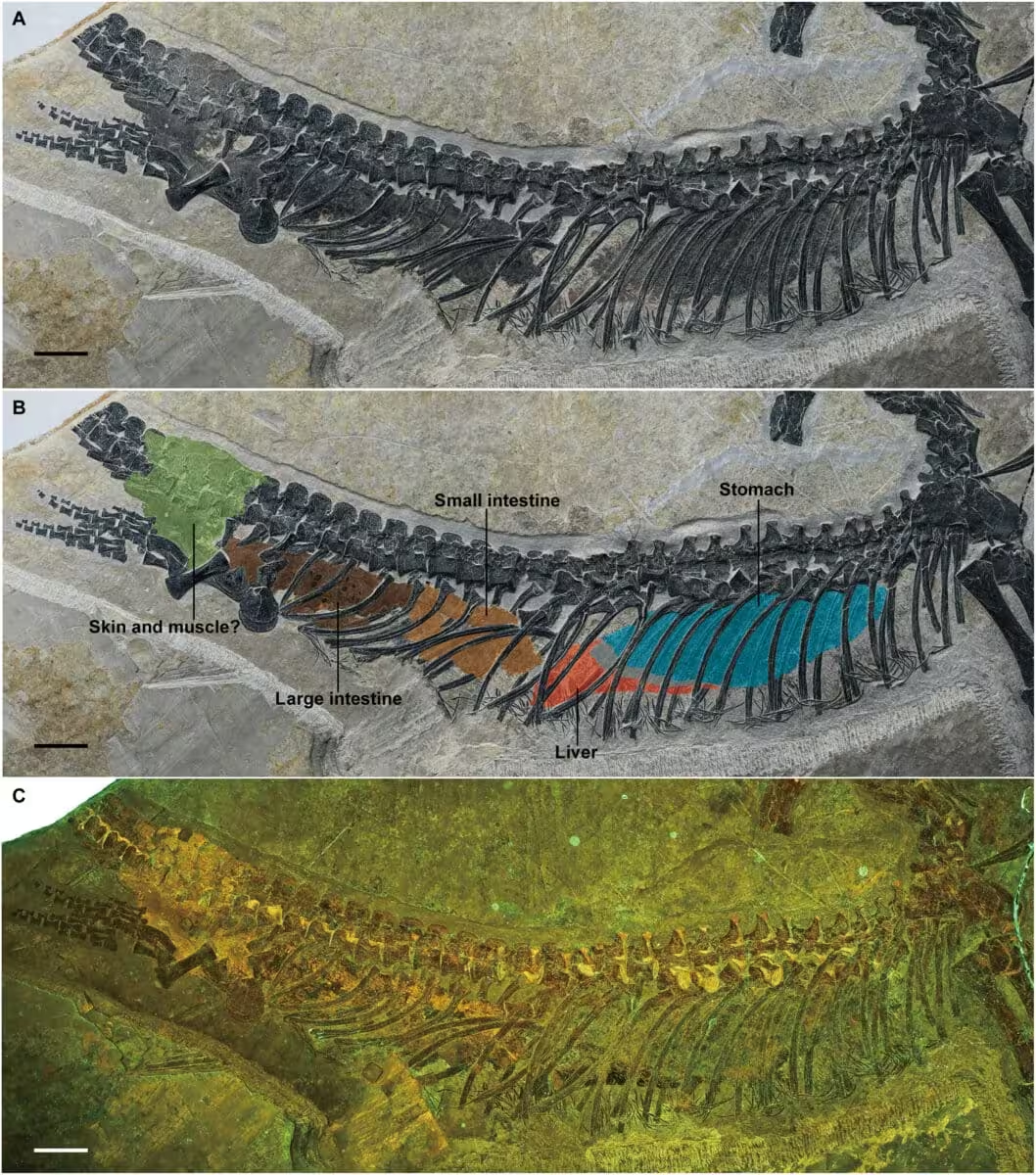
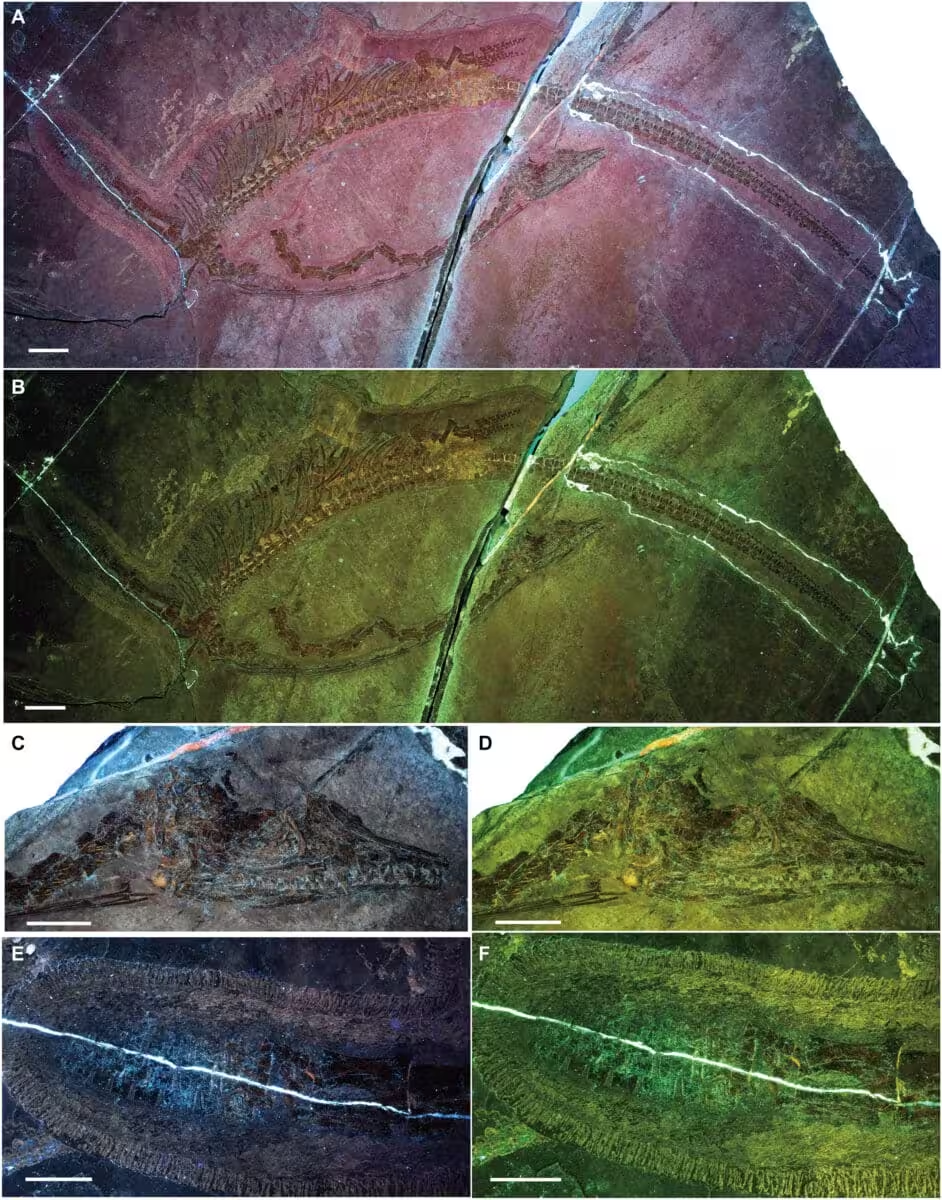
The most striking aspect of the find lies within the rib cage, where a darkened region turned out to be the fossilized remains of a digestive system. Researchers employed ultraviolet‑light photography and mass‑spectrometry to identify several internal structures, including a sizable sac‑like stomach, a liver that retained traces of hemoglobin, and an extensive intestinal tract.
Lead author Dr. Wei Wang of the Institute of Vertebrate Paleontology and Paleoanthropology in Beijing emphasized that, despite the animal’s streamlined skeleton, its internal anatomy remained relatively simple. “The overall arrangement shows that the digestive system of Austronaga was relatively simple in structure. This fossil is the oldest known example of a largely complete digestive system in a reptile,” he explained.
What the gut tells us about early archosaur biology
Modern birds and crocodilians possess a two‑chambered stomach, yet Austronaga appears to have had a single, undivided chamber. According to Nick Fraser of National Museums Scotland, this suggests that the earliest archosaurs likely began with a straightforward stomach design, with more complex compartmentalization evolving later.
The reptile’s short, uncomplicated intestinal tract resembles that of contemporary fish‑eating reptiles, reinforcing the idea that its feeding strategy was relatively unspecialized. Combined with the skeletal data, the soft‑tissue evidence provides one of the clearest reconstructions of an early marine reptile’s biology.
The specimen now resides in Beijing, where it continues to inform investigations into the diversity of Triassic marine reptiles and their terrestrial ancestors. Researchers hope that further discoveries will refine the evolutionary narrative of early archosaurs and their transition from land to sea.
This article has been fact checked for accuracy, with information verified against reputable sources. Learn more about us and our editorial process.
Last reviewed on .
Article history
- Latest version
Cite this page:
- Posted by Hassan Raza