Second Sauropod Fossil Hidden Antarctic Titanosaur Tail Bone Revealed After 40 Years
A hidden Antarctic dinosaur fossil, overlooked for 40 years, is finally reexamined, revealing its surprising significance for paleontology.
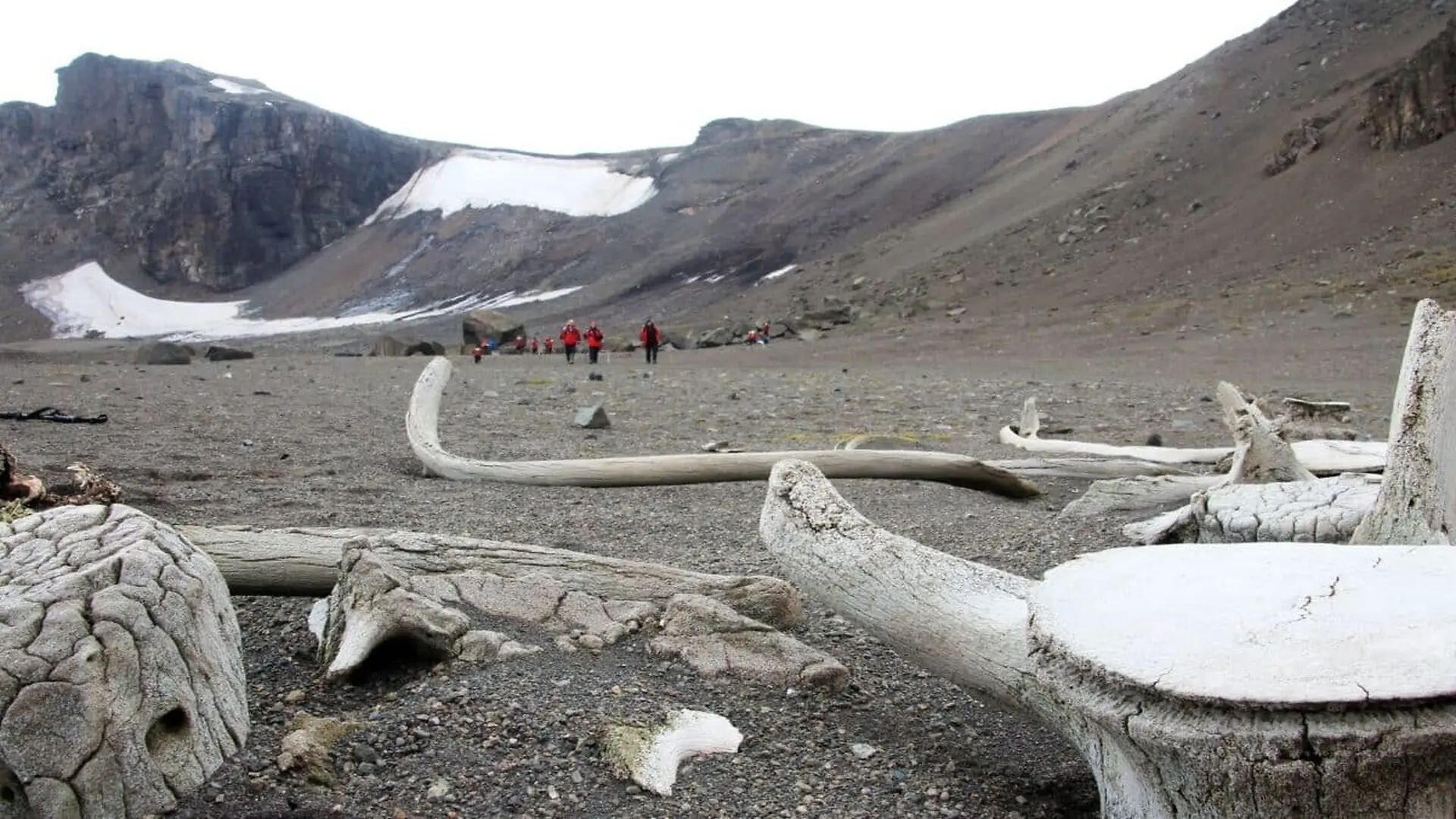
A fragment of a long‑necked dinosaur tail collected on James Ross Island in 1985 has now been confirmed as belonging to a titanosaur, a massive herbivorous sauropod. The bone, long stored in a British Antarctic Survey archive, offers fresh proof that Antarctica once supported a diverse dinosaur fauna.
The piece was recovered during a field season led by geologist Mike Thomson, who was mapping sedimentary layers and gathering fossils to reconstruct the continent’s deep past. At the time, the isolated bone was catalogued simply as a large reptilian fragment and set aside.
Decades later, paleontologist Mark Evans stumbled upon the same specimen while reviewing the BAS collection. Detailed morphometric analysis and comparison with known sauropod material revealed the surprising identity of the bone.
The results appear in Acta Palaeontologica Polonica, where the authors describe the fragment as belonging to an Upper Cretaceous titanosaurian sauropod from Antarctica, adding a rare data point to the scant polar dinosaur record.
Antarctic Sauropods: Uncovering Fossils Beneath the Ice
Locating dinosaur remains on the icy continent is exceptionally challenging because most of the landmass is cloaked in permanent ice, as noted in a recent overview of Antarctic ice coverage. The newly identified tail fragment stands out for originating from a region that, during the Cretaceous, bore lush forests rather than the barren snowfields seen today.
“This discovery represents only the second sauropod body fossil known from Antarctica, although it was the first dinosaur bone to be collected from the continent,” explained the authors.
When these giants roamed the southern latitudes, the climate was considerably warmer, supporting forests and a range of organisms. Co‑author Paul Barrett of the Natural History Museum in London described the ancient landscape as “rather different and much more hospitable than we think of today.”
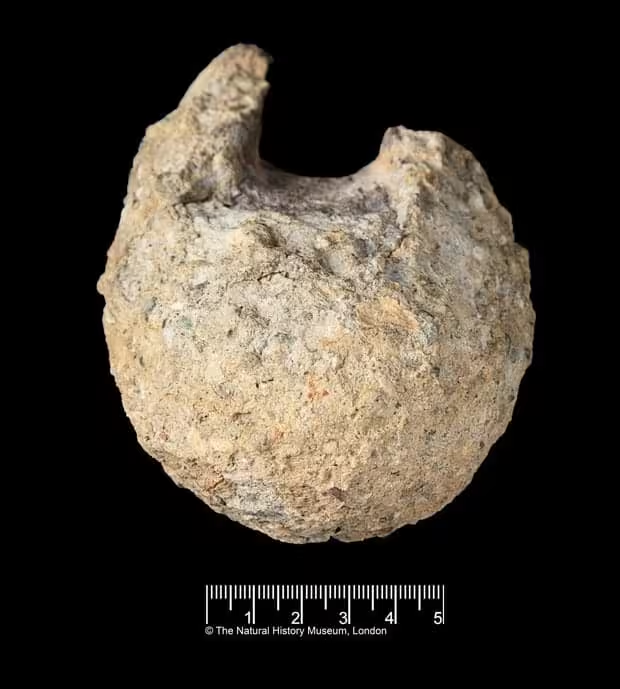
The case illustrates how specimens once dismissed as routine can yield groundbreaking insights when examined with contemporary analytical tools and an expanded comparative framework.
Size, Growth Stage, and Unresolved Taxonomy
Measurements suggest the animal measured roughly 23 feet (7 meters) in length, placing it on the smaller end of the titanosaur spectrum. Researchers infer the individual may have been a juvenile at the time of death.
Because only a portion of the caudal vertebra is available, the exact species remains indeterminate, as highlighted in the full study. The fragmentary nature precludes a complete anatomical reconstruction.
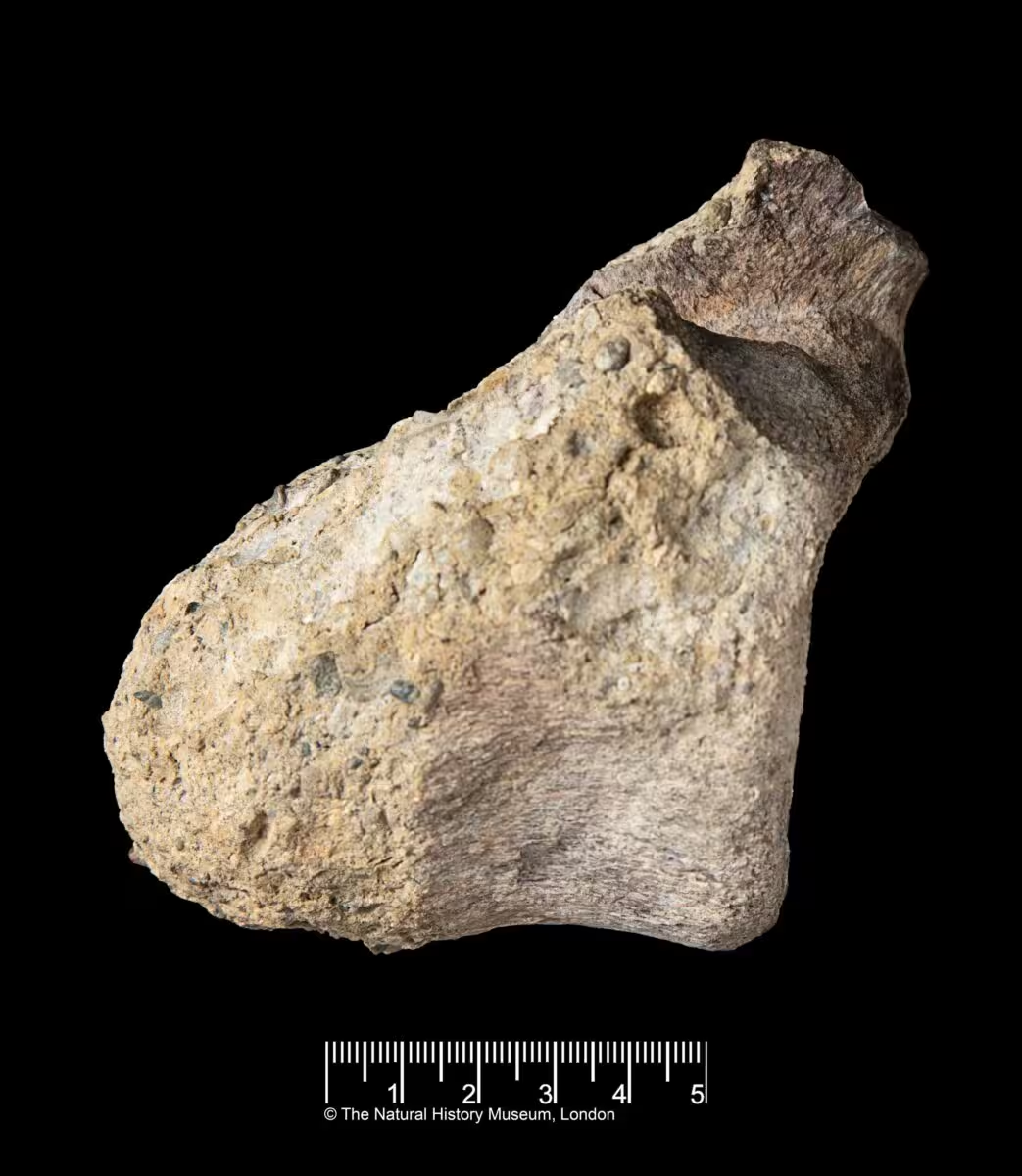
The cause of death is still speculative. One hypothesis proposes that the carcass drifted offshore before settling on the seafloor, where it became encased in marine sediments that later lithified into rock. This scenario helps explain how dinosaur material can persist in Antarctica’s harsh geological record.
Cutting‑Edge Techniques Reveal a Hidden Identity
Advances in imaging, micro‑structural analysis, and comparative databases now enable paleontologists to resolve fragmentary fossils that were previously ambiguous. The bone collected in 1985 could not be placed within a specific clade until these modern methods were applied.
While Mike Thomson initially recovered the specimen, the analytical arsenal available then was limited. It was only after Mark Evans revisited the collection—unaware that the original discoverer had passed away in 2020—that the true nature of the fragment emerged.
“If he were still with us, he would be delighted to know what this was,” Evans said.
This article has been fact checked for accuracy, with information verified against reputable sources. Learn more about us and our editorial process.
Last reviewed on .
Article history
- Latest version
Reference(s)
- “Prof Paul Barrett | Natural History Museum.” <https://www.nhm.ac.uk/our-science/people/paul-barrett.html>.
- “A titanosaurian sauropod dinosaur from the Upper Cretaceous of Antarctica - Acta Palaeontologica Polonica.” <https://www.app.pan.pl/article/item/app013152025.html>.
Cite this page:
- Posted by Hassan Raza