Scotland Hoard Reveals Iranian Vessel and Community Wealth, Not Pure Viking Treasure
Scotland’s 2014 Galloway Hoard unearthed over 100 Viking‑age silver, gold, Christian relics and a rare Iranian‑linked vessel.
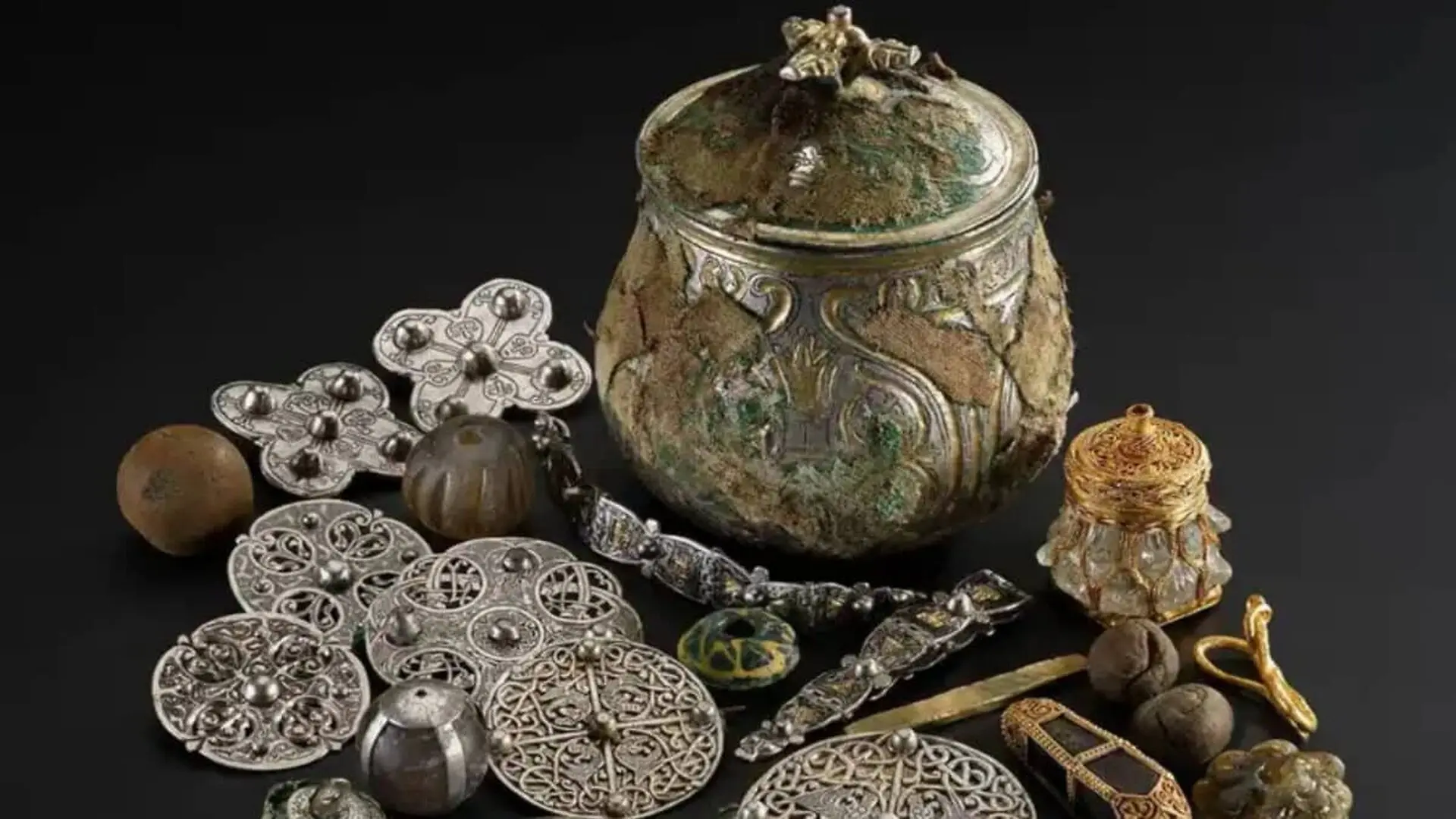
Dating to around A.D. 900, the assemblage was first classified as a Viking hoard because of its abundant silver items. It stands as the most extensive and diverse Viking‑era treasure ever uncovered in Britain or Ireland, yet several pieces resist a simple Scandinavian explanation.
The find demonstrates a blend of cultural currents: Viking‑linked silver coexists with Anglo‑Saxon runic inscriptions, Christian artifacts, and objects that journeyed across great distances before arriving in Scotland.
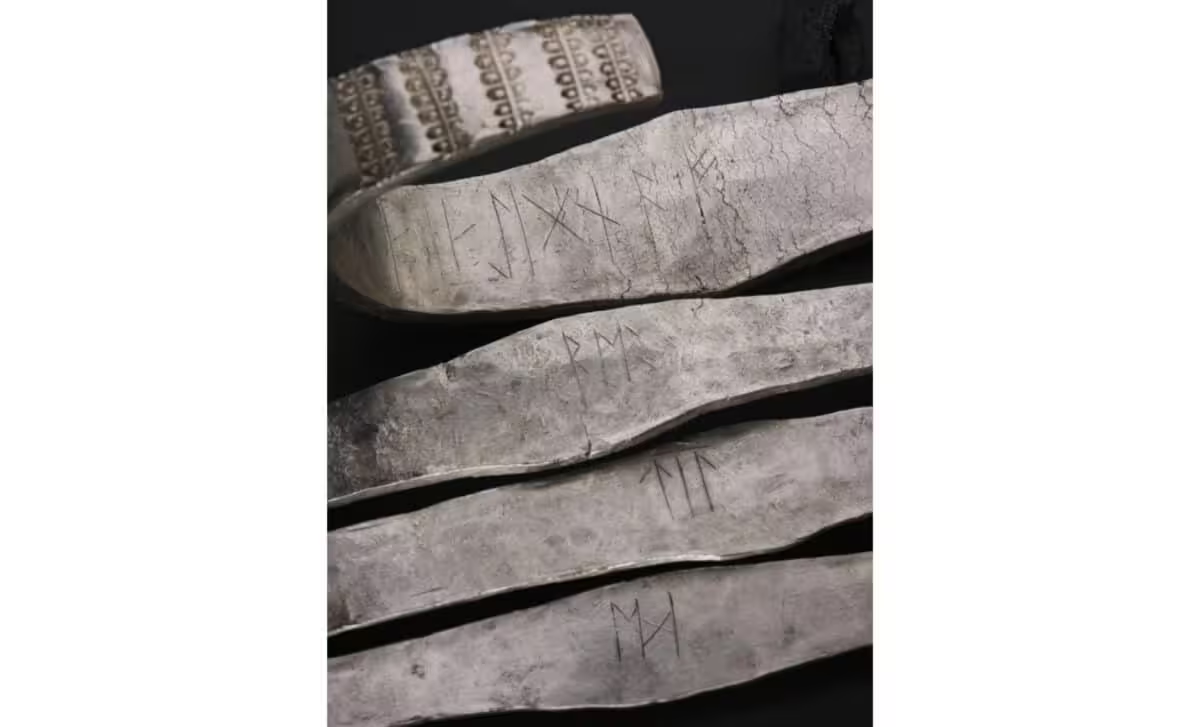
Scholars propose that the hoard was not the property of a lone warrior or merchant. National Museums Scotland notes that a runic message on one arm ring may translate to “the community’s wealth” or “the community’s property,” hinting at a collective ownership model for at least part of the cache.
Hidden Layers Reveal a More Complex Story
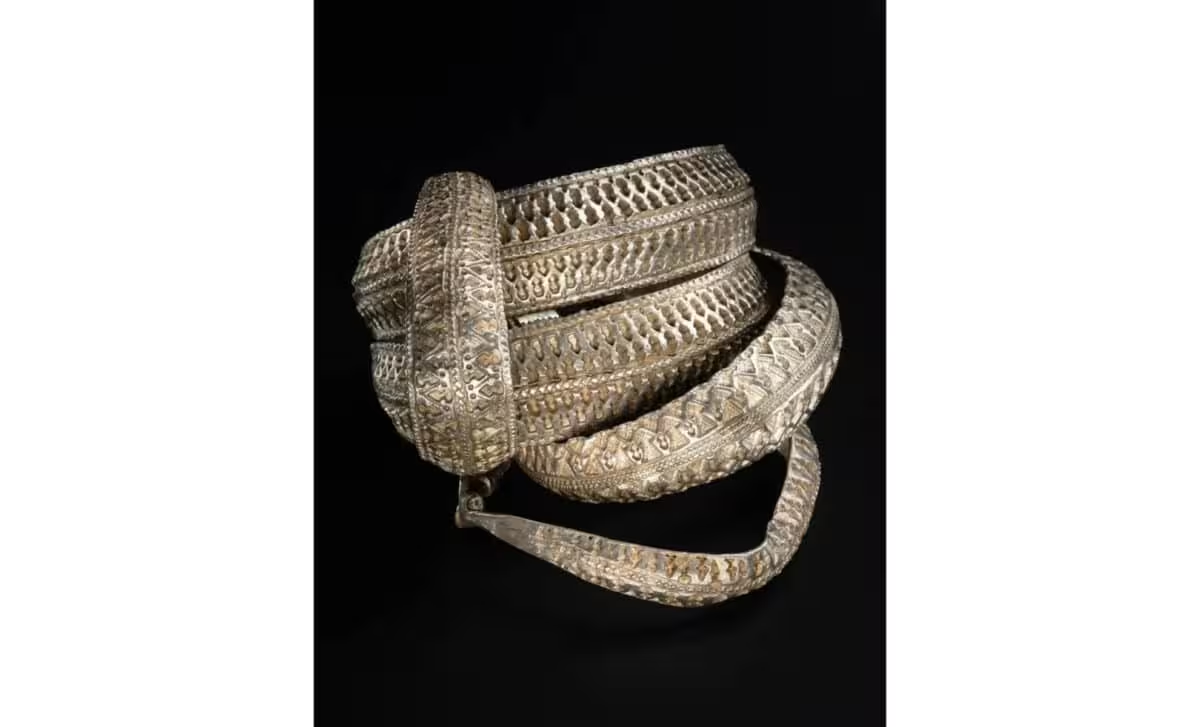
Initial excavation exposed piles of silver bullion, fragmented metal, and dozens of arm rings—materials that align with the weight‑based silver economy that spread across Britain and Ireland during the Viking period.
However, the presence of these items does not automatically denote Scandinavian origin. Many of the broader‑band arm rings likely originated around the Irish Sea rather than in Scandinavia.
Adrián Maldonado of National Museums Scotland explained that the hoard was originally labeled a Viking deposit because of the sheer volume of silver uncovered. Subsequent analysis revealed a far richer assortment.
The treasure was buried in four distinct packages. Beneath the surface layer of silver, archaeologists uncovered a deeper stratum containing additional bullion, elaborately decorated arm rings, gold items, and a meticulously wrapped silver‑gilt vessel.
The upper layer may have functioned as a decoy, leading any discoverer to believe the entire hoard had been revealed while the more exotic lower deposit remained concealed.
Among the deeper finds were a gold bird‑shaped pin, an Anglo‑Saxon cross, a rock‑crystal jar associated with a bishop, and a lidded container holding numerous objects sourced from far‑flung regions.
Christian Iconography and Runic Texts Hint at Communal Ties
Christian motifs appear prominently among the items. The gold bird‑shaped pin, once likened to a flamingo, is now thought to represent a phoenix, a symbol linked to resurrection in Christian theology.
Maldonado argues that such a piece would have been worn only by an individual of high ecclesiastical rank or royalty, stating, “It could only have been worn by an abbot, a bishop, or royalty.”
Another standout find is an ornate silver cross inlaid with gold, featuring motifs representing the four Gospel writers. Its design suggests it was intended to be displayed on the chest of a prominent Christian figure.
Runic inscriptions on several arm rings have reshaped scholarly interpretations. Some markings incorporate Anglo‑Saxon names or terminology, while one particularly long inscription has long eluded definitive translation.
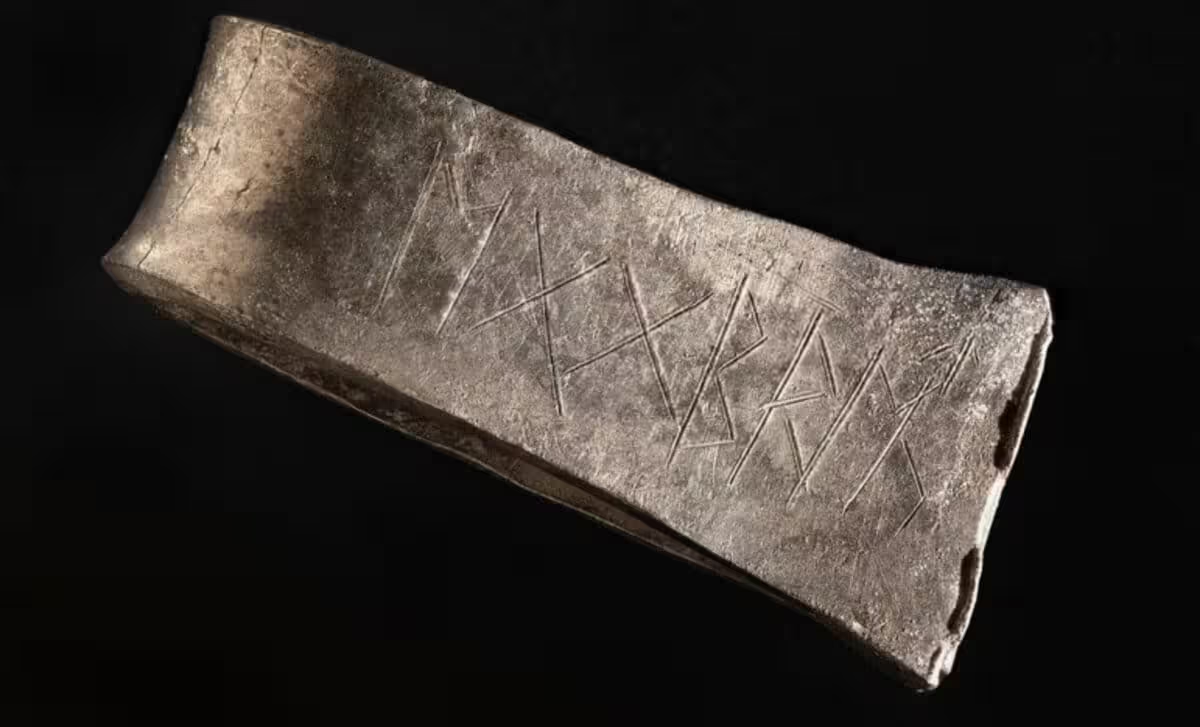
In February 2025, researchers at National Museums Scotland suggested that the longest inscription, rendered as “DIS IS ƗIGNA F[EOH],” could be read as “This is the community’s wealth” or “This is the community’s property.” They argue that atypical spelling and regional pronunciation may account for its deviation from standard runic conventions.
Runologist David Parsons cautions that the reading remains tentative, noting several anomalous features but acknowledging that the proposed interpretation fits within the broader context of the hoard.
If the translation proves accurate, it would imply that the treasure was linked to a collective entity rather than representing isolated personal assets.
Iranian Vessel Highlights Far‑Reaching Trade Networks
The most striking artifact is a small silver‑gilt vessel discovered among the decorated arm rings. Wrapped in well‑preserved textiles, the vessel bears motifs such as Zoroastrian fire altars, winged crowns, and depictions of leopards and tigers.
These designs are characteristic of the Sasanian Empire, which ruled parts of present‑day Iran from A.D. 224 to 651. Laboratory analysis confirmed that the vessel’s silver‑copper alloy matches known Sasanian metalwork, while the black niello silver was traced to the Nakhlak mine in central Iran.
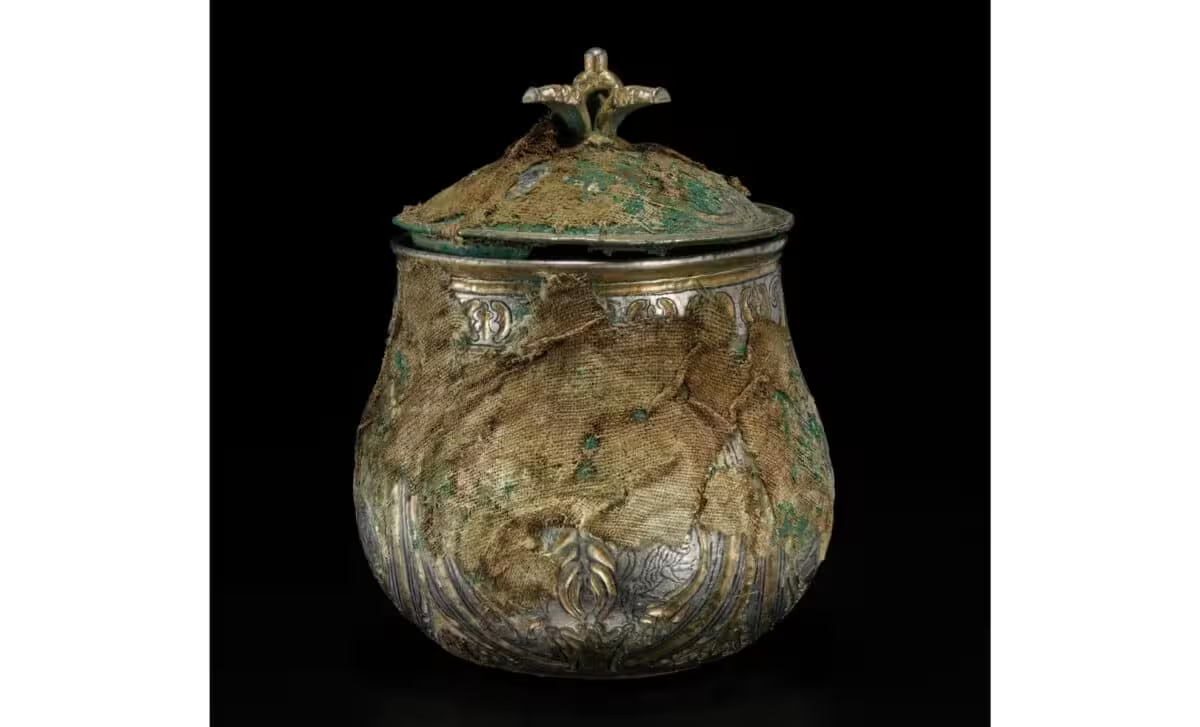
Researchers note that such a vessel had never before been identified this far west. Already centuries old when it was interred in Scotland, the object likely traveled via Byzantine, Islamic, or royal exchange routes, or perhaps through ecclesiastical or private collections.
Inside, archaeologists recovered 27 smaller items—including glass beads, pendants, brooches, silk fragments, and a rock‑crystal jar wrapped in linen—arranged in a manner suggesting deliberate selection rather than a random hoard of raw wealth.
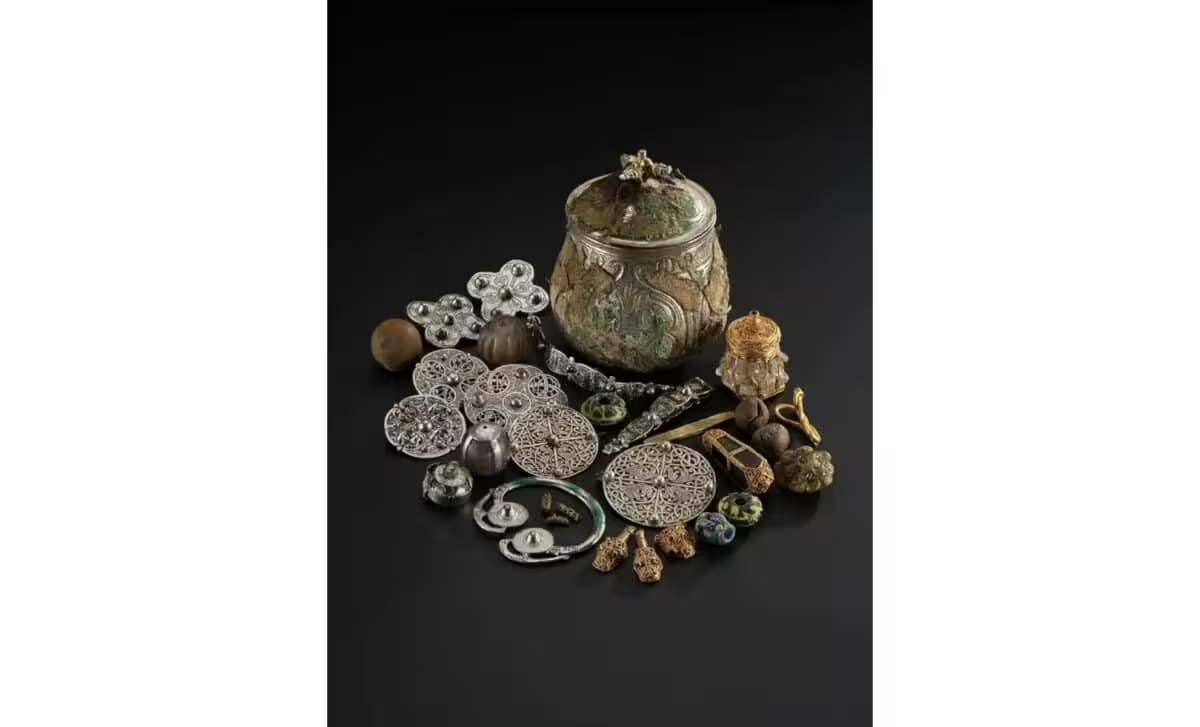
The Galloway Hoard encapsulates a moment when diverse communities interacted across the Irish Sea and beyond. Its silver ties it to Viking‑age commerce, its inscriptions link it to Anglo‑Saxon literacy, and its religious objects reflect Christian institutional influence.
The identities of the individuals who assembled and concealed the treasure remain unknown. The assemblage may represent the collective wealth of a community navigating Viking‑era trade networks while preserving its own cultural and religious distinctiveness.
This article has been fact checked for accuracy, with information verified against reputable sources. Learn more about us and our editorial process.
Last reviewed on .
Article history
- Latest version
Reference(s)
- <https://www.nms.ac.uk/discover-catalogue/a-runic-revelation-who-owned-the-galloway-hoard>.
- “Features - Secrets of Scotland's Viking Age Hoard - Archaeology Magazine - May/June 2022.”, April 25, 2022 Archaeology Magazine <https://archaeology.org/issues/may-june-2022/features/scotland-galloway-viking-age-hoard/>.
Cite this page:
- Posted by Hassan Raza