New 210‑Million‑Year‑Old Zimbabwe Dinosaur Unveils Hidden Triassic Ecosystems
New Zimbabwe dinosaur species, 210 million-year-old, reveals early African dinosaurs lived in separate ecosystems, reshaping evolution theories.
A collaborative team of paleontologists has uncovered a remarkably intact dinosaur skeleton along the banks of Lake Kariba in northern Zimbabwe. The specimen, assigned to a new species, marks only the fifth dinosaur ever identified from Zimbabwean deposits and suggests that Late Triassic dinosaur diversity was broader than previously thought.
The find was reported in the Journal of Systematic Palaeontology by an international research group. According to the authors, the fossil represents one of the most complete skeletons of its age recovered in the country, offering a rare glimpse into a time when dinosaurs were beginning to spread but had not yet become the dominant terrestrial vertebrates.
New Evidence Reshapes Understanding of Early Triassic Life
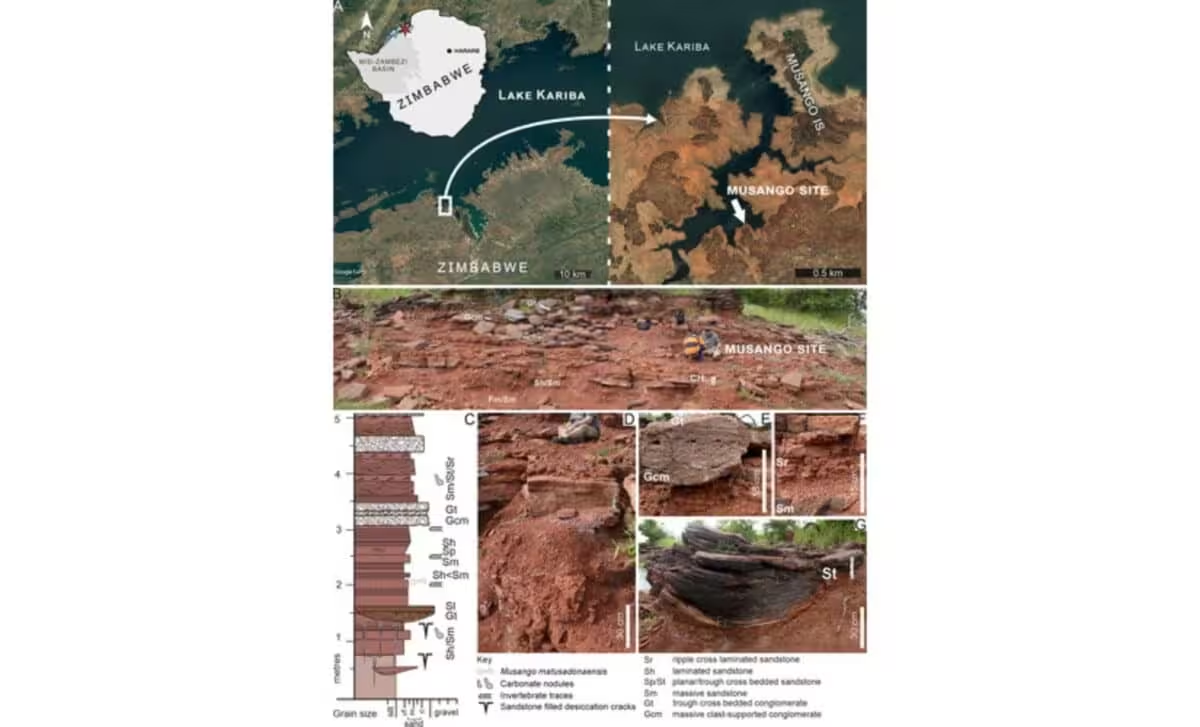
Musango matusadonaensis was excavated in 2018 from sedimentary layers bordering Lake Kariba. Its name derives from the Shona term “musango,” meaning “dweller of the bush,” reflecting the animal’s presumed habitat.
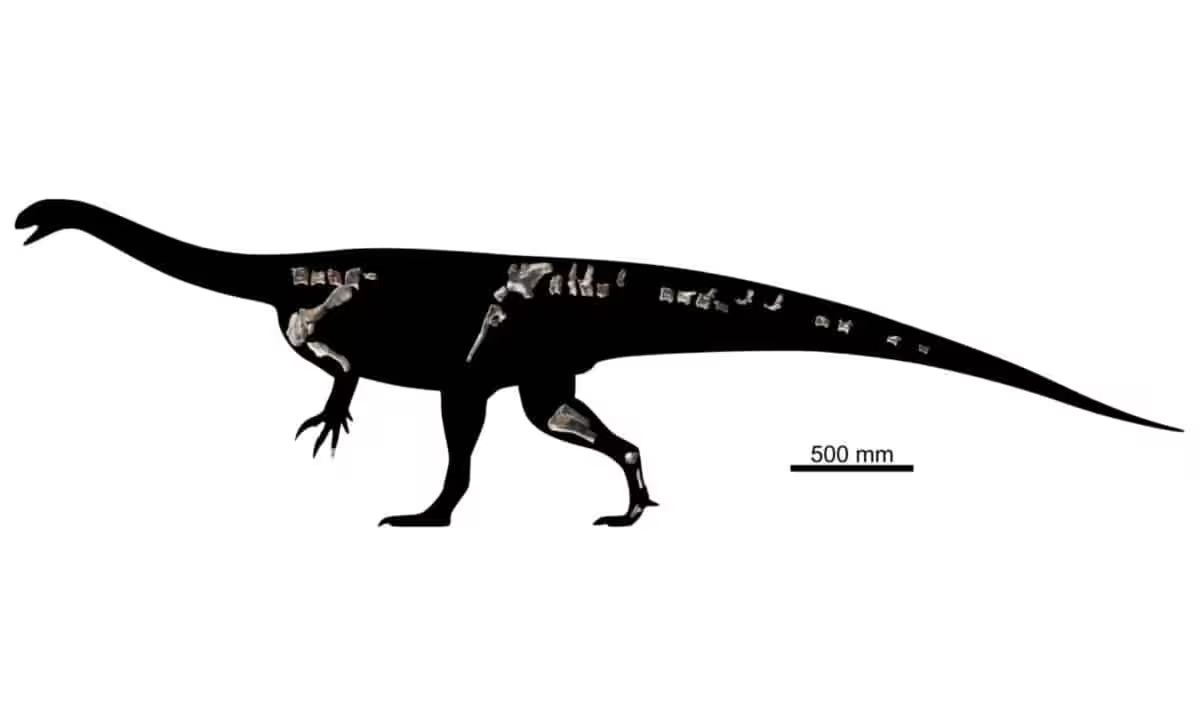
Radiometric dating places the creature at roughly 210 million years ago, in the Late Triassic. Unlike the massive sauropods that would dominate later periods, this dinosaur was relatively slender, measuring about 4.5 meters (15 feet) in length and weighing an estimated 222 kilograms (490 pounds), comparable to a large domestic pig.
The fossil includes articulated vertebrae, ribs, forelimb and hindlimb bones, and foot elements, making it one of the most complete Triassic dinosaur specimens from Zimbabwe. Researchers estimate the individual was around eight years old and near full size at the time of death.
Microscopic analysis of the bone tissue reveals signs of a healed injury or infection, indicating the animal survived a serious health challenge. While the skull remains missing, the team proposes that Musango was likely a herbivore or omnivore that fed on riparian vegetation.
The authors argue that adding this species to Zimbabwe’s fossil record deepens our knowledge of the region’s Late Triassic fauna and underscores the country’s emerging role in early dinosaur research.
Rethinking Dinosaur Diversity Across Southern Africa
Historically, scientists assumed that Triassic dinosaurs across southern Africa shared similar ecological traits. The new specimen challenges that view, suggesting a mosaic of distinct habitats each supporting its own dinosaur assemblage.
Paul Barrett of the Natural History Museum in London, a co‑author on the study, notes that the find “reveals a far more complex picture of southern African ecosystems than we previously imagined.” He adds that the current record likely represents “only the tip of the iceberg,” hinting at many undiscovered species awaiting future excavations.
The discovery follows the 2022 identification of Mbiresaurus raathi, which is considered Africa’s oldest known dinosaur. That earlier find, documented in the original study, dates to roughly 230 million years ago, measured about one meter tall, and weighed close to 30 kilograms (66 pounds).
Together, the two specimens illustrate a progressive diversification of dinosaurs in the region—from the diminutive Mbiresaurus of the early Late Triassic to the larger, more derived Musango that inhabited riverine environments later in the period. The expanding fossil record along Lake Kariba now offers a clearer window onto the ecological dynamics that preceded the rise of dinosaurs as the dominant land animals.
This article has been fact checked for accuracy, with information verified against reputable sources. Learn more about us and our editorial process.
Last reviewed on .
Article history
- Latest version
Reference(s)
- “Prof Paul Barrett | Natural History Museum.” <https://www.nhm.ac.uk/our-science/people/paul-barrett.html>.
- Barrett, Paul M.., et al. “A new sauropodomorph dinosaur from the Pebbly Arkose Formation (Upper Triassic: Norian) of Kariba, Zimbabwe.” Journal of Systematic Palaeontology, vol. 24, no. 2, July 28, 2026 Informa UK Limited, doi: 10.1080/14772019.2026.2678610. <https://www.tandfonline.com/doi/full/10.1080/14772019.2026.2678610>.
Cite this page:
- Posted by Hassan Raza