Scientists Unearth New Marsupial Order From 35‑Million‑Year‑Old Australian Fossils
Fossil teeth and jaw fragments unveil a new sixth order in Australidelphia, shedding light on an early marsupial evolutionary branch.
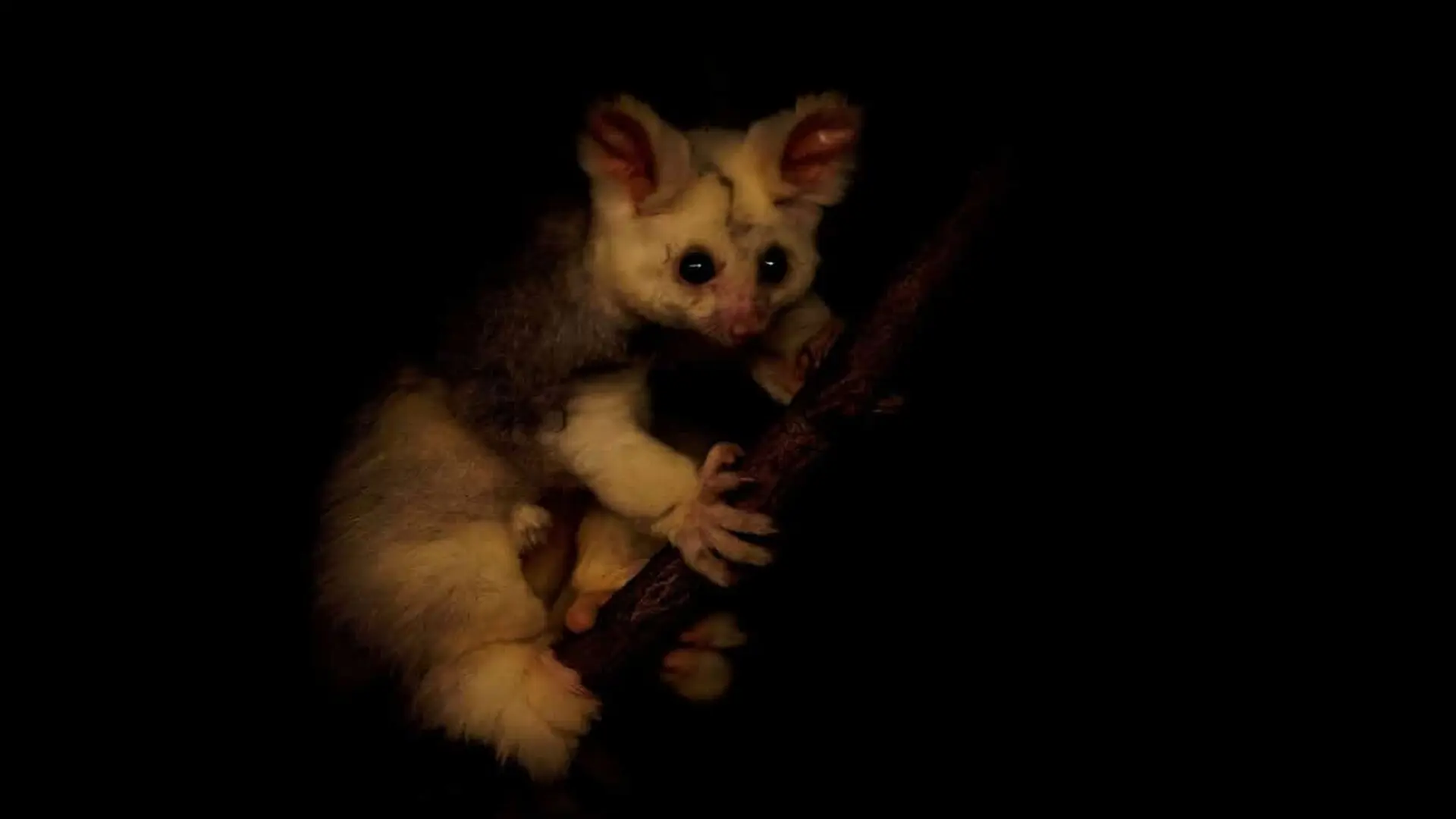
Paleontologists led by Tim Churchill at the University of New South Wales have introduced three previously unknown species and two new genera within a brand‑new order they have named Keeunamorphia. Their findings, detailed in the Journal of Paleontology, indicate that these tiny insect‑eating mammals once roamed the lush rainforests that covered present‑day northern Queensland.
Marsupials such as kangaroos, koalas, wombats and wallabies are thought to have arrived in Australia roughly 55 million years ago as the supercontinent Gondwana fragmented. While the broad pattern of their spread is fairly well mapped, the earliest branches of their evolutionary tree have remained obscure. The newly described fossils add a crucial piece to that ancient puzzle.
New Order Keeunamorphia Revealed Through Fossil Teeth
The order Keeunamorphia comprises the genera Keeuna and Phantasmodon. According to Churchill, this grouping could represent one of the continent’s most basal marsupial lineages, persisting for more than 35 million years before vanishing in the Middle Miocene.
Specimens were extracted from shallow cave deposits where whole skeletons are exceptionally rare. As the study notes, the team relied chiefly on isolated teeth and jaw fragments to assess the animals’ position within the marsupial phylogeny.
Churchill stated that “Keeunamorphia may represent some of Australia’s earliest marsupials, with possible origins in Gondwana and a record spanning more than 35 million years before its apparent extinction in the Middle Miocene.”
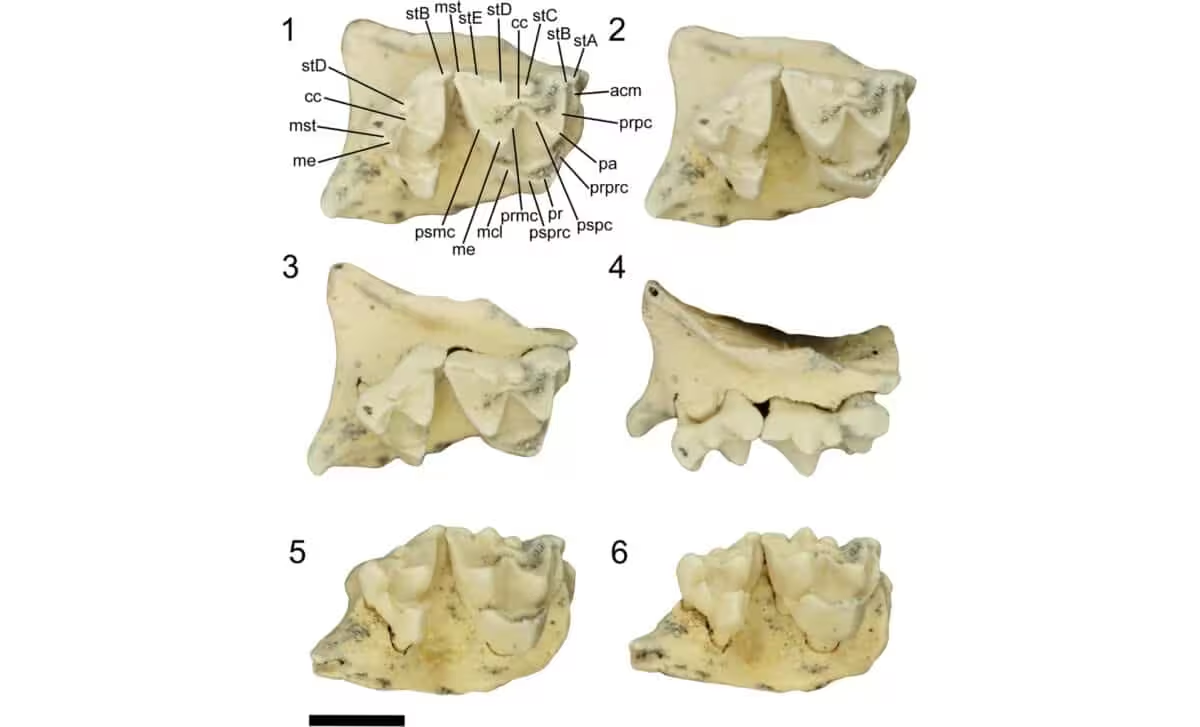
Unique Dental Features Distinguish Keeunamorphians
Analysis of the fossils revealed teeth that do not match any previously documented marsupial. Their molars are tribosphenic, capable of both slicing and grinding, yet they possess an atypical cusp on the primary crest called an ectoloph.
The same ectoloph appears in two extinct species, Ankotarinja tirarensis and Djarthia murgonensis. Although ankle and heel bones—key markers for the broader group Australidelphia—were not preserved, Churchill identified thirteen dental traits shared across Keeunamorphia that are absent from all other known marsupials, living or extinct. The study points to Marsupialiformes as the closest known relative.
Within Keeunamorphia, the upper molars of Phantasmodon travouilloni resemble those of Keeuna woodburni despite belonging to separate genera. Both taxa exhibit a derived pattern of crests and ridges on their teeth, a configuration missing in Djarthia murgonensis, which is interpreted as their most recent common ancestor. Nevertheless, the newly described species display notable differences in other aspects of their dentition.
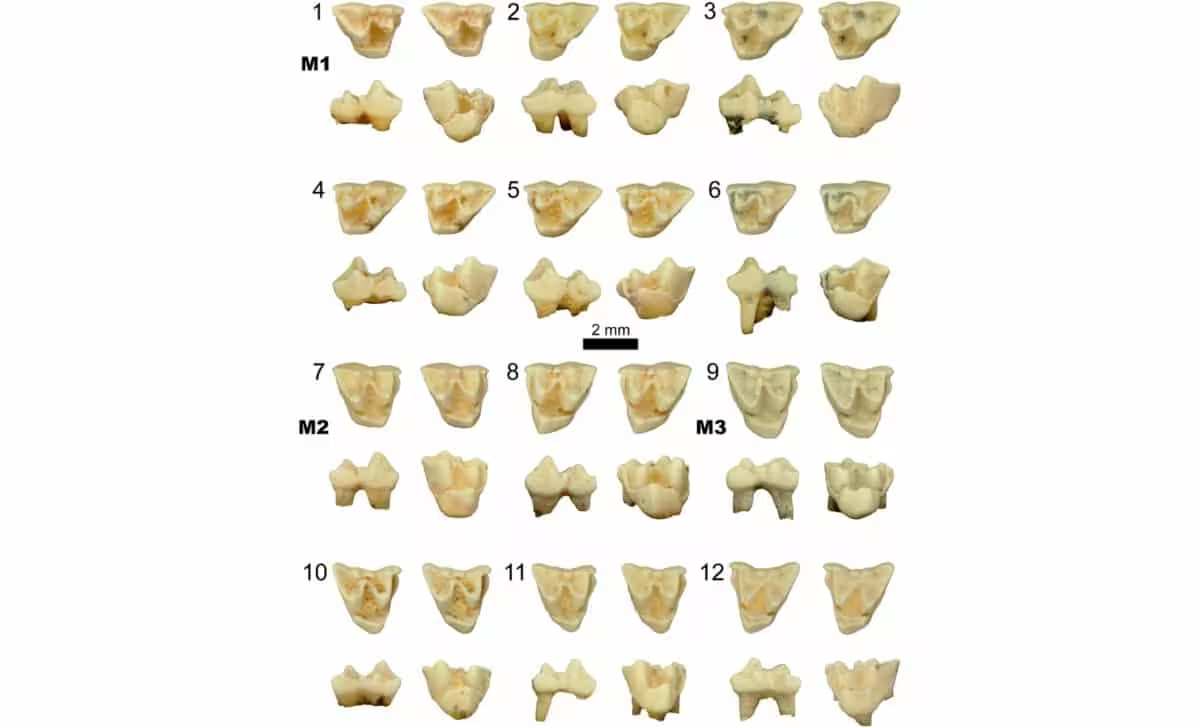
Significant Gaps Persist in Australia’s Marsupial Fossil Record
Churchill argues that the dental affinities between keeunamorphians and other marsupials support an early divergence, suggesting the group may represent both the oldest and longest‑lasting marsupial lineage identified to date. He also characterises keeunamorphians as more primitive than the contemporaneous marsupials that inhabited ancient Australia.
The researchers note that several of the dental traits observed in Keeunamorphia resemble those of dasyuromorphians, the carnivorous marsupials that preyed on both vertebrates and invertebrates.
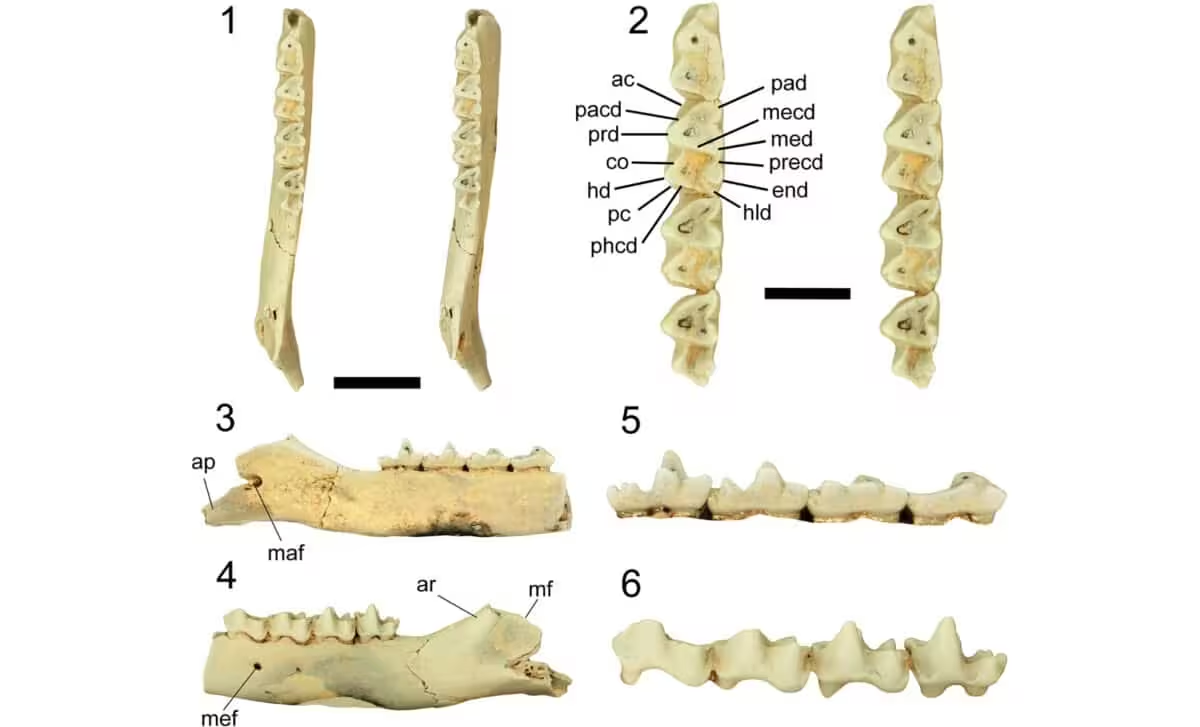
The authors highlight a roughly 20‑million‑year hiatus in the marsupial fossil record, leaving open the possibility that additional lineages remain undiscovered. They write:
“By the Miocene, most small carnivorous niches were occupied by dasyuromorphians, peramelemorphians, or diminutive thylacoleonids. This may explain why keeunamorphians are relatively rare in the Miocene fossil record […] which otherwise exhibits an extremely rich fossil diversity for most metatherian lineages.”
Also ReadNearly 6KM Down in the Pacific Abyss, Scientists Found a ‘Giant’ Creature Named After a Sea God
This article has been fact checked for accuracy, with information verified against reputable sources. Learn more about us and our editorial process.
Last reviewed on .
Article history
- Latest version
Reference(s)
- <https://www.researchgate.net/publication/407064458_A_new_metatherian_order_from_Australia_Keeunamorphia_Metatheria_and_new_Early_Miocene_species_from_the_Riversleigh_World_Heritage_Area_northwestern_Queensland>.
- Woodburne, Michael O.., et al. “The evolution of tribospheny and the antiquity of mammalian clades.” Molecular Phylogenetics and Evolution, vol. 28, no. 2, August 1, 2003, pp. 360-385. Elsevier BV, doi: 10.1016/S1055-7903(03)00113-1. <https://www.sciencedirect.com/science/article/abs/pii/S1055790303001131>.
- <https://aussieanimals.com/profiles/ankotarinja-tirarensis/>.
- <https://aussieanimals.com/profiles/djarthia-murgonensis/>.
- “Dasyuromorphia (dasyuroid marsupials and marsupial carnivores) | INFORMATION | Animal Diversity Web.” <https://animaldiversity.org/accounts/Dasyuromorphia/>.
Cite this page:
- Posted by Hassan Raza