Camera Reveals 60 Million Icefish Nests: The Largest Underwater Breeding Colony Ever Found
Scientists discover mysterious seafloor nests under Antarctic ice, revealing a hidden ocean world larger than ever imagined.
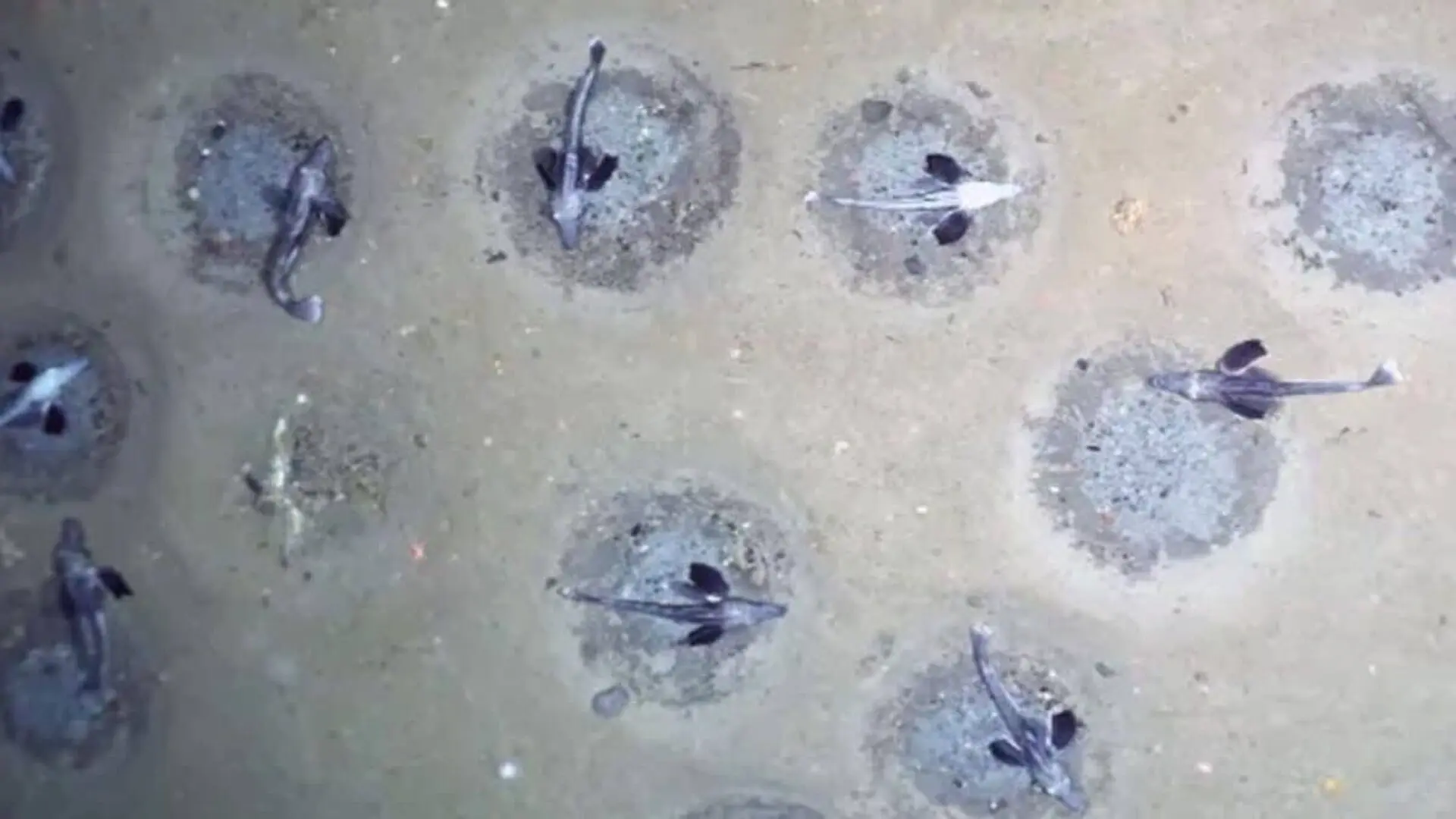
An expedition aboard the German icebreaker RV Polarstern revealed a previously unknown fish breeding ground that dwarfs all earlier records: an estimated 60 million icefish nests spread across roughly 240 square kilometres of the Weddell Sea floor.
How a Routine Survey Turned Into a Landmark Find
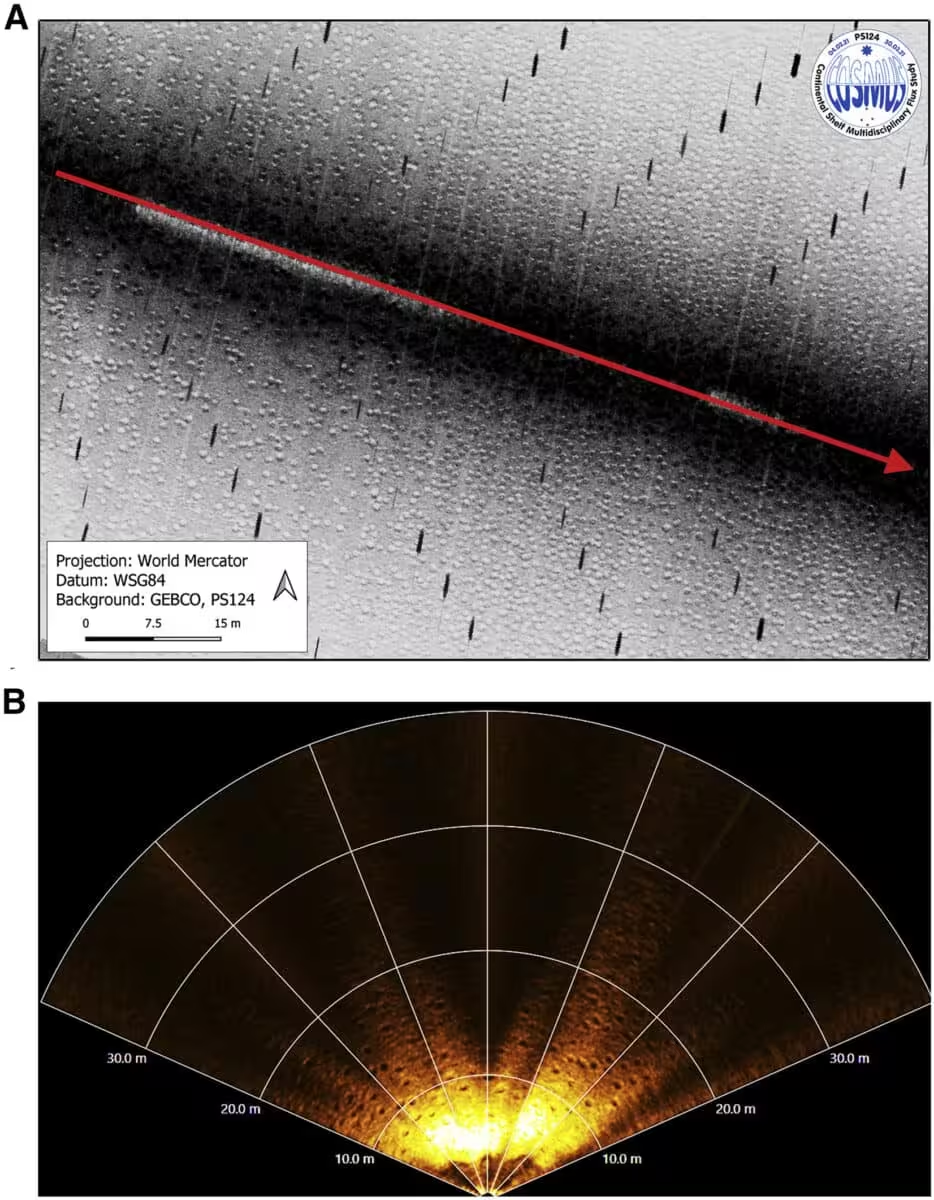
While mapping the benthic environment of the Weddell Sea, a team from the Alfred Wegener Institute deployed the Ocean Floor Observation and Bathymetry System (OFOBS), a one‑ton camera towed behind the vessel. Graduate researcher Lilian Böhringer monitored the live feed and began noticing an unprecedented density of small depressions on the seafloor. As the camera continued its sweep, the pattern persisted, prompting immediate curiosity.
“The camera was moving [across the seafloor] and it just didn’t stop. They were everywhere,” she said.
Autun Purser, also of the Alfred Wegener Institute, recalled the team’s reaction after reviewing the footage back at the institute: “We realized after ringing up the home institute the next day that we had found something spectacular,” he explained.
The Ghostly Icefish and Its Unusual Reproduction
All the nests belong to Neopagetopsis ionah, an Antarctic icefish species notable for lacking hemoglobin—a trait that gives the fish a translucent, white appearance and makes them the only known vertebrates without this oxygen‑carrying protein. Each bowl‑shaped nest, dug into the muddy substrate, typically hosts an adult fish guarding a clutch of roughly 1,700 eggs.
The sheer scale of the colony surprised scientists. Prior records of icefish nesting sites reported only a few dozen nests; this discovery expands the known extent of such behavior by several orders of magnitude.
A Warm Upwelling Shapes the Nursery Landscape
The researchers identified a localized upwelling where water temperatures were about 2 °C warmer than the surrounding deep‑sea environment. This thermal anomaly also delivered abundant microscopic zooplankton to the surface, providing a critical food source for newly hatched icefish larvae before they migrate to deeper waters.
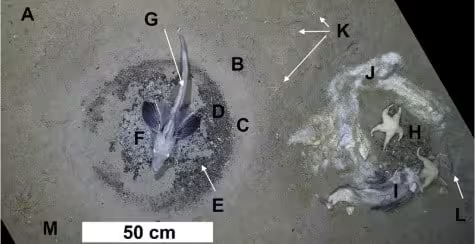
The colony’s boundary was strikingly sharp: dense nesting zones abruptly gave way to barren seafloor, reminiscent of the clear edges seen in penguin colonies. “[The colony] went from very, very dense to nothing, much like penguin colonies,” Purser noted. “It was like a line in the sand.”
Ecological Consequences and Conservation Steps
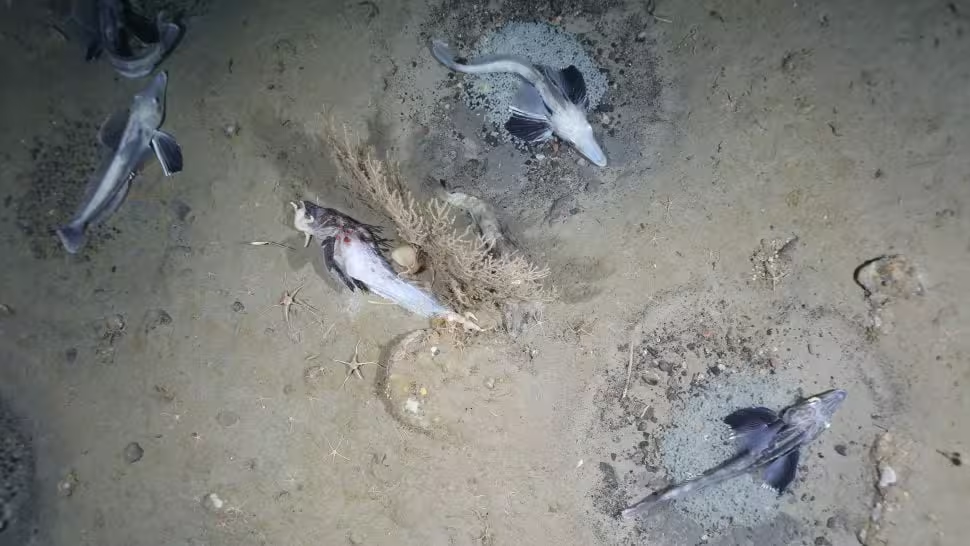
Analysis of the site, published in Current Biology, documented numerous dead icefish interspersed among active nests, suggesting the area also functions as a significant food reservoir for higher predators such as Weddell seals. The researchers propose that the warm, nutrient‑rich waters underpin both the massive breeding effort and the associated trophic interactions.
The discovery has prompted the Commission for the Conservation of Antarctic Marine Living Resources (CCAMLR) to consider the region for formal protection as a Marine Protected Area. Before departing, the Polarstern crew installed two additional cameras to monitor changes in the breeding grounds over time, aiming to track how the icefish and associated fauna adapt to the unique environment.
This article has been fact checked for accuracy, with information verified against reputable sources. Learn more about us and our editorial process.
Last reviewed on .
Article history
- Latest version
Reference(s)
- “Lilian Böhringer - AWI.” <https://www.awi.de/en/about-us/organisation/staff/single-view/lilian-boehringer.html>.
- <https://www.cell.com/current-biology/fulltext/S0960-9822(21)01698-5?utm_source=EA>.
- “Home Page | CCAMLR.” <https://www.ccamlr.org/en/organisation/home-page>.
Cite this page:
- Posted by Hassan Raza