Massive 5th‑Century Coptic Monastery Unearthed in Egypt’s Desert Reveals Early Christian Life
New findings from a 5th‑century Coptic complex reveal daily life, architecture, and art of early Christian communities.
Christianity took root in Egypt soon after the apostolic era, with tradition crediting Saint Mark the Evangelist for establishing a community around 49 CE. The faith grew under leaders such as Bishop Demetrius of Alexandria, while early believers endured Roman persecution until Emperor Constantine proclaimed Christianity the empire’s official religion in 312 CE.
Alexandria emerged as a hub of theological study for centuries. By the fifth century, doctrinal disagreements and rivalry with Constantinople prompted Egyptian Coptic Christians to separate from both the Roman Catholic and Greek Orthodox traditions, yet Coptic art and cultural expression continued to flourish.
Monastery Complex Discovered at Al‑Qalaye
Archaeologists excavating the Al‑Ruba’iyat sector of the Al‑Qalaye site uncovered a sprawling monastic compound composed of thirteen vaulted rooms. According to Popular Mechanics, the layout includes individual cells, communal areas, kitchens, storage facilities, teaching halls, and spaces designated for hospitality.
Earlier fieldwork had already identified clusters of monastic cells known as manshubiyat, together with ancillary service structures and pottery sherds that hint at daily activity. The current team, led by archaeologist Samir Rizq Abdel‑Hafez, also revealed a sizable northern hall whose stone benches bear plant‑motif carvings, likely intended to receive guests.
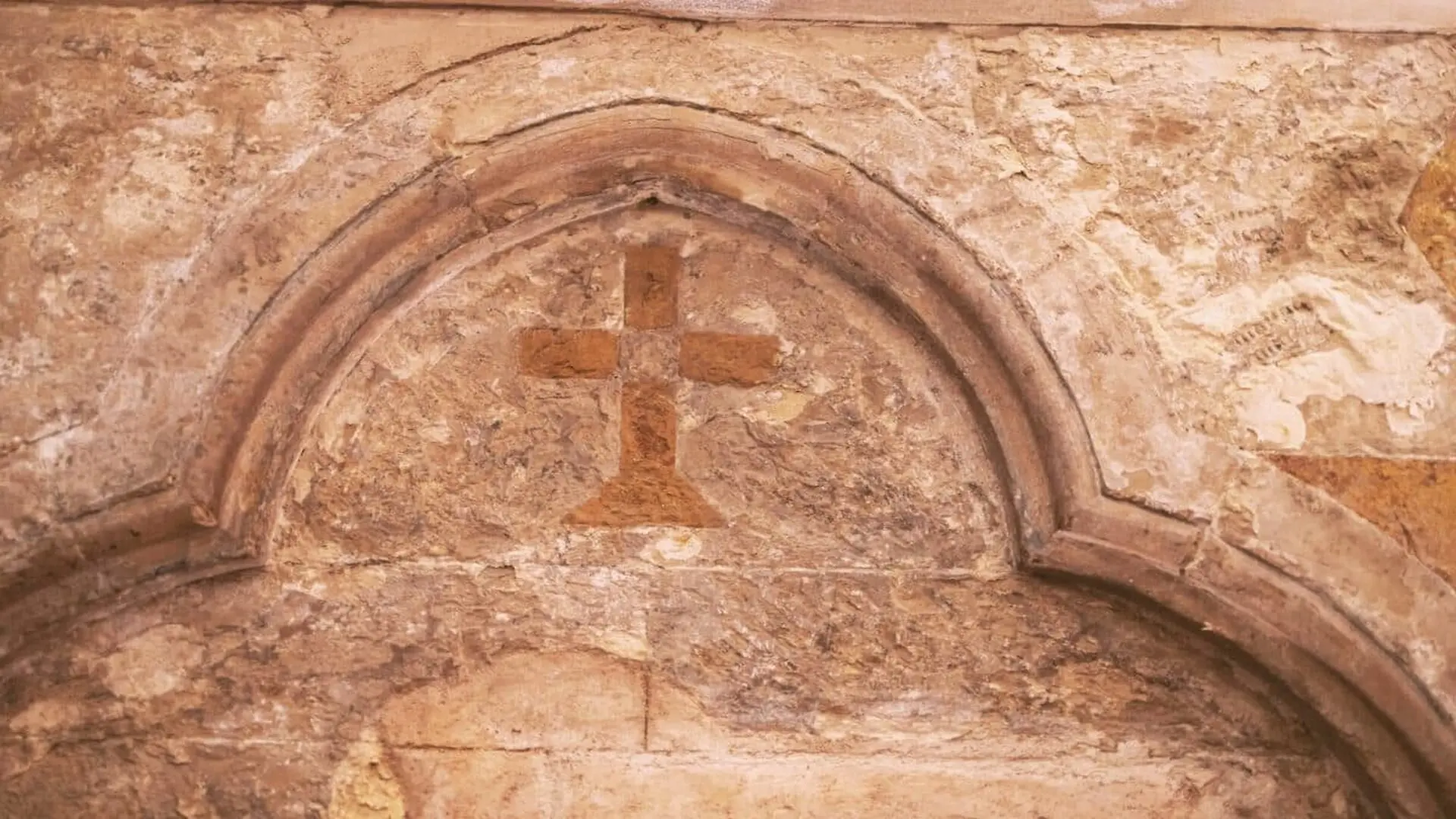
At the heart of the site lies a prayer chamber marked by a limestone cross. Excavated animal bones, seashell fragments, and ceramic containers suggest routine communal meals, while a limestone headstone inscribed “Apa Kyr, son of Shenouda” points to the burial of monastic members on‑site.
Coptic Artistic Finds Highlight Monastic Culture
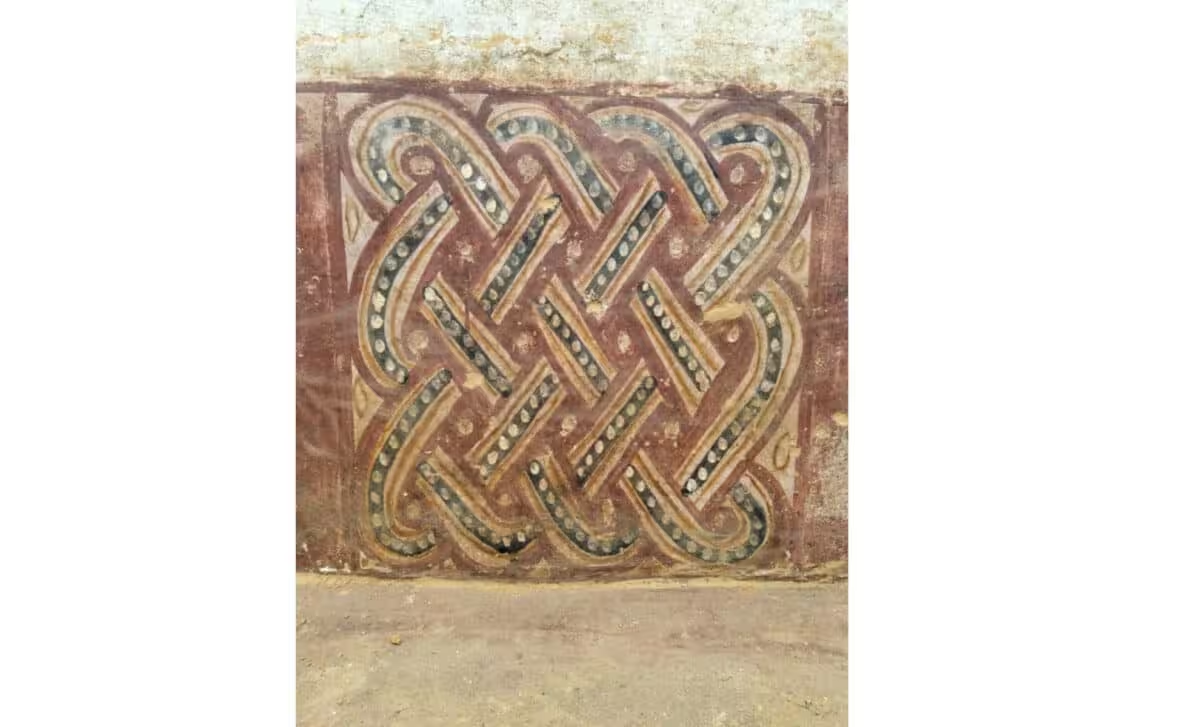
The dig produced a wealth of Coptic artworks, including wall paintings that depict monks framed by intricate braided designs. The pigments—red, black and white—have faded but still reveal the original color scheme.
Nature motifs appear throughout the frescoes, with scenes of gazelles amidst vegetation and stylized eight‑petal flowers. Similar decorative themes were identified on ceramic fragments recovered from the same layers.
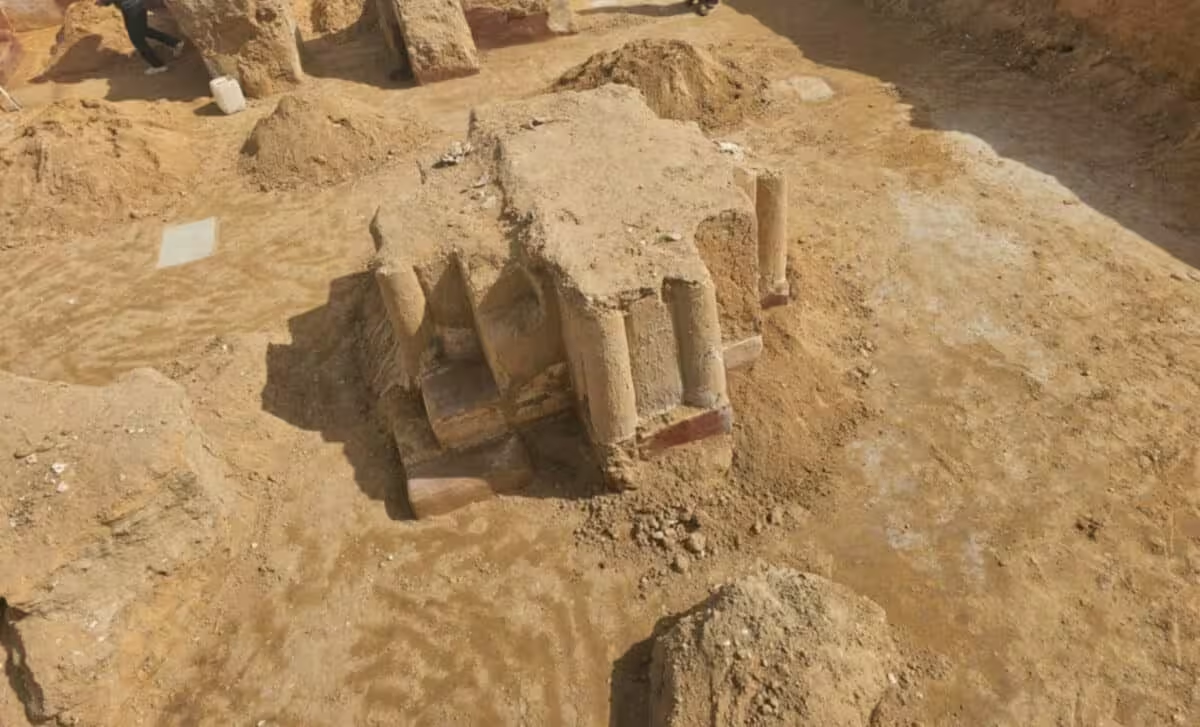
Deeper strata exposed marble architectural elements, such as a column and its accompanying capitals and bases, shedding light on the construction techniques employed in early Egyptian Christian buildings.
Hisham El‑Leithy, Secretary General of the Supreme Council of Antiquities, emphasized that the monastery offers fresh insight into the evolution of Coptic architecture and artistic practice, complementing earlier research on Egypt’s shift from pagan worship to Christianity Coptic traditions.
New Perspectives on Early Christian Egypt
The Al‑Qalaye monastery adds to a growing list of sites that map the expansion of Christian communities across Egypt. Earlier investigations by the Supreme Council of Antiquities uncovered a sprawling complex at Ain al‑Kharab in the Kharga Oasis, featuring churches, cemeteries, residential blocks, and a mural portraying Christ healing a sick individual at the site.
Together, these findings illustrate how early Egyptian Christians created multifunctional religious spaces that served educational, hospitable, and artistic purposes. Ongoing analysis of the Al‑Qalaye structures and associated artifacts promises to deepen understanding of Coptic culture and the broader trajectory of Christian architecture in the region.
This article has been fact checked for accuracy, with information verified against reputable sources. Learn more about us and our editorial process.
Last reviewed on .
Article history
- Latest version
Reference(s)
- Rayne, Elizabeth. “Archaeologists Discovered the Remains of One of the Largest Christian Monasteries Ever.”, July 21, 2026 Popular Mechanics <https://www.popularmechanics.com/science/archaeology/a73218582/christian-monastery-egypt-discovery/>.
- “Coptic Egypt: background.” <https://www.ucl.ac.uk/museums-static/digitalegypt/coptic/coptic.html>.
- “An early Coptic city unveiled in Egypt’s Western Desert - Coptic - Antiquities.” Ahram Online <https://english.ahram.org.eg/UI/Front/Inner.aspx?NewsContentID=550176>.
Cite this page:
- Posted by Hassan Raza