Liopleurodon Was Only About 5 Meters Long But Its Giant Skull Made It a Jurassic Apex Predator
New study revisits Liopleurodon ferox fossils to uncover the secrets behind this legendary Jurassic ocean predator’s extraordinary abilities.
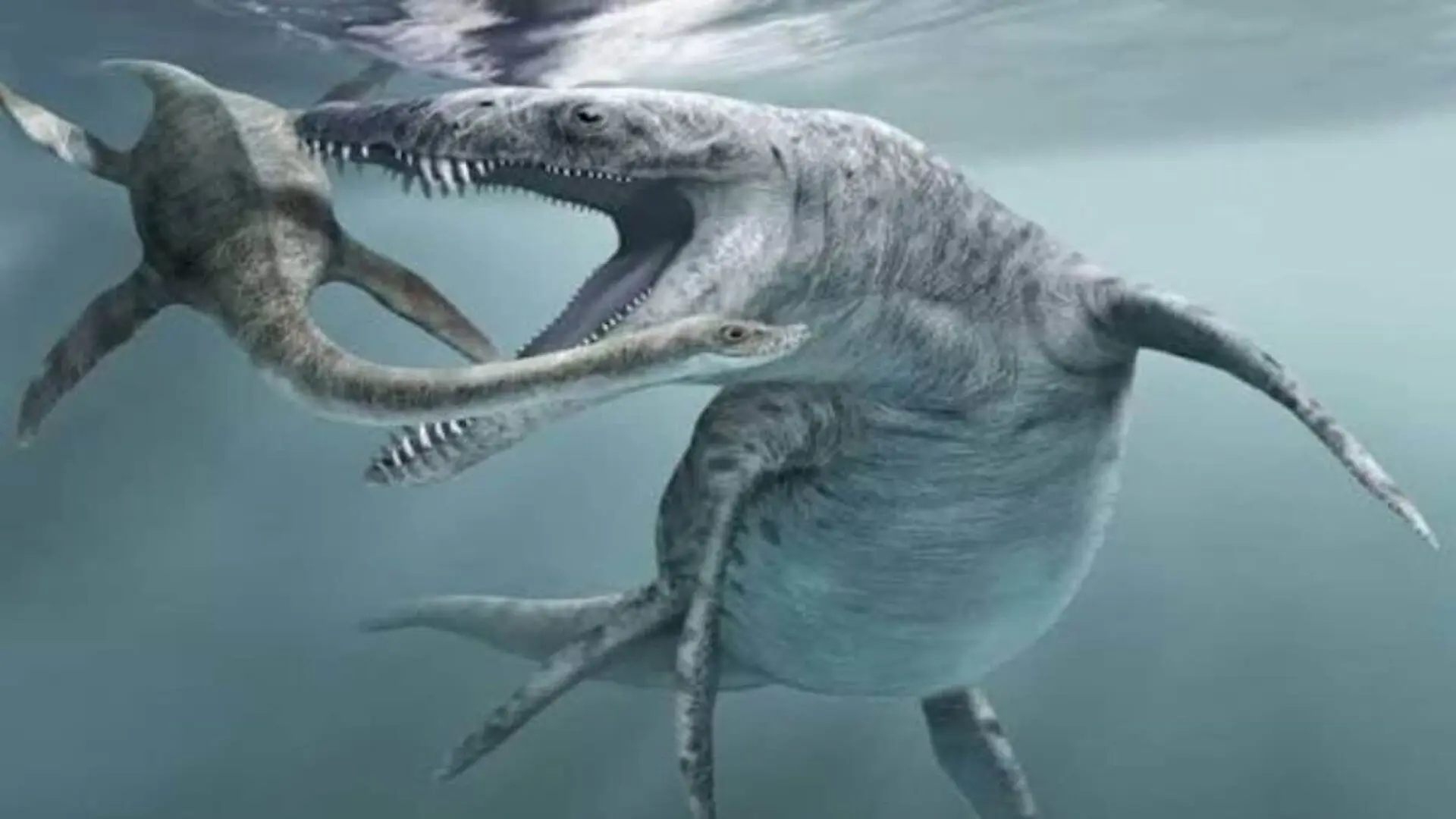
Long celebrated as a towering Jurassic sea predator, Liopleurodon ferox has often been imagined as a 25‑meter-long monster. Recent research, however, suggests a considerably smaller stature, while confirming that its hunting prowess was sustained by a disproportionately massive skull.
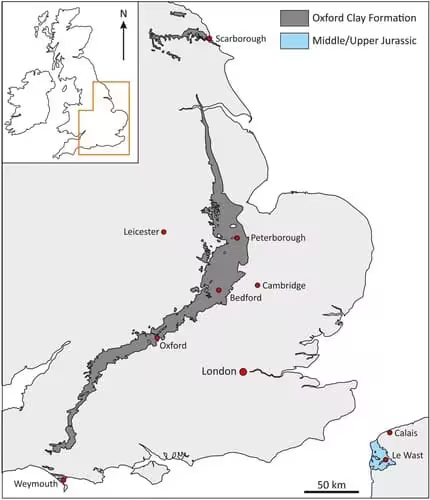
The pliosaur, distinguished by its short neck, roamed the shallow seas that covered present‑day England and France about 163 million years ago, during the Middle Jurassic. Its fame grew from fragmentary fossils, shifting scientific views, and popular media such as the 1999 BBC series Walking with Dinosaurs, which popularised the 25‑meter image.
Reevaluating Liopleurodon’s Length
A team led by paleontologist Edward Bartlett examined every known specimen attributed to Liopleurodon ferox. Their analysis incorporated 37 fossils, marking the first comprehensive review of the species’ remains.
The study concluded that individuals ranged from roughly 2.46 meters to 8.09 meters, with the most complete skeletons falling between 4.8 meters and 6 meters. The authors propose an average length near 5 meters, a stark contrast to the legendary 25‑meter depiction but still sizable within the Oxford Clay Formation ecosystem.
“By bringing together all of the available material, we can finally provide a robust estimate of its size and body proportions,” Dr. Bartlett said. “Although it was smaller than some famous reconstructions, it was still the dominant marine predator in the Jurassic Oxford Clay seas.”
Skull Size Compensates for a Shorter Body
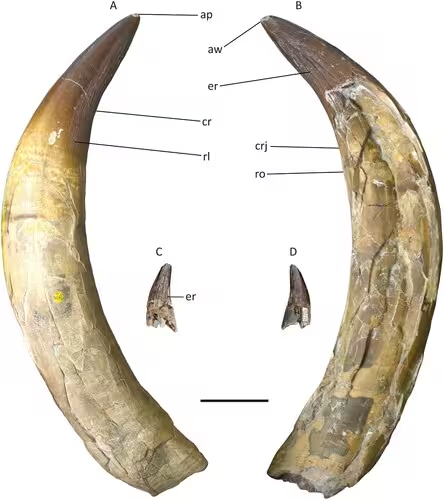
A reduced overall length did not diminish Liopleurodon ferox’s predatory edge. The animal possessed an exceptionally large skull, a trait that amplified its ability to seize sizeable prey.
To refine proportional estimates, the researchers examined two well‑preserved skeletons—one housed in Tübingen, Germany, and another at the Natural History Museum in London—supplemented by a complete cranium. The skull accounted for about 24 % of total skeletal length, underscoring its role as a dominant hunting apparatus.
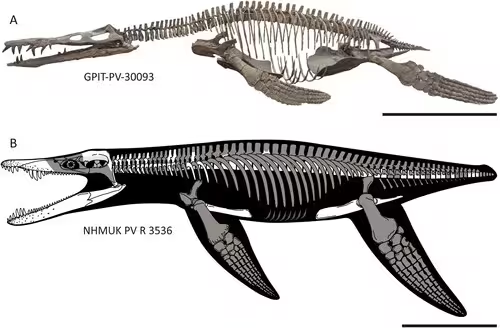
Even after adjusting for size, the species remains the largest confirmed predator from the Oxford Clay deposits.
Even Larger Pliosaurs Shared the Same Waters
Fragmentary remains from the same formation hint at pliosaurs that may have exceeded 10 meters, with estimated lengths ranging between 7.02 meters and 12.2 meters. The incomplete nature of these fossils prevents precise taxonomic assignment, but their dimensions indicate that giant marine reptiles coexisted with Liopleurodon ferox.
These findings demonstrate that the late Middle Jurassic seas hosted a spectrum of apex predators, from the 5‑meter Liopleurodon to yet‑unidentified giants surpassing a dozen meters.
This article has been fact checked for accuracy, with information verified against reputable sources. Learn more about us and our editorial process.
Last reviewed on .
Article history
- Latest version
Reference(s)
- “ORCID.” <https://orcid.org/0009-0009-9721-506X>.
Cite this page:
- Posted by Hassan Raza