NASA’s Lucy Spacecraft Uncovers Bizarre Asteroid Secrets During Its Multiyear Deep Space Trek
Five years after launch, NASA’s Lucy mission has uncovered unexpected asteroid structures as it gears up to explore Jupiter’s ancient Trojan swarms.
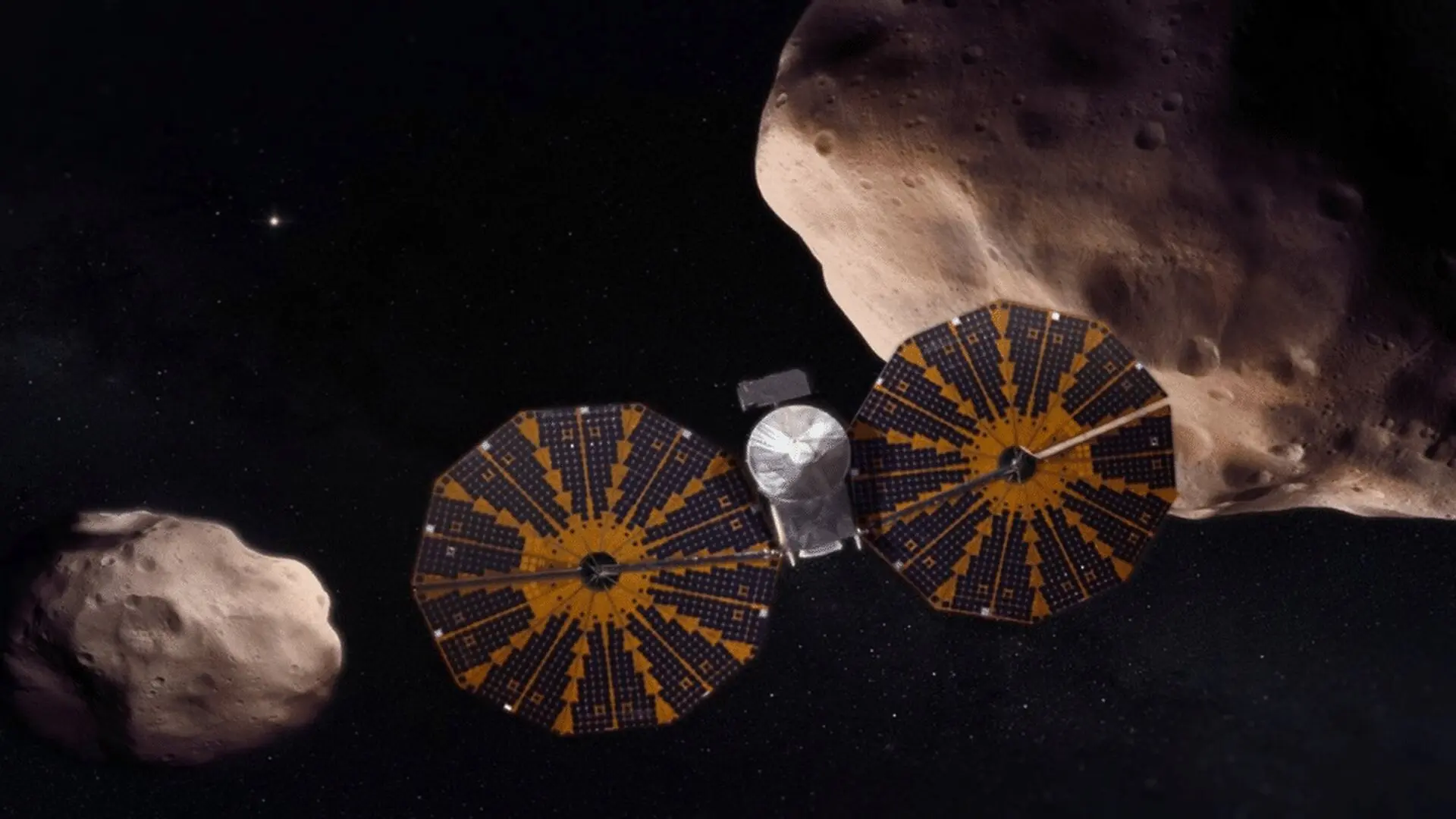
Five years after its departure, NASA’s Lucy spacecraft is already rewriting our understanding of solar system history. While its primary objective—a deep-space survey of the Trojan asteroids orbiting Jupiter—does not officially commence until August 2027, the mission has already identified unprecedented celestial structures, providing a high-stakes preview of the discoveries to come.
Uncharted Configurations in the Asteroid Belt
Since its launch on October 16, 2021, the 12-year mission has been tasked with exploring 11 different asteroids, which serve as pristine, ancient snapshots of the solar system’s origins. While these targets were the focus, Lucy’s journey through the main asteroid belt yielded unexpected scientific breakthroughs.
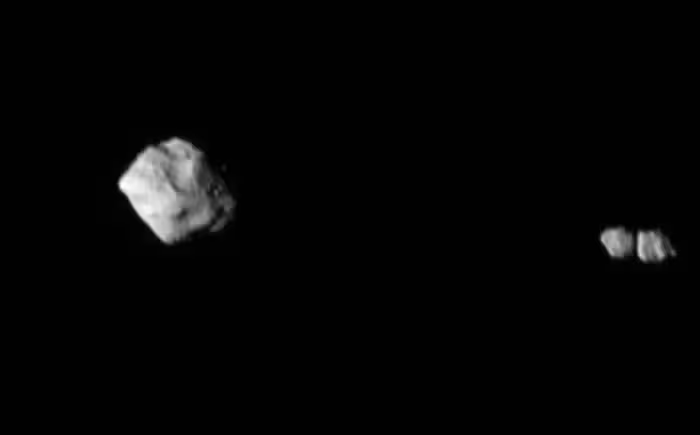
In late 2023, the craft performed a flyby of the asteroid Dinkinesh. What was initially intended as a straightforward engineering check evolved into a discovery of historical proportions: the identification of a satellite, now named Selam. Imaging data confirmed that Selam is a contact binary—two distinct lobes fused together—marking the first instance of such a configuration being observed in orbit around another asteroid.
“Though contact binaries seem to be fairly common in the solar system, we haven’t had the opportunity to see many up close,” said John Spencer, Lucy’s deputy project scientist at SwRI. “And we have never seen one orbiting another asteroid.”
Complex Rotational Dynamics
The mission continued its success in April 2025 during an encounter with Donaldjohanson. High-resolution imagery revealed a peanut-shaped object defined by two lobes connected by an unexpectedly uniform, smooth midsection. Scientists noted that the asteroid exhibits a complex, wobbling rotation, spinning end-over-end on a 10.5-day cycle while simultaneously rolling laterally every 26.5 days.
These findings suggest that the physical characteristics of these small bodies are far more varied than models previously predicted, influenced heavily by centuries of solar radiation and gravitational interactions.
Preparing for the Main Event
Beyond its imaging successes, the mission team has overcome significant technical hurdles, including the complex stabilization of an incompletely deployed solar array and successful gravity-assist maneuvers at Earth in 2022 and 2024. Lucy also provided unique observational data on NASA’s DART mission and the interstellar comet 3I/ATLAS, proving the spacecraft’s versatility as a deep-space observer.
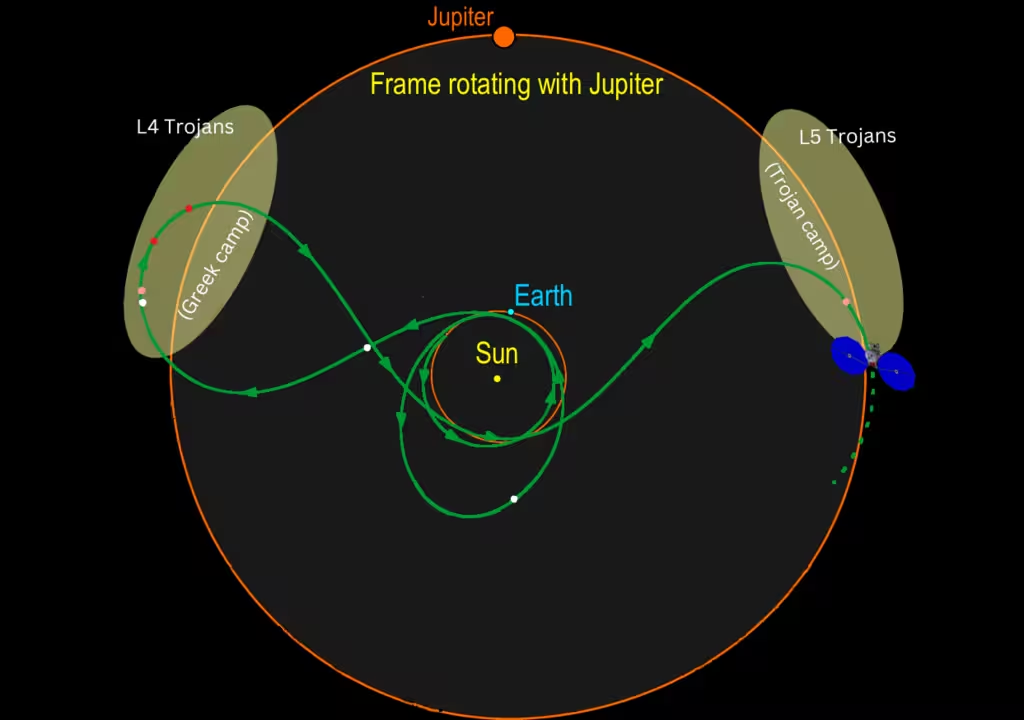
According to a recent report from the Southwest Research Institute, the coming years are critical. The mission will begin its investigation of the Trojan swarms in August 2027, targeting Eurybates and its moon Queta, followed by flybys of Polymele, Leucus, and Orus. By 2033, the craft is scheduled to rendezvous with the binary system of Patroclus and Menoetius.
“Despite these eventful five years, most of Lucy’s mission still lies ahead,” said Dr. Hal Levison, the mission’s principal investigator. “These relics are effectively fossils of the planet formation process, holding vital clues to deciphering the history of our solar system.”
This article has been fact checked for accuracy, with information verified against reputable sources. Learn more about us and our editorial process.
Last reviewed on .
Article history
- Latest version
Reference(s)
- “SwRI-led Lucy mission marks five years of discoveries | Southwest Research Institute.” <https://www.swri.org/newsroom/press-releases/swri-led-lucy-mission-marks-five-years-of-discoveries>.
Cite this page:
- Posted by Karan Das