Ancient Roman Sarcophagus Found Containing Medieval Remains Identified as Westminster Abbot
A 150-year-old mystery at Westminster Abbey may be solved as new research suggests a Roman sarcophagus was reused to bury an 11th-century abbot.
A centuries-old archaeological mystery at Westminster Abbey has reached a breakthrough, as researchers reveal that a Roman-era sarcophagus was repurposed to house a high-ranking medieval clergyman. While the stone coffin bears an inscription honoring a fourth-century Roman citizen named Valerius Amandinus, a recent study published in the Journal of the British Archaeological Association confirms that its final occupant lived over 600 years after the vessel was originally carved.
A Dual History in Stone
The limestone coffin was first discovered by laborers in 1820 near the north side of Westminster Abbey, an event that resulted in the lid being shattered into six fragments. It was not until an official excavation in 1869 that the artifact received serious scholarly attention. The exterior of the sarcophagus features inscriptions dedicated to Valerius Amandinus by his sons, Valerius Superventor and Marcellus, typical of late Roman funerary art. However, the lid tells a different story, sporting a prominent Latin cross that aligns with Anglo-Saxon Christian traditions.
Warwick Rodwell, the consultant archaeologist for Westminster Abbey, suggests that while the sarcophagus likely originated from a Roman mausoleum, its specific provenance remains elusive. No other Roman materials were found in the immediate vicinity during subsequent excavations.
Biological Evidence Points to the Anglo-Saxon Era
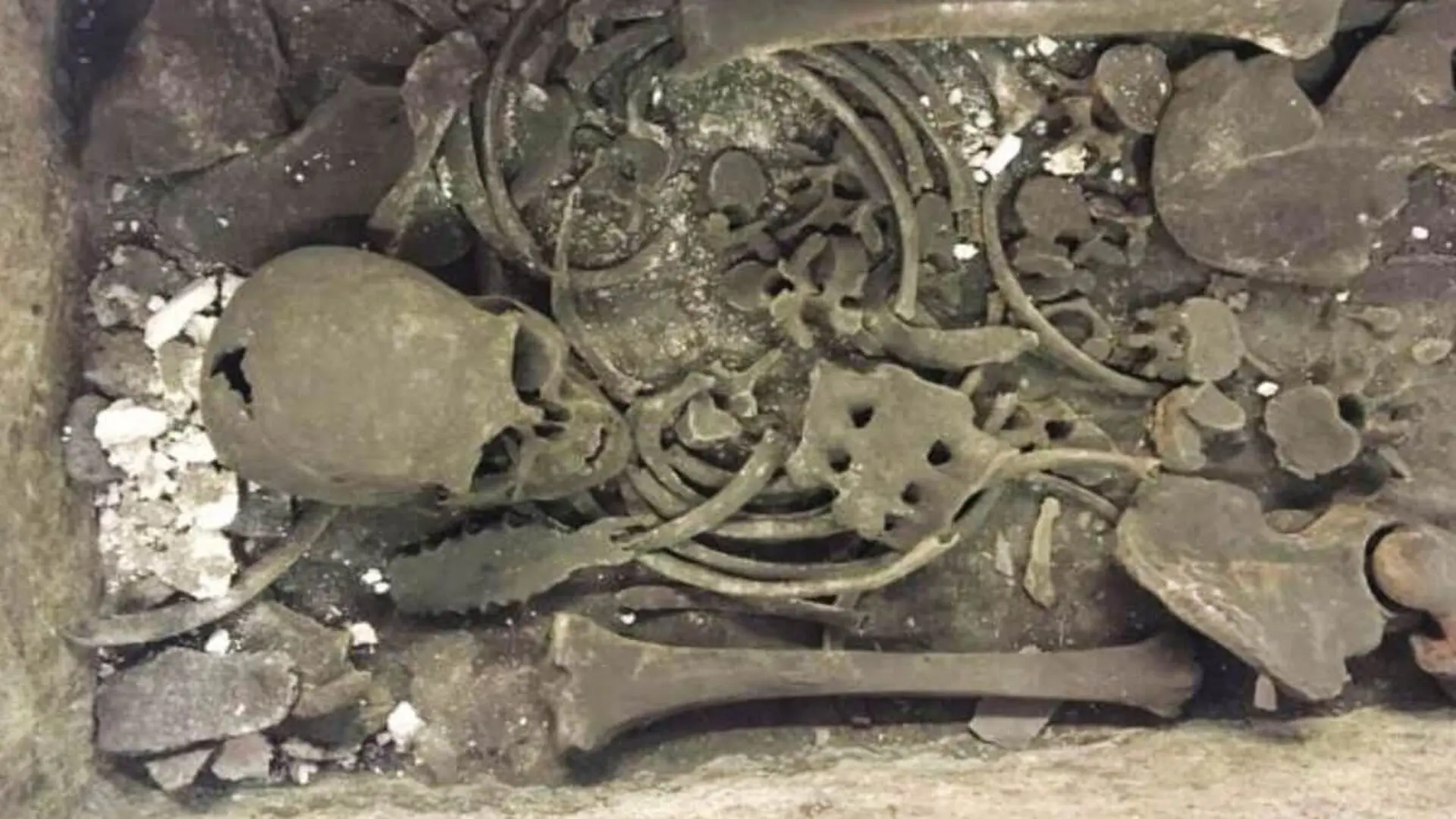
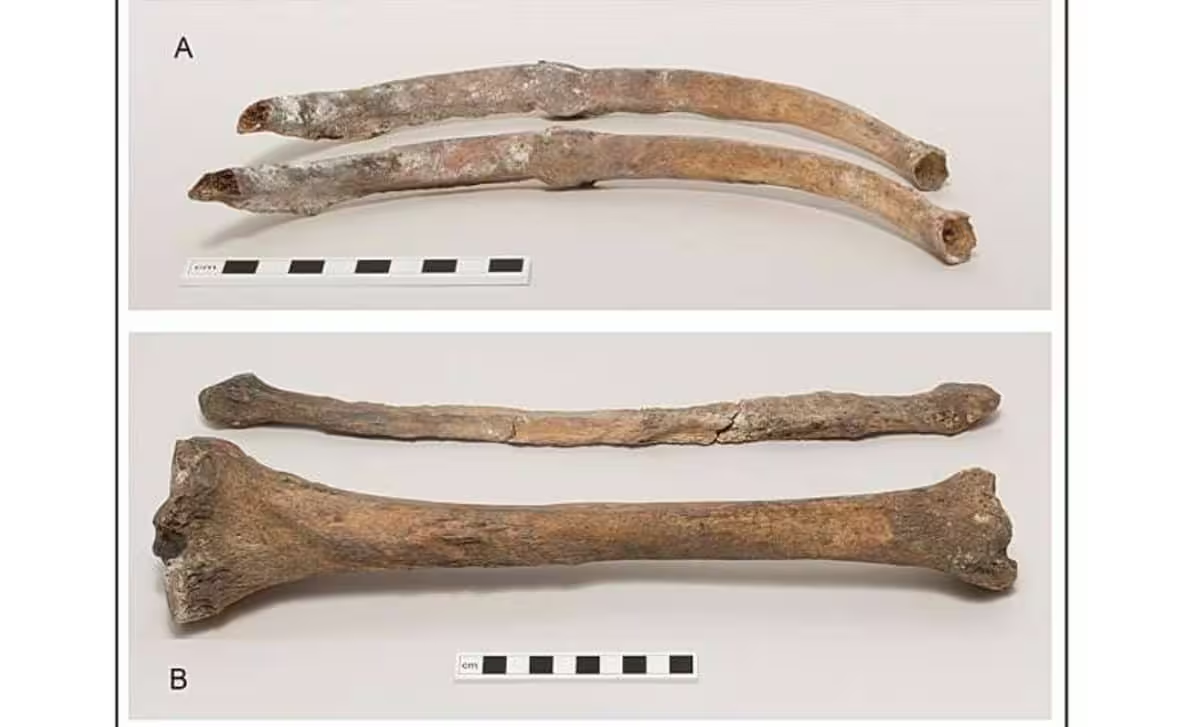
A comprehensive re-evaluation of the site in 2016 provided a major turning point. Conservators discovered a nearly complete set of human remains that had been overlooked in early reports. Osteological analysis conducted by James Young Langthorne of Pre-Construct Archaeology revealed the individual to be a male, standing approximately 5 feet 9 inches tall, who lived between the ages of 35 and 49. His skeleton showed clear evidence of a difficult life, including gout, osteoarthritis, and healed rib fractures.
Crucially, radiocarbon dating pinned the burial to between A.D. 987 and 1052. This timeframe confirms that the coffin was reclaimed and modified by Anglo-Saxon Christians who carved the cross into the lid to suit their own funerary customs.
Identifying the Medieval Cleric
The research team has narrowed down the potential identity of the occupant to two prominent abbots of Westminster: Ælfwig, who held the post from 993 to 1020, and his successor, Wulfnoth, who died in 1049. While a third candidate, Wulfsige, was considered, his tenure ended when he moved to a bishopric elsewhere, making his burial at the abbey less probable.
Rodwell leans toward Ælfwig as the primary candidate, noting his long, 27-year tenure and deep roots as a monk within the community. Further physical evidence—a distinct rectangular lime residue found inside the stone casing—suggests the body was placed within a wooden coffin before being laid to rest inside the Roman stone, a high-status practice for the period.
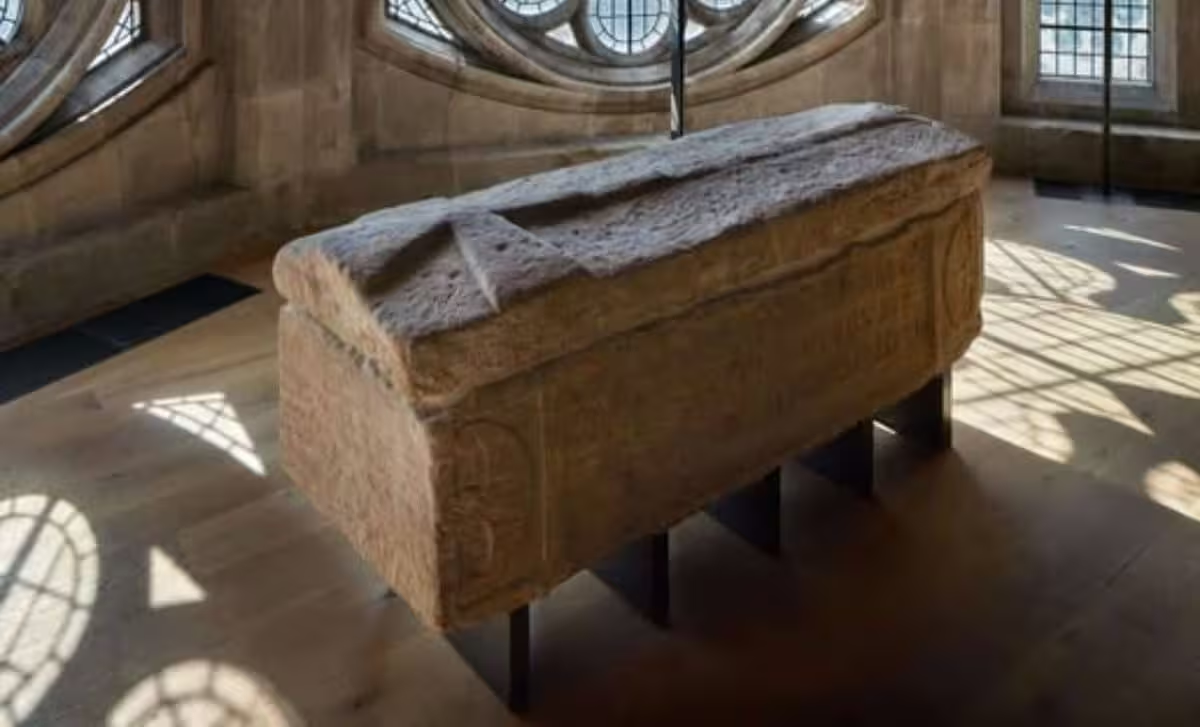
Historians believe the memorial likely sat at floor level within the eastern section of the early abbey. It was eventually moved during the major reconstruction led by Henry III in the 1240s, leading to its eventual reinterment in the sacristy courtyard around 1258. Today, the artifact resides in the Queen’s Diamond Jubilee Galleries at Westminster Abbey, standing as a physical testament to the blending of two distinct historical epochs.
This article has been fact checked for accuracy, with information verified against reputable sources. Learn more about us and our editorial process.
Last reviewed on .
Article history
- Latest version
Cite this page:
- Posted by David Anderson