DNA Reveals the Bo People as the Ancestors of China’s Mysterious Hanging Coffins
Archaeologists investigate the mysterious cliff‑hung wooden coffins of southern China, seeking to identify the ancient culture behind this unique burial practice.
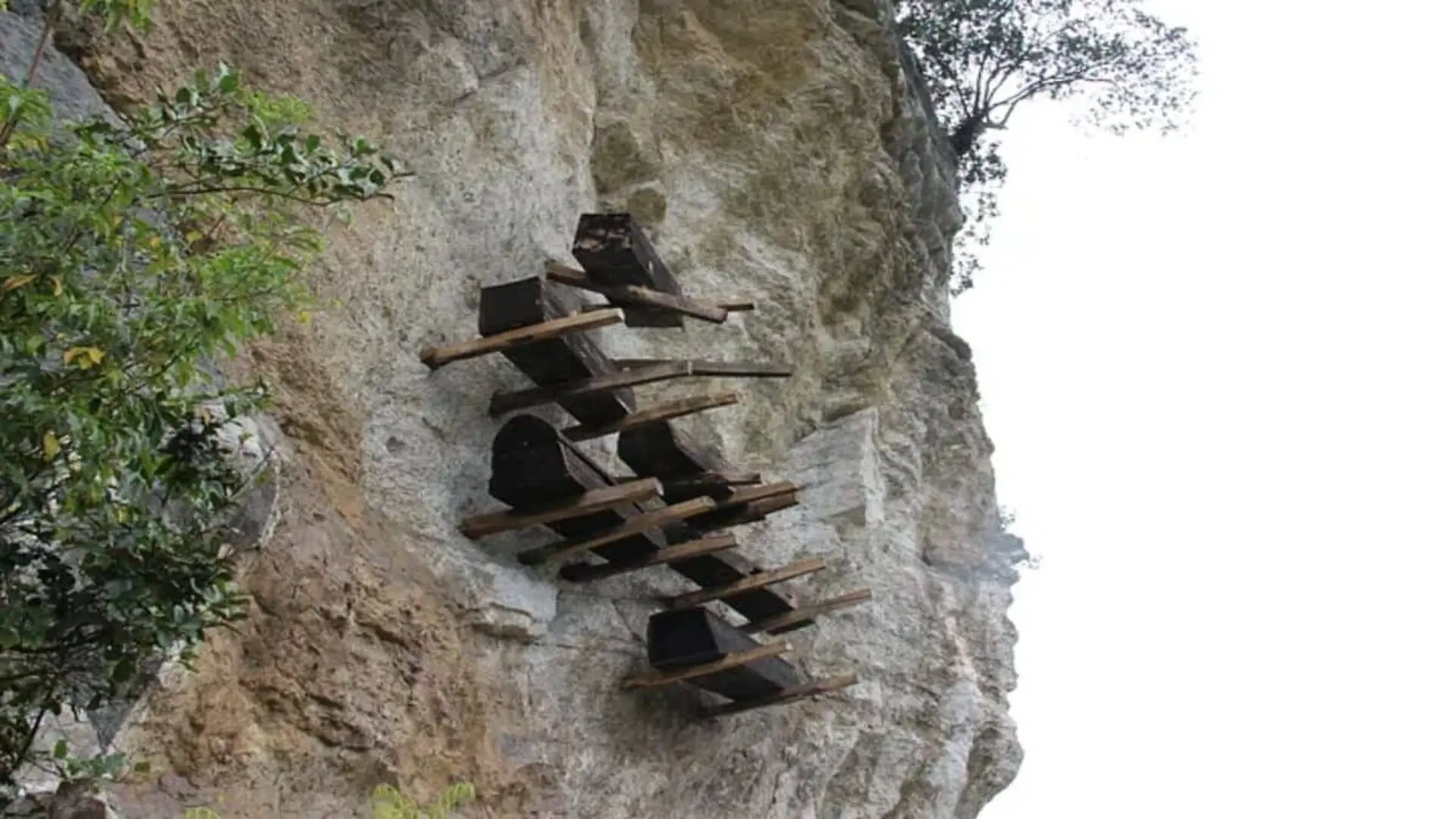
A recent analysis of ancient DNA has finally traced the makers of China’s enigmatic “hanging coffins” to the ancestors of the modern Bo community, which still inhabits parts of southwest China.
For decades, scholars have been intrigued by the cliff‑side burial chambers scattered across southern China and neighboring Southeast Asia. These wooden coffins, often perched on sheer rock faces or tucked inside caves, endured for millennia while the identity of the people who constructed them remained a mystery.
The study, appearing in Nature Communications, employed genetic sequencing to link the ancient interments to present‑day Bo populations, offering a concrete biological bridge between the two groups.
Beyond confirming lineage, the research highlights broader patterns of migration and interaction throughout southern China and Southeast Asia, suggesting that the practitioners of the hanging‑coffin custom were part of a wider network of early societies.
Genetic Evidence Uncovers Ancestral Roots
Researchers extracted DNA from eleven skeletal remains recovered from four separate hanging‑coffin sites in China, some dating back more than two millennia. Parallel analysis included four individuals from log‑coffin burials discovered in a northwestern Thai cave, with the oldest specimen estimated at around 2,300 years old. These ancient genomes were then compared with the DNA of thirty living individuals who identify as Bo.
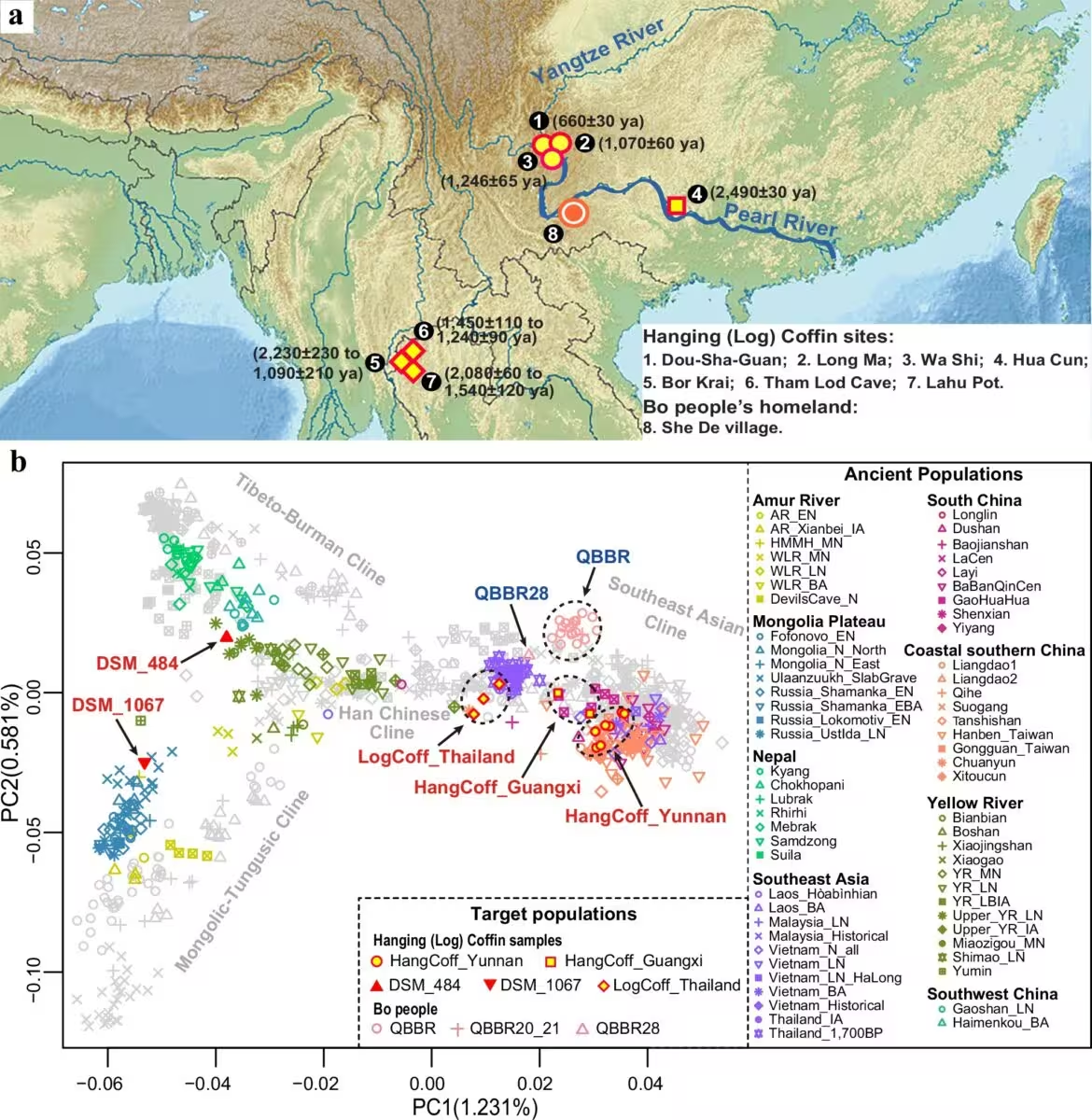
The comparative analysis demonstrated a clear genetic continuity between the ancient cliff‑side interments and contemporary Bo groups, confirming that the Bo are direct descendants of the culture that devised the hanging‑coffin practice.
These results echo longstanding oral histories and regional accounts that have linked the Bo people to the distinctive burial method, moving the connection from speculation to scientific verification.
Wider Regional Connections Unveiled
The study (Nature Communications) also identified shared ancestry between the Chinese hanging‑coffin individuals and populations that inhabited southern China and Southeast Asia during the Neolithic era, a period spanning roughly 10,000 B.C. to 2,000 B.C.
Genetic parallels suggest that these ancient peoples were likely related to early Tai‑Kadai speakers, who occupied extensive territories in the south before the later expansion of Han Chinese groups.
Comparable burial techniques have been documented beyond China’s borders. In northwestern Thailand, prehistoric communities fashioned log coffins by halving tree trunks, hollowing one half, and sealing the other as a lid. These containers were then positioned inside caves, sometimes on raised wooden platforms.

The genetic affinity between Thai and Chinese remains points to a shared lineage among these early groups, indicating that the hanging‑coffin tradition formed part of a broader cultural exchange across Southeast Asia.
From Ming Decline to Modern Legacy
Historical records suggest the practice waned during the Ming dynasty (1368–1644), with earlier references appearing in Yuan-era texts that described elevated coffins as auspicious symbols.
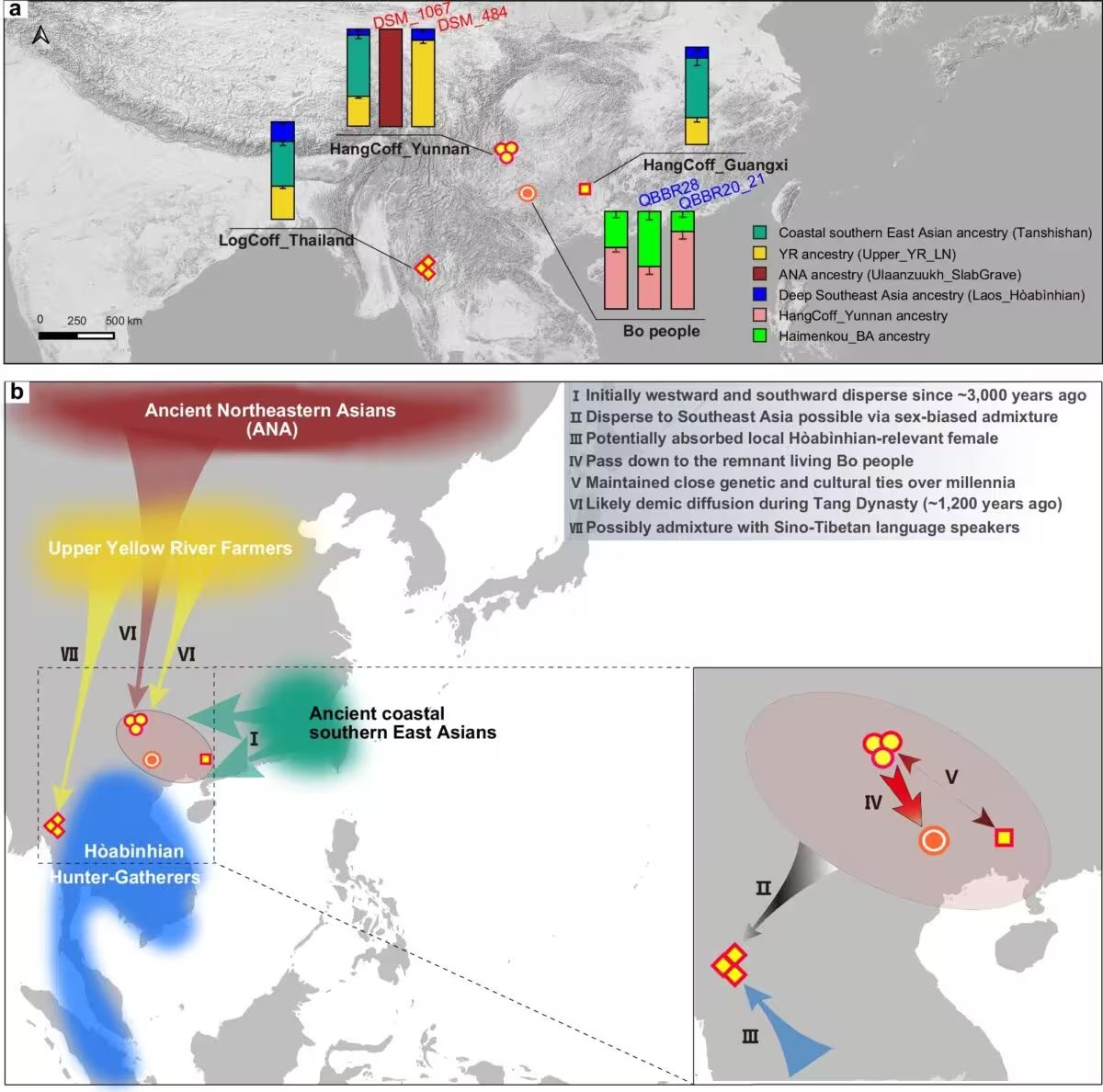
Today, a few thousand individuals of Bo heritage continue to reside in Yunnan province, officially categorized under the Yi ethnic group yet preserving their distinct language and customs. The new genetic insights anchor the ancient burial phenomenon within a living cultural continuum, affirming that the builders of the hanging coffins were not a vanished civilization but the forebears of communities still present in the region.
This article has been fact checked for accuracy, with information verified against reputable sources. Learn more about us and our editorial process.
Last reviewed on .
Article history
- Latest version
Reference(s)
- Zhou, Hui. “Exploration of hanging coffin customs and the bo people in China through comparative genomics - Nature Communications.”, vol. 16, no. 1, November 20, 2025, pp. 10230 Nature, doi: 10.1038/s41467-025-65264-3. <https://www.nature.com/articles/s41467-025-65264-3>.
Cite this page:
- Posted by Vikram Desai