Could A Hidden Companion Star Be Triggering Mass Extinctions On Earth Every 26 Million Years
Could a hidden companion star, known as Nemesis, be triggering Earth’s mass extinctions? A physicist revisits the mysterious hypothesis behind comet showers.
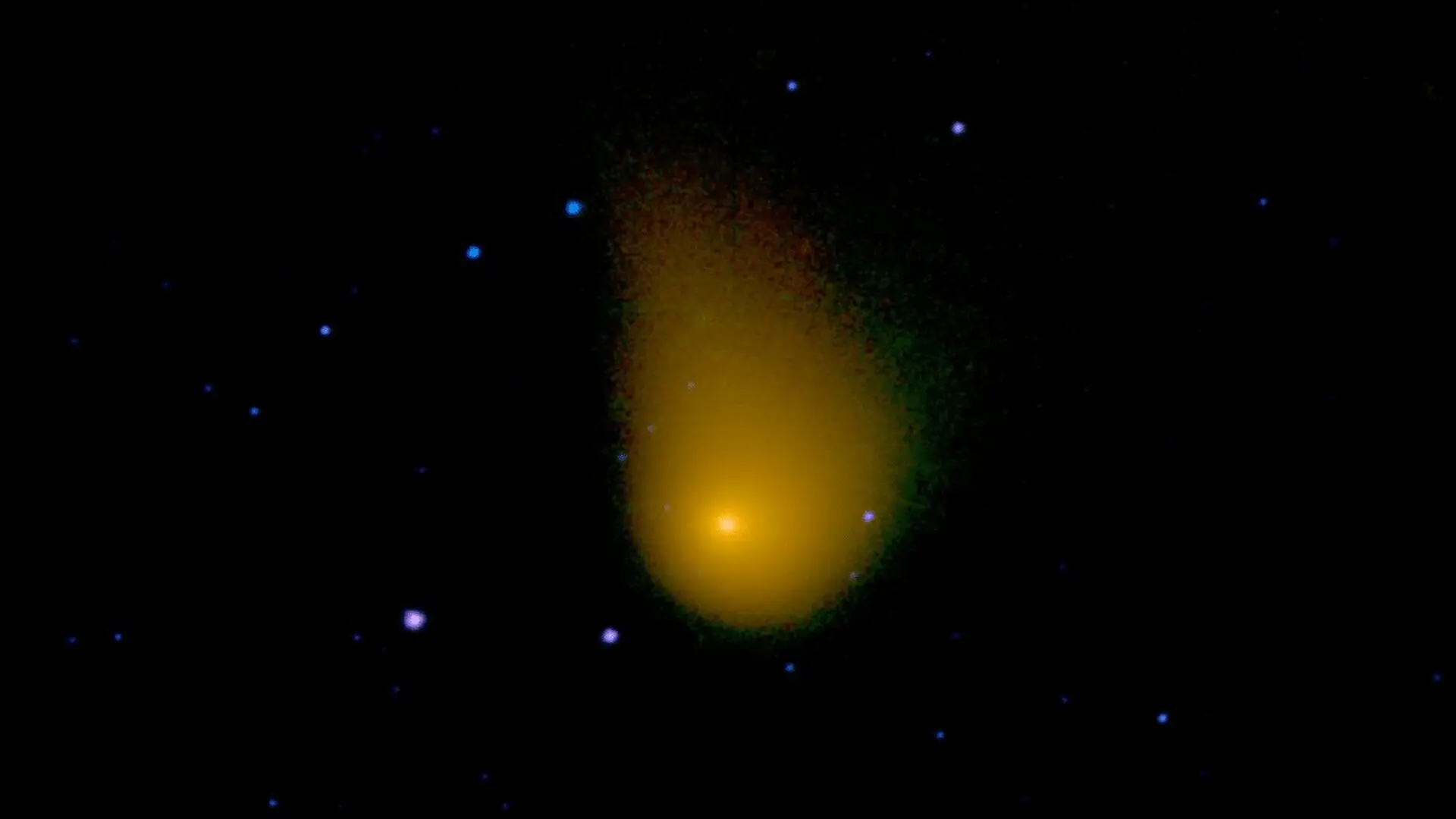
For decades, scientists have grappled with the mystery of whether an elusive, unseen stellar companion to our Sun could be responsible for triggering mass extinctions on Earth. The hypothesis centers on the existence of “Nemesis,” a theoretical red dwarf star residing in the far reaches of the solar neighborhood that, according to some models, periodically disturbs the icy reservoirs of the Oort Cloud, sending swarms of comets hurtling toward the inner solar system.
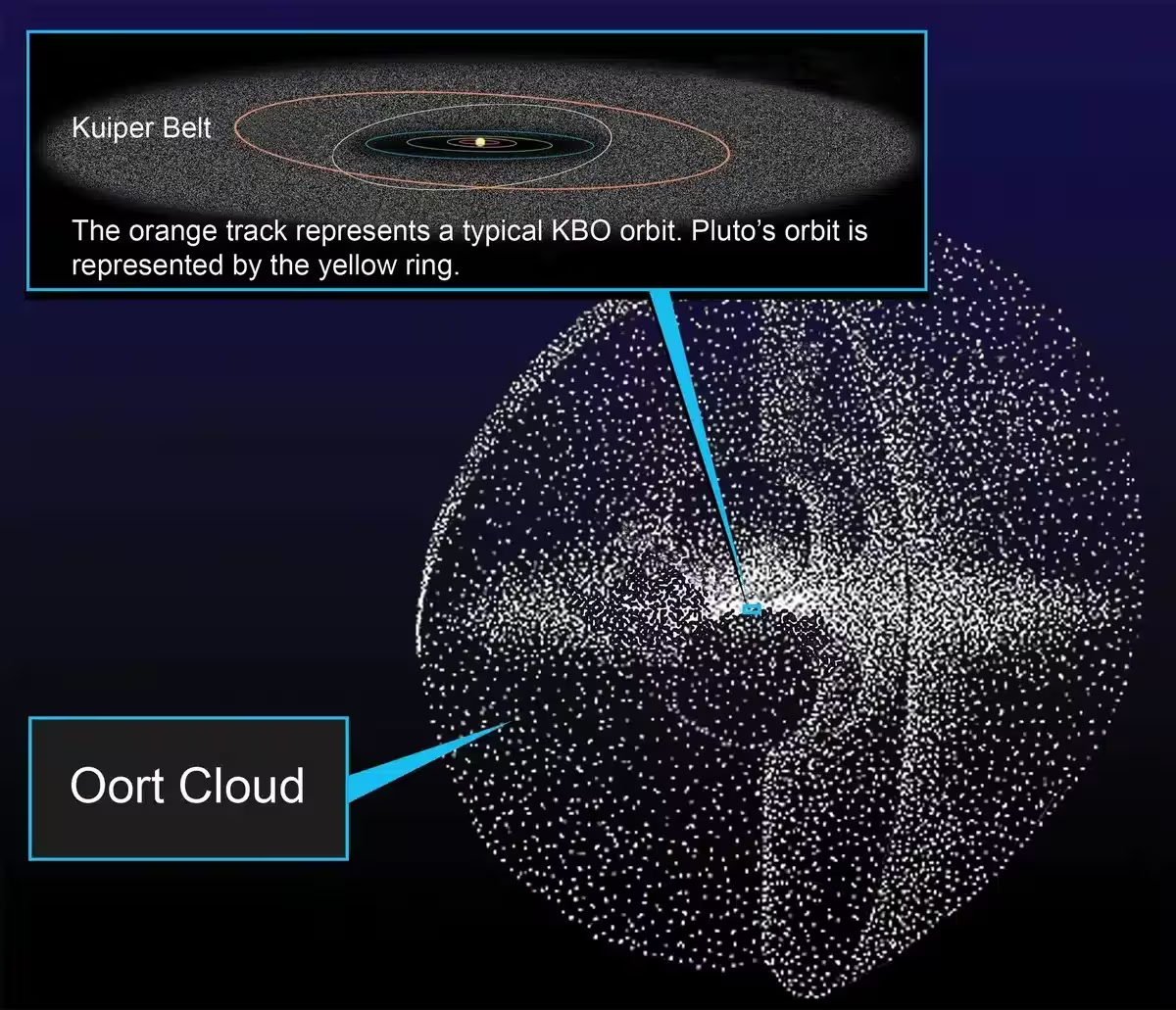
The Oort Cloud, a vast, spherical shell of frozen debris extending nearly 1.6 light-years from the Sun, is the widely accepted source of long-period comets. While the cloud has never been imaged directly, its gravitational interactions with passing stars are typically cited as the primary catalyst for nudging these icy bodies out of their distant orbits. However, physicist Richard Muller, a professor emeritus at the University of California, Berkeley, has long championed a more specific mechanism: a binary companion star that exerts a recurring gravitational influence on the region.
The Statistical Link Between Comets and Ancient Catastrophes
The Nemesis theory gained traction in the 1980s following research by paleontologists David Raup and Jack Sepkoski, who analyzed marine fossil records and proposed that mass extinctions occur with a rhythmic periodicity of approximately 26 million years. Seeking an astronomical explanation for this cycle, Muller suggested that a companion star on a highly elliptical orbit would periodically plunge through the outer reaches of the Oort Cloud, triggering massive cometary showers every few million years.
The most famous impact event, the Chicxulub impact that marked the end of the non-avian dinosaurs 66 million years ago, serves as the centerpiece for discussions regarding this theory. While scientific consensus identifies the culprit as an asteroid, the potential for a cometary source remains a point of academic debate. Critics, however, point out that the evidence for a rigid 26-million-year extinction cycle is statistically contentious and that other terrestrial factors, such as large-scale volcanism, offer more robust explanations for global climate shifts.
Searching for the Invisible
The primary obstacle to the Nemesis model is the lack of empirical evidence. Modern sky surveys, most notably data gathered by NASA’s Wide-field Infrared Survey Explorer (WISE), have failed to find any trace of a massive object at the distances required to influence the Oort Cloud. Even if the star were faint, modern infrared technology should have revealed its heat signature, and parallax measurements would have identified its motion relative to the Sun.
Muller has countered that the star’s apparent lack of movement could make it difficult to detect against the backdrop of distant stars, particularly if its orbital plane aligns with the ecliptic. Nevertheless, most astronomers maintain that a star massive enough to destabilize the Oort Cloud would be difficult to miss given our current observational capabilities.

Future Prospects for Mapping the Outer Solar System
While the search for a companion star may have reached a stalemate, understanding the dynamics of the Oort Cloud remains a top priority for planetary scientists. Researchers like Sean Raymond of the Bordeaux Astrophysical Laboratory argue that the cloud is a complex graveyard of objects, some formed in our own planetary system and others captured from the birth cluster that once surrounded our Sun.
The Vera C. Rubin Observatory in Chile is expected to provide unprecedented insights into this region. By scanning the skies with extreme sensitivity, the observatory will track thousands of faint objects, allowing astronomers to refine their models of how external gravity—whether from individual stars or the tidal forces of the Milky Way—affects the paths of long-period comets. Until such evidence emerges to support the existence of a companion, Nemesis remains a provocative, if largely unsupported, narrative in the ongoing study of our solar system’s turbulent history.
This article has been fact checked for accuracy, with information verified against reputable sources. Learn more about us and our editorial process.
Last reviewed on .
Article history
- Latest version
Cite this page:
- Posted by Vikram Desai