Boy Kept A Pebble In His Bedroom For Years Before Realizing It Was A 60,000 Year Old Axe
A seemingly ordinary piece of flint discovered on Shoreham Beach has sparked unexpected interest, revealing the hidden history beneath our feet.
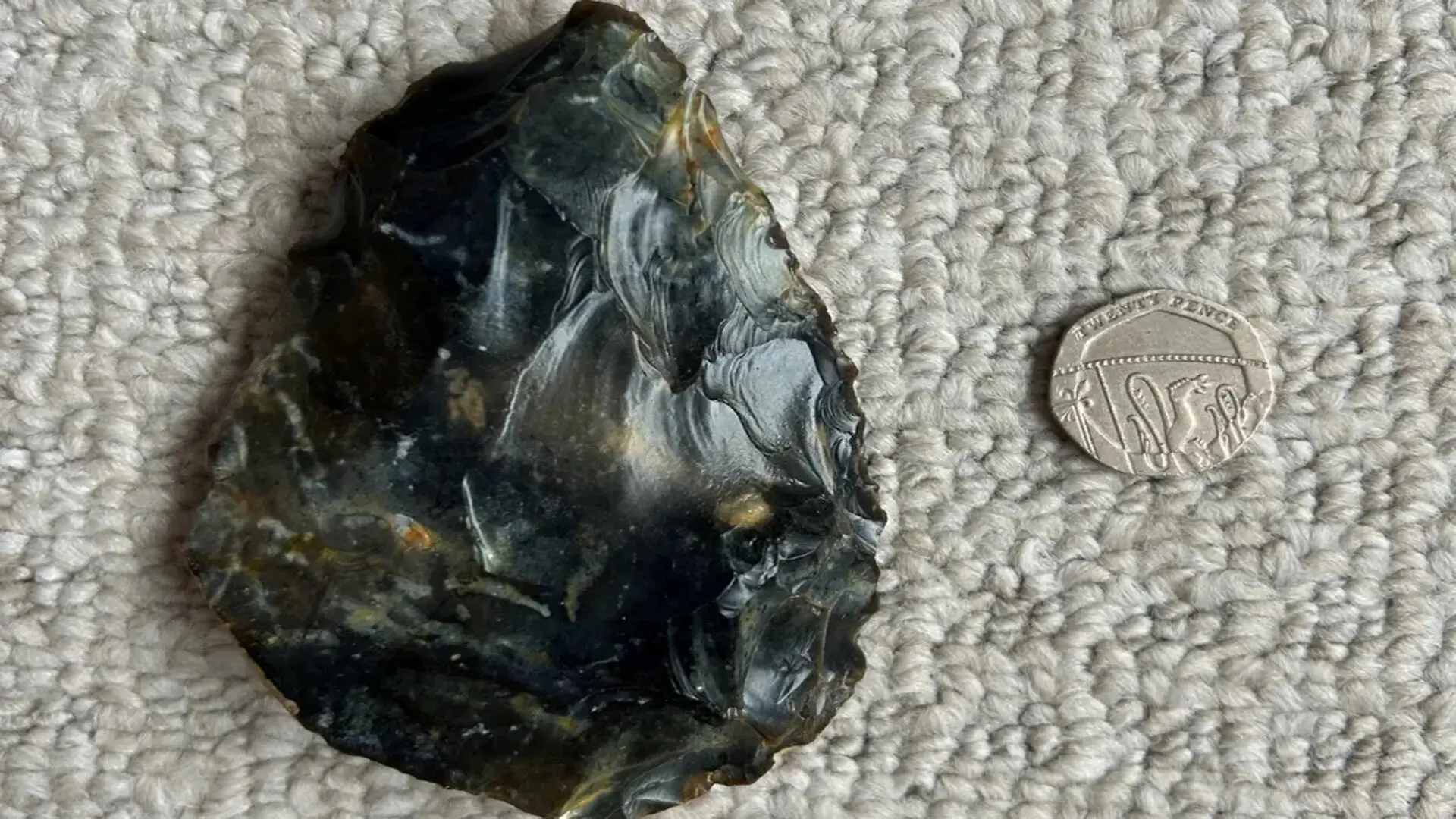
A simple, curious habit has led to an extraordinary archaeological discovery on the West Sussex coast. For three years, a young boy named Ben Witten kept a peculiar piece of flint in his bedroom, unaware that the stone he plucked from the sands of Shoreham Beach was actually a relic of the Middle Paleolithic era.
An Accidental Discovery
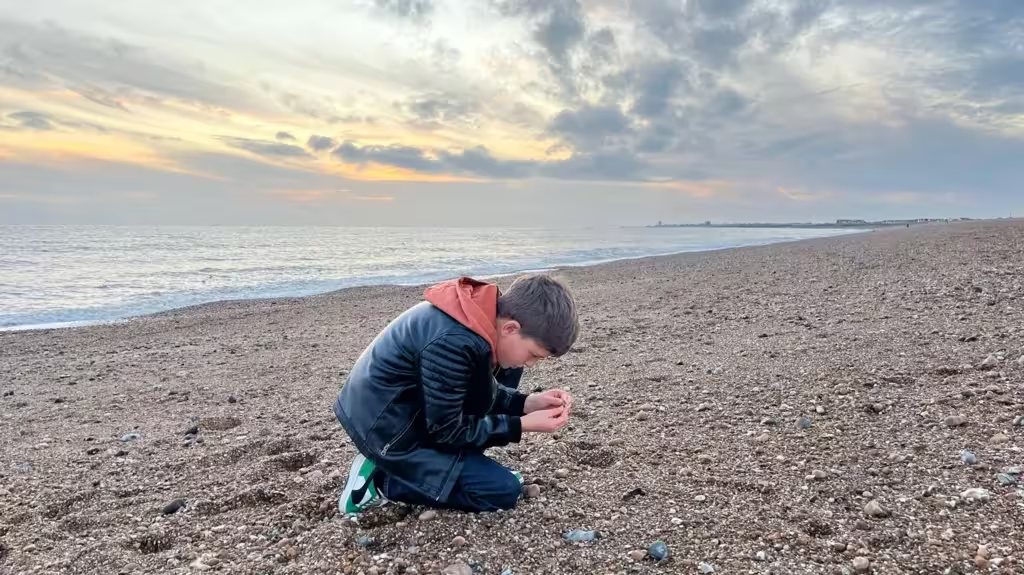
Ben was just six years old when he first noticed the stone among the millions of pebbles that populate the beach. Unlike the surrounding debris, the object possessed a distinct, worked quality that captured his attention. It remained a cherished, if occasionally misplaced, curiosity in his room until he visited a Stone Age exhibition at the Worthing Museum three years later. Recognizing the similarity between his beach find and the ancient tools on display, his mother reached out to the museum’s archaeology curator, James Sainsbury.
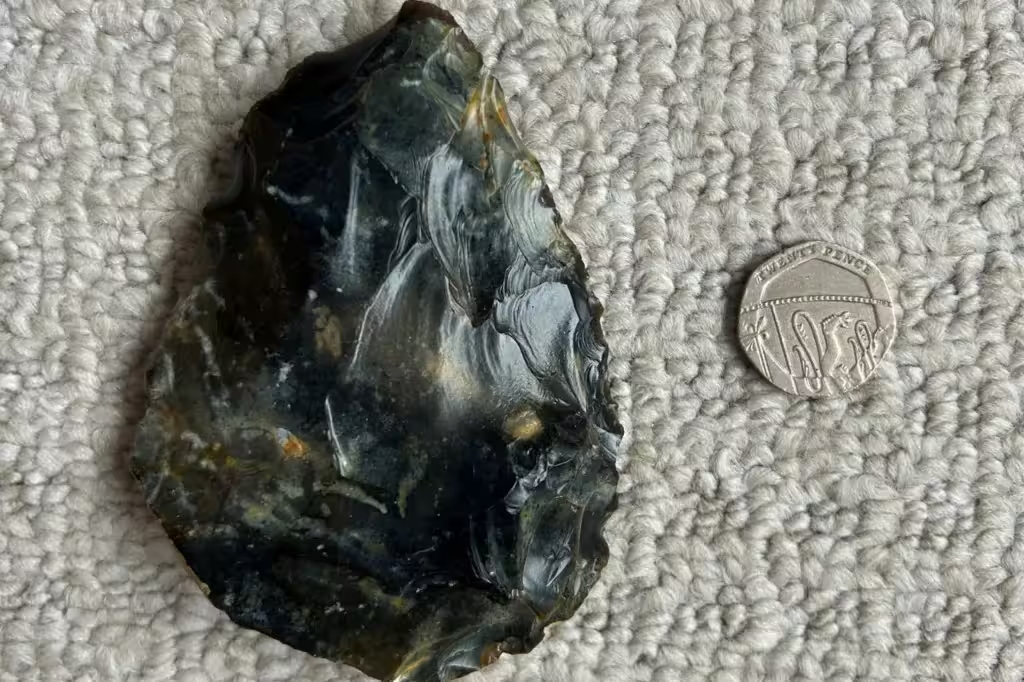
Sainsbury, initially expecting the common assortment of mundane rocks, was stunned by the images provided by the family. Analysis confirmed that the object was a Neanderthal hand axe, dating back approximately 40,000 to 60,000 years. According to the curator, who spoke with Fox News Digital, this is the oldest artifact brought to his attention in over a decade.
Ancient Craftsmanship Unearthed
The tool is a classic example of a bifacial axe, featuring deliberate, symmetrical shaping on both sides of the flint. This level of craftsmanship signifies a sophisticated understanding of tool-making, likely utilized by Neanderthals for essential survival tasks such as butchering, wood processing, and digging. Its survival in such recognizable condition is rare, particularly given the dynamic nature of coastal erosion and human activity along the shoreline.
The exact origin of the axe remains a subject of intrigue. Sainsbury notes that the geography of the region during the Ice Age was vastly different, with the coastline pushed further out into what is now the English Channel. It is possible the tool was displaced by more recent human intervention, such as coastal defense construction, or it may have been revealed by the natural shifting of submerged ancient landscapes.

Inspiring a New Generation of Researchers
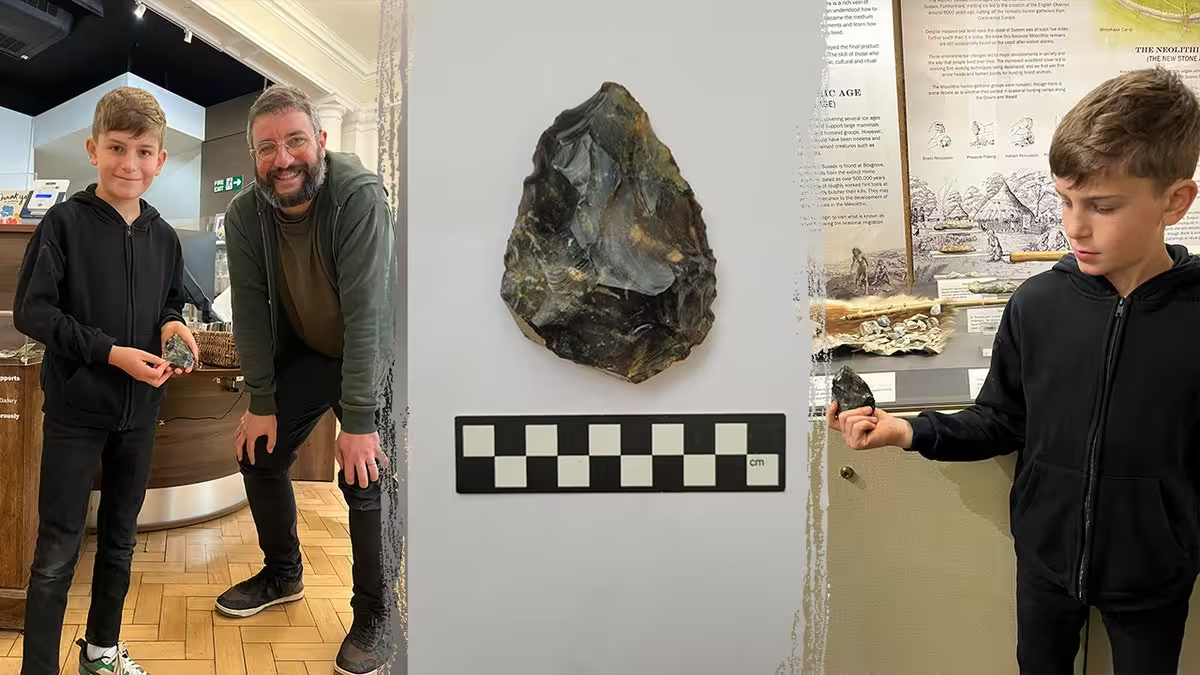
The axe was placed on loan to the Worthing Museum for public viewing, an experience that has profoundly impacted young Ben. He has expressed a growing interest in pursuing a career in archaeology, fueled by the realization that history is not just found in books, but hidden in plain sight.
For the experts, this find serves as a potent reminder that scientific discovery is accessible to everyone. “I hope people realize that they don’t need specialist training to find interesting archaeology,” Sainsbury remarked. The find is now being formally recorded through the British Museum’s Portable Antiquities Scheme, ensuring it is preserved for future research and education.
This article has been fact checked for accuracy, with information verified against reputable sources. Learn more about us and our editorial process.
Last reviewed on .
Article history
- Latest version
Reference(s)
- “Shoreham: Boy discovers Neanderthal hand axe on beach.”, November 27, 2024 <https://www.bbc.com/news/articles/cn9xr3weg0xo>.
- <https://www.smithsonianmag.com/smart-news/a-little-boy-found-a-strange-stone-on-the-beach-archaeologists-told-him-it-was-a-neanderthals-hand-ax-180985578/>.
- Messier, Ashlyn. “9-year-old boy finds 60,000-year-old axe at Shoreham Beach in England.”, November 30, 2024 Fox News <https://www.foxnews.com/travel/9-year-old-boy-finds-60000-year-old-axe-shoreham-beach-england>.
Cite this page:
- Posted by Vikram Desai