Inside the Antarctic Volcano Where Abandoned Whaling Ruins Still Haunt the Ice
Beneath Antarctica’s icy surface lies a hidden, flooded volcano, home to abandoned whaling relics, forgotten graves, and mysterious geothermal activity.
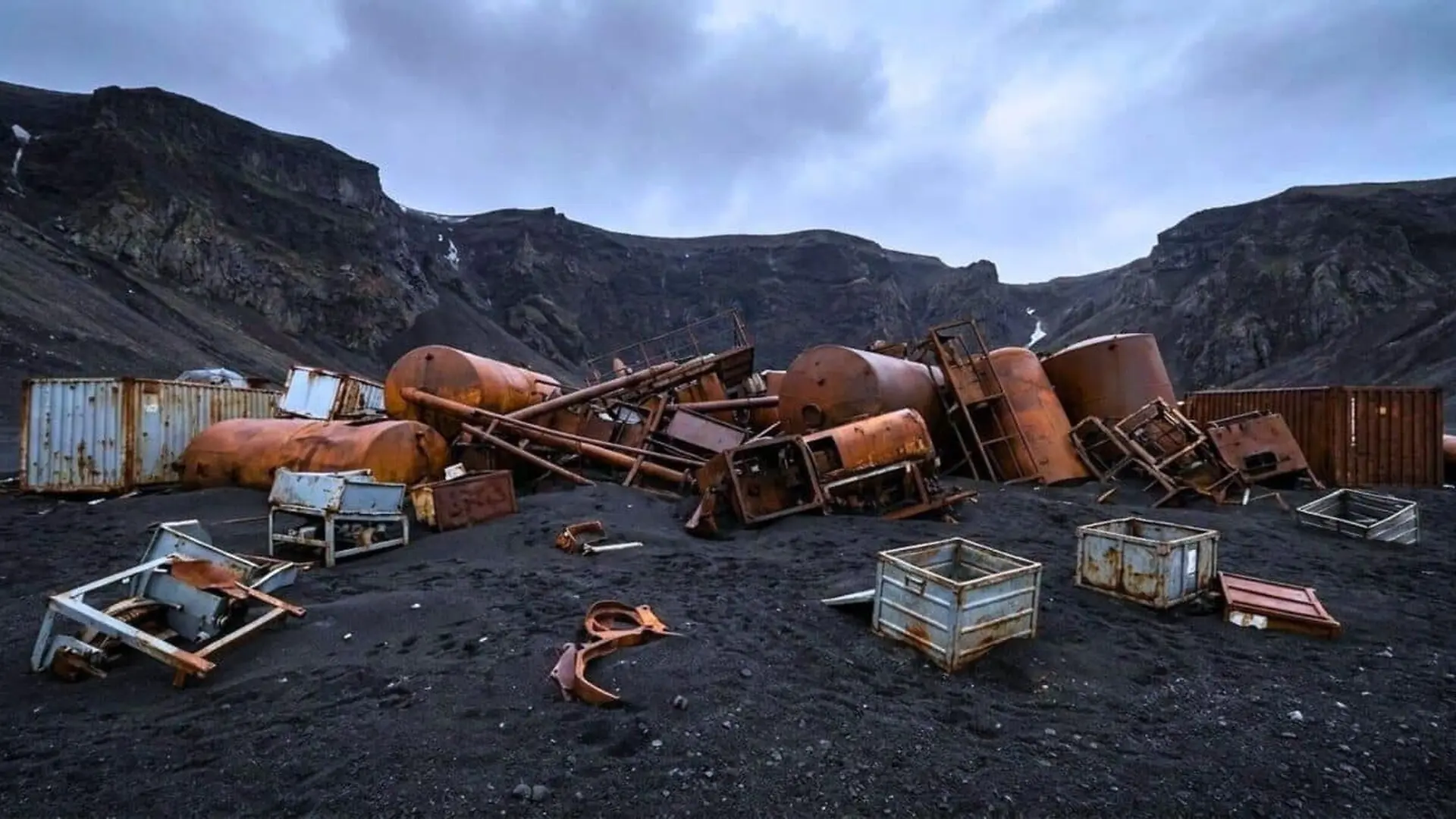
Navigating toward Deception Island in the South Shetland archipelago requires precision. Vessels must thread through Neptune’s Bellows, a precarious, narrow gap in the crater wall where treacherous submerged rocks and volatile currents challenge even the most experienced mariners. Yet, once inside, the waters transform into a tranquil, sheltered basin known as Port Foster, a flooded volcanic caldera long favored as one of the safest natural anchorages in the Southern Ocean.
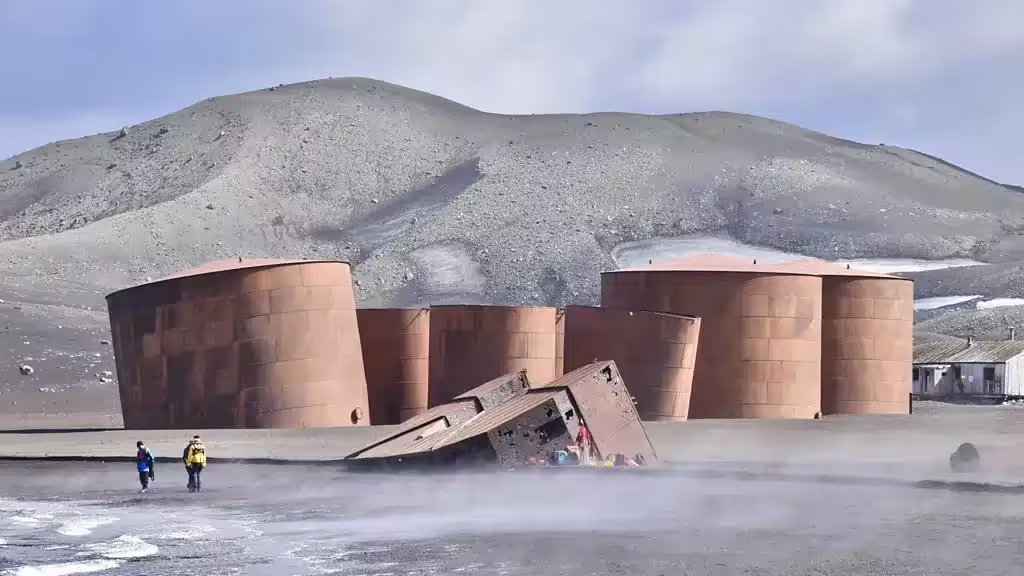
The shoreline of the caldera, particularly at Whalers Bay, presents a haunting intersection of human industry and geological power. Scattered across the black, volcanic sand are the skeletal remnants of the Hektor Whaling Station, once the only successful land-based commercial enterprise in Antarctic history. Rusted iron tanks, abandoned boilers, and the splintered remains of industrial buildings lie exposed, periodically warmed by geothermal heat that continues to pulse beneath the earth.
A Century of Transformation
Established in 1912 by the Norwegian firm Aktieselskabet Hektor, the station functioned until 1931, serving as a critical land base that supplemented the factory ships already anchoring in the caldera. As historian J. Stephen Dibbern notes in his analysis for Polar Record, the site represents a unique chapter in Antarctic commercial history, though it was far from the island’s first human encounter. Since the early 1800s, Deception Island has hosted sealers, explorers, and scientific researchers, all drawn by its unique geography.
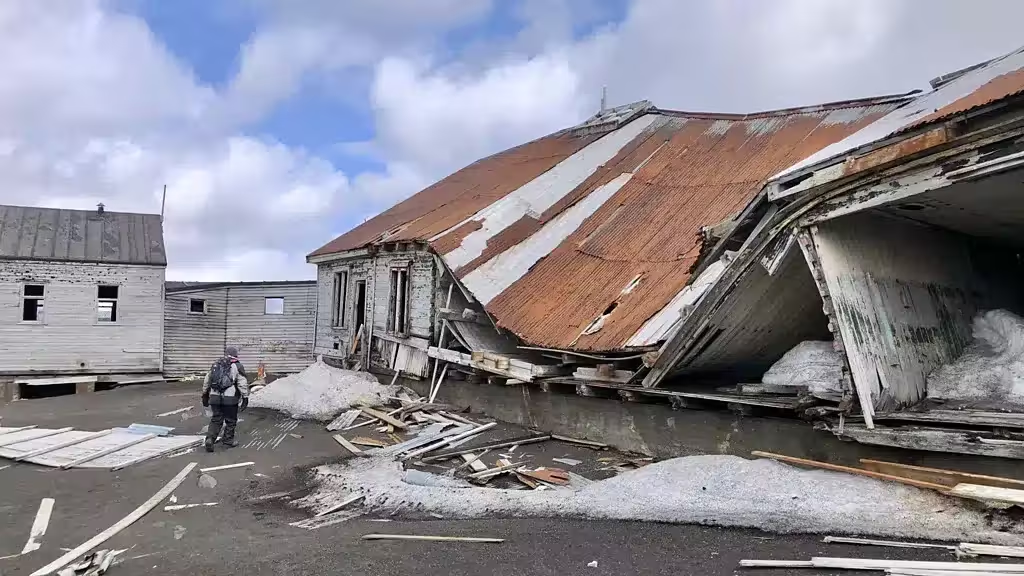
During the Second World War, the island saw a pivot in purpose. In the 1943–44 season, British forces launched Operation Tabarin, establishing “British Base B” among the derelict whaling structures. This station, which eventually became a foundation for the British Antarctic Survey, transformed the site into an early hub for permanent scientific inquiry in the region.
The Power of a Restless Caldera
The island’s history is defined not only by those who built upon it but by the volcanic forces that periodically reclaimed it. The caldera itself was forged approximately 4,000 years ago during a massive eruption that expelled between 30 and 60 cubic kilometers of magma and ash. In the modern era, volcanic activity has remained a persistent threat. Major eruptions in 1967, 1969, and 1970 forced the emergency evacuation of research teams and caused extensive damage to both the Norwegian whaling ruins and the newer British facilities.
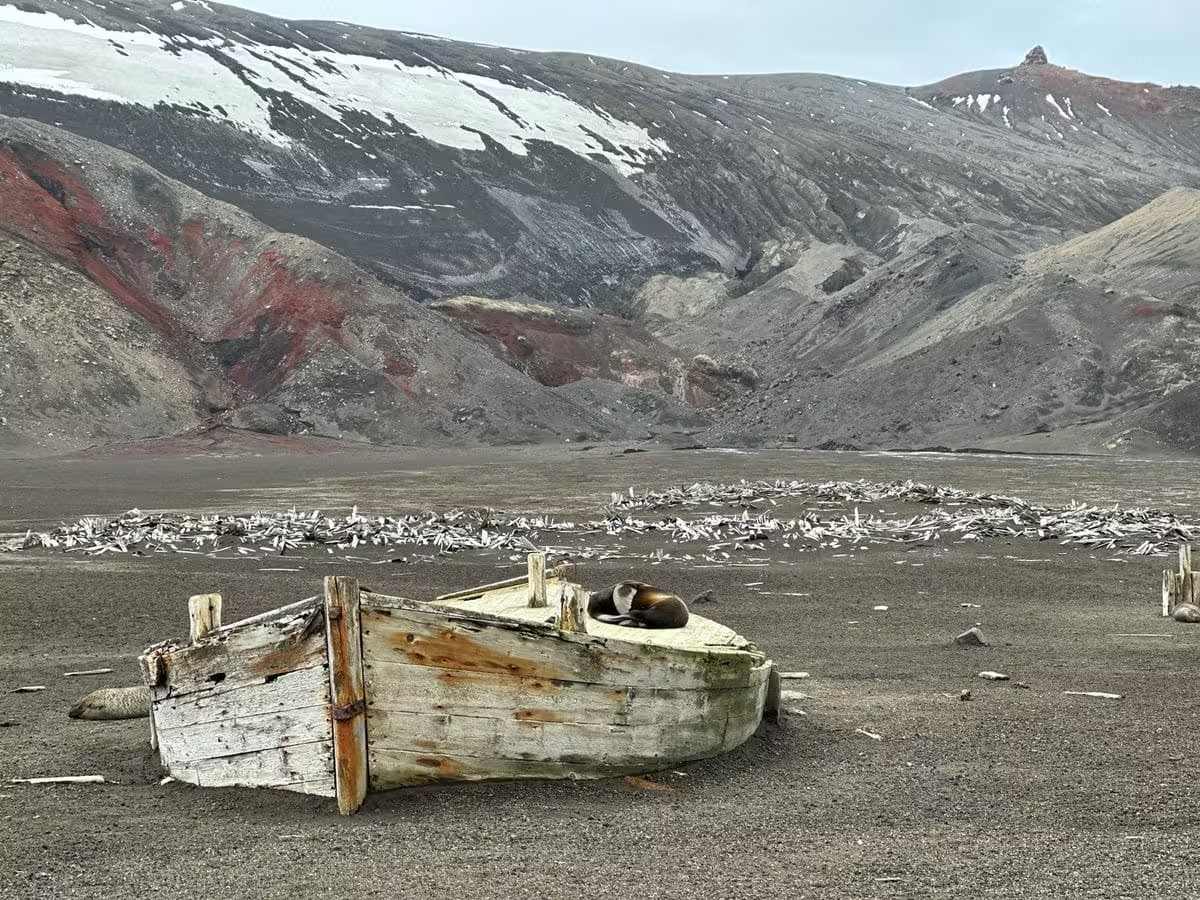
The impact of these events is most poignant at the site’s former cemetery. Originally containing 35 graves and a memorial for mariners lost at sea, the graveyard was largely decimated by mud and ash flows in 1969. Today, the site serves as a somber reminder of the environment’s hostility, though conservation efforts have managed to preserve at least one connection to the past: the restored wooden cross of Norwegian whaler Peder Knapstad, which stands as the only clearly identified grave marker remaining in the bay.
Nature’s Resilient Return
Despite the history of industrial extraction and volcanic upheaval, Deception Island currently functions as a thriving ecosystem. The same geothermal energy that creates the island’s harsh terrain also fosters pockets of ice-free ground, supporting mosses, lichens, and vast seabird populations. Most notably, Baily Head is home to a staggering chinstrap penguin colony, with tens of thousands of breeding pairs returning annually to the rugged coastline.
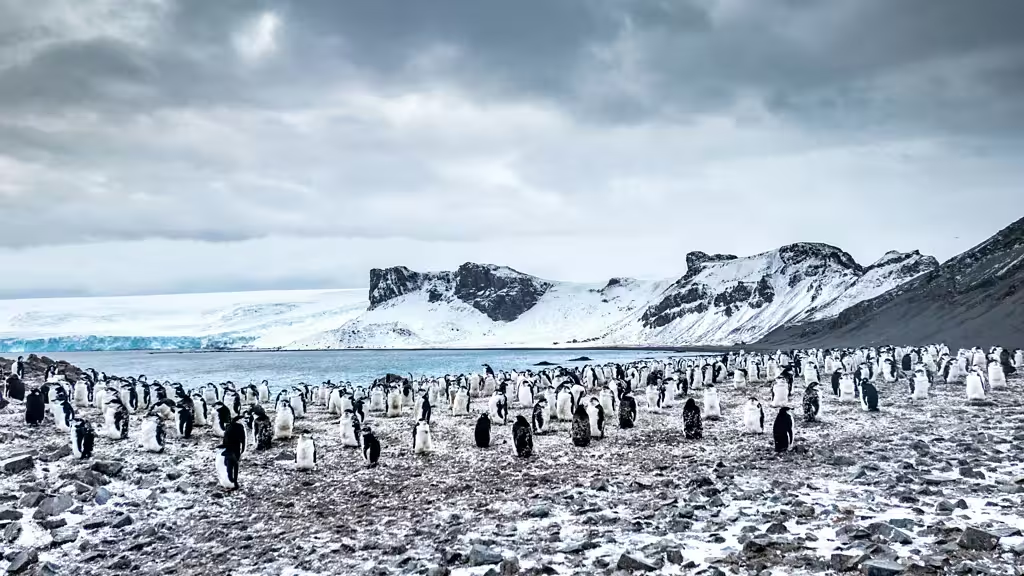
Today, the island stands as Historic Site and Monument No. 71, a protected space that offers a layered look at human ambition set against the backdrop of an active volcano. It remains a rare place where the evidence of twentieth-century industry exists in constant dialogue with the unpredictable, ongoing evolution of the Antarctic landscape.
This article has been fact checked for accuracy, with information verified against reputable sources. Learn more about us and our editorial process.
Last reviewed on .
Article history
- Latest version
Reference(s)
- Dibbern, J.. “Fur seals, whales and tourists: a commercial history of Deception Island, Antarctica | Polar Record | Cambridge Core.”, vol. 46, no. 3, pp. 210-221. Cambridge Core, doi: 10.1017/S0032247409008651. <https://www.cambridge.org/core/journals/polar-record/article/abs/fur-seals-whales-and-tourists-a-commercial-history-of-deception-island-antarctica/88ED36AD8A0FBC63FB89F7BC5AE88357>.
Cite this page:
- Posted by Vikram Desai