CERN Detects Elusive Particle Decay That Happens Only Once in 10 Billion Attempts
CERN’s upgraded LHCb detector has captured a rare beauty meson decay occurring once in 10 billion cases, offering a rigorous new test for particle physics.
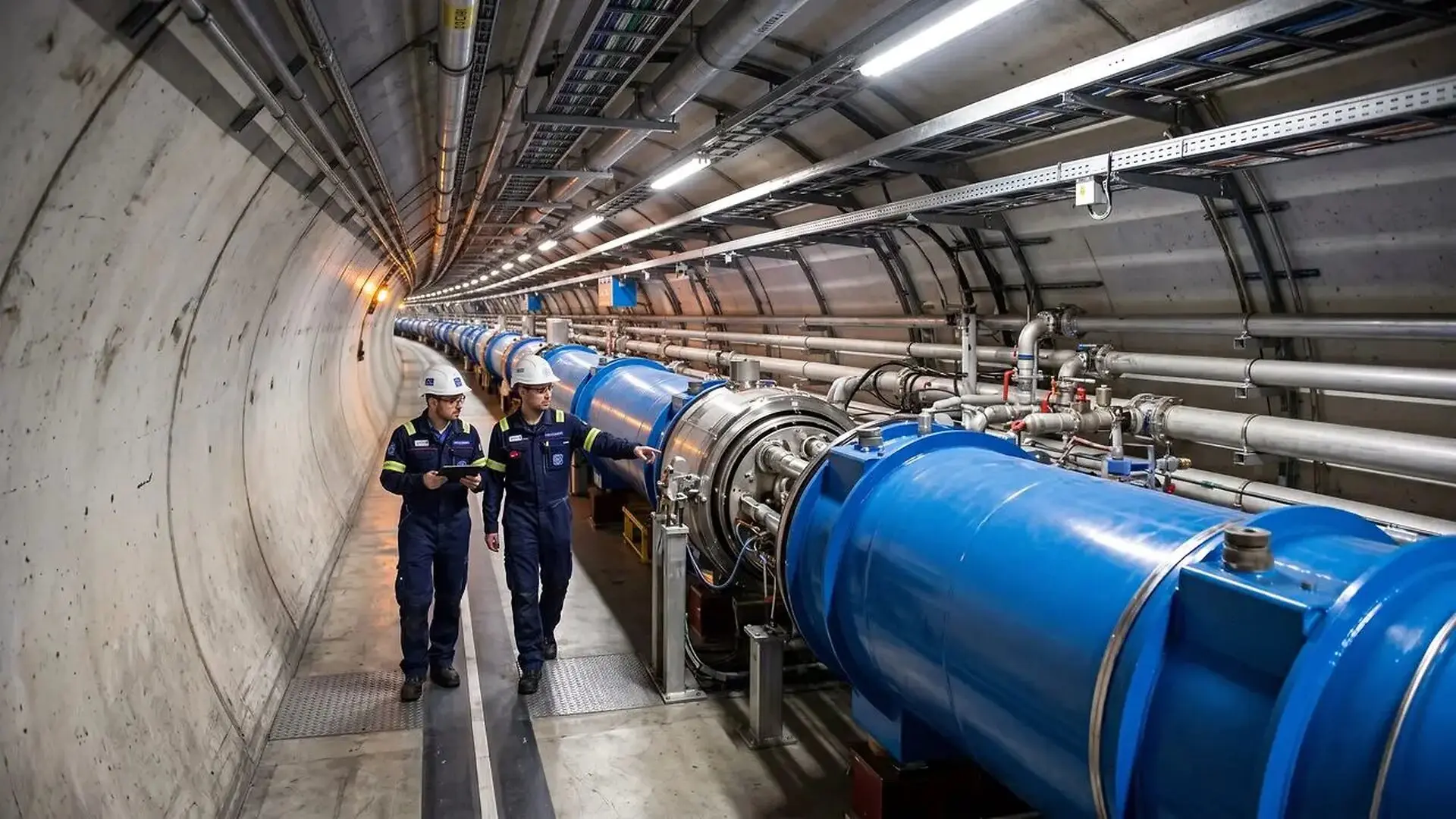
Physicists at CERN have successfully captured evidence of an ultra-rare subatomic event: the decay of a neutral beauty meson, known as the Bd (or B0) meson, into two muons. This transformation, which is estimated to occur in only about one out of every 10 billion instances, has eluded definitive observation for more than four decades. The findings, detailed in a preprint submitted to Physical Review X, represent a significant technical milestone for the LHCb collaboration.
While the result reaches a statistical significance of 3.2 sigma, it falls short of the five-sigma threshold required to claim a formal discovery in particle physics. Furthermore, the measurement aligns with current theoretical predictions, meaning it reinforces the Standard Model rather than signaling the presence of new, undiscovered particles.
Precision Upgrades Power Rare Event Detection
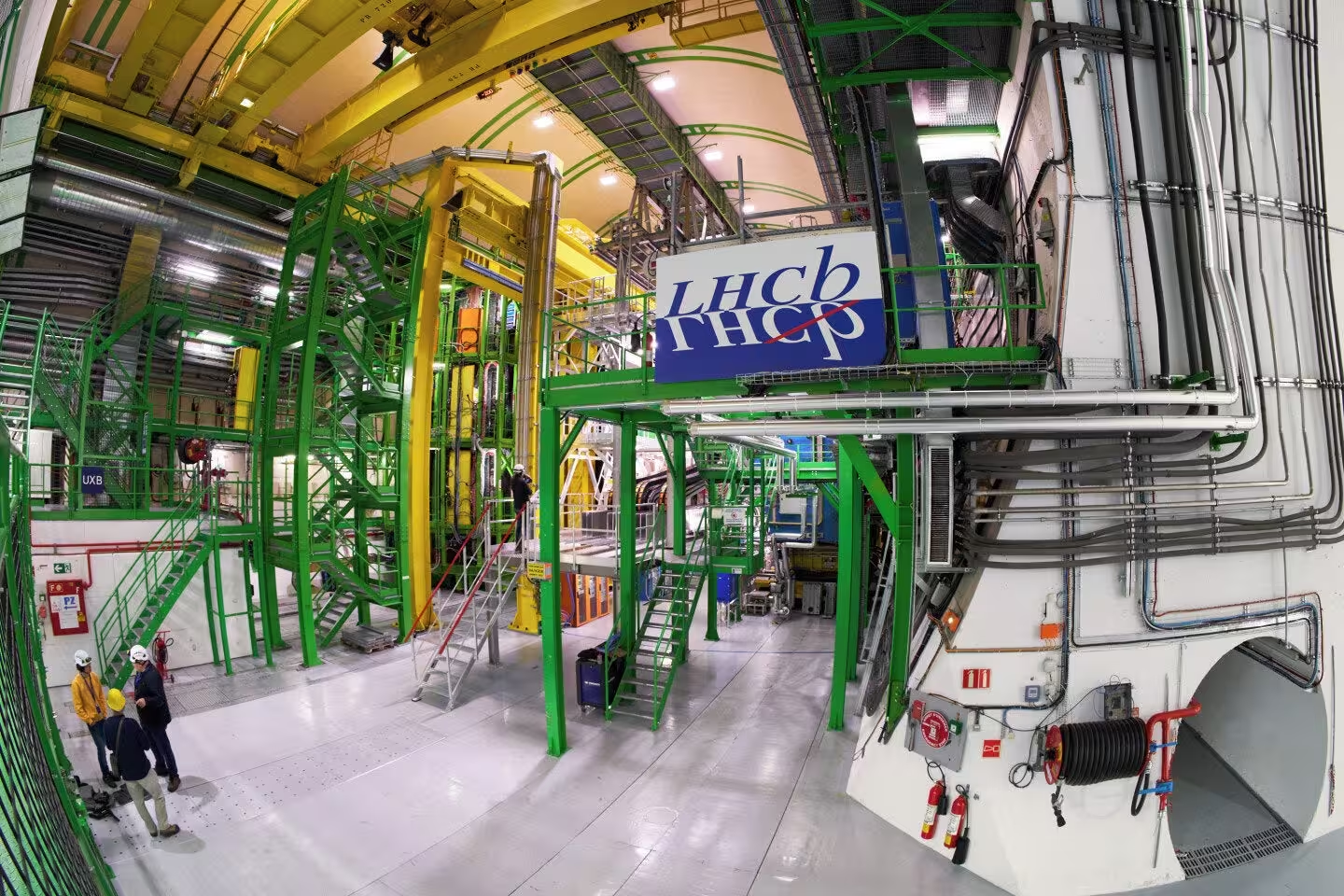
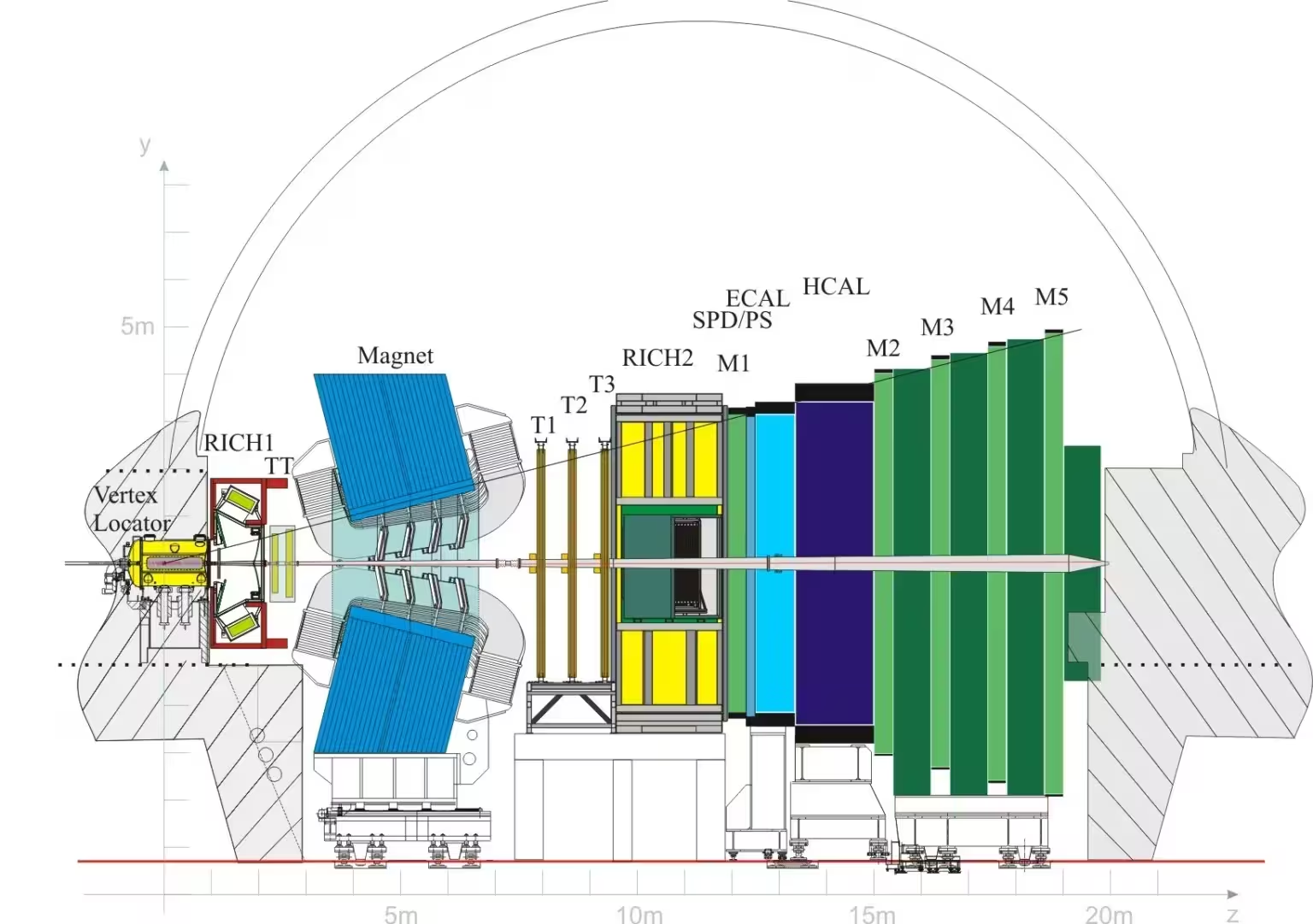
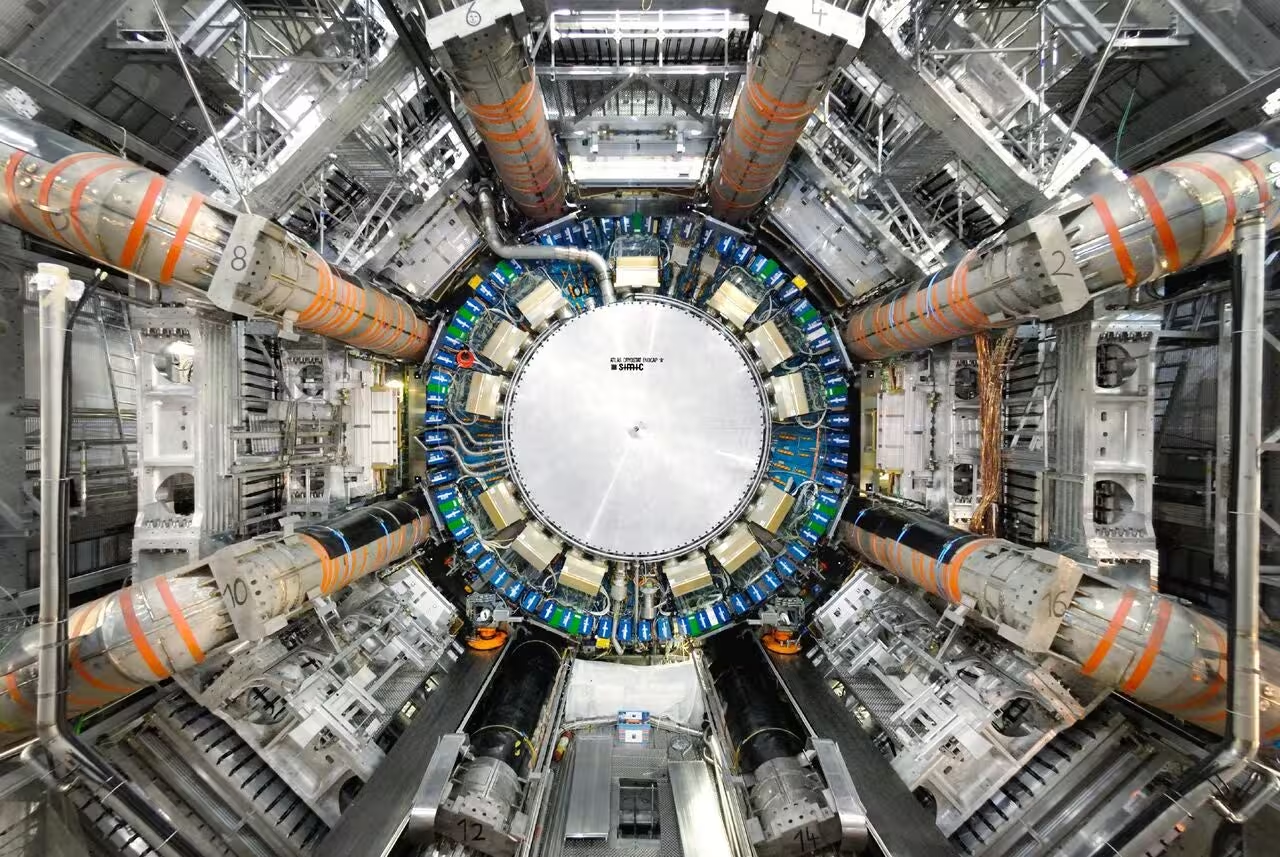
The ability to isolate such an infrequent signal is largely due to a recent, massive upgrade to the LHCb detector. Among the key improvements is the Vertex Locator (VELO), a high-precision silicon pixel detector engineered by teams at the University of Liverpool and the University of Manchester. Positioned a mere five millimeters from the LHC beams, the VELO allows researchers to track the paths of particles with extraordinary accuracy, enabling them to distinguish the decay of a short-lived beauty meson from the chaotic background of other collision activity.
The upgraded experiment is now capable of recording data at five times the rate of its predecessor. This increased throughput, combined with advanced machine-learning algorithms used to suppress unwanted noise, allowed the team to extract the elusive signal from proton collisions gathered during 2024 and 2025.
Testing the Limits of the Standard Model
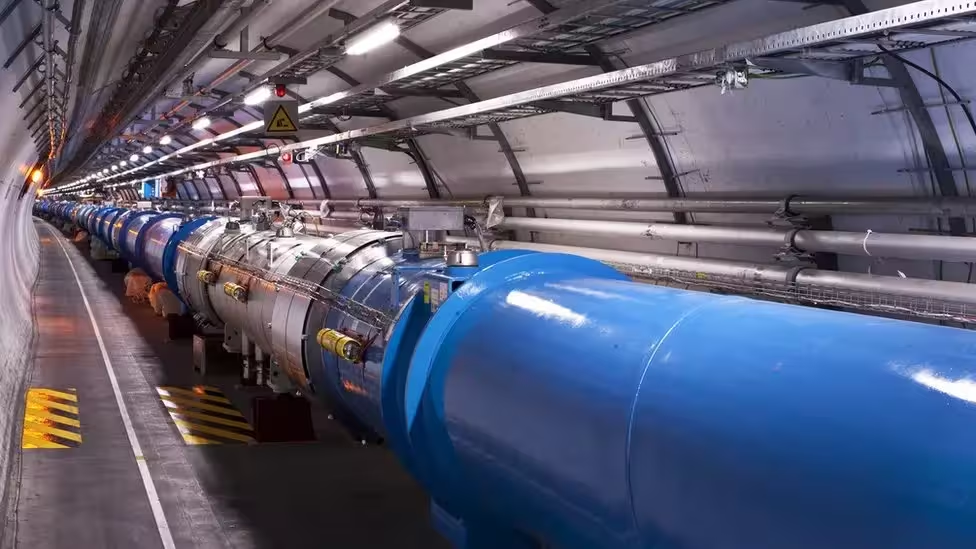
Beauty mesons contain beauty quarks, which are heavier counterparts to the up and down quarks found in stable matter. Because these particles are so short-lived, researchers must reconstruct their behavior from their decay products. The specific route involving two muons is of intense interest because it serves as a sensitive probe for physics beyond the Standard Model.
Although the Standard Model has proven remarkably robust, it remains an incomplete description of reality—failing to account for gravity or the nature of the dark sector. By measuring the “branching fraction”—the probability of a particle taking a specific decay path—physicists can look for subtle discrepancies caused by heavy, hypothetical particles that might interact with these mesons at quantum scales. Even in the absence of a deviation, such measurements provide crucial constraints on the mass and behavior of potential new particles.
A New Milestone for Single-Experiment Evidence
The current finding is notable for being the first single-experiment evidence of this specific decay. While a previous joint analysis between LHCb and the CMS collaboration, published in Nature, had previously hinted at the phenomenon, those results were not replicated in subsequent measurements. By securing independent evidence, the team has turned a fleeting hint into a stable, verifiable data point.
Researchers are calling this work a window into the “Zeptoverse”—a regime of distance at roughly a billionth of a trillionth of a meter. While the detector cannot visualize these scales directly, the high-fidelity reconstruction of collision events allows scientists to infer the presence of new physics through precision measurement. The collaboration now looks toward future upgrades, which aim to increase data collection rates by another order of magnitude, potentially pushing the Bd decay measurement toward a formal discovery.
Resources for Further Reading
- LHCb Upgrade II Scoping Document: Details on the technical goals for future experiment iterations.
- Upstream Tracker Installation: A look at the tracking systems enabling high-precision particle reconstruction.
- The Standard Model Overview: CERN’s guide to the fundamental particles and forces governing the universe.
This article has been fact checked for accuracy, with information verified against reputable sources. Learn more about us and our editorial process.
Last reviewed on .
Article history
- Latest version
Reference(s)
- collaboration, LHCb. “Evidence for the decay $B^0 \to μ^+ μ^-$ and improved measurements of the decay $B^0_s \to μ^+ μ^-$.” arXiv.org <https://arxiv.org/abs/2611.00230>.
- “University of Liverpool.” <https://www.liverpool.ac.uk/>.
- “The University of Manchester.” The University of Manchester <https://www.manchester.ac.uk/>.
- Khachatryan, V.. “Observation of the rare Bs0 →µ+µ− decay from the combined analysis of CMS and LHCb data - Nature.”, vol. 522, no. 7554, pp. 68-72. Nature, doi: 10.1038/nature14474. <https://www.nature.com/articles/nature14474>.
- “LHCb Upgrade II Scoping Document.” <https://lhcb-outreach.web.cern.ch/2025/04/14/lhcb-upgrade-ii-scoping-document/>.
- “Upstream Tracker closing completes installation of the LHCb Upgrade 1 detector.” <https://lhcb-outreach.web.cern.ch/2023/04/14/upstream-tracker-closing-completes-installation-of-the-lhcb-upgrade-1-detector/>.
- “The Standard Model – Home | CERN.” <https://home.web.cern.ch/science/physics/standard-model>.
Cite this page:
- Posted by Nida Rehman