Astronomers Discover Massive Mega Earth That Defies Planetary Formation Laws
Astronomers have discovered a massive, ultra-dense rocky exoplanet orbiting a nearby star in a bizarre, highly tilted path.
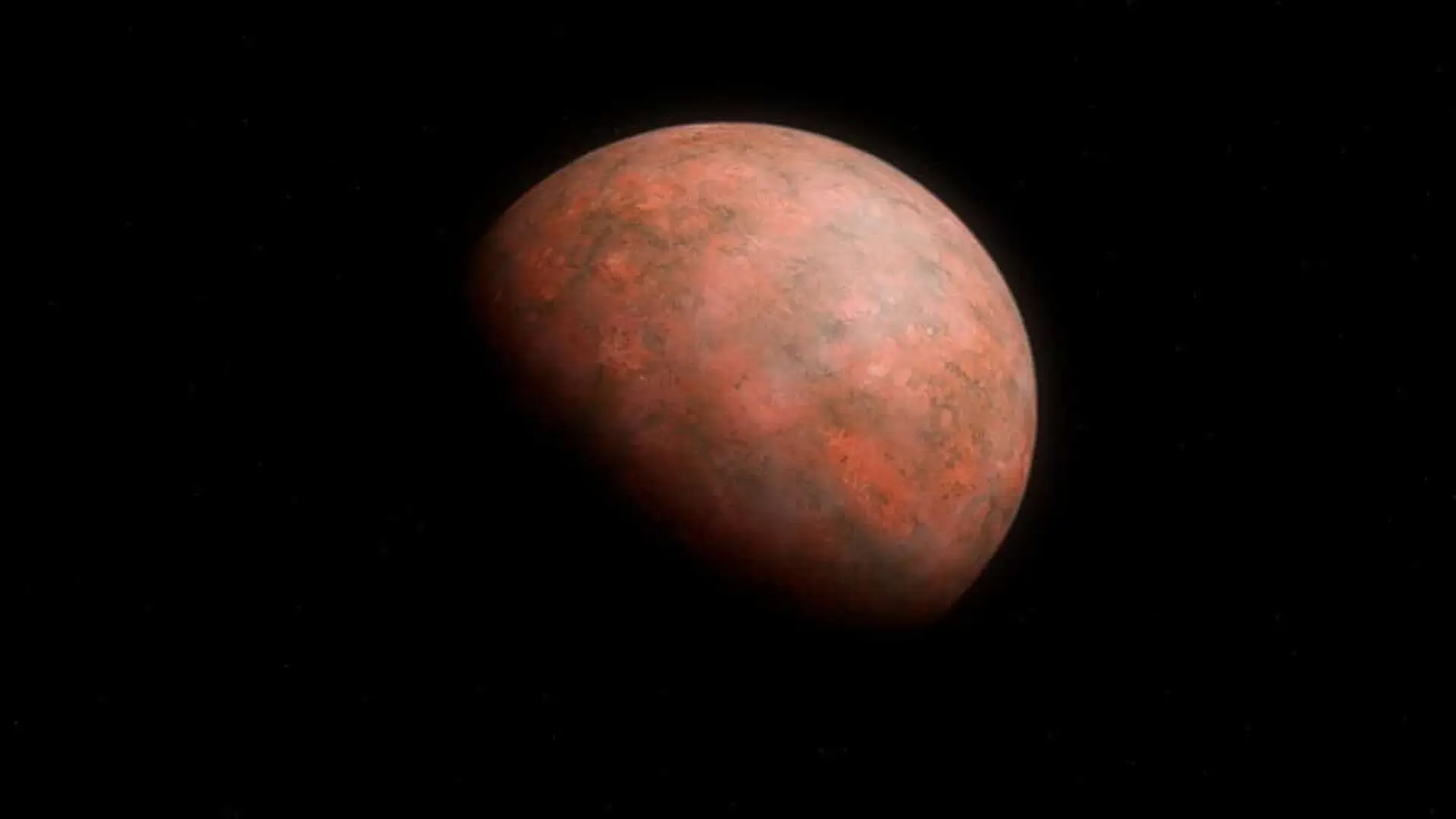
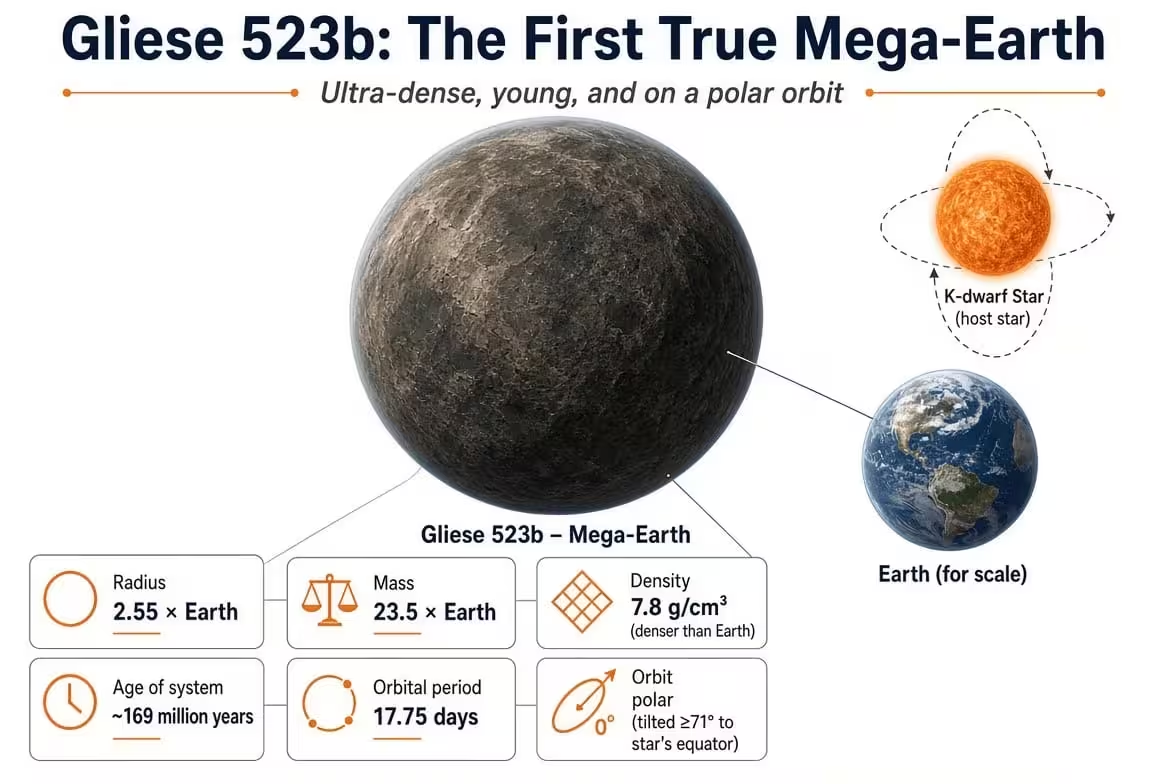
Astronomers have identified an extraordinary exoplanet, Gliese 523b, that challenges fundamental theories regarding planetary formation and composition. Located approximately 87 light-years away, this dense, massive world orbits its host star, a K-type dwarf, every 17.75 days. With a mass nearly 24 times that of Earth and a radius 2.55 times larger, the planet represents a rare, concrete example of a “mega-Earth” that defies typical astrophysical classification.
Anomalous Density and Composition
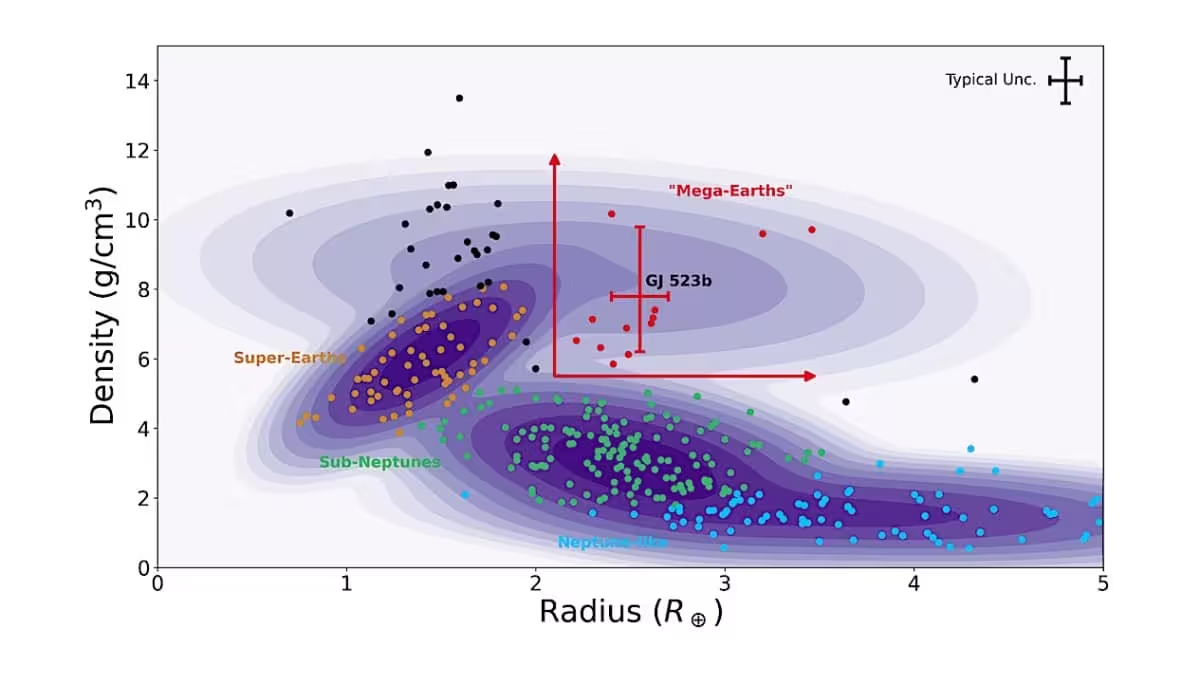
The research team from the University of Wisconsin-Madison, led by graduate student Max Kroft and astronomer Thomas Beatty, found the planet’s density to be remarkably high at 7.8 grams per cubic centimeter. Typically, celestial bodies exceeding twice the radius of Earth are expected to accumulate significant gaseous envelopes, resulting in lower overall density. Gliese 523b, however, appears to be an outlier, possessing a rocky core composition more common in much smaller, terrestrial planets.
“People have been using the phrase mega-Earth for more than a decade, but we’ve never had a planet that let us say concretely what one is,” said Thomas Beatty, an astronomer at the University of Wisconsin-Madison.
The discovery utilized data from NASA’s TESS mission combined with high-precision radial velocity measurements from the NEID spectrograph, located at the Kitt Peak National Observatory’s WIYN Telescope. These observations not only allowed for the characterization of the planet’s size and mass but also revealed a highly unusual orbital inclination. The planet is tilted at least 71 degrees relative to the equator of its host star, suggesting a trajectory that may pass over the star’s poles rather than following its rotational plane.
A Young System with a Turbulent History
Gliese 523 is a relatively young stellar system, estimated by researchers to be approximately 169 million years old. The combination of such youth and an extreme orbital tilt presents a significant puzzle for planetary scientists. In traditional models, planets are thought to form within a flat, rotating disk, which would typically result in orbits aligned with the host star’s rotation.
“This isn’t what we expected at all,” said Max Kroft, a graduate student at the University of Wisconsin-Madison. “Dense planets like this aren’t uncommon, but they’re usually small rocky planets similar to Earth or Mercury. This planet is two and a half times bigger than the Earth.”
To explain the planet’s anomalous features, researchers are exploring several theories, including the possibility of a catastrophic collision earlier in the system’s history that may have stripped away a primary atmosphere, leaving behind a dense, exposed core. Alternatively, the planet may have migrated into a tighter orbit where intense stellar heat caused its atmosphere to evaporate.
The findings, published in the Astronomical Journal, serve as a vital case study for the diversity of planetary evolution. Whether influenced by gravitational interactions with other hidden bodies in the system or set on its course by a chaotic primordial disk, Gliese 523b offers a rare window into the violent and complex processes that shape young planetary systems.
This article has been fact checked for accuracy, with information verified against reputable sources. Learn more about us and our editorial process.
Last reviewed on .
Article history
- Latest version
Reference(s)
- “Beatty, Thomas.”, September 6, 2022 Department of Astronomy <https://www.astro.wisc.edu/staff/beatty-thomas/>.
- “Max Kroft.”, April 2, 2024 Badger Talks <https://badgertalks.wisc.edu/speaker/max-kroft/>.
- Kroft, Maxwell. “GJ 523b is a Massive, 170 Myr-old Mega-Earth, Likely on a Polar Orbit.” arXiv.org <https://arxiv.org/abs/2603.24682>.
Cite this page:
- Posted by Aisha Ahmed