NASA Proposes Giant Space Starshade to Directly Photograph Earth-Like Planets
NASA is developing a 99-meter starshade designed to block starlight, allowing ground-based telescopes to capture images of Earth-like rocky exoplanets.
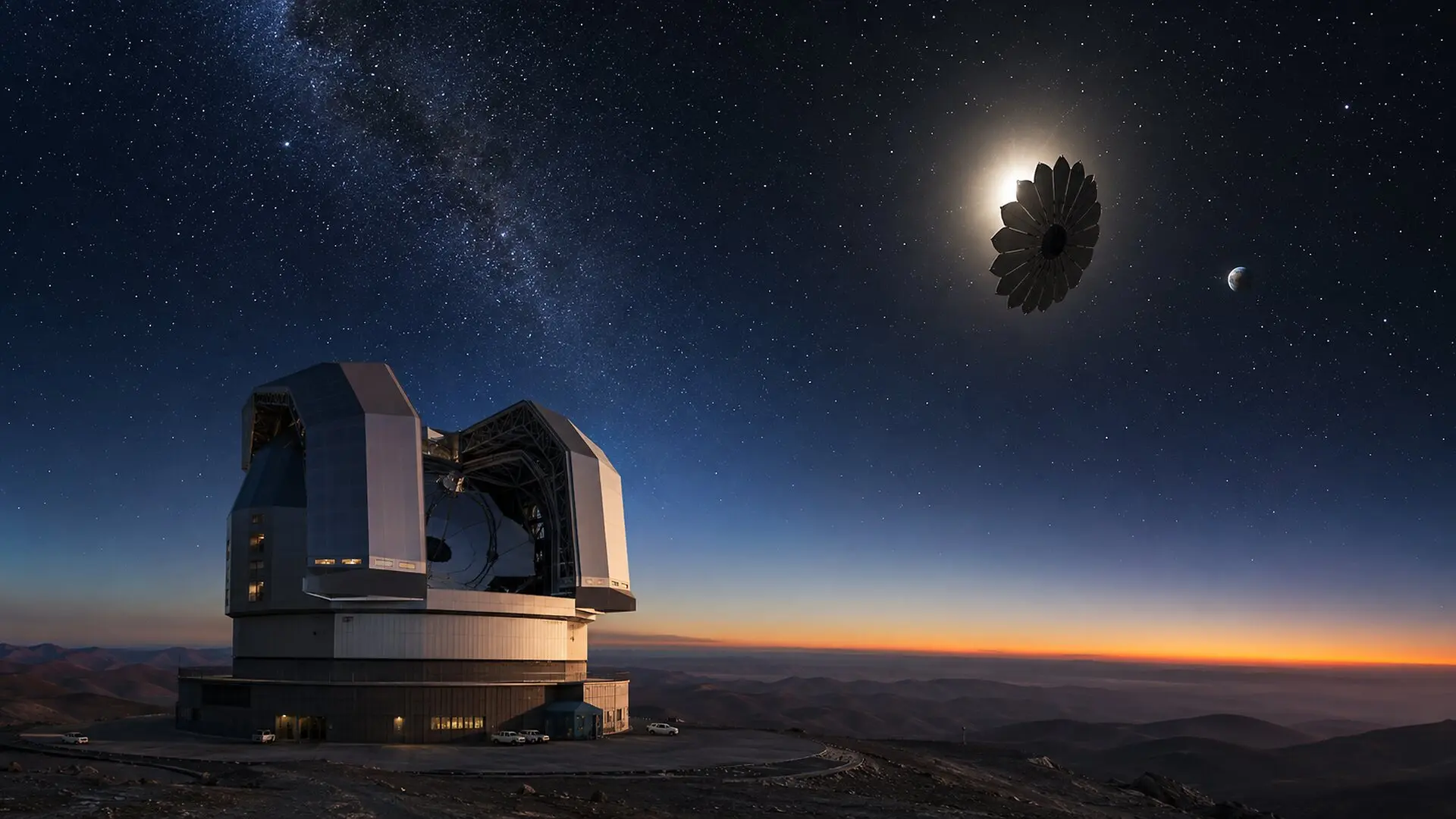
Detecting an Earth-like world remains one of the most formidable challenges in modern astronomy. Because terrestrial planets are dwarfed by the intense luminosity of their host stars, they are effectively hidden within a blinding glare that current technology struggles to penetrate. To bypass this, a team of researchers led by NASA has unveiled a proposal for a hybrid observatory system that pairs the immense power of ground-based telescopes with a massive, orbiting light-blocking shield.
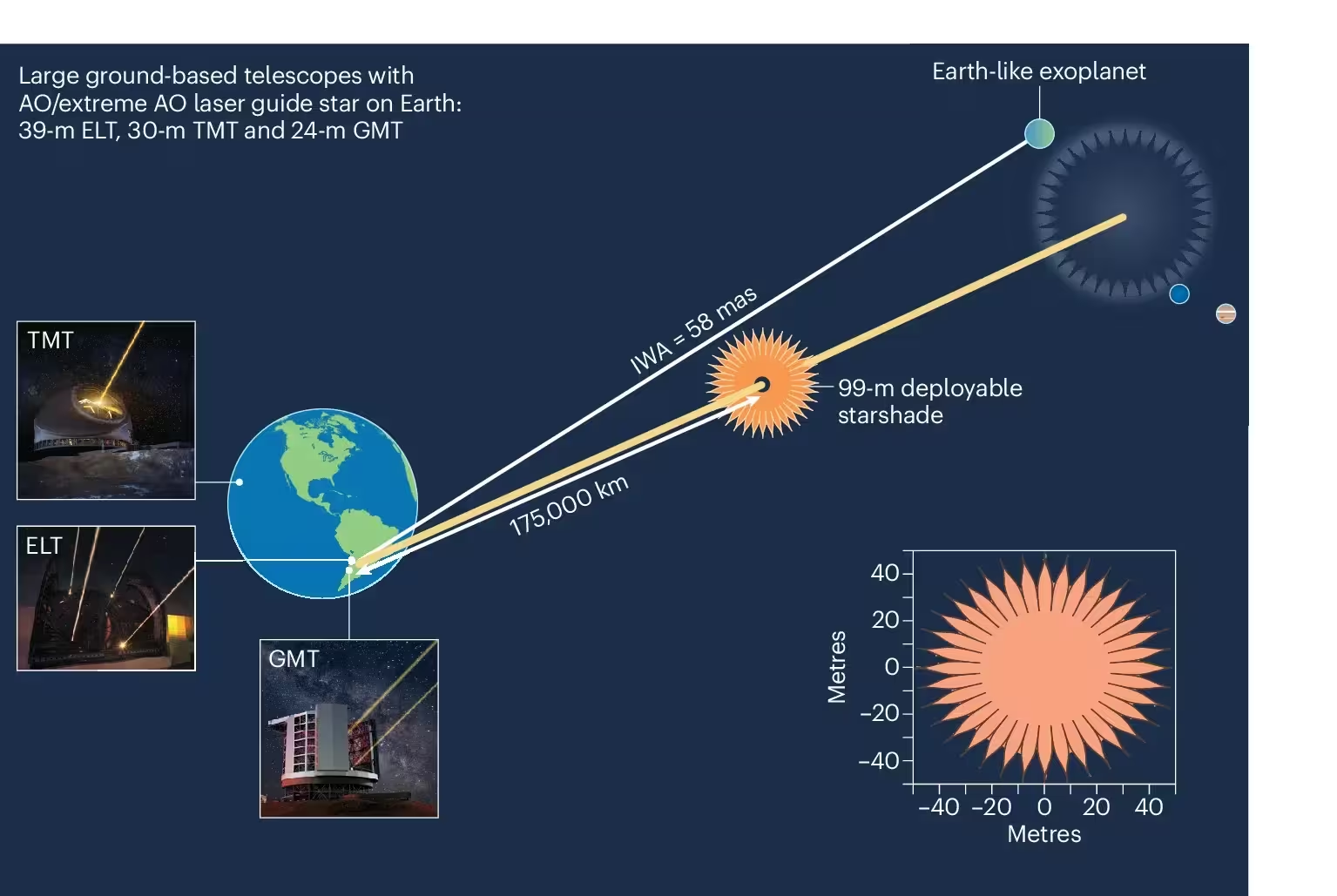
The concept, detailed in a recent study published in Nature Astronomy, envisions a 99-meter starshade positioned roughly 175,000 kilometers from Earth. By operating in space, this structure would cast an artificial eclipse over Earth-bound observatories, stripping away the starlight before it enters the atmosphere and leaving the reflected light of faint, rocky planets exposed for observation.
Engineering an Artificial Eclipse
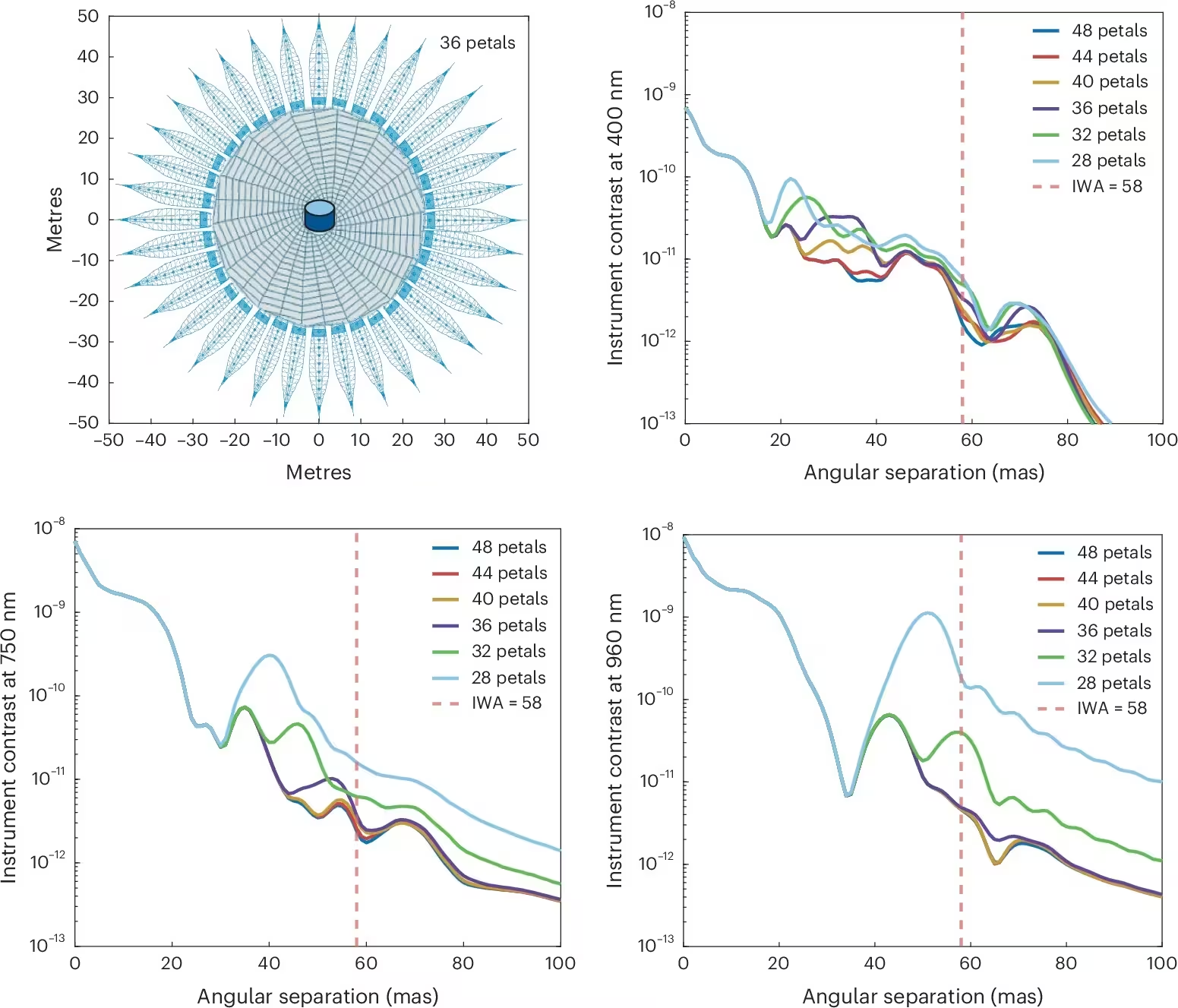
The proposed starshade design features a 50-meter central disk fringed by 48 petals, each spanning 24.5 meters in length. According to Vladimir Airapetian, a senior astrophysicist at NASA’s Goddard Space Flight Center, the goal is to create a perfect shadow that suppresses stellar interference at the source. Maintaining this alignment requires extreme precision, with the starshade utilizing a combination of chemical and solar electric propulsion to adjust its position and track targets across the sky.
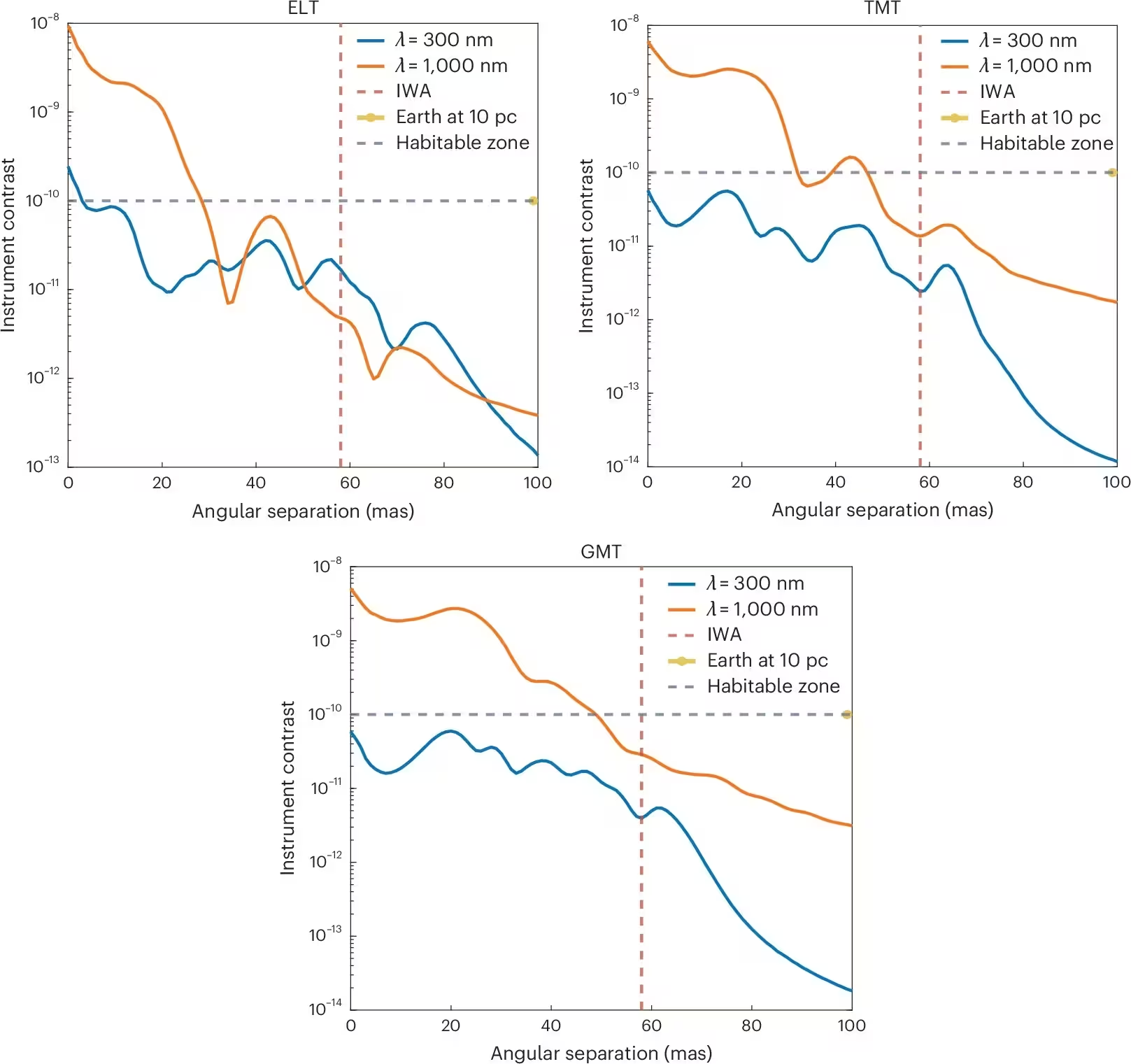
This “Hybrid Observatory for Earth-like Exoplanets” (HOEE) would leverage the massive mirror surfaces of next-generation facilities like the European Southern Observatory’s Extremely Large Telescope (ELT) in Chile, as well as the Giant Magellan Telescope and the Thirty Meter Telescope. These ground-based mirrors offer a scale and light-gathering capability that current space telescopes simply cannot match.
Mapping Alien Architectures
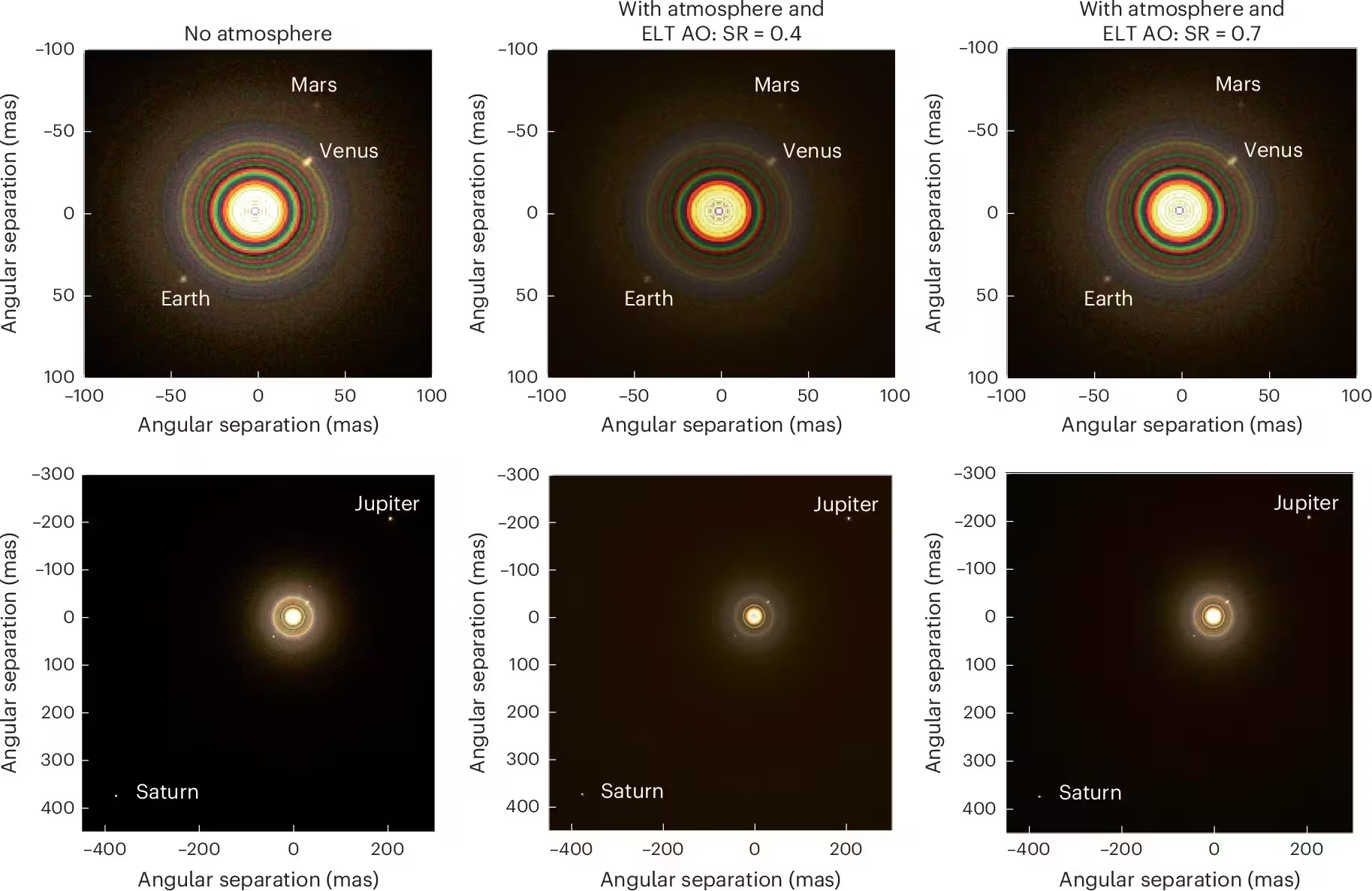
Simulations suggest that this hybrid approach could reach contrast levels below one part in 10 billion, enabling astronomers to isolate a rocky planet next to its significantly brighter parent star. During testing, the team simulated a solar system 55 light-years away; in just 20 minutes of exposure, the system successfully distinguished multiple planets, ranging from Venus-like worlds to gas giants like Saturn.
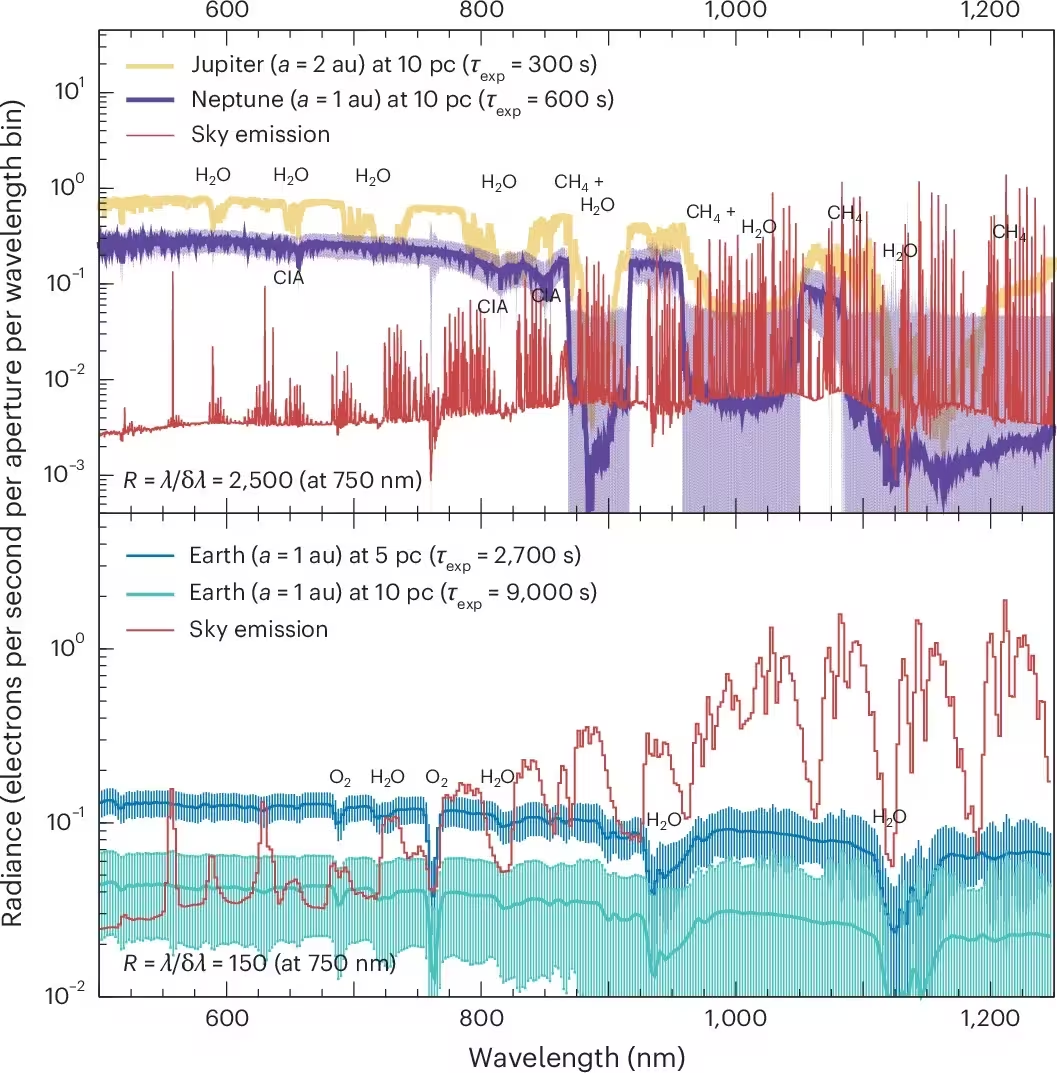
Beyond simply spotting these worlds, the HOEE aims to conduct spectroscopy, breaking down the light reflected from these planets to detect chemical signatures. By analyzing wavelengths below 850 nanometers, researchers hope to identify the presence of water, methane, and oxygen—key markers of habitability. Airapetian noted that the system is particularly well-suited for studying active stars, where researchers might be able to detect spectral signatures from planetary auroras, providing further insight into how these worlds maintain their atmospheres.
Overcoming Atmospheric Hurdles
While the starshade removes starlight, the telescope itself still faces the challenge of Earth’s atmosphere. The team plans to rely on advanced adaptive optics to correct for turbulence in real-time. Modeling suggests that even under typical atmospheric conditions, the system can maintain the necessary contrast to perform high-resolution observations.
The primary challenge remains the practical logistics of launching and deploying such a large, lightweight structure. Researchers are exploring the use of inflatable materials to keep the launch mass around 1,500 kilograms, keeping the potential price tag of the mission in the billion-dollar range. While the project is currently in the conceptual phase, it represents a significant leap toward realizing the long-held goal of directly imaging another Earth.
For those looking to learn more, detailed analysis of the system’s optical performance and comparisons with other proposed missions like the Habitable Worlds Observatory can be found in the Journal of Astronomical Telescopes, Instruments, and Systems. Further technical documentation on the Habitable Worlds Observatory and roadmaps for Exoearth imaging with the ELT provide a broader context for these emerging detection methods.
- NASA researchers are developing a hybrid observatory that would pair a giant telescope on Earth with a 99-meter starshade orbiting about 175,000 kilometers away.
- The starshade would block a nearby star before its light enters Earth’s atmosphere, potentially allowing extremely large telescopes to directly photograph Earth-like planets.
- Simulations suggest the system could study entire nearby planetary systems and search exoplanet atmospheres for oxygen, water, methane and other potential signs of habitability.
This article has been fact checked for accuracy, with information verified against reputable sources. Learn more about us and our editorial process.
Last reviewed on .
Article history
- Latest version
Reference(s)
- “1.JATIS.11.1.014002.”, doi: 10.1117/1.JATIS.11.1.014002.full. <https://www.spiedigitallibrary.org/journals/Journal-of-Astronomical-Telescopes-Instruments-and-Systems/volume-11/issue-01/014002/Optical-performance-of-Hybrid-Observatory-for-Earth-like-Exoplanets/10.1117/1.JATIS.11.1.014002.full>.
- Arroyo, Yesenia. “Habitable Worlds Observatory - NASA Science.”, December 11, 2023 NASA <https://science.nasa.gov/astrophysics/programs/habitable-worlds-observatory/>.
- Markus, Kasper,. “PCS — A Roadmap for Exoearth Imaging with the ELT.”, January 1, 2021, pp. 38-43., doi: 10.18727/0722-6691/5221. <https://doi.eso.org/10.18727/0722-6691/5221>.
Cite this page:
- Posted by Aisha Ahmed