Webb Telescope Reveals What Is Actually Hiding Inside The Universe’s Mysterious Little Red Dots
New JWST observations of mysterious little red dots suggest massive black holes may have formed and grown before their host galaxies even took shape.
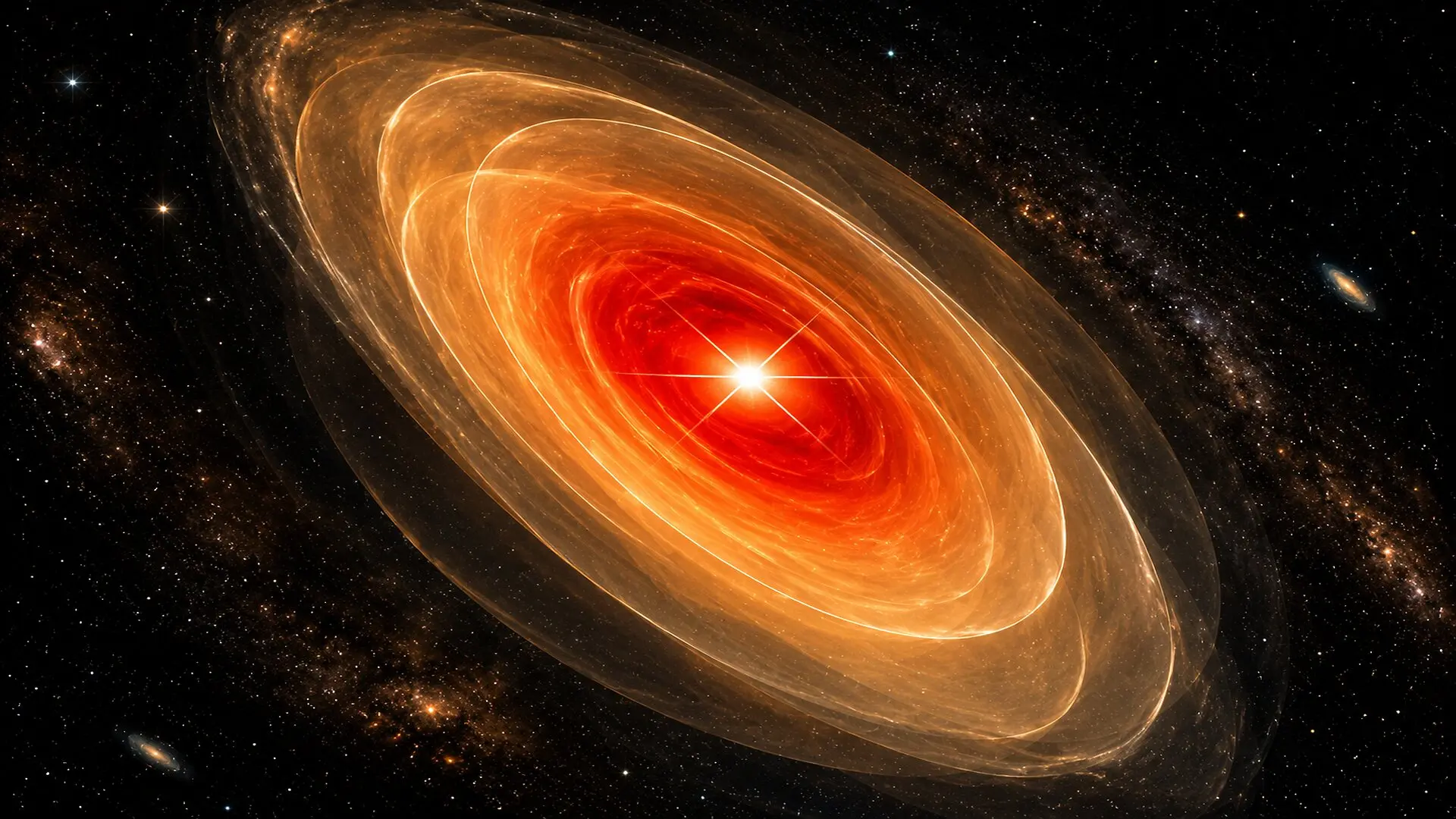
The James Webb Space Telescope (JWST) has shed new light on one of the most puzzling phenomena in the early universe: the “little red dots.” These intensely luminous, compact objects have long defied clear classification, but a new study suggests they are not isolated anomalies. Instead, they appear to be energetic centers of supermassive black holes nestled within remarkably small, dense galaxies.
Led by Yiyang Zhang of Wuhan University, a research team analyzed 217 of these red dots using high-resolution imagery from the JWST’s deep-field surveys. Their findings, published in Nature Astronomy, indicate that these objects reside in galaxies containing roughly a billion solar masses in stars, yet these hosts are exceptionally compact, measuring just a fraction of the size of the Milky Way.
Unmasking the Faint Galaxy Host
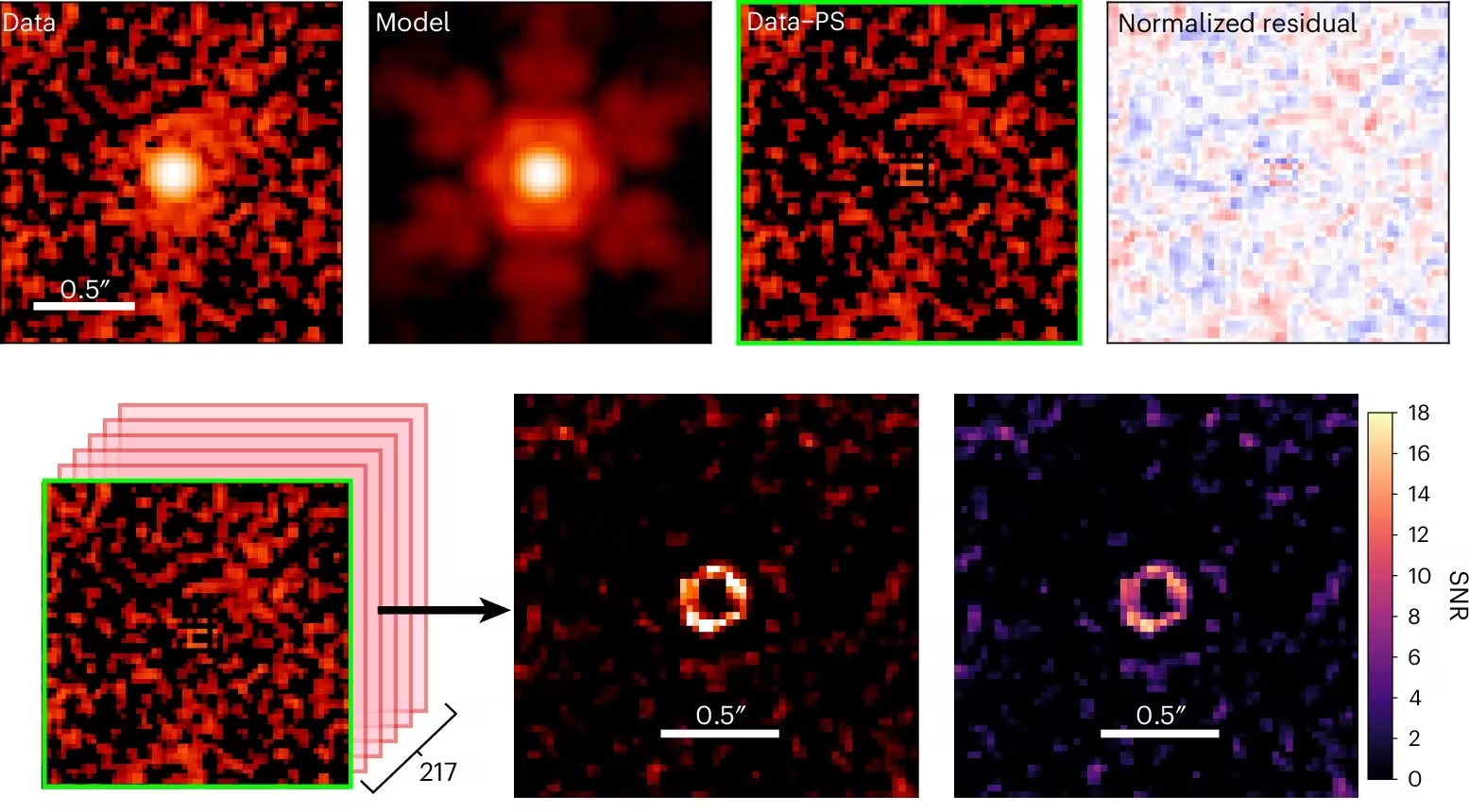
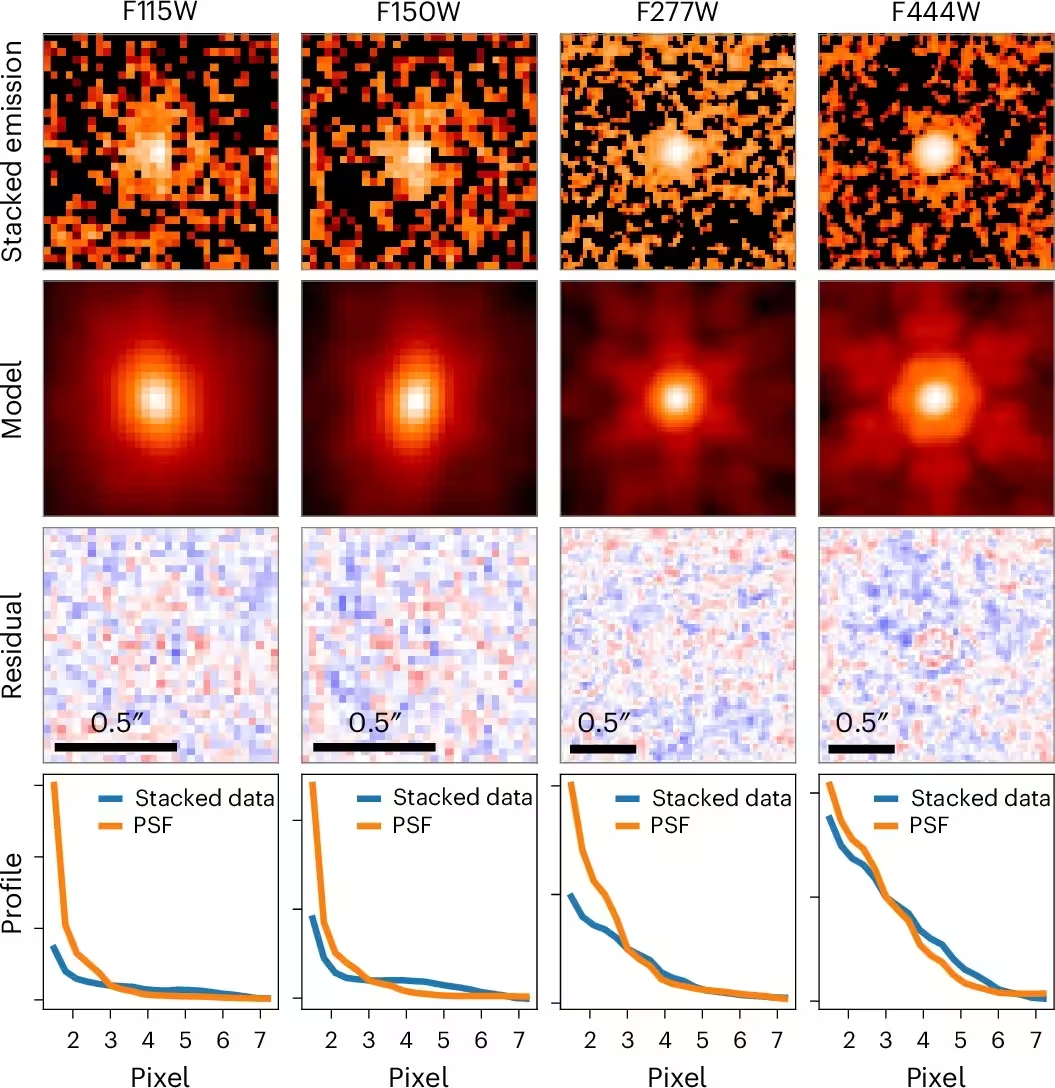
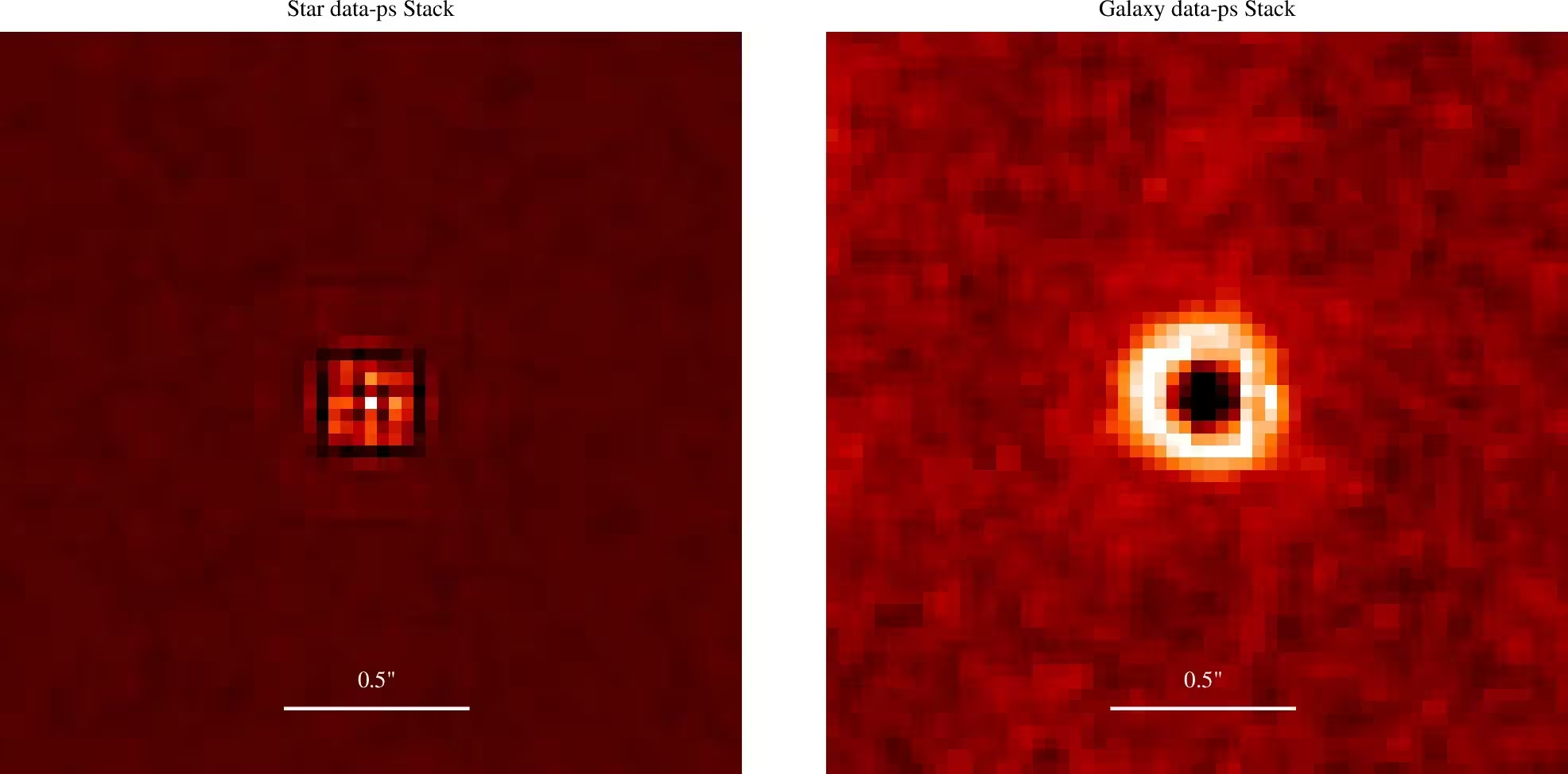
Distinguishing the host galaxy from the brilliant central point source has been a primary challenge for astronomers. At the infrared wavelengths captured by the JWST, the central object—likely an actively feeding supermassive black hole—outshines its surroundings, masking the galaxy entirely. To overcome this, the researchers employed a sophisticated modeling technique to subtract the central point-spread function from their images, effectively “stacking” the residual data from 217 separate observations to reveal the faint, extended structures hidden beneath the glare.
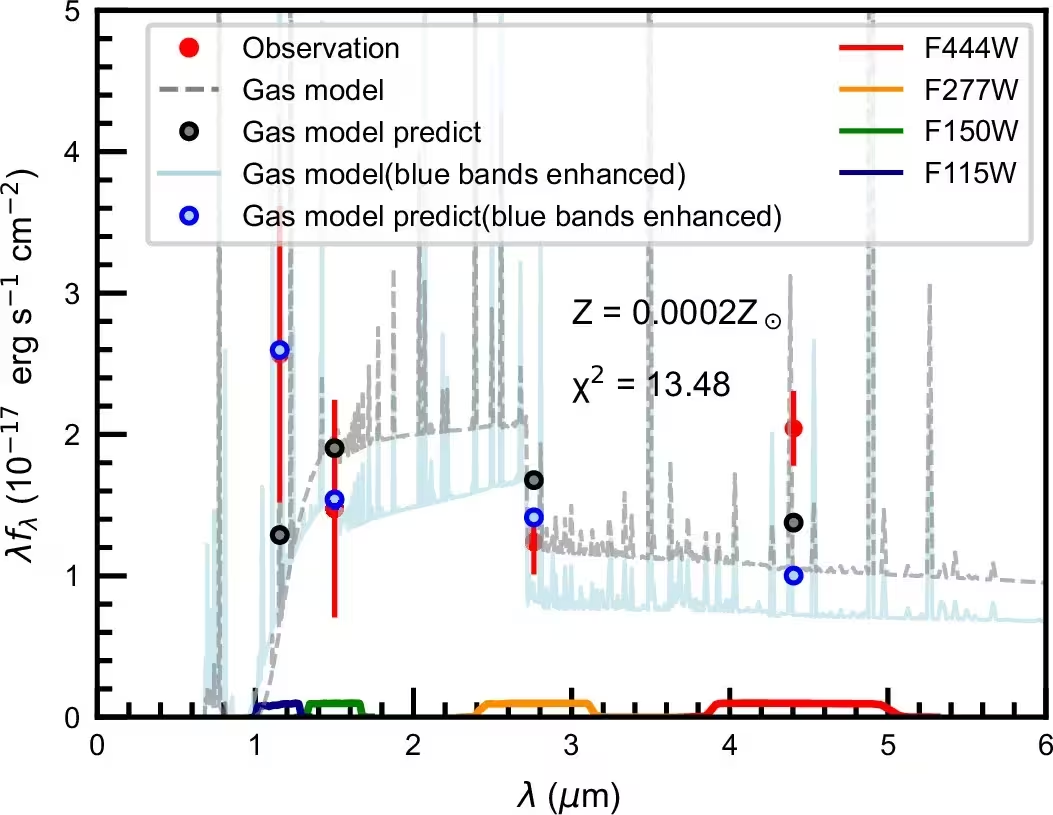
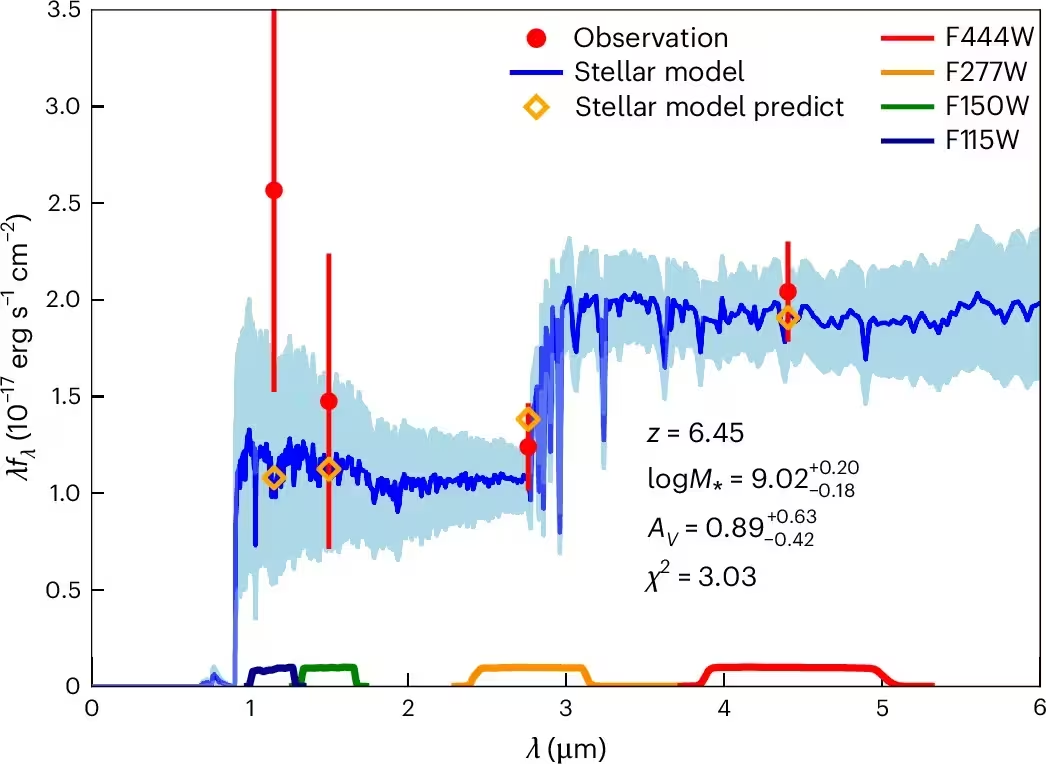
The results revealed a distinct ring-like structure surrounding the central core. Analysis of this light shows that the host galaxies contribute only 10% to 20% of the total emission in longer infrared bands, while the central source dominates the light profile. These galaxies are incredibly dense, with an average effective radius of roughly 685 light-years, making them about 2.5 times more compact than typical star-forming galaxies of similar mass from that epoch.
Implications for Early Cosmic Evolution
The discovery suggests a potential inversion of traditional galaxy growth models. Because these compact galaxies host what appear to be massive central engines, the data hints that supermassive black holes may have undergone significant growth before their host galaxies reached their full stellar maturity. The team’s modeling of the extended light suggests the presence of stars formed via an “inside-out” growth process, where recent star formation is pushed to the outer regions while the core remains dominated by the black hole’s influence.
While the study provides a clearer picture of these enigmatic systems, researchers acknowledge that significant questions remain. Because the extended emission is too faint to resolve for individual objects, these findings represent an average portrait of the population. Furthermore, the lack of widespread spectroscopic confirmation means that distance and mass estimates still carry uncertainties.
A New Piece in the Cosmic Puzzle
These little red dots exist at redshifts between 5 and 9, placing them in an era when the universe was less than a billion years old. Understanding their nature is essential for refining theories on how the first generation of supermassive black holes formed and interacted with their nascent environments. As the JWST continues its observations, the ability to peel back the layers of these “red pinpoints” is providing a rare glimpse into the formative stages of the early universe.
This article has been fact checked for accuracy, with information verified against reputable sources. Learn more about us and our editorial process.
Last reviewed on .
Article history
- Latest version
Cite this page:
- Posted by Aisha Ahmed