Scientists Say These Ancient Black Holes May Never Fully Evaporate, Surviving Instead as Tiny White Holes
Einstein’s last riddle: Do the tiniest black holes leave a hidden echo in the cosmos?
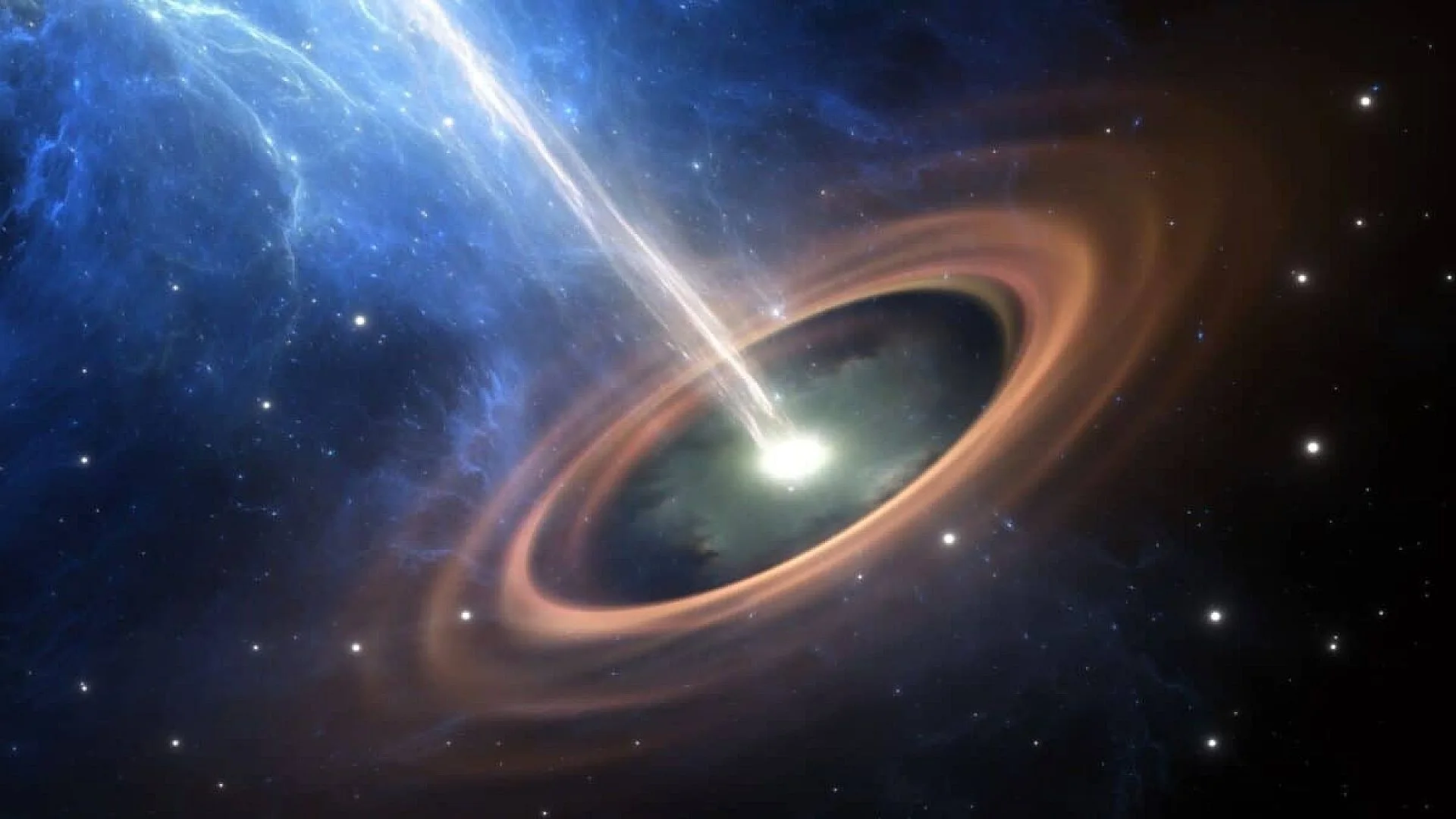
Recent theoretical work indicates that the smallest primordial black holes may linger far longer than standard models predict, potentially stabilizing as objects that mimic the elusive concept of a white hole rather than disappearing entirely through Hawking radiation.
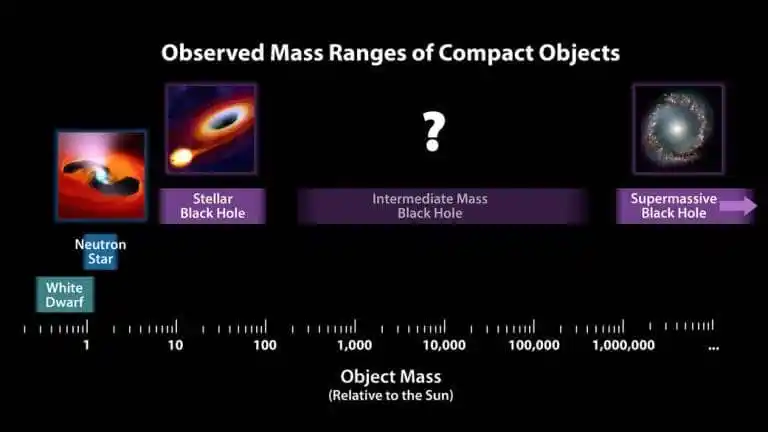
Primordial black holes are hypothesized to have formed within fractions of a second after the Big Bang, when the cosmos was extremely hot and dense. Because they differ from the stellar‑collapse black holes that have been detected, these relics remain speculative but are considered promising candidates for exotic dark‑matter particles.
For decades, the consensus has been that black holes with masses below a certain threshold would evaporate away via Hawking radiation—a quantum‑mechanical process first described by Stephen Hawking in the 1970s. The new analysis re‑examines the final stages of that evaporation and arrives at an unexpected outcome.
When a Black Hole Reaches the Planck Scale
The investigation, headed by Daniel Paraizo and collaborators, focuses on what transpires as a primordial black hole shrinks to roughly 20 µg—the Planck mass. That amount corresponds to the weight of an eyebrow hair or a flea egg, but in fundamental physics it marks the point where gravitational and quantum effects become comparable.
“We found that the lifetime of black holes is much longer than previously thought,” explained Paraizo. “The phenomena that we identify are relevant for black holes possibly formed in the early universe. These objects have not been observed yet, but their search is a topic of intense interest as dark matter candidates.”
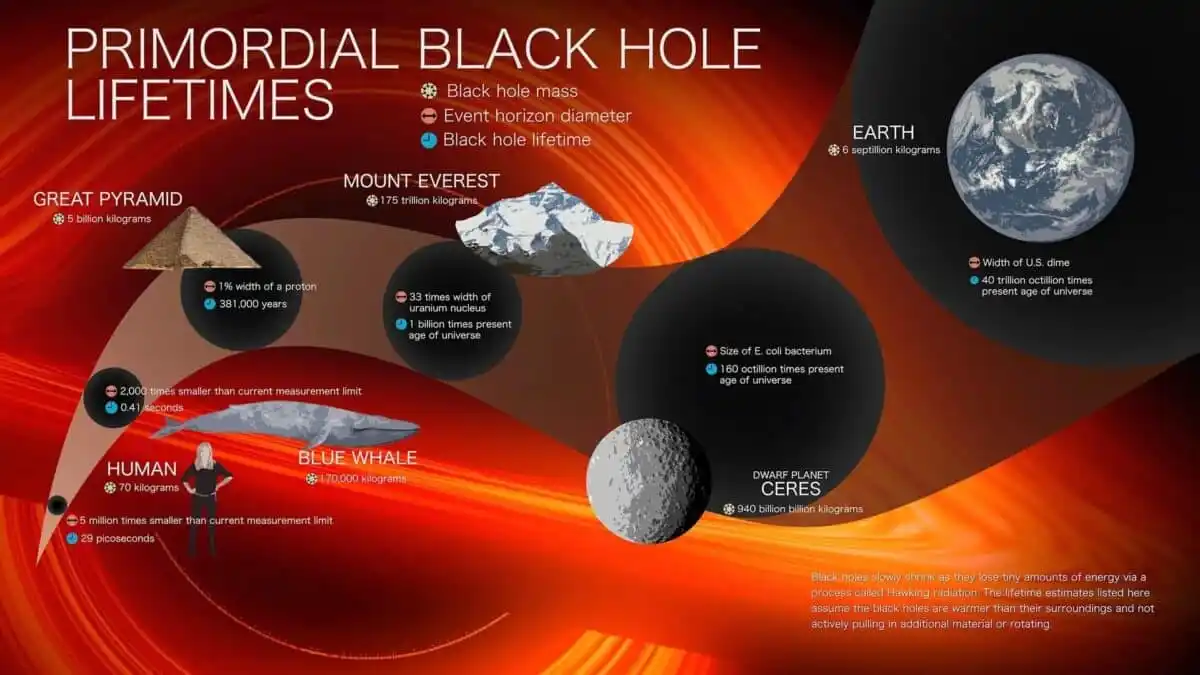
In the conventional picture, Hawking radiation causes a black hole to lose mass ever more rapidly as it becomes smaller, but the ultimate fate of the final microgram‑scale remnant has remained uncertain.
A Surprise at the End of Evaporation
The team modeled the evolution of primordial black holes spanning a wide mass range. Their calculations, posted on the arXiv pre‑print server, indicate that an object starting with about one billion tons—comparable to a mid‑size asteroid—would require roughly a billion years to shrink down to the Planck mass.
For much lighter seeds, the timeline collapses dramatically. A black hole initially weighing around a ton would attain the Planck‑mass stage almost instantly. Earlier estimates suggested that the remaining 20 µg would radiate away within a second. Paraizo clarified the new perspective:
“It is then that our results predict something new: previous arguments indicated that the remaining 20 micrograms are radiated in at least 1 second; our estimate shows instead that these 20 microgram remnants are practically stable.”
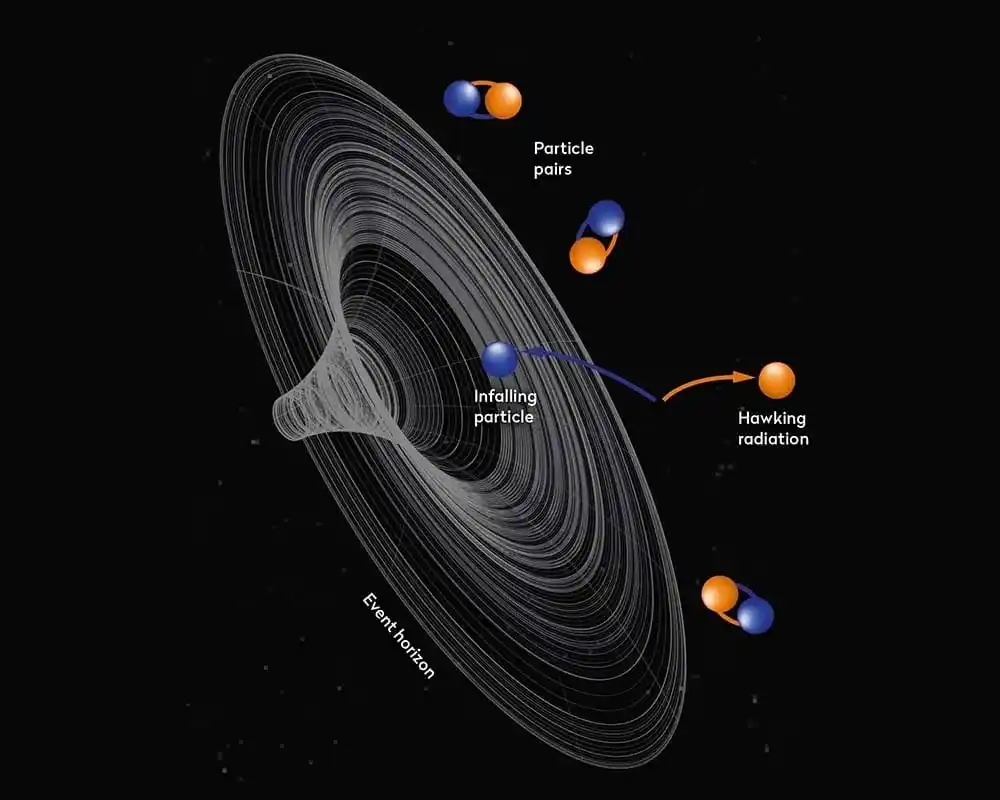
If this scenario holds, the evaporation process would effectively halt once the black hole reaches the Planck‑mass threshold, leaving behind a quasi‑stable relic.
What a Remnant Might Look Like
According to the authors, crossing the Planck‑mass boundary triggers the gradual dissolution of the event horizon—the surface that ordinarily prevents anything, including light, from escaping.
“The mechanism that we study for the death of this Planck-sized black hole is the gradual disappearance of the horizon that traps radiation,” he said.
As the horizon fades, the residual core begins emitting what the researchers label “purifying radiation,” a behavior that mirrors the theoretical properties of a white hole—a speculative object that ejects matter and energy instead of absorbing it.
The authors stress that a complete description of these remnants will require a quantum‑gravity framework capable of unifying general relativity with quantum mechanics, a challenge that remains at the frontier of modern physics.
This article has been fact checked for accuracy, with information verified against reputable sources. Learn more about us and our editorial process.
Last reviewed on .
Article history
- Latest version
Reference(s)
- “Daniel Paraizo | Eberly College of Science.” <https://science.psu.edu/physics/people/ajp7326>.
- Bianchi, Eugenio. “Minimum lifetime of a black hole.” arXiv.org <https://arxiv.org/abs/2605.03922>.
Cite this page:
- Posted by Aisha Ahmed