Stunning Solar ‘Godzilla’ Captured in Backyard Astrophotography Looks Straight Out of Sci-Fi
Gigantesco arco de plasma solar capturado en vídeo casero por astrofotógrafo revela la dinámica actividad del Sol
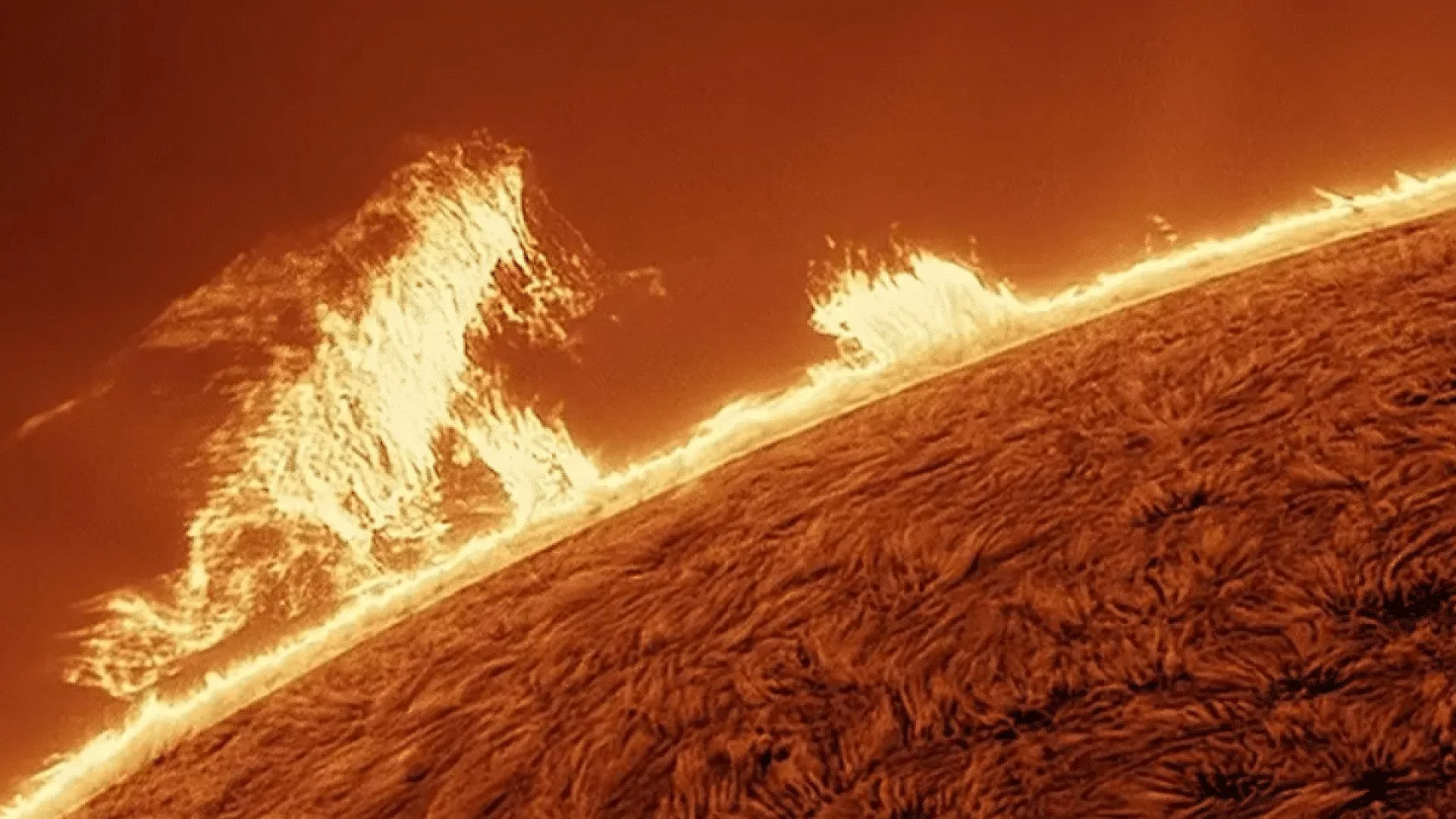
Astrophotographer Mark Johnston has released striking video of a colossal solar prominence—a towering plume of plasma that appears to skim the Sun’s limb. The clips, supplied to Space.com, expose the Sun’s magnetic dynamics in unprecedented detail from a ground‑based perspective.
Stunning Backyard Capture Reveals Solar Plasma Giants
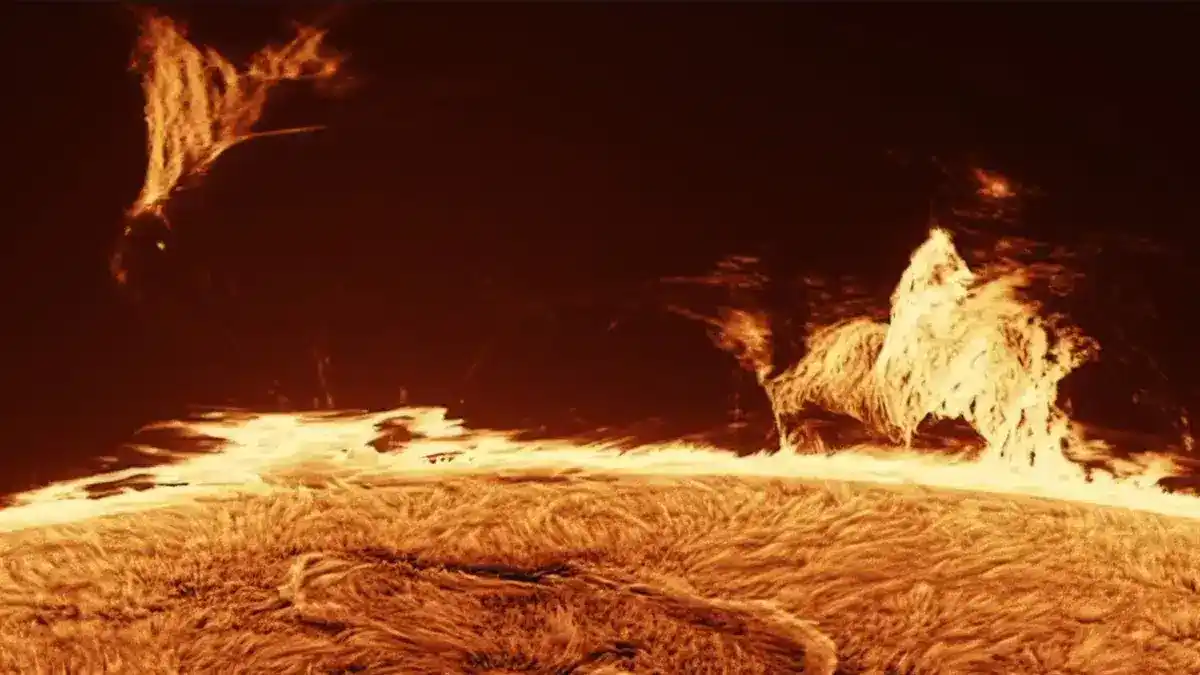
Working from his Scottsdale, Arizona garden, Johnston recorded two distinct prominences in late May 2026. With a 160 mm refractor fitted with a hydrogen‑alpha solar filter, he captured the May 22 event as streams of material fell back toward the solar surface as coronal rain, and the May 31 eruption that resembled a massive “Godzilla‑like” silhouette rising above the photosphere. The timelapse sequences, each lasting between 90 minutes and two hours, showcase the plasma’s intricate motion along magnetic field lines.
“The movement you see may look like wind effects, but it’s mostly caused by magnetic fields and, to a lesser extent, gravity. The hydrogen on the limb is ionized, so magnetic fields pull it along invisible field lines,” Johnston explained to Space.com via email.
Inside the Magnetically‑Guided Structures of the Sun
Solar prominences are massive arches of superheated plasma that extend outward while remaining anchored to the Sun by magnetic fields. When they appear against the blackness of space they glow as luminous curtains; when projected onto the bright solar disk they are called filaments and show up as dark, cooler ribbons.
“It’s not flame. There’s no fire on the Sun. Just as your stove can glow red‑hot and not be on fire, the hydrogen on the Sun is so hot it glows too.”
These magnetic‑bound plasma formations offer clues about the Sun’s volatile behavior and help researchers predict space‑weather events that can impact Earth’s technological systems.
Amateur Solar Imaging: A Routine of Discovery
Johnston says he attempts solar imaging on every clear morning, constantly scanning for unusual features. This disciplined approach lets him capture fleeting phenomena that might escape professional observatories, highlighting the valuable contribution of backyard astronomers to solar science.
He also stresses the need for proper filtration: observing the Sun without certified solar filters can cause irreversible eye injury. Hydrogen‑alpha filters isolate a narrow wavelength band, revealing magnetic structures invisible to the naked eye while protecting the observer.
Voir cette publication sur InstagramSafe Solar Observation with Proper Filters
The videos underscore how specialized equipment can transform a potentially hazardous activity into a scientific window onto the Sun’s magnetic choreography. By employing hydrogen‑alpha filters, Johnston not only protects his eyesight but also reveals fine details of plasma motion that are invisible in ordinary sunlight.
Each captured prominence, arching filament, and fleeting coronal‑rain event adds to a growing visual archive that helps researchers decode the immense forces governing our nearest star.
This article has been fact checked for accuracy, with information verified against reputable sources. Learn more about us and our editorial process.
Last reviewed on .
Article history
- Latest version
Reference(s)
- Dobrijevic, Daisy. “Astrophotographer captures colossal 'Godzilla' plasma cloud stalking the edge of the sun (video).”, June 5, 2026 Space <https://www.space.com/stargazing/astrophotographer-captures-colossal-godzilla-plasma-cloud-stalking-the-edge-of-the-sun-video>.
Cite this page:
- Posted by Aisha Ahmed