Mars, Saturn And A Thin Crescent Moon Will Create A Stunning Dawn Alignment: Here’s When to Watch
A unique cosmic lineup featuring Mars, Saturn, and the slender crescent moon will form a dazzling triangular pattern in the predawn sky on May 14.
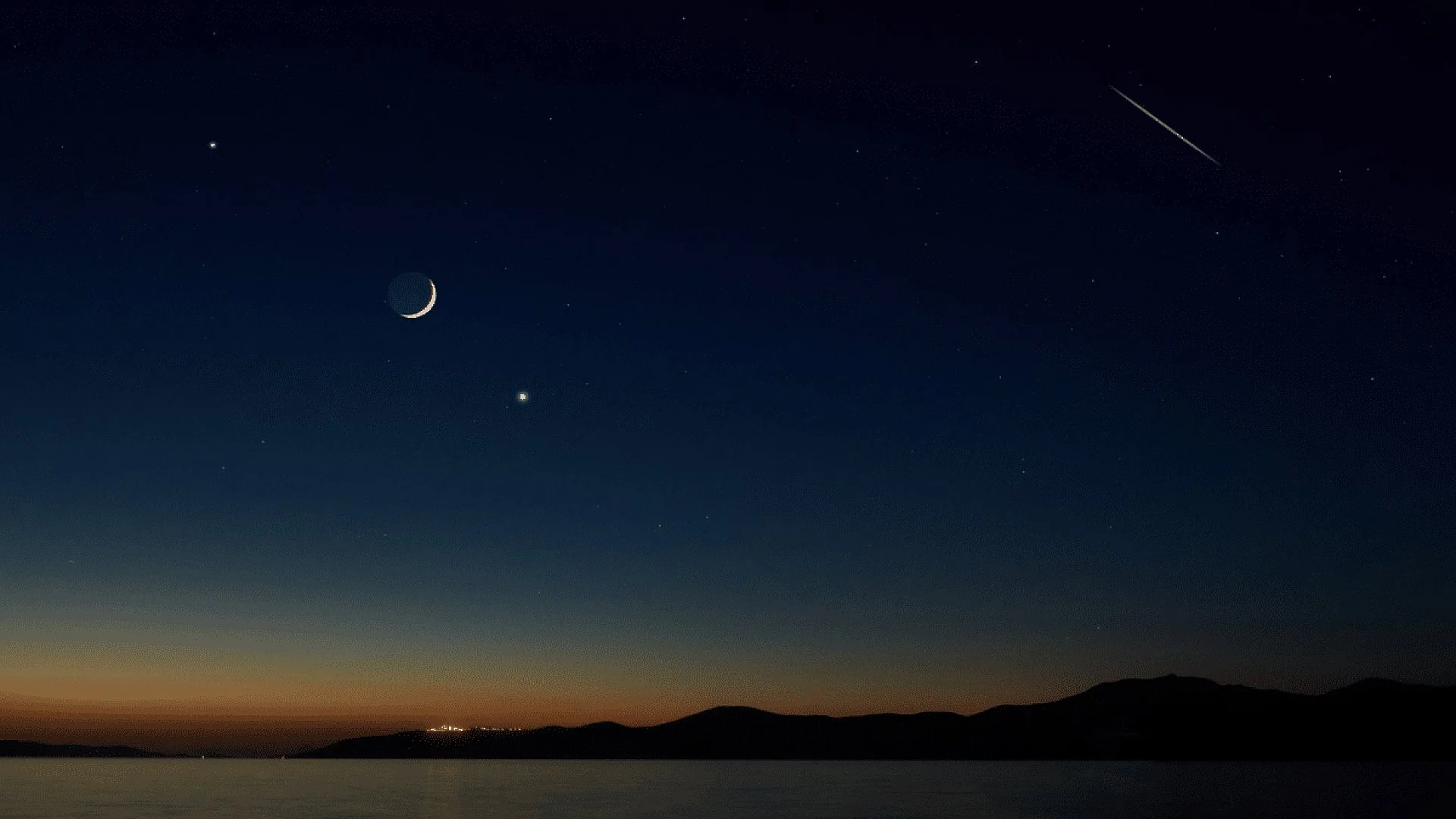
A rare celestial spectacle is set to unfold in the eastern sky on May 14, as Mars, Saturn and a slender crescent moon converge in a striking cosmic triangle. According to Space.com, this alignment will be visible to skywatchers across the globe in the hour preceding sunrise, offering a fleeting opportunity to capture one of the month’s most captivating sky events before daylight obliterates it.
A Brief Celestial Encounter in the Eastern Horizon
The event centers on an 8%-lit waning crescent moon positioned low above the eastern horizon as the night draws to a close. Nearby, Saturn will shine brightly to the lower right of the moon, while the reddish hue of Mars will appear farther left and slightly lower in the sky. Together, the trio will form a triangular arrangement that should be visible to the naked eye under clear conditions.
The alignment will occur very close to sunrise, making timing crucial for those hoping to witness it. Observers will need an unobstructed view towards the east, as the trio will remain less than 20 degrees above the horizon as dawn approaches. Any obstructions, such as buildings or hills, could easily block the view during the short observation window. The fading darkness before sunrise will also add a dramatic backdrop, with the warm glow of dawn slowly overtaking the planets and the moon.
Astronomers often describe these planetary gatherings as conjunction-style events, even though the objects remain separated by vast distances in space. From Earth, their apparent closeness creates visually striking patterns that capture the attention of both experienced skywatchers and casual observers. This particular arrangement stands out because it combines two visible planets with a delicate crescent moon in a compact area of the sky.
Neptune’s Presence in the Background
While the cosmic triangle itself will be easily identifiable under clear skies, another planet will quietly share the same region of space. Neptune, the most distant major planet in the solar system, will sit roughly 10 degrees to the right of the crescent moon. Despite its proximity in the sky, Neptune will remain invisible to the naked eye due to its faint brightness and the growing light of dawn.
Under darker conditions and with optical equipment, Neptune normally appears as a tiny bluish point rather than a bright planet-like object. On May 14, however, the increasing sunlight before sunrise will make spotting it extremely challenging for most observers. The event will therefore remain centered on the brighter and more accessible trio of Mars, Saturn, and the moon.
Reports highlighted by Space.com note that the alignment’s geometry will shift subtly as the morning progresses. Because the Earth rotates continuously, the positions of the planets and moon relative to the horizon will change minute by minute before sunrise. This movement creates a narrow viewing opportunity that rewards early risers willing to watch the eastern sky during the final dark moments before dawn.
The event also coincides with the final phase of the lunar cycle before the upcoming new moon on May 16. Over the following mornings, the moon will disappear almost entirely from view as it moves closer to the sun from Earth’s perspective. At the same time, Mars and Saturn will continue drifting apart among the stars of the constellation Pisces.
Why Skywatchers Should Avoid Telescopes During the Event
Although the alignment will likely tempt many astronomy enthusiasts to reach for telescopes or binoculars, experts strongly advise against using optical equipment once the sun approaches the horizon. Even a brief accidental view of the rising sun through magnified optics can cause immediate and permanent eye damage.
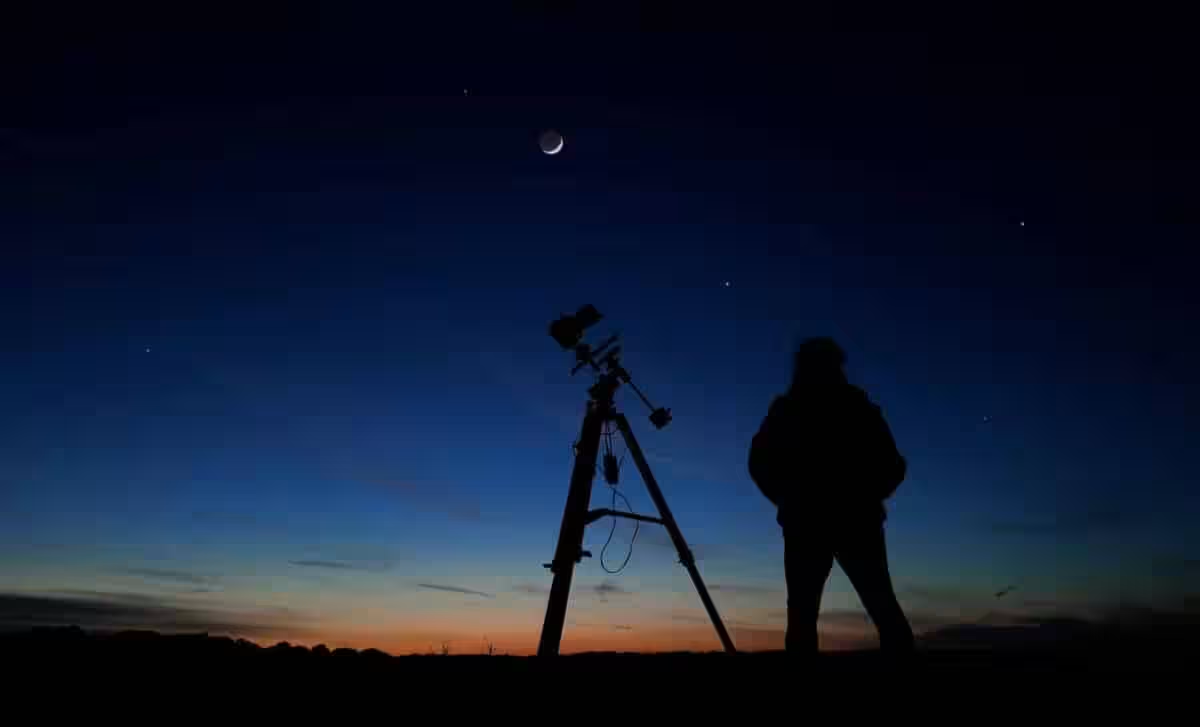
Because the planets and moon will appear very low in the sky near sunrise, the margin for safe observation becomes extremely small. Naked-eye viewing remains the safest and most practical way to enjoy the event. Smartphone cameras and wide-angle photography setups may still capture the alignment safely if used before direct sunlight enters the frame.
Astrophotographers hoping to document the event may benefit from scouting locations ahead of time. Open landscapes, beaches, and elevated viewpoints with clear eastern horizons will provide the best chances for successful viewing and imaging. The combination of twilight colors, the crescent moon, and the contrasting hues of Mars and Saturn could produce dramatic photographs during the short appearance window.
Planetary alignments continue to captivate global interest because they transform abstract astronomy into something immediately visible and emotionally engaging. Unlike deep-space phenomena that require advanced equipment, events like this allow millions of people to connect directly with the movement of worlds across the solar system using only their eyes and a clear sky.
This article has been fact checked for accuracy, with information verified against reputable sources. Learn more about us and our editorial process.
Last reviewed on .
Article history
- Latest version
Reference(s)
- Wood, Anthony. “Don't miss Mars, Saturn and the moon form a cosmic triangle before dawn on May 14.”, May 12, 2026 Space <https://www.space.com/stargazing/dont-miss-mars-saturn-and-the-moon-form-a-cosmic-triangle-before-dawn-on-may-14>.
Cite this page:
- Posted by Aisha Ahmed