This Famous Black Hole Is Launching “Dancing Jets” Powerful Enough to Rival 10,000 Suns
A distant black hole, situated thousands of light-years from Earth, has just displayed an extraordinary phenomenon that researchers had previously only theorized about.
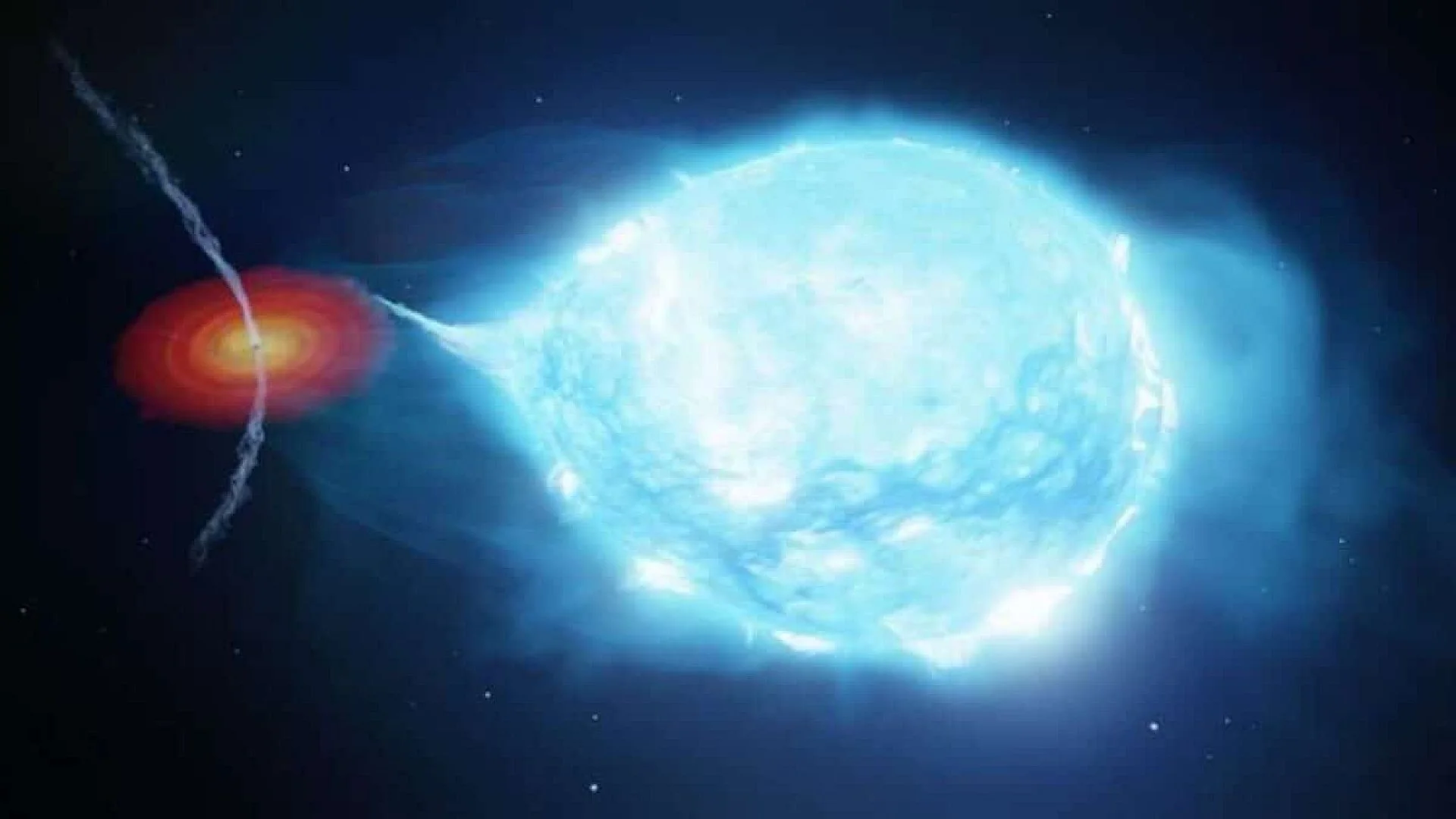
For the first time, astronomers have directly measured the instantaneous power of jets blasting from a black hole system, revealing an output equivalent to nearly 10,000 suns. The observations, focused on the famous binary system Cygnus X-1, also tracked jet speeds approaching half the speed of light.
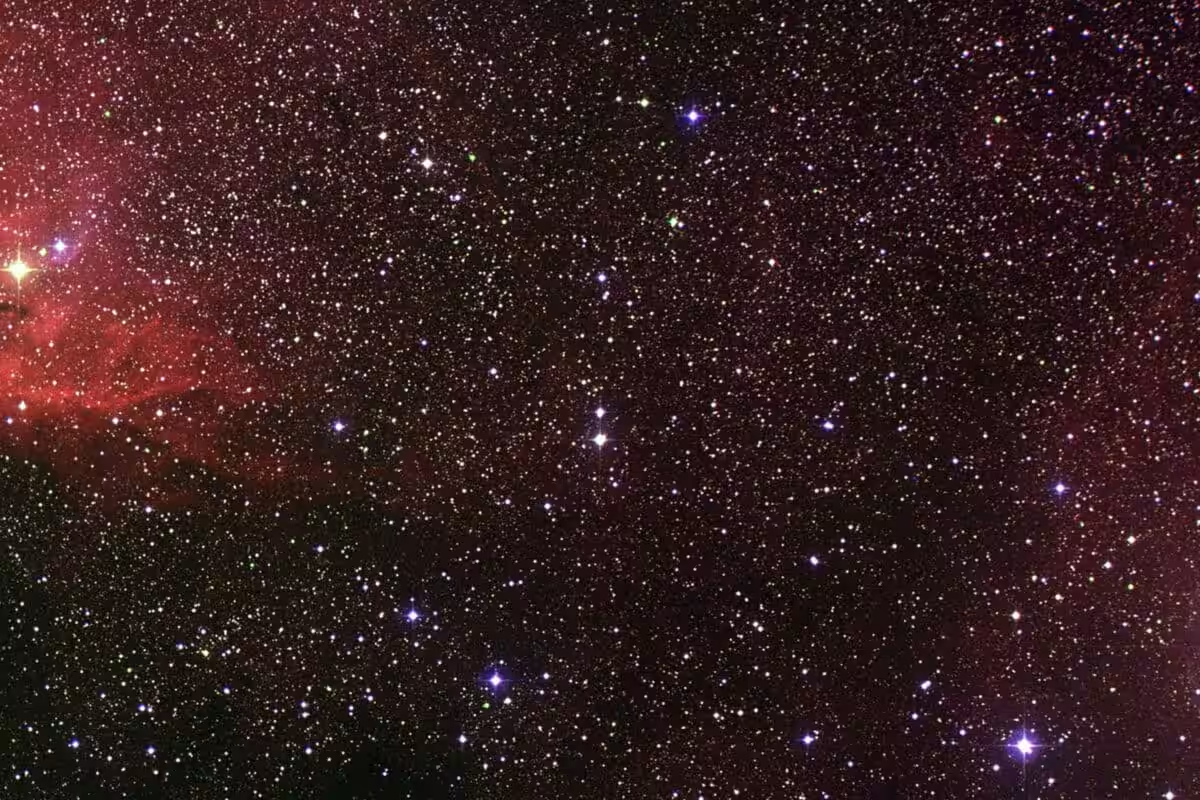
Located about 7,200 light-years from Earth in the constellation Cygnus, the system contains a black hole and a blue supergiant star orbiting one another. The black hole continuously pulls material from its stellar companion, creating the conditions needed to launch powerful jets into space.
As reported in Nature Astronomy, the research was led by Steve Prabu of the University of Oxford, using 18 years of high-resolution radio observations gathered through an international network of telescopes. The work began while Prabu was still affiliated with Curtin University in Australia.
Jets Traveling At Half The Speed Of Light
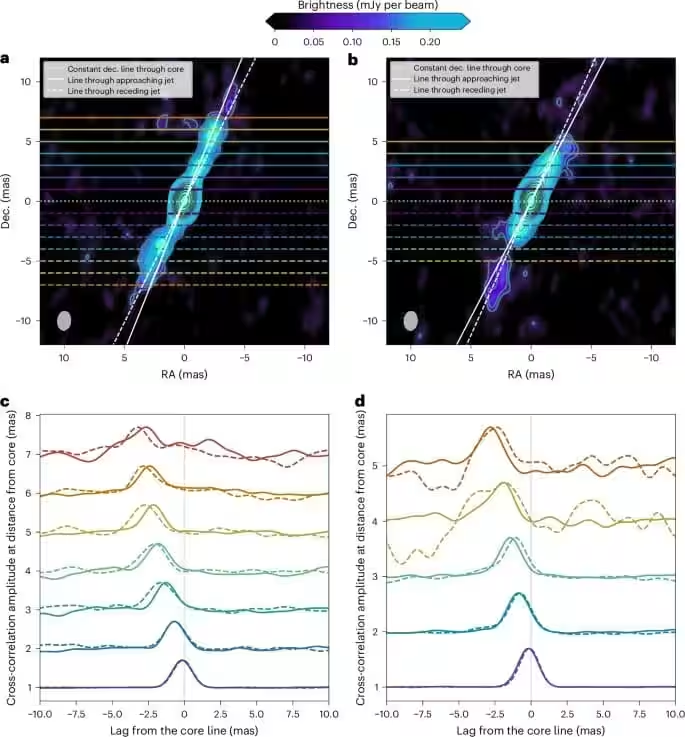
The research team measured the jets moving at roughly 355 million mph (540 million kph), which corresponds to about half the speed of light. Those measurements mark one of the central achievements of the study because they capture the jet activity in real time rather than relying on historical averages.
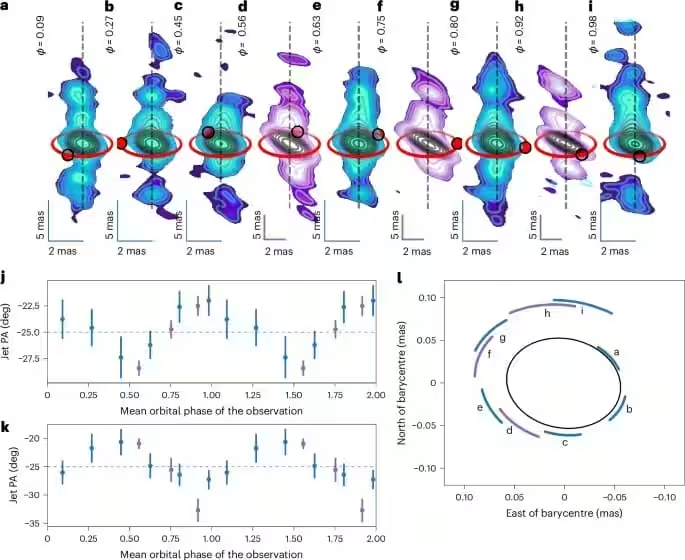
Scientists focused on the way the jets interacted with the intense stellar wind produced by the blue supergiant star. The outflows did not travel in straight lines. Instead, they appeared bent and displaced by the pressure generated by the companion star’s wind.
Researchers writing in Nature Astronomy explained that radio imaging combined with computer modeling allowed them to calculate the jet power from the degree of bending observed in the structures. Prabu referred to them as “dancing jets” because of their shifting motion caused by the stellar environment. Before this work, jet power could only be inferred through indirect methods over very long timescales.
A Black Hole System Studied For Decades
Cygnus X-1 occupies a special place in astronomy because it was the first black hole candidate widely accepted by scientists. The binary system was discovered during the 1960s and has remained one of the most closely studied black hole systems in the Milky Way.
The black hole itself is relatively modest compared with supermassive black holes found in galactic centers, yet it remains highly active because it constantly draws gas from its companion star. That material feeds the accretion process surrounding the black hole and contributes to the formation of the jets.
In comments shared by Prabu and cited in coverage of the study, the supergiant star gives the black hole “something to ‘eat’ and launch as jets.” The process creates a continuous exchange between the two objects as they orbit each other.
Researchers also found that around 10% of the energy released as matter falls toward the black hole is carried away by the jets.
Black Holes May Be Sculpting Space in Surprising Ways
The observations may help scientists better understand the broader role black hole jets play in the universe. These outflows can generate shocks and turbulence that influence surrounding gas and cosmic structures over large distances.
“Jets also provide a major channel for kinetic feedback between accreting black holes and their surroundings. Without this injection of energy into the surrounding environment, models of large-scale structure formation in the universe fail to reproduce the observed properties of galaxies,” the authors said.
The study team noted that studying these jets in greater detail may improve understanding of how black holes interact with their environments. Measuring jet power directly, rather than averaging it across millennia, represents a major technical advance for astronomers working on compact objects. Prabu also said he hopes to apply similar techniques to additional black hole systems in future studies.
“It would be exciting to measure jet power in many more systems,” he stated.
This article has been fact checked for accuracy, with information verified against reputable sources. Learn more about us and our editorial process.
Last reviewed on .
Article history
- Latest version
Cite this page:
- Posted by Aisha Ahmed