A Massive 2022 Eruption on Earth May Reveal Active Volcanoes on Venus
A dramatic volcanic event in Hawaii is providing researchers with an unforeseen instrument to identify active volcanoes on Venus, potentially transforming our interpretation of the planet’s concealed terrain.
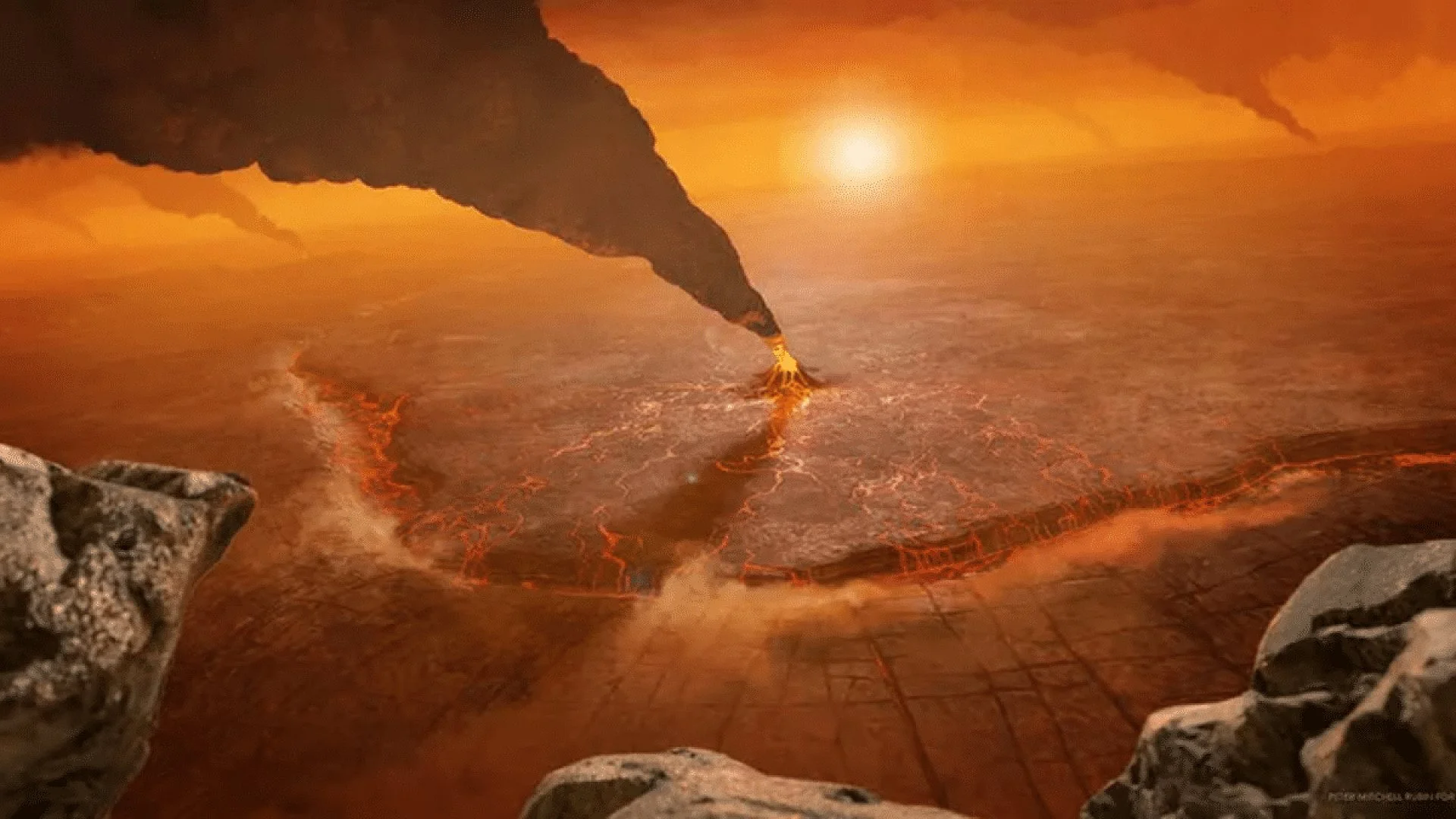
The explosive power of a volcanic eruption on Earth is now revolutionizing the way scientists search for active volcanoes on Venus, providing a groundbreaking method to decipher alien lava flows. The findings, set to be published in the June 2026 issue of theJournal of Volcanology and Geothermal Research, reveal how combining satellite data and machine learning could finally uncover whether Venus is still geologically alive.
A Planet Reshaped By Fire And Fury
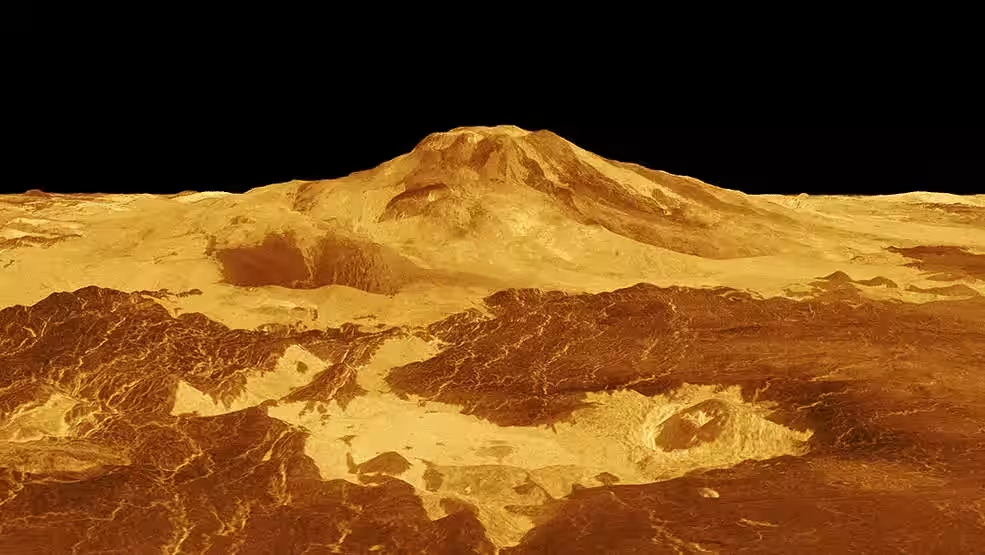
Venus, often referred to as a world dominated by volcanism, boasts an astonishing 85,000 volcanoes scattered across its surface. A significant portion of the planet appears to have been resurfaced by lava within the past 500 million years, suggesting a violent geological history. For decades, scientists believed this activity occurred during a single massive event, after which the planet became largely dormant.
However, recent reanalysis of data from NASA’s Magellan mission has started to challenge that view. Subtle surface changes and chemical signatures in the atmosphere, such as elevated levels of sulfur dioxide and carbon dioxide, hint at ongoing volcanic processes. Yet without direct observation of eruptions, the case has remained uncertain.
This is where Earth-based research becomes crucial. By understanding how lava behaves, cools, and evolves on our own planet, scientists can build models to interpret what they might eventually detect on Venus. The study, which will appear in the June 2026 issue of the Journal of Volcanology and Geothermal Research, marks a significant step in bridging that gap.
Credit: NASA
Unlocking The Secrets Of Mauna Loa
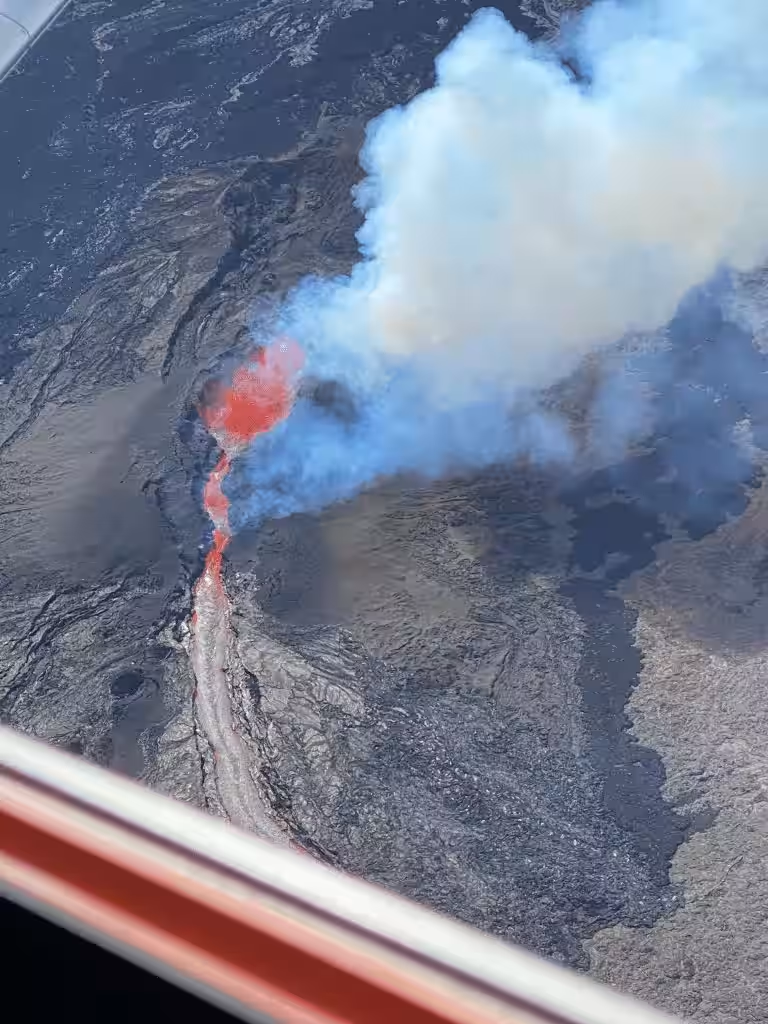
The eruption of Mauna Loa in late 2022 provided a rare opportunity to study lava flows in extraordinary detail. As the largest active volcano on Earth, Mauna Loa has erupted dozens of times since the 19th century, but this recent event stood out due to the availability of both public and private satellite data.
Scientists combined imagery from government missions with high-frequency observations from commercial satellites, allowing them to track the lava’s movement in near real time. This fusion of datasets enabled a much richer understanding of how lava spreads, thickens, and cools over time.
“When we search for active lava flows on other planets, knowing how long it takes for lava to cool on Earth will help us better understand what’s happening if we see a hot flow on Venus,” said Ian Flynn, a geologist at the University of Pittsburgh.
The team also applied machine learning to detect patterns leading up to the eruption. They identified a buildup of underground heat roughly a month before lava reached the surface, an insight that could eventually help predict eruptions, both on Earth and elsewhere.
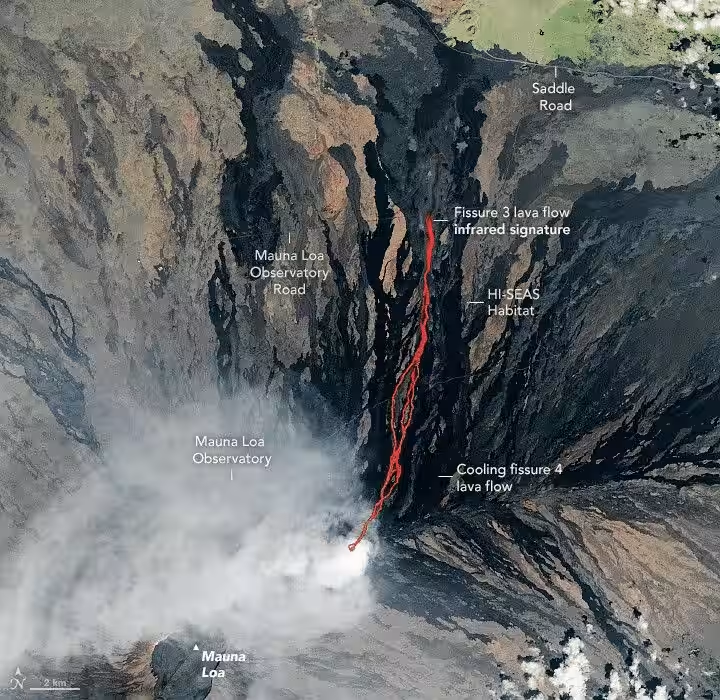
Image: NASA Earth Observatory
From Flat Images To 3D Lava Flow Models
One of the most innovative aspects of the study was the transition from traditional 2D satellite imagery to three-dimensional modeling of lava flows. Thickness plays a critical role in determining how long lava remains hot and how far it travels, yet it has often been difficult to measure remotely.
By collaborating with NASA’s Goddard Space Flight Center, researchers adapted techniques previously used to measure glacier thickness. This allowed them to reconstruct the depth of Mauna Loa’s lava flows with remarkable accuracy.
“Getting visible data helped us understand where it’s going,” said Flynn. “Now we can also generate flow thickness and understand how much material is coming out.”
The results were striking: lava flows thicker than 20 meters took around 21 months to fully cool. This kind of data provides a timeline that scientists can apply when analyzing thermal signals from Venus, helping determine whether a flow is recent or ancient.
Credit: NASA/JPL-Caltech
A New Framework For Detecting Venusian Activity
The implications for Venus exploration are significant. Future missions such as NASA’s VERITAS, expected to launch in the early 2030s, aim to map the planet’s surface with unprecedented precision. Interpreting those observations will depend heavily on models developed from Earth analogs like Mauna Loa.
“Knowing how lava cools enables scientists to better constrain our models when we find active volcanoes on other planets,” said Flynn.
By linking cooling rates, flow thickness, and thermal signatures, scientists can begin to identify which regions of Venus may still be volcanically active. This approach transforms raw satellite data into a timeline of geological activity, offering the strongest path yet toward confirming ongoing eruptions.
This article has been fact checked for accuracy, with information verified against reputable sources. Learn more about us and our editorial process.
Last reviewed on .
Article history
- Latest version
Reference(s)
- Flynn, Ian T.W.., et al. “Satellite data synergy for volcano monitoring: The 2022 Mauna Loa eruption.” Journal of Volcanology and Geothermal Research, vol. 474, June 1, 2026, pp. 108603 Elsevier BV, doi: 10.1016/j.jvolgeores.2026.108603. <https://www.sciencedirect.com/science/article/pii/S0377027326000764>.
Cite this page:
- Posted by Aisha Ahmed