How Starlink Will Accelerate Lunar Image Delivery in Artemis III
NASA and SpaceX merge lunar mission Artemis III with cutting‑edge satellite communications to boost moon exploration capabilities.
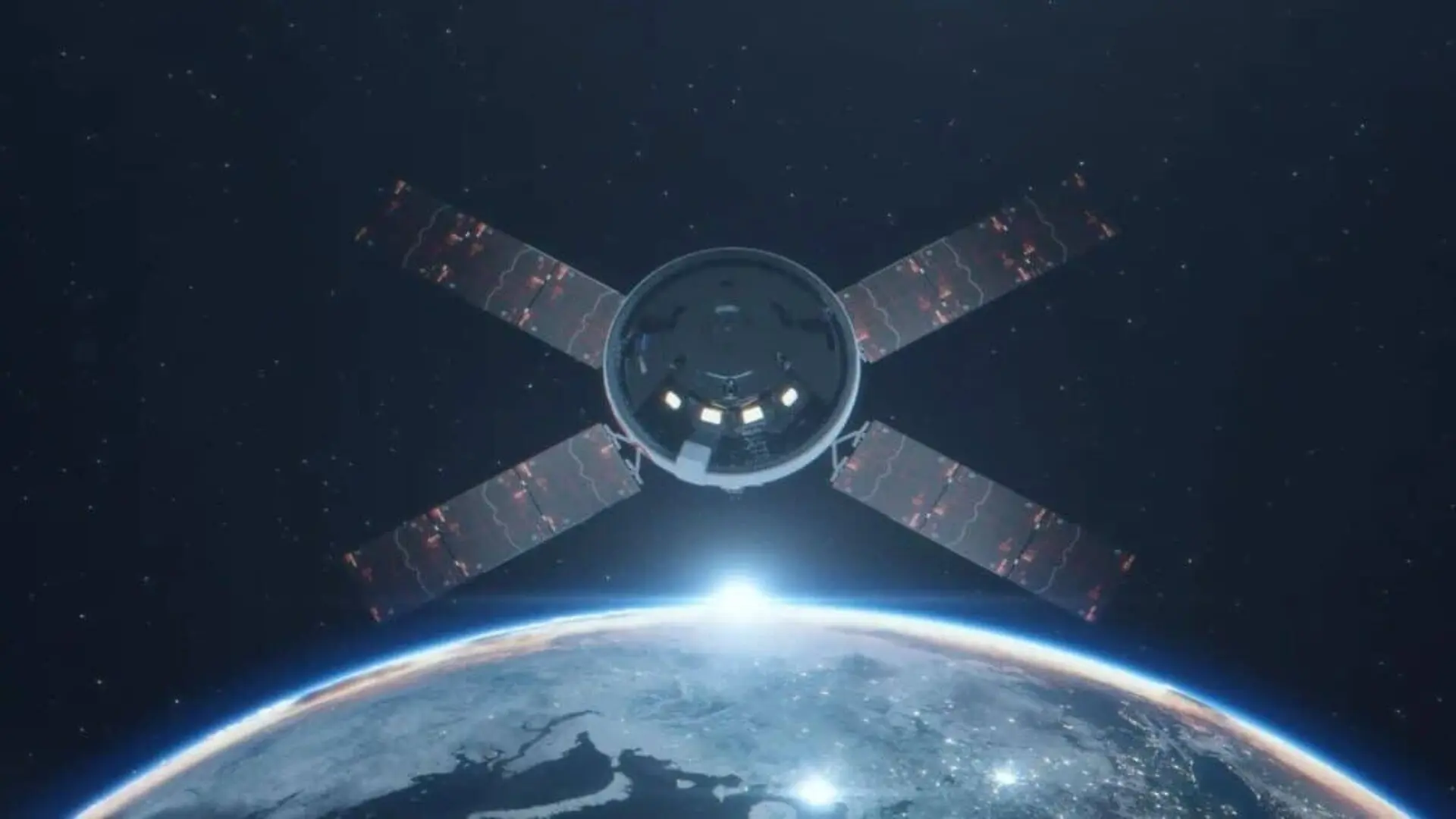
NASA announced that SpaceX’s Starlink constellation will serve as the data‑relay backbone for the upcoming Artemis III lunar venture, creating a direct link between the Orion crew capsule and mission control on Earth. The statement underscores the growing role of commercial satellite networks in future deep‑space exploration.
Linking Orion to Earth for the Next Moon Landing
Artemis III aims to deliver the first crewed touchdown on the Moon under NASA’s renewed Artemis program, with astronauts traveling aboard Orion before heading back home. A persistent obstacle for missions beyond low Earth orbit is the transmission of large volumes of scientific and operational data across millions of kilometres while preserving a stable communications channel.
By integrating Starlink hardware, NASA is embedding a commercial communications layer into a program traditionally driven by government assets. The network will handle the downlink of high‑resolution images captured during the lunar sortie, speeding the flow of visual information back to researchers.
The collaboration highlights an industry‑wide shift toward leveraging private‑sector expertise for specialized space capabilities. With one of the most extensive low‑Earth‑orbit constellations already in place, SpaceX’s infrastructure is now being evaluated for performance beyond Earth’s immediate vicinity.
Rapid access to lunar photography benefits both scientific analysis and mission oversight. Detailed visuals allow ground teams to assess the terrain, monitor hardware behavior, and document astronaut activities in real time.
Starlink Mini Lasers will deliver high-bandwidth connectivity to NASA’s Orion Spacecraft during Artemis III https://t.co/sBLyK3ERybpic.twitter.com/dU2XKhI21m
— Starlink (@Starlink) July 16, 2026
NASA Outlines Starlink’s Role in Lunar Data Transfer
In a blog post, NASA detailed how the Starlink system will be woven into Artemis III’s communications architecture as part of an ongoing effort to boost data throughput for future exploration missions. The agency continues to broaden its ties with commercial partners to devise solutions for operations beyond low Earth orbit.
The focus of the announcement is the delivery of imagery from Orion throughout the lunar mission. Photographs taken by the crew will provide engineers and scientists with direct insight into the Moon’s surface, equipment performance, and human activity.
Commercial communication platforms could become a staple for more ambitious lunar endeavors, where reliable high‑bandwidth links are essential for both spacecraft systems and ground‑based analysis.
NASA’s partnership strategy merges governmental expertise with private‑sector innovation, capitalizing on launch services, cargo transport, and satellite technology already supplied by industry players.
By outsourcing certain capabilities to rapidly evolving commercial systems, the agency can concentrate its resources on core exploration objectives while benefiting from the agility of privately developed infrastructure.
Adapting Earth‑Orbit Networks for Moon Missions
Starlink was conceived to deliver global broadband via a massive constellation encircling Earth. Repurposing comparable communication concepts for lunar exploration marks a novel application for commercial satellite fleets.
Operating near the Moon introduces distinct challenges: greater distances demand robust signal strength and sophisticated routing to sustain mission‑critical data flow.
Embedding commercial technology into Artemis III illustrates how existing space assets can be customized for exploration needs, reducing the necessity for agencies to develop every subsystem from scratch.
The alliance also reflects the blurring lines between public space programs and private enterprises, as the modern space ecosystem increasingly relies on collaboration among agencies, manufacturers, launch providers, and satellite operators.
As humanity prepares for a sustained return to the lunar surface, dependable communications will be pivotal for documenting discoveries and ensuring astronaut safety. The images transmitted via Starlink will help archive the next chapter of human activity on the Moon.
This article has been fact checked for accuracy, with information verified against reputable sources. Learn more about us and our editorial process.
Last reviewed on .
Article history
- Latest version
Reference(s)
- “https://twitter.com/SpaceX/status/2077886067420565755.” <https://t.co/sBLyK3ERyb>.
- “https://twitter.com/Starlink/status/2077886415741006330/photo/1.” <https://t.co/dU2XKhI21m>.
- Russell, Jimi. “NASA Taps SpaceX’s Starlink to Deliver Artemis III Imagery from Orion - NASA.”, July 16, 2026 NASA <https://www.nasa.gov/blogs/missions/2026/07/16/nasa-taps-spacexs-starlink-to-deliver-artemis-iii-imagery-from-orion/>.
Cite this page:
- Posted by Karan Das