US Firm Gets FCC Nod to Test Orbital Mirror That Could Beam Sunlight After Dark
US firm cleared to test a massive space mirror, sparking debate over potential climate impacts and the risk of permanently brightening the night sky.
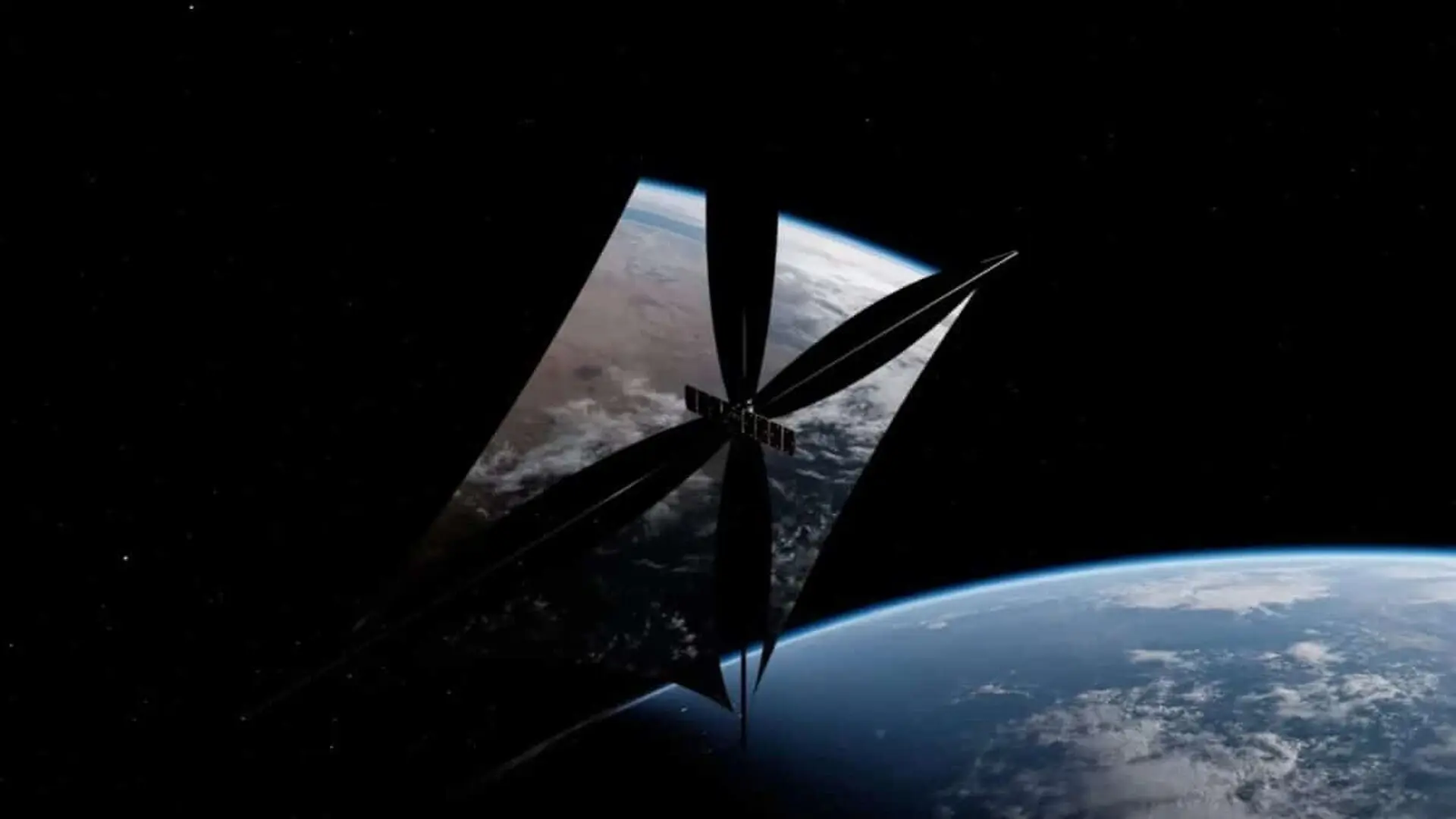
A federal panel has cleared a U.S. firm to launch its inaugural test satellite that will bounce sunlight onto the planet’s surface after dark, reviving a concept that has not been demonstrated in orbit for more than three decades. The decision arrives just days after a leading European observatory released a peer‑reviewed analysis warning that the company’s long‑range plans could brighten night skies over major telescopes by up to four times.
Reflect Orbital Secures License for First Light‑Redirecting Satellite
On 9 July 2026, the Federal Communications Commission’s Space Bureau approved Reflect Orbital Inc. to place a single demonstration craft called Earendil‑1 into a near‑polar orbit 625 km above Earth with an 88‑degree inclination. The satellite carries a thin‑film, steerable reflector intended to channel sunlight toward a pre‑selected ground location during nighttime, operating under a two‑year licence that activates once the craft is verified in orbit.
Company’s Blueprint for Space‑Based Sunlight Infrastructure
Reflect Orbital markets itself as a provider of orbital lighting solutions. Its flagship offering is a maneuverable space mirror that can illuminate specific sites after sunset without relying on traditional power grids. Potential uses cited by the firm include boosting solar‑panel output beyond daylight hours, lighting disaster zones, supporting remote industrial operations, and aiding agricultural activities.
The reflected beam could be dialed from a faint moon‑like glow up to brightness comparable to noon‑time sunlight, with the ability to confine illumination to a defined area and shut it off instantly by rotating the platform. Reflect Orbital’s rollout plan envisions two test units in 2026, scaling to more than a thousand satellites by 2028, and deploying upwards of 50 000 mirrors by 2035. At full scale, the network could generate illuminance levels approaching 36 000 lux, a figure the company likens to daylight exposure.

Earendil‑1’s primary mission is to confirm whether the reflector can be deployed and aimed with the precision required for ground‑based illumination. The FCC’s order frames the flight as a short‑term technology demonstrator, intended to surface practical challenges before any larger constellation is contemplated.
Regulatory Rationale and Astronomer Pushback
The Space Bureau justified its approval on the grounds that the test serves the public interest by fostering innovation in space‑based services and bolstering U.S. competitiveness in the burgeoning orbital economy. Although the act of beaming sunlight falls outside the FCC’s usual licensing domain, the agency determined that authorising the radio links required for satellite control falls squarely within its remit.
The application attracted organized resistance. The American Astronomical Society submitted a formal petition for denial, and over 1 800 members of the public offered comments highlighting potential harms to astronomical observations, light‑pollution impacts on ecosystems and human health, aviation safety concerns, and the risk of eye injury for telescope operators inadvertently intersecting the reflected beam. The bureau dismissed each objection as either beyond its jurisdiction or insufficiently specific to the single‑satellite test.

Regarding space‑debris mitigation, the FCC accepted the company’s plan without imposing extra conditions. Earendil‑1 will be equipped with propulsion for collision avoidance, feature a rip‑stop reflector resilient to micrometeorite impacts, and is programmed to decay naturally within one year after mission completion. The licence also obliges Reflect Orbital to post a surety bond by 10 August 2026 and to achieve launch and operational status no later than 9 July 2032.
European Observatory Quantifies Night‑Sky Brightening from Mirror Constellations
Eight days before the FCC ruling, the European Southern Observatory released a peer‑reviewed analysis in Astronomy & Astrophysics authored by astronomer Olivier Hainaut. The study expands on prior work by evaluating not only the visual streaks of passing satellites but also the diffuse illumination that a full mirror fleet would add to the night sky. Simulations incorporated the trajectories and brightness of existing and proposed constellations.
For a hypothetical 50 000‑satellite Reflect Orbital network, the model predicts that atmospheric scattering of reflected light could amplify sky brightness at the Very Large Telescope on Cerro Paranal by a factor of three to four, even when none of the mirrors point directly at the observatory. By contrast, a projected one‑million‑satellite constellation from SpaceX would generate dozens of streaks per image taken two hours after sunset, eroding up to 28 % of the VLT’s field of view.
From these findings, Hainaut suggested capping the total number of orbital satellites at 100 000 to preserve the viability of optical astronomy, with a stipulation that all platforms remain invisible to the naked eye. The ESO coordinated its response to the FCC alongside the Royal Astronomical Society and the International Astronomical Union. Reflect Orbital has pledged to maintain an open dialogue with the scientific community as it advances its plans.
Cold‑War Era Experiments That First Tried to Shine Sunlight from Space
The notion of beaming daylight from orbit traces back to the late 1980s, when Russian engineer Vladimir Syromyatnikov spearheaded the Znamya program at RSC Energia. On 4 February 1993, the Znamya 2 satellite unfurled a 20‑metre Mylar sheet after separating from the Mir space station, briefly casting a 5‑kilometre‑wide bright patch across Europe at a velocity of 8 km s⁻¹. Inclement weather limited observations, and the craft re‑entered the atmosphere after only a few hours.
A follow‑up attempt, Znamya 2.5, failed during deployment in 1999 when the reflector snagged on a Mir antenna, prompting the programme’s cancellation. At the time, astronomers voiced strong objections, with the Royal Astronomical Society issuing a formal statement and DarkSky International condemning the venture as an intrusion on humanity’s right to darkness.
Should Earendil‑1 demonstrate successful reflector operation, it would represent the first functional orbital sunlight mirror since Znamya 2’s fleeting passage over Europe more than 33 years ago. The FCC’s approval explicitly frames the flight as a feasibility test, positioning the mission as a modern successor to the pioneering, yet short‑lived, Soviet experiments.
This article has been fact checked for accuracy, with information verified against reputable sources. Learn more about us and our editorial process.
Last reviewed on .
Article history
- Latest version
Reference(s)
- “DA 26 706A1.” <https://docs.fcc.gov/public/attachments/DA-26-706A1.pdf>.
- “Reflect Orbital.” <https://www.reflectorbital.com/>.
- “1c9ffc17fa64fa1119492987618f0db3d1ce3d4b.” <https://cdn.zmescience.com/wp-content/uploads/2026/07/1c9ffc17fa64fa1119492987618f0db3d1ce3d4b.webp>.
- “The Sat Jm9n.” <https://cdn.zmescience.com/wp-content/uploads/2026/07/the-sat_jm9n.jpg>.
- “"Beyond the limit": one million satellites and mirrors in space pose grave threat to the night sky.” www.eso.org <https://www.eso.org/public/news/eso2607/>.
Cite this page:
- Posted by Karan Das