NASA Astronauts Risk Their Lives to Fix ISS Robotic Arm in Critical Spacewalk
NASA astronauts perform a challenging spacewalk to fix the ISS Canadarm2 after a critical mechanical failure.
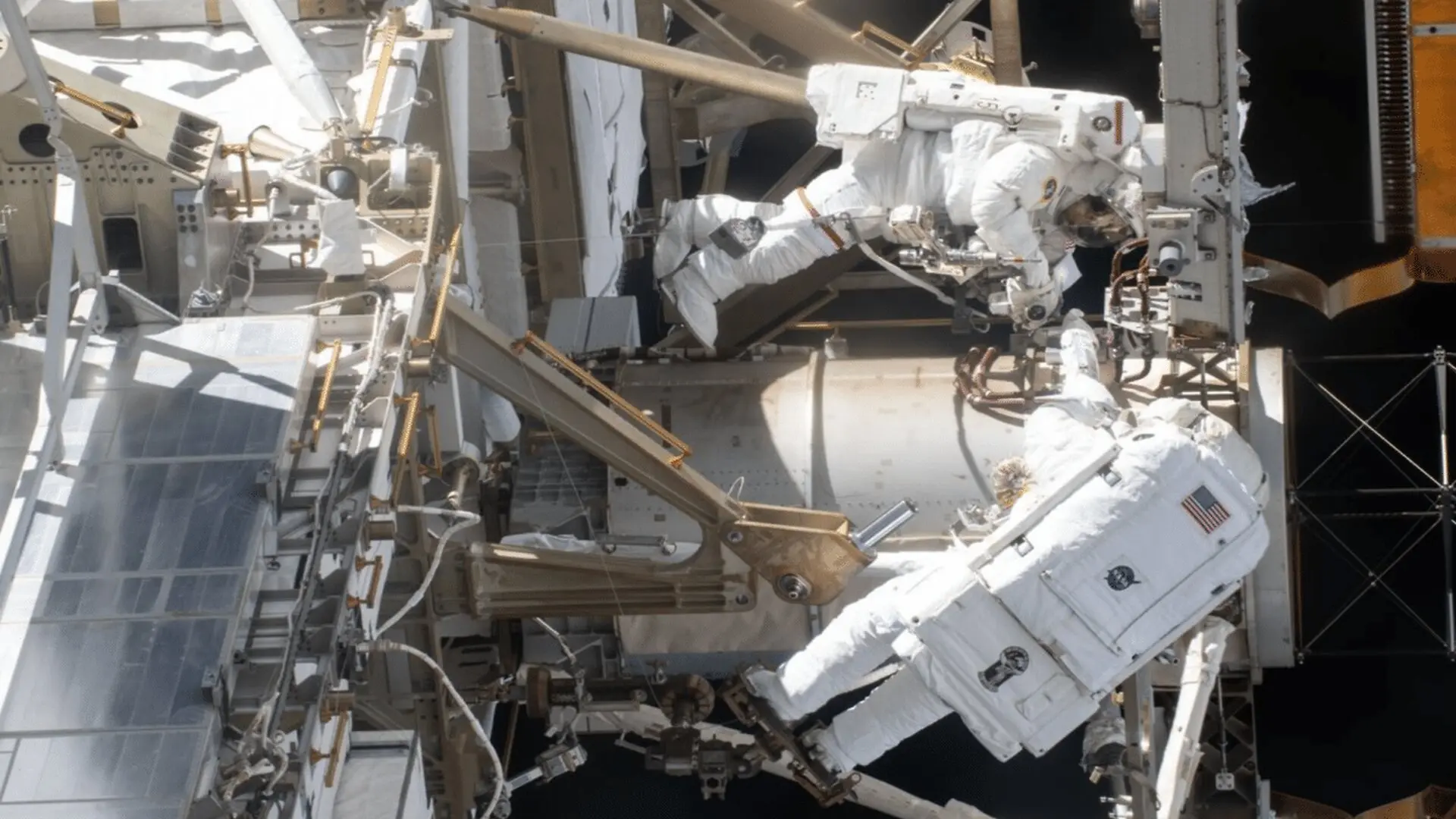
NASA astronauts Chris Williams and Jessica Meir are conducting a complex extravehicular activity to replace a malfunctioning wrist joint on the International Space Station’s Canadarm2 robotic arm, a repair that underscores both the vulnerability and durability of the orbital platform that has hosted humans continuously for more than two decades.
Six‑Hour EVA Planned to Restore ISS Robotic Arm
The spacewalk, scheduled to begin around 8:35 a.m. EDT, will last roughly 6.5 hours and focuses on swapping out a 200‑pound wrist joint that stopped responding after an unexpected rise in motor current during May‑time operations. NASA notes that the faulty component was already stowed aboard the station, allowing the crew to complete the fix without waiting for a new supply launch. NASA reported that the malfunction prevented the arm from moving as intended, prompting the urgent hardware replacement.
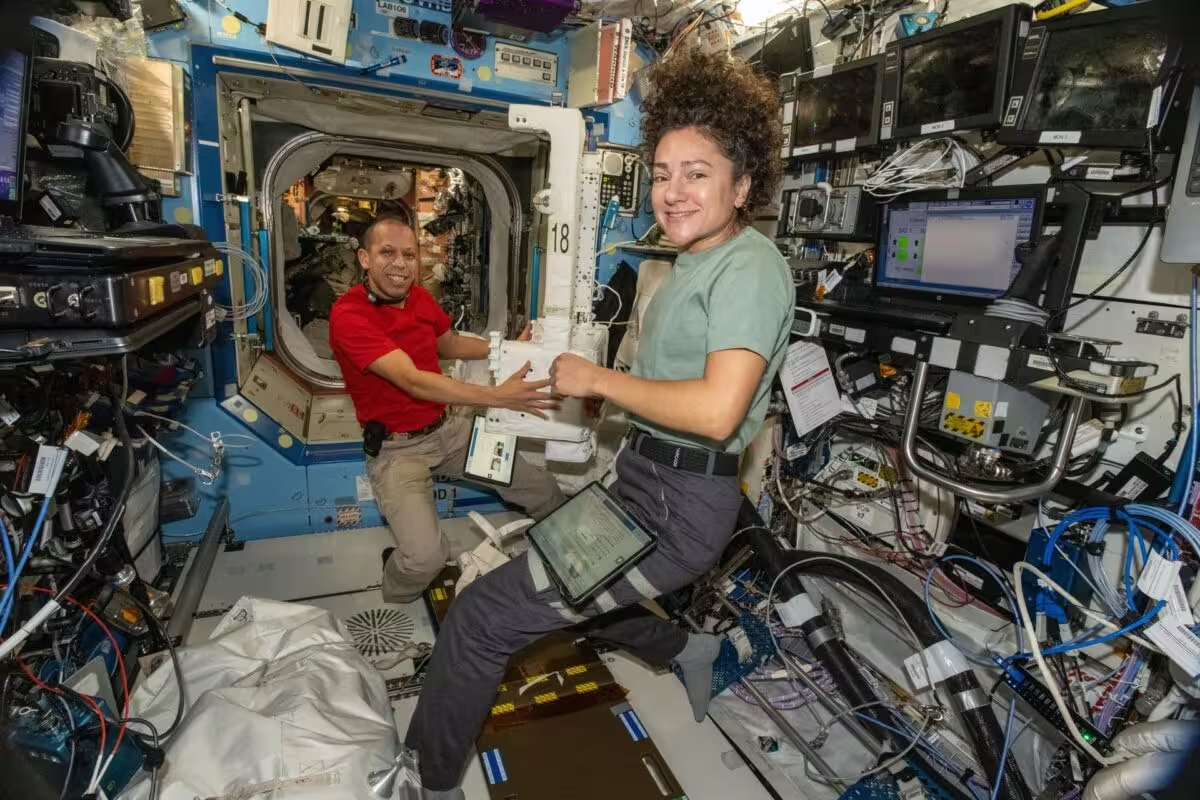
Mission control has been broadcasting live telemetry and commentary throughout the EVA, giving the public a front‑row view of the repair process. In briefings prior to the walk, engineers highlighted the modular design of Canadarm2, which permits component swaps without returning hardware to Earth—a strategy that has extended the arm’s service life well beyond its original design horizon.
“Repairs to robotics, like Canadarm2, are normal and expected after more than 25 years of continuous operations, as the system was designed with replaceable components and planned maintenance in mind,” NASA officials added in the preview.
Technical Hurdles in Swapping a Space‑Based Wrist Joint
Canadarm2, a 56‑foot, 3,000‑pound robot that arrived on the ISS in 2001 aboard the shuttle Endeavour, is essential for docking, payload transfers, and external maintenance. The May anomaly surfaced when the arm’s control software logged abnormal motor currents and refused to execute movement commands. Ground teams traced the fault to a wrist joint assembly, prompting the current EVA to replace the part.
Executing the swap demands precise choreography: the astronauts must maneuver large hardware while tethered to the station’s structure, coordinate tool usage, and follow exact torque specifications transmitted from mission control. The pre‑positioned spare joint eliminates the need for additional resupply flights, showcasing decades of foresight in designing redundant, modular space systems.
Williams and Meir Lead the Extravehicular Repair
Chris Williams, the EVA lead, works in a suit marked with red stripes, while Jessica Meir, on her fifth spacewalk, assists in an unstriped suit. Their partnership builds on a joint EVA earlier this year, when they prepared sections of the station for upcoming solar‑array upgrades. During the current walk, both astronauts manage tether lines, tool interfaces, and continuous communication with Houston, ensuring the joint is secured and aligned before fastening.
Although the joint weighs about 200 pounds on Earth, it still requires careful handling in microgravity to avoid imparting unwanted forces on the station’s framework. The operation adds to the ISS’s record‑setting total of 279 spacewalks, a testament to the ongoing need for human presence in maintaining sophisticated orbital hardware despite advances in automation.
Why Ongoing Robotic Maintenance Matters for the ISS
Canadarm2 remains a linchpin for routine cargo handling and critical missions such as spacecraft capture and module installation. Its reliability directly influences the station’s capacity to receive supplies and implement upgrades without depending solely on crewed vehicle docking. NASA stresses that long‑term space platforms must incorporate repairability, given the inevitable wear from radiation, thermal cycling, and mechanical stress.
Over more than 25 years of service, the arm has undergone multiple upgrades and component swaps, each extending its operational lifespan. The ability to replace a single wrist joint while the station remains fully functional illustrates the robustness of the ISS’s design philosophy and highlights the evolving synergy between astronauts and robotic systems in low‑Earth orbit.
This article has been fact checked for accuracy, with information verified against reputable sources. Learn more about us and our editorial process.
Last reviewed on .
Article history
- Latest version
Reference(s)
- Garcia, Mark. “Astronauts Prepare to Exit Station for Robotics Repair Spacewalk - NASA.”, June 30, 2026 NASA <https://www.nasa.gov/blogs/spacestation/2026/06/30/astronauts-prepare-to-exit-station-for-robotics-repair-spacewalk/>.
Cite this page:
- Posted by Karan Das