Hayabusa2 to Skim Within One Kilometer of Asteroid Torifune in Daring July 5 Flyby
Hayabusa2 readies for an ultra‑close flyby of a mysterious near‑Earth asteroid, promising fresh insights into its composition and origins.
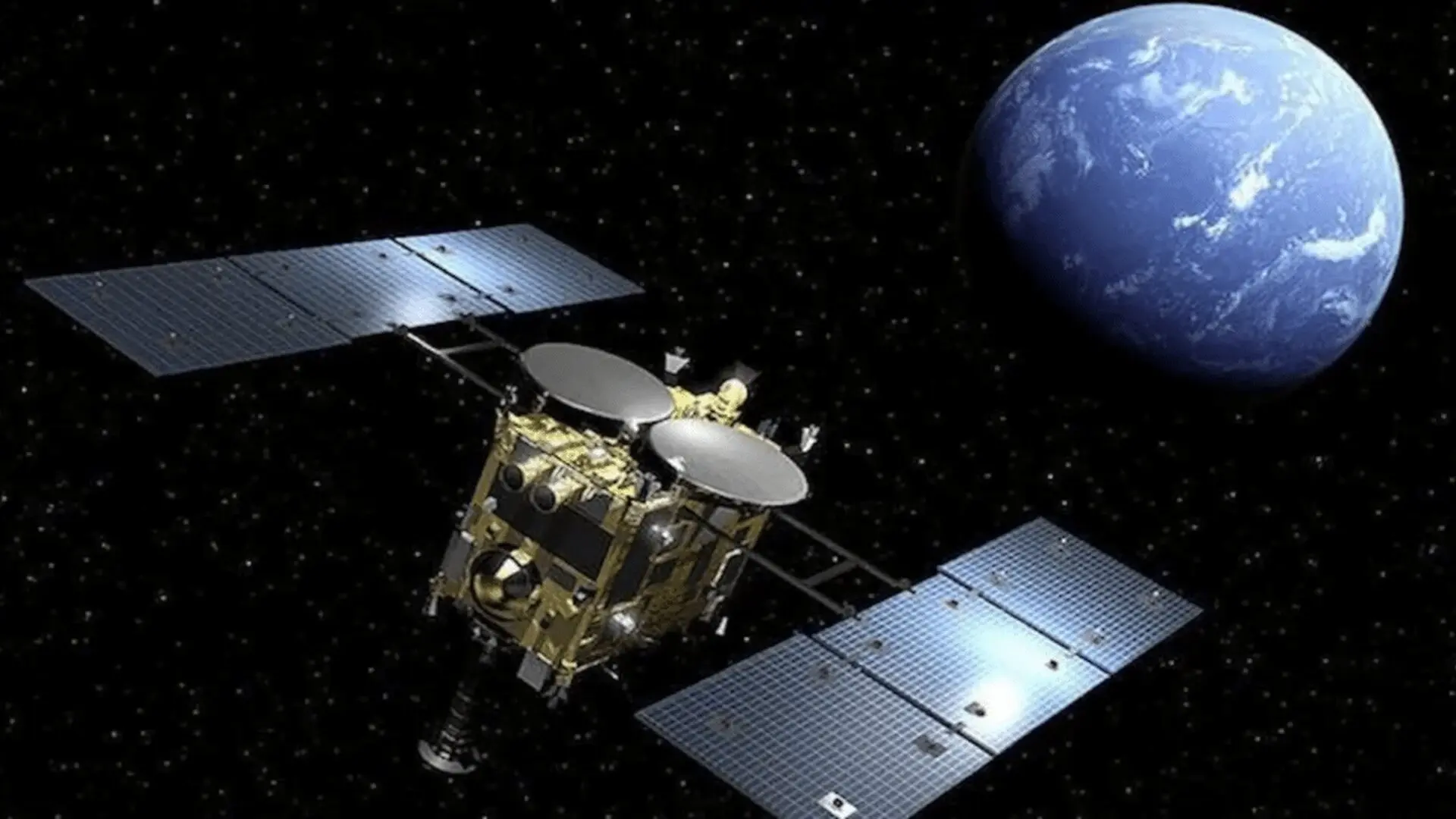
Japan’s Hayabusa2 probe is gearing up for an unprecedented close‑approach to the near‑Earth asteroid Torifune. On 5 July 2026 the spacecraft will zip past the object at a distance measured in mere kilometres, capturing high‑resolution data during a fleeting flyby. The mission, overseen by JAXA, marks a pivotal chapter in the probe’s extended service, coming years after it successfully delivered Ryugu samples to Earth and promising fresh insights for future asteroid reconnaissance and planetary‑defence initiatives.
Hayabusa2 Tackles One of Its Most Exacting Maneuvers Yet
Following the landmark return of material from asteroid Ryugu in 2020, the spacecraft was expected to drift silently through deep space. Instead, engineers have plotted a daring new objective that demands sub‑kilometre navigation accuracy. During the Torifune encounter, Hayabusa2 will skim between 1 and 10 kilometres of the asteroid while travelling at roughly 5.3 kilometres per second, leaving only a few seconds to acquire imagery and scientific measurements before the probe resumes its trajectory.
Mission designers describe the operation as one of the toughest tasks ever attempted by a small‑body explorer. The flyby relies on sophisticated autonomous guidance software capable of maintaining tight positional control despite limited knowledge of Torifune’s physical characteristics. According to JAXA, each moment of the encounter has been choreographed to extract maximum science while keeping operational risk to a minimum. The data set could reveal details about the asteroid’s shape, spin state, surface texture and internal makeup, enriching the broader picture of near‑Earth asteroid diversity.
— HAYABUSA2@JAXA (@haya2e_jaxa) June 25, 2026
During a recent briefing, project scientist Satoshi Tanaka highlighted the significance of the maneuver, noting:
“This is one of the closest asteroid encounters ever attempted by a mission of this class. By combining advanced navigation techniques and the engineering capabilities of Hayabusa2, we have made it possible to achieve a flyby at a distance of only about 1 kilometre.”
The feat reflects more than a decade of engineering progress and operational experience accumulated since the probe’s launch in 2014.
Torifune Remains an Enigmatic Target
Although astronomers have tracked Torifune for several years, its physical properties are still poorly constrained. The asteroid is estimated to be about 450 metres across, yet its exact dimensions, shape and internal structure remain unknown. Scientists are still debating whether it is a monolithic rock, a loose rubble‑pile, or a contact binary formed by the gentle merger of two smaller bodies.
The uncertainty adds both excitement and difficulty to the mission. Patrick Michel, principal investigator of the European Space Agency’s Hera mission and a member of the Hayabusa2 science team, warned that the operation carries inherent risk because it was not part of the original flight plan. He told Space.com that “it’s still a risky operation, because they had not planned for this.”
Despite those challenges, researchers see a huge upside. Every close‑up mission to an asteroid has upended pre‑flight expectations, revealing unexpected geology and surface features that telescopic observations alone could not predict. Michel emphasized this point, stating:
“We’re going to discover what it looks like. And each time we have seen a new asteroid, we’ve been surprised,” Michel said. “We’re going to discover another beast to put in the zoo of asteroids.”
His comments capture the blend of anticipation and humility that defines contemporary planetary science, where even modest‑sized objects can reshape prevailing models.
Implications for Future Planetary‑Defense Efforts
The scientific payoff of the flyby extends well beyond the specifics of Torifune. Modern planetary‑defence concepts rely on the ability to rapidly assess newly discovered near‑Earth objects that could threaten our planet. In practice, a future mission might need to approach an asteroid with only weeks of warning, determine its size, composition, spin and internal cohesion, and then decide on a mitigation strategy.
Hayabusa2’s close‑range passage will serve as a practical test of that capability. Demonstrating navigation within roughly one kilometre of a fast‑moving body while gathering usable data will provide engineers with hands‑on experience that can be transferred to upcoming defence missions. The lessons are likely to complement projects such as NASA’s DART, which proved the feasibility of asteroid deflection in 2022. Robust reconnaissance, as exemplified by this flyby, remains a prerequisite for any successful deflection attempt, making the operation highly relevant as agencies worldwide refine coordinated defence strategies.
Beyond Torifune: Hayabusa2’s Long‑Term Ambitions
The July 5 encounter is not slated to be the final chapter for the aging probe. Throughout its extended mission, Hayabusa2 has continued to conduct valuable science, including studies of zodiacal light and distant exoplanet observations while traversing interplanetary space. These activities keep the spacecraft scientifically productive as it heads toward its next target.
Looking ahead, the probe aims to rendezvous with the tiny asteroid 1998 KY26 in 2031. At roughly 11 metres in diameter, the object would become the smallest asteroid ever visited by a spacecraft. Engineers have even floated the possibility of attempting a soft landing on the miniature world, a feat that would push the boundaries of autonomous navigation and surface‑interaction technology.
If the July 5 flyby proceeds as planned, Hayabusa2 will once again demonstrate how a spacecraft built for a single mission can be repurposed to deliver groundbreaking science years after its primary goal. Though the encounter with Torifune will last only seconds, the observations gathered could shape asteroid research, spacecraft guidance, and planetary‑defence planning for many years to come.
This article has been fact checked for accuracy, with information verified against reputable sources. Learn more about us and our editorial process.
Last reviewed on .
Article history
- Latest version
Reference(s)
- Jones, Andrew. “Japanese probe set for super-close flyby on July 5: 'We're going to discover another beast to put in the zoo of asteroids'.”, June 28, 2026 Space <https://www.space.com/astronomy/asteroids/japanese-probe-set-for-super-close-flyby-on-july-5-were-going-to-discover-another-beast-to-put-in-the-zoo-of-asteroids>.
- Posted by Karan Das