BepiColombo Shuts Down Ion Engines After 8‑Year Cruise, Begins Final Mercury Push
BepiColombo, after eight years of ion propulsion, reaches the final critical phase of its Mercury mission, promising groundbreaking data.
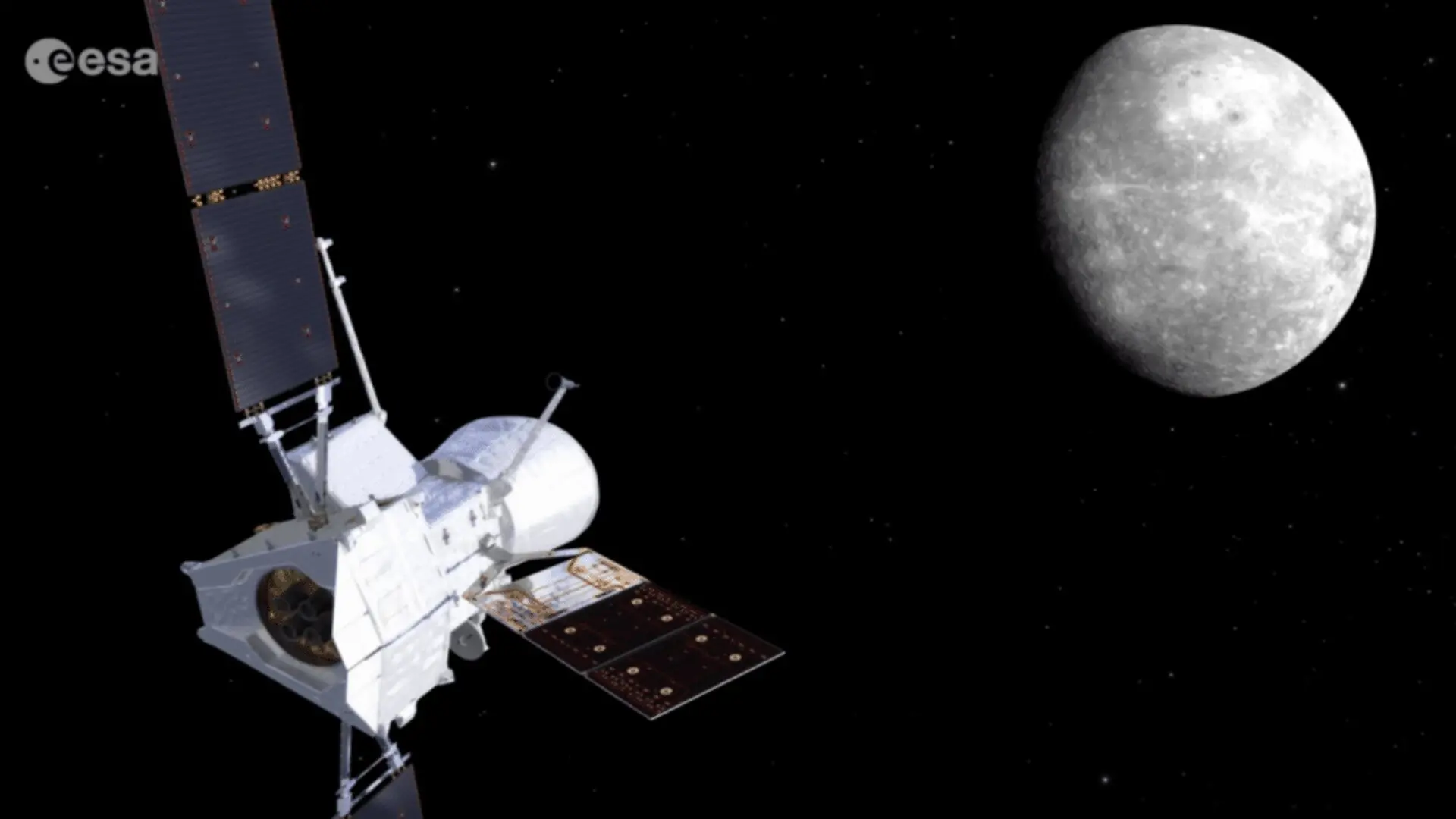
After almost eight years traversing the inner Solar System, the joint ESA‑JAXA probe BepiColombo has turned off its solar electric propulsion system on 15 June, closing the chapter on its long‑duration cruise and moving toward the demanding operations required to orbit Mercury. ESA describes the event as more than a simple engine shutdown; it marks the shift from a gradual interplanetary journey to the final approach of the Sun’s innermost planet.
Ion Thrusters Silenced, New Mission Phase Begins
For nearly a decade the spacecraft rode on a faint blue plume of ionized xenon, a hallmark of its ion‑driven propulsion. Unlike conventional rockets that fire in short bursts, BepiColombo’s four QinetiQ T6 thrusters used electricity from large solar arrays to ionise xenon and expel plasma at high speed, providing continuous, low‑thrust acceleration. At 15:24 CEST on 15 June, mission control commanded the final shutdown, ending the propulsion phase that began with launch in October 2018.
The Mercury Transfer Module (MTM) housed the ion engines, allowing the spacecraft to reshape its orbit over millions of kilometres while executing a series of planetary flybys. By relying on patient, precise thrust rather than brute‑force rockets, the probe could gradually counter the Sun’s gravity and align its path with Mercury’s orbit.

Why Mercury Demands Extraordinary Mission Design
Reaching Mercury is far more challenging than travelling to the outer planets. A spacecraft departing Earth already carries Earth’s orbital velocity around the Sun; to enter Mercury’s orbit that speed must be reduced dramatically while moving deeper into the Sun’s gravity well. Simple thrust alone cannot solve this energy problem.
BepiColombo tackled the issue with an intricate gravity‑assist campaign that included nine planetary flybys: an Earth swing‑by, two Venus encounters, and six Mercury fly‑bys. Each maneuver subtly altered the probe’s velocity and orbital geometry, synchronising its motion with Mercury without exhausting propellant reserves.
The ion engines operated in concert with these assists, providing fine‑tuned trajectory corrections between each encounter. The combined approach represents one of the most sophisticated navigation strategies ever attempted in interplanetary exploration, showcasing technologies that could shape future deep‑space missions.
— ESA Operations (@esaoperations) June 24, 2026
Next Critical Maneuvers for the Probe
ESA notes that the ion‑propulsion shutdown is only the start of a sequence of high‑precision operations. With the thrusters offline, BepiColombo now coasts ballistically until the next scheduled events. On 3 September 2026 the Mercury Transfer Module will detach, leaving the remaining spacecraft to rely on the chemical propulsion of the Mercury Planetary Orbiter (MPO) for the subsequent trajectory adjustments.
The key engine burn is slated for 21 November 2026, when the probe must fire its main thrusters at a precise moment to achieve permanent capture by Mercury’s gravity. Following a successful orbit insertion, the Japanese magnetosphere orbiter Mio will be released, and the European orbiter will be lowered to its science orbit by March 2027. Each step demands exact navigation, leaving little margin for error after the lengthy cruise.
Engineering Lessons That Will Shape Future Deep‑Space Propulsion
The conclusion of the electric‑propulsion phase offers a trove of operational data for future missions. Over the eight‑year cruise, the ion engines proved reliable under the harsh conditions of deep space and the intense solar flux near Mercury. Prior to the shutdown, engineers gathered at ESA’s European Space Operations Centre (ESOC) in Darmstadt, Germany, to review performance metrics and extract lessons for upcoming spacecraft designs.
Lead solar electric propulsion specialist Neil Wallace and his team examined thruster behavior, aiming to refine the technology for missions that may depend on similar high‑efficiency propulsion. The success of BepiColombo’s ion engines underscores the growing importance of electric propulsion for ambitious planetary exploration, from asteroid visits to distant planetary probes.
Approaching Mercury: Scientific Opportunities Ahead
Having completed the extensive series of flybys and trajectory tweaks, BepiColombo is now positioned for the final approach that the mission was built to achieve. The spacecraft’s ion engines are no longer needed because previous maneuvers have placed it on a path that naturally leads to Mercury.
If the upcoming burns proceed as planned, scientists will soon obtain unprecedented data on Mercury’s interior structure, magnetic environment, surface composition, and its interaction with the solar wind. The quiet shutdown of the propulsion system therefore opens a new chapter of scientific discovery that has been years in the making.
This article has been fact checked for accuracy, with information verified against reputable sources. Learn more about us and our editorial process.
Last reviewed on .
Article history
- Latest version
Cite this page:
- Posted by Karan Das