NASA Tests Cryogenic Coupler That Could Enable Spacecraft Refueling Without Spacewalks
NASA tests orbital refueling tech, paving way for longer, deeper solar system missions.
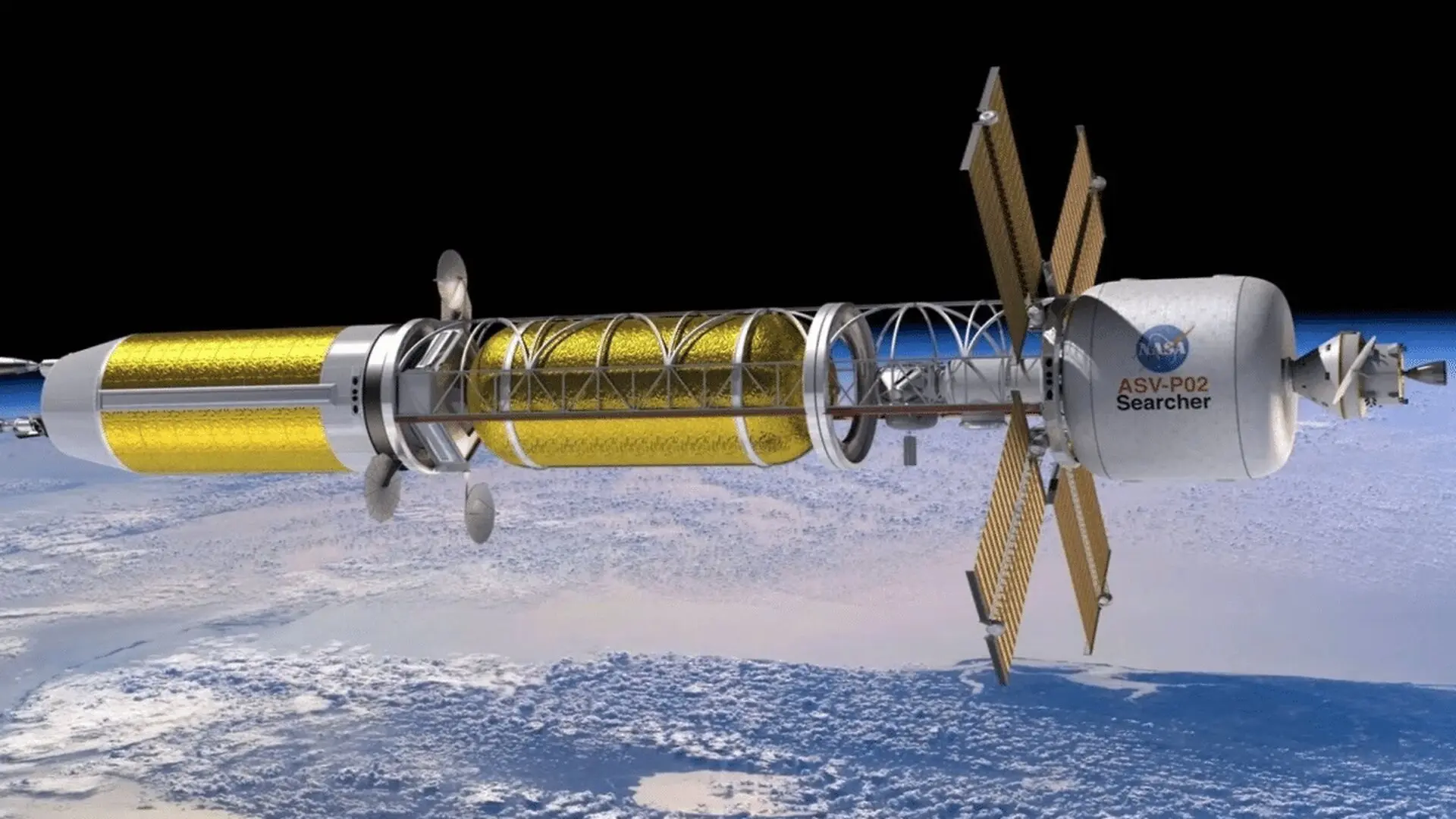
Future missions to the Moon, Mars and deeper destinations may soon be able to refuel without carrying every kilogram of propellant from Earth. NASA has demonstrated a next‑generation cryocoupler, a purpose‑built interface that moves ultra‑cold rocket fuels between orbiting vehicles. The test marks a key milestone toward establishing orbital fuel stations that could relax launch constraints and enable missions that are currently out of reach.
A Tiny Component with Far‑Reaching Impact
Propellant mass, not thrust, is the primary cost driver for long‑range space travel. Each kilogram launched from the ground reduces payload capacity and inflates mission budgets. Engineers have long proposed orbital fuel depots where spacecraft could top up their tanks before heading farther out. Turning that concept into reality requires hardware capable of safely moving cryogenic liquids like liquid hydrogen and liquid oxygen in the vacuum of space.
Unlike ground‑based fueling rigs, an in‑space refueling system must repeatedly engage and disengage without crew assistance, while withstanding extreme cold, vacuum, and tight docking tolerances. According to NASA, solving these challenges is essential for exploration architectures that rely on reusable vehicles and in‑orbit logistics instead of launching fully‑fuelled spacecraft for every trip.
According to Travis Belcher, cryocoupler project manager at NASA’s Marshall Space Flight Center in Huntsville, Alabama,
“In-orbit cryogenic refueling between two spacecraft has yet to be done and remains one of the toughest engineering challenges in spaceflight. These propellant transfers are essential for the kinds of missions NASA wants to fly in the future, so developing a coupler that can handle ultra-cold propellants is a critical step toward making that capability real.”
Belcher’s remarks highlight why a seemingly modest device could become a cornerstone of next‑generation exploration infrastructure.
Rigorous Testing Drives Cryogenic Innovation
The cryocoupler, built by L3Harris, underwent a joint evaluation at NASA’s Marshall Space Flight Center. Test engineers immersed the assembly in liquid nitrogen at roughly minus 321 °F to observe how seals, materials and moving parts behaved under the severe thermal loads expected in orbit.
Even minor heat ingress can cause rapid vaporization of cryogenic fuels, leading to loss of propellant. As temperatures drop, materials contract, which can jeopardize seal integrity and mechanical alignment. The test campaign therefore examined both fluid transfer capability and the durability of the coupler through multiple connect‑disconnect cycles.
A further objective was to replicate realistic docking dynamics. One half of the coupler was attached to a robotic arm that could shift and rotate, intentionally creating slight misalignments before engagement. This setup let engineers assess whether the device could tolerate the positioning errors that autonomous spacecraft inevitably encounter during rendezvous. Demonstrating this flexibility is a vital step because future refueling missions will depend heavily on automated operations.
Automation Removes the Need for EVA Refueling
A standout feature of the cryocoupler is its fully automated operation. Conventional launch‑pad fueling hardware is manually attached before liftoff and discarded afterward; it was never intended for repeated use in orbit. Belcher noted how the new design diverges from legacy systems.
“The cryocouplers we’re working on can attach and detach multiple times and are fully automated, so astronauts won’t have to perform a spacewalk to transfer propellant,” he said. “They’re rigorously designed to withstand space and sized for the expected tank designs.”
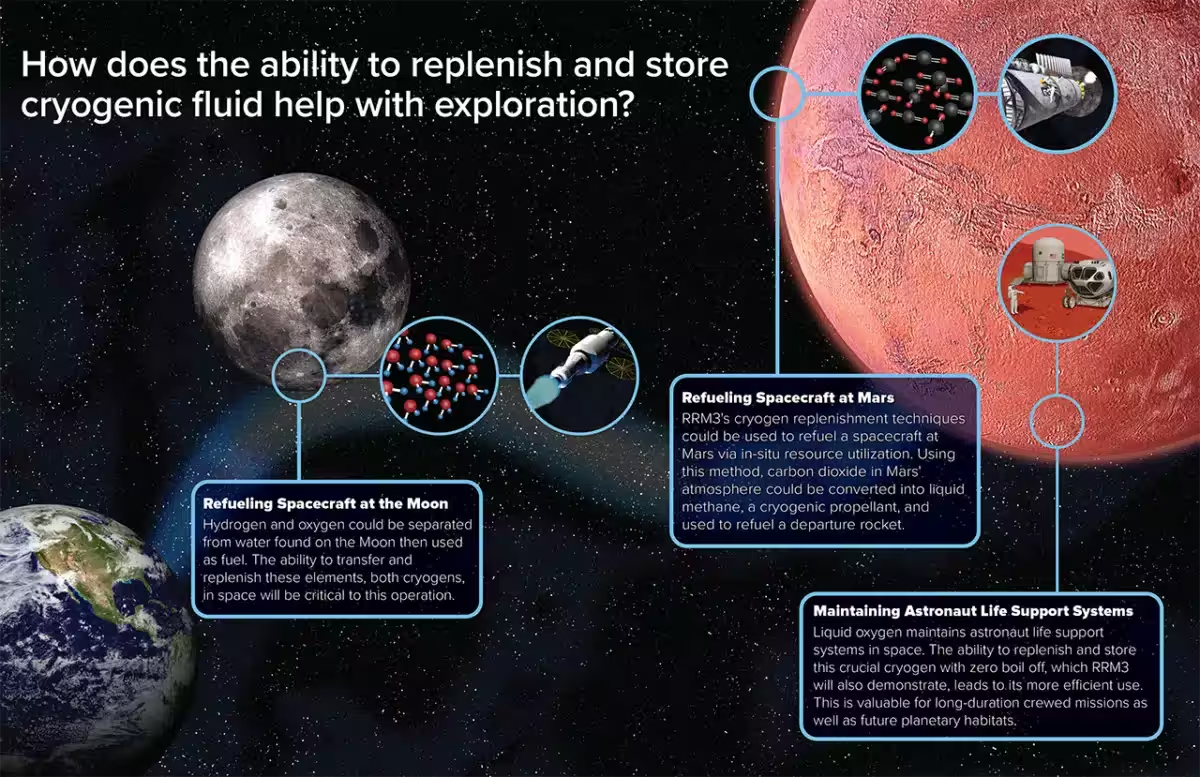
Eliminating EVA‑based fueling improves mission efficiency and lowers risk. An automated system could service reusable lunar landers, cargo ships, deep‑space transport vehicles and orbital depots with minimal crew involvement. As both government agencies and commercial operators move toward sustained presence beyond low Earth orbit, technologies that lessen human exposure become increasingly valuable.
The broader vision envisions a space‑based economy where spacecraft are serviced, upgraded and refueled rather than discarded after a single flight. Reliable cryogenic transfer hardware is a critical enabler of that future.
Early Steps Toward In‑Orbit Fuel Stations
While recent tests show promising performance, the cryocoupler is still at an early development stage. Engineers are confirming core functions before tailoring the hardware to specific vehicle architectures and mission needs. Each application will likely require bespoke engineering to match propellant type, tank dimensions, docking mechanisms and operational constraints.
Belcher cautioned that further work lies ahead.
“These cryocouplers are very early in development, so the testing is mostly focused on basic functionality. Future test campaigns will design them for specific missions and assess them more meticulously based on that mission’s requirements.”
The effort is part of NASA’s Cryogenic Fluid Management Portfolio, jointly overseen by Marshall Space Flight Center and Glenn Research Center, with the recent trials conducted in partnership with L3Harris under a 2022 Announcement of Collaboration Opportunity. As validation progresses, the cryocoupler could transition from an experimental prototype to a core component supporting future voyages to the Moon, Mars and, eventually, more distant reaches of the solar system. Operational orbital fuel depots would let spacecraft launch lighter, travel farther and stay in service longer than today’s exploration vehicles.
This article has been fact checked for accuracy, with information verified against reputable sources. Learn more about us and our editorial process.
Last reviewed on .
Article history
- Latest version
Reference(s)
- Mohon, Lee. “NASA Tests New Refuel Device for Future In-Space Refueling Missions - NASA.”, June 26, 2026 NASA <https://www.nasa.gov/directorates/stmd/tech-demo-missions-program/cryogenic-fluid-management-cfm/nasa-tests-new-refuel-device-for-future-in-space-refueling-missions/>.
Cite this page:
- Posted by Karan Das