Will a Spent SpaceX Rocket Hit the Moon in August and Be Visible From Earth
A spent SpaceX Falcon 9 upper stage will strike the Moon in August, sparking debate among scientists about whether the impact can be seen from Earth.
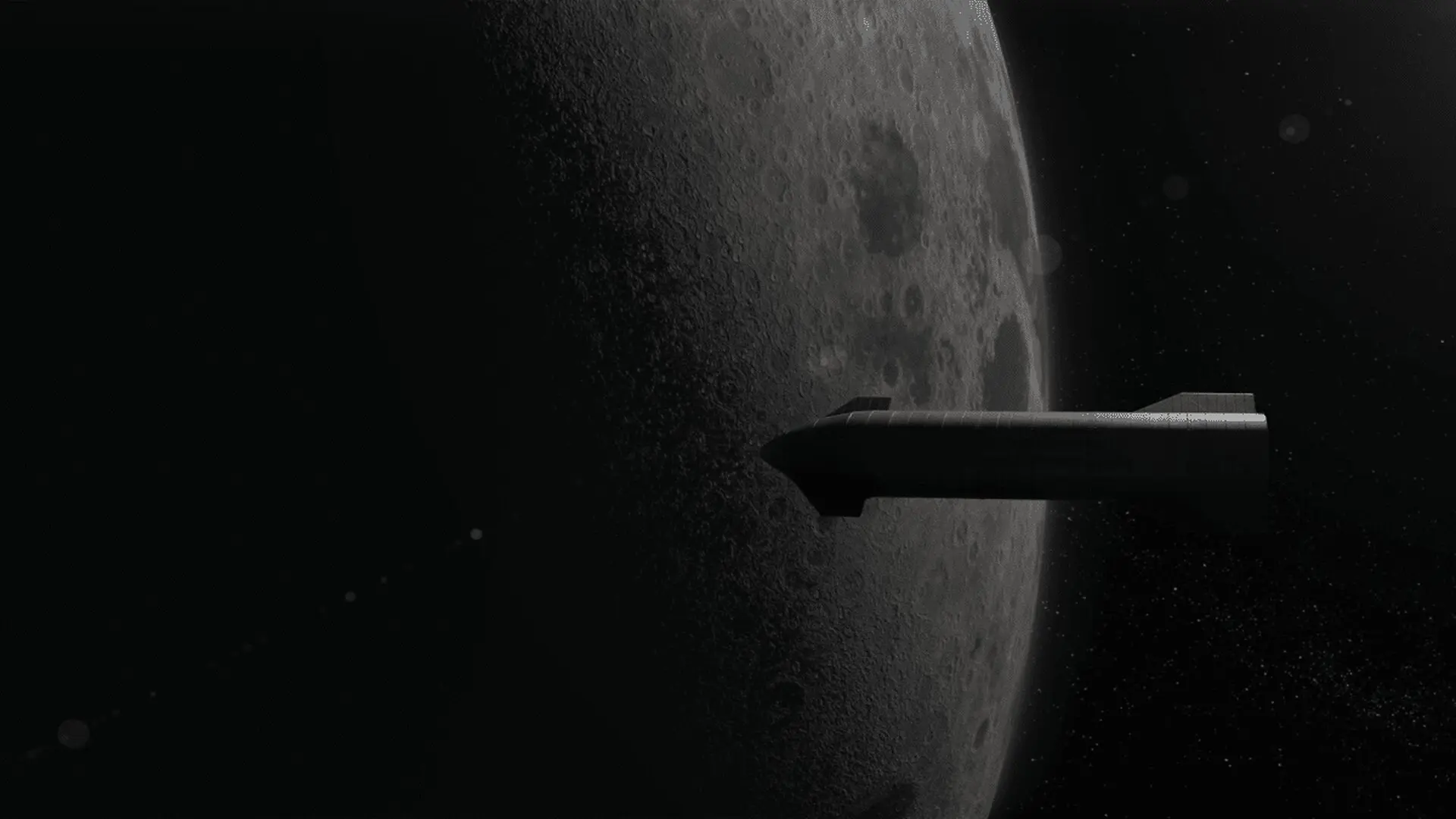
A decommissioned SpaceX Falcon 9 upper stage is slated to hit the Moon in early August, offering a rare opportunity for scientists and sky‑watchers to study a human‑made impact on a celestial body, reports Space.com.
Moon to be struck by defunct Falcon 9 stage in August
The lunar surface is set to experience an event that merges aerospace history with active research, as a discarded SpaceX Falcon 9 upper stage, originally launched for missions under NASA’s Commercial Lunar Payload Services program, is on a collision course. After its release, the piece has lingered in a gradually shifting orbit. Current calculations indicate it will intersect the Moon at high velocity near the western edge of Einstein Crater or just beyond the visible limb, though the exact site remains uncertain, complicating predictions about observability and scientific payoff.
The potential impact zone lies on the Moon’s far western side, where subtle changes in trajectory could dictate whether ground‑based telescopes capture any signal. Even minor adjustments in the projected path can reshape observation plans, prompting a worldwide coordination effort among professional and amateur astronomers. The goal is not to avert the strike but to document one of the few controlled impact events on the lunar surface.
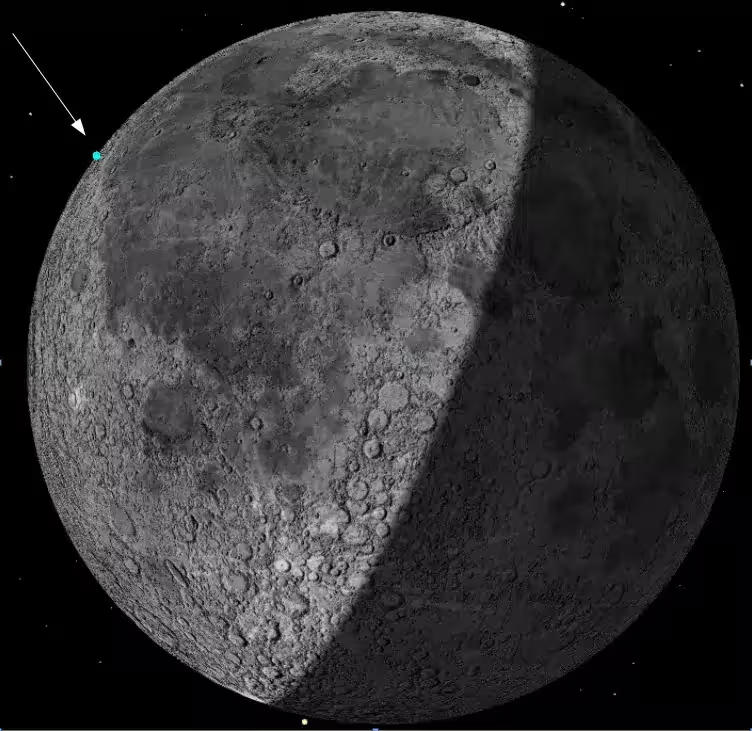
International effort to monitor the impending collision
According to Space.com, the piece in question originated from earlier lunar‑bound flights that delivered payloads under the CLPS framework. Researchers have reconstructed its orbital evolution using a combination of tracking data and predictive software that simulates deep‑space debris dynamics. Long‑term forecasts at lunar distances are inherently imprecise, as minute gravitational nudges accumulate over months, expanding the possible impact footprint to tens of kilometres.
Continual refinements are underway as fresh observations feed into the trajectory models. The impact window has been narrowed to around August 5, though the precise moment remains fluid. A shift of only a few minutes could alter the geometry for Earth‑based viewing. Traveling at several kilometres per second, the stage will carry enough kinetic energy to carve a discernible crater, providing a natural laboratory to examine how artificial objects interact with the Moon’s regolith. Observatories worldwide are synchronising their schedules to capture the fleeting event.
Project Pluto’s Bill Gray described the evolving confidence in the path prediction, noting: “I’ve gone from ‘probably’ to ‘probably not,’ and more recently, to ‘maybe,’”
He added that current models still leave a margin of uncertainty: “Even though we have tracked it since launch, our idea of when and where it’s going to hit are currently fuzzy by minutes and dozens of kilometres,” Gray said. “But we will refine that and get an idea of where it’s going to hit.”
Scientific interest in the impact’s effect on lunar regolith
Beyond the collision itself, scientists are keen to see how the Moon’s surface reacts to a high‑speed, atmosphere‑free impact. Without an air cushion, incoming objects strike at full velocity, instantly converting kinetic energy into heat and shock, potentially producing a bright flash and ejecting material high above the surface. Measuring the amount of debris lofted and its behaviour in low‑gravity conditions could shed light on lunar surface mechanics.
Dust dispersal, plume morphology, and illumination patterns may all reveal new details about how regolith responds to energetic events. Both Earth‑based telescopes and orbiting instruments could contribute data. The occurrence also offers a chance to calibrate impact‑detection algorithms used in planetary‑defense research, as fleeting optical flashes can be hard to separate from sensor noise or cosmic‑ray hits. Simultaneous observations from multiple sites will be crucial for confirming any signal.
NASA’s SSERVI program highlighted the broader relevance, stating:
“One of the things that is really important here with this impact that is coming up is it serves as a reminder to us that the moon is a dynamic environment. We think of it as being static. It is not. It is being whacked. It is changing,” Day said.
He also encouraged public involvement, adding: “And that can be done either with instrumentation you have in your own backyard or you can use ours in orbit around the moon. This impact is a great reminder of this wonderful environment of the moon.”
Assessing the chances of Earth‑based detection
A central question remains whether the impact will be observable from Earth. Visibility hinges on the exact timing, impact location, and illumination at the moment of collision. If the strike occurs near the lunar limb, observers might only catch an indirect cue such as a brief flash or a sun‑lit dust plume. Space.com notes that expert opinions diverge, reflecting the difficulty of forecasting both the physical event and its observable signatures. Some researchers warn that the signal could be too faint for most instruments, while others maintain that a narrow set of conditions could allow detection.
NASA’s Meteoroid Environment Office manager William Cooke summed up the uncertainty: “I think it’s going to be very subtle. I think it’s going to be very, very hard to see, if not impossible. But there’s always a chance.”
He suggested what might improve detectability: “It will excavate that out of the crater and this may create a plume that will be illuminated by the sun. So, it’s not only important to look for the impact flash, but if this occurs close enough to the limb, you may be able to see that plume of material rising, and that would be significant as well.”
This article has been fact checked for accuracy, with information verified against reputable sources. Learn more about us and our editorial process.
Last reviewed on .
Article history
- Latest version
Reference(s)
- David, Leonard. “A SpaceX rocket will slam into the moon this August. Will we be able to see it?.”, June 25, 2026 Space <https://www.space.com/astronomy/moon/a-spacex-rocket-will-slam-into-the-moon-this-august-will-we-be-able-to-see-it>.
Cite this page:
- Posted by Karan Das